
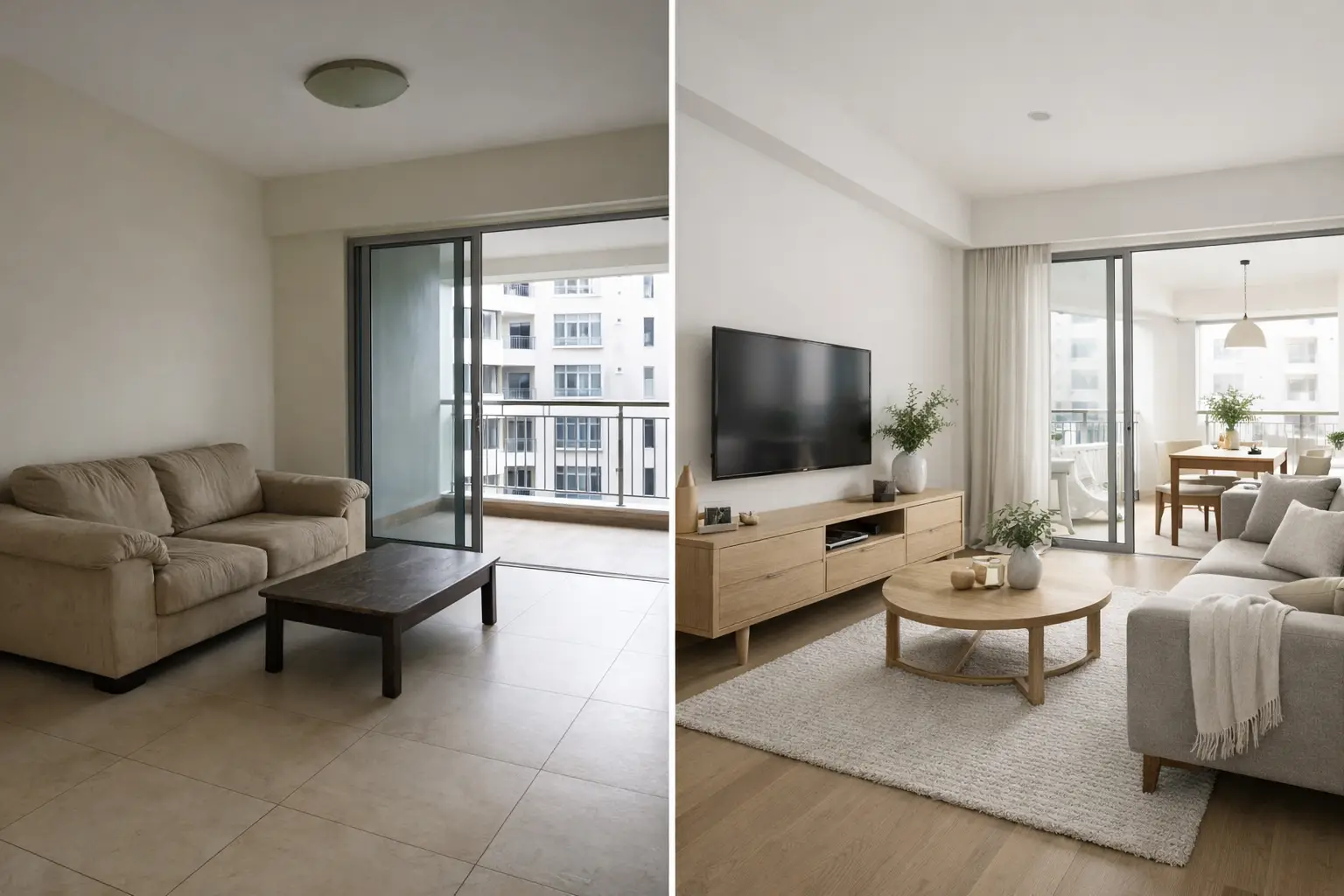
A vacant flat can look smaller in photos than it does in person. A lived-in home can feel harder to read, even when the layout is strong. That is why before after property styling matters – not as decoration for its own sake, but as a practical way to change how a listing is understood at first glance.
For property agents and owners, that shift is often the difference between passive browsing and genuine enquiry. Buyers and tenants do not only assess square footage, finishes or postcode. They respond to how quickly they can picture the space working for them. Styling helps remove hesitation. It gives shape to empty rooms, reduces visual friction, and makes a property feel ready rather than unresolved.
Why before after property styling changes response
The strongest styling transformations are rarely dramatic in a theatrical sense. They are effective because they solve common viewing problems. An empty living room offers no scale reference. A bedroom with awkward proportions can feel impractical. A dining area tucked into a corner may go unnoticed entirely. Once furnished and styled with intent, those same areas become legible.
That legibility matters online first. Listing photos do a large part of the selling before any viewing is booked. If a property looks cold, cramped or uncertain in images, many prospects will simply move on. When the same space is styled properly, the eye understands function much faster. The living area reads as a place to gather. The bedroom feels restful. The study nook becomes useful instead of accidental.
This is where the before-and-after comparison is so persuasive. It does not rely on claims. It shows how presentation affects perceived value. Not by changing the bones of the property, but by changing how those bones are seen.
What actually changes in a before-and-after styling project
In most cases, the floorplan stays exactly the same. The walls stay the same. The finishes stay the same. What changes is the framing of the space.
A well-styled property introduces proportion, rhythm and purpose. Furniture placement clarifies circulation. Rugs help anchor open-plan areas. Lighting softens corners that feel stark in photographs. Soft furnishings add warmth without making the space personal or distracting. Art and accessories are usually kept restrained, because the aim is not to impose a taste-heavy identity. It is to create a clean, neutral, market-ready environment.
For sale listings, that often means helping buyers feel the home has value beyond its raw condition. For rental listings, it can make a unit feel immediately liveable, which is especially useful when marketing to tenants who need to make decisions quickly.
There is also a practical point here. Styling is not the same as filling every room. Overfurnishing can make a property feel smaller. Underfurnishing can leave it flat. The right approach depends on layout, target audience and price point.
Before after property styling for vacant homes
Vacant properties are often the clearest case for styling because emptiness can work against perception. People assume an empty room is easy to interpret, but many buyers struggle to judge scale without context. They may underestimate how a sofa fits, where the bed should go, or whether a dining table is realistic.
In before-and-after styling, a vacant unit usually benefits from selective furnishing rather than full saturation. The key spaces tend to be the living room, dining area and principal bedroom. These do the most work in helping viewers understand the home. If there is a secondary bedroom that could function as a child’s room, guest room or study, styling can also help signal flexibility.
For agents, this is often where time on market comes into the conversation. A vacant listing may receive traffic but weaker emotional response. Once styled, the same unit can feel more complete in photos and more convincing during viewings. It does not guarantee a sale or rental on its own, but it removes one of the most common barriers to momentum.
Styled versus occupied – the trade-off
Not every property starts empty. Some homes are owner-occupied, tenanted or partially furnished. In those cases, before-and-after property styling is less about full transformation and more about editing.
Sometimes the issue is visual noise. Too many personal items, inconsistent furniture, dated pieces or poor layout can make a sound property feel less desirable. A styling plan may involve decluttering, rebalancing furniture, introducing rental pieces where needed, and removing items that distract from the room itself.
There is always a trade-off. A fully vacant property gives more control. An occupied home may require compromises around timeline, access and what can realistically be changed. But occupied homes can still benefit significantly from styling if the objective is clear. The aim is not perfection. It is to improve buyer perception enough to strengthen the listing and support the viewing experience.
What buyers and tenants notice first
Most viewers are not consciously judging cushion choices or side table styling. They are absorbing broader signals. Does this home feel spacious? Does it feel maintained? Does it feel current? Could I move in without feeling overwhelmed by work?
These impressions happen quickly. That is why styling should support the property rather than call attention to itself. Clean lines, balanced layouts and neutral tones tend to work well because they widen appeal. The job is not to impress with personality. It is to reduce uncertainty.
In Singapore, where many viewings happen on tight schedules and online competition is high, that first impression carries even more weight. A listing often needs to communicate clarity within seconds. Styling helps do that.
The commercial value behind the visual change
The reason before-and-after staging gets attention is simple: people can see the difference. The reason professionals use it is commercial. Better presentation can improve click-through interest, increase viewing quality and support stronger perceived value.
That value does not always appear in a single obvious metric. Sometimes it shows up as more serious enquiries. Sometimes as fewer objections during viewings. Sometimes as a shorter decision cycle because the property feels easier to understand and easier to want.
For landlords, there is another consideration. A styled rental listing may help attract tenants looking for a straightforward move. For corporate housing and relocation cases, a furnished presentation can make a property feel practical from day one, which matters when timelines are compressed.
Furniture rental is especially useful here because it allows spaces to be prepared quickly without the cost and commitment of buying pieces outright. That flexibility is part of what makes styling commercially sensible, particularly for temporary campaigns or properties in transition.
How to judge whether styling is worth it
Not every property needs the same level of intervention. A newly renovated unit with good natural light may only need light styling for photography. A large empty flat with unusual room shapes may benefit from a fuller setup. An occupied family home may need careful editing more than added furniture.
The key question is whether the current presentation is helping or hindering the listing. If photos feel flat, if viewers struggle to understand room use, or if a good property is drawing weaker response than expected, styling is worth considering.
It is also worth looking at the likely return in context. For a higher-value sale, even a modest improvement in perception can be meaningful. For rentals, reducing vacancy time may justify the staging decision very quickly. The right answer depends on the asset, the market and the urgency of the campaign.
Good styling is strategic, not decorative
The best before-and-after results come from understanding the audience first. A unit aimed at young professionals may need a different setup from a family home or an executive rental. The furniture style, room emphasis and overall finish should support the likely buyer or tenant without becoming too specific.
That is where an experienced staging partner adds value. It is not just about placing attractive items in a room. It is about deciding what the property needs in order to photograph better, view better and compete better. At Expats Partner, the work is approached in exactly that way – as a practical tool to help listings perform.
When styling is done well, the transformation feels obvious afterwards. The room looks calmer. The layout makes sense. The property feels easier to choose. That is the real power of before-and-after property styling. It helps the right person see the property clearly, and often that is what moves a listing forward.
If a space is not landing the way it should, the answer is not always renovation. Sometimes it is presentation – thoughtful, efficient and designed to help the market respond.
Contact us now at: Kevin Chang – 80119753 sales@expatspartner.com.sg Sales Specialist