
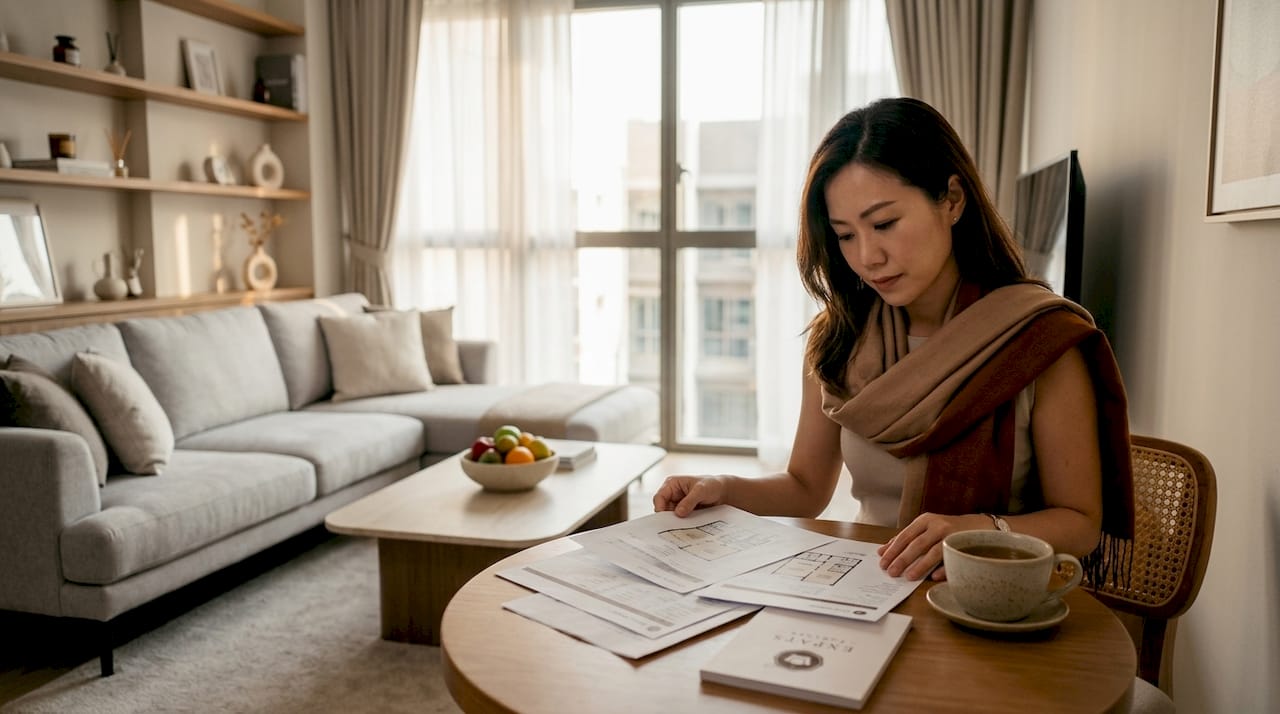
Property staging is the practice of furnishing and presenting a rental unit to maximise its appeal to prospective tenants before listing. In Singapore’s competitive rental market, how staging competes directly shapes enquiry volumes, viewing rates, and the rent a landlord can command. Furnished listings generate 40–60% more enquiries than empty units, and staged rentals can achieve 10–20% higher monthly rents in prime locations. Beyond the numbers, staging compresses void periods from the typical 3–6 weeks down to roughly one week, protecting rental income between tenancies. For landlords and agents managing condos, HDB flats, or landed homes, staging is not an optional extra. It is a core part of a competitive leasing strategy.
How staging competes in the rental market: the measurable benefits
Staging’s competitive advantage begins with listing photography. Furnished photos generate 20–30% more viewing requests compared to empty unit shots. That uplift matters because more viewings mean faster leasing and a shorter window of lost rental income.
The rent premium is equally concrete. Homejourney’s 2026 data shows a 2-bedroom condo in a prime Singapore location renting at S$5,200 furnished versus S$4,300 unfurnished. That is a S$900 monthly difference, or S$10,800 per year, from the same physical unit. The staging investment pays for itself quickly when the premium is sustained across a 12-month tenancy.
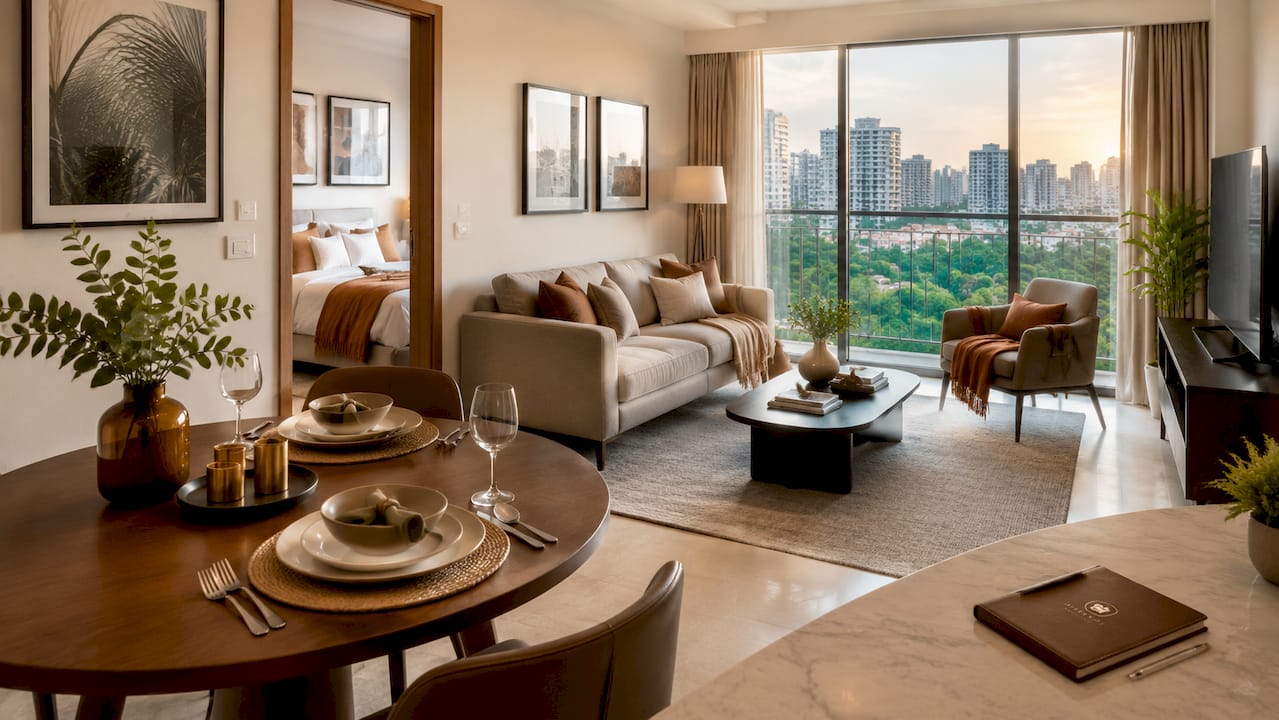
Staging also improves the quality of enquiries, not just the volume. Photos that communicate room scale, storage, and hygiene cues attract tenants who have already pre-qualified the space mentally. Landlords spend less time fielding unsuitable enquiries and more time converting serious prospects.
Key benefits of staging for Singapore rental properties:
- Higher enquiry volume: Furnished listings attract 40–60% more clicks and online engagement.
- Stronger rent premiums: Staged units in prime areas command 10–20% above unfurnished equivalents.
- Shorter void periods: Staging reduces vacancy time from 3–6 weeks to approximately one week.
- Better tenant quality: Clear, well-staged photos pre-qualify tenants before the first viewing.
- Faster decision-making: A furnished space is easier for tenants to imagine living in, reducing hesitation.
Pro Tip: When briefing a photographer, request a wide doorway shot for each room, a dedicated storage shot, and a close-up of the workspace with visible power points. These three angles address the questions most Singapore tenants ask before booking a viewing.
Virtual staging vs physical staging: which wins for rentals?
Both virtual and physical staging improve rental competitiveness, but they serve different stages of the tenant decision process. Understanding when to use each method is the real skill.
Virtual staging: speed and cost at scale
Virtual staging uses AI or design software to add furniture and décor to empty room photographs digitally. AI staging costs S$25–S$150 per flat and can be completed in under five minutes. That speed is a genuine operational advantage in Singapore’s rental market, where a unit can sit vacant for weeks if the listing goes live with poor imagery.
Virtual staging is ideal for the marketing launch phase. It allows landlords and agents to publish a polished, furnished listing the same day a unit becomes vacant. The speed advantage of virtual staging is especially valuable in competitive HDB estates and mid-tier condo developments where multiple similar units list simultaneously.
Physical staging: confidence at the viewing
Physical staging involves placing real furniture in the unit before viewings. It costs significantly more, typically S$3,000–S$5,000 per flat for a full staging setup. However, physical furnishing builds tenant confidence about furniture fit, room proportions, and liveability in a way that digital images cannot fully replicate. Tenants who walk into a well-staged unit can sit on the sofa, open the wardrobe, and feel the space. That tactile experience closes leases.
| Factor | Virtual Staging | Physical Staging |
|---|---|---|
| Cost per flat | S$25–S$150 | S$3,000–S$5,000 |
| Turnaround time | Under 5 minutes | 1–3 days setup |
| Best use case | Online listing launch | In-person viewings |
| Tenant confidence | Moderate (visual only) | High (tactile experience) |
| Reusability | High (templates reusable) | Moderate (furniture moves) |
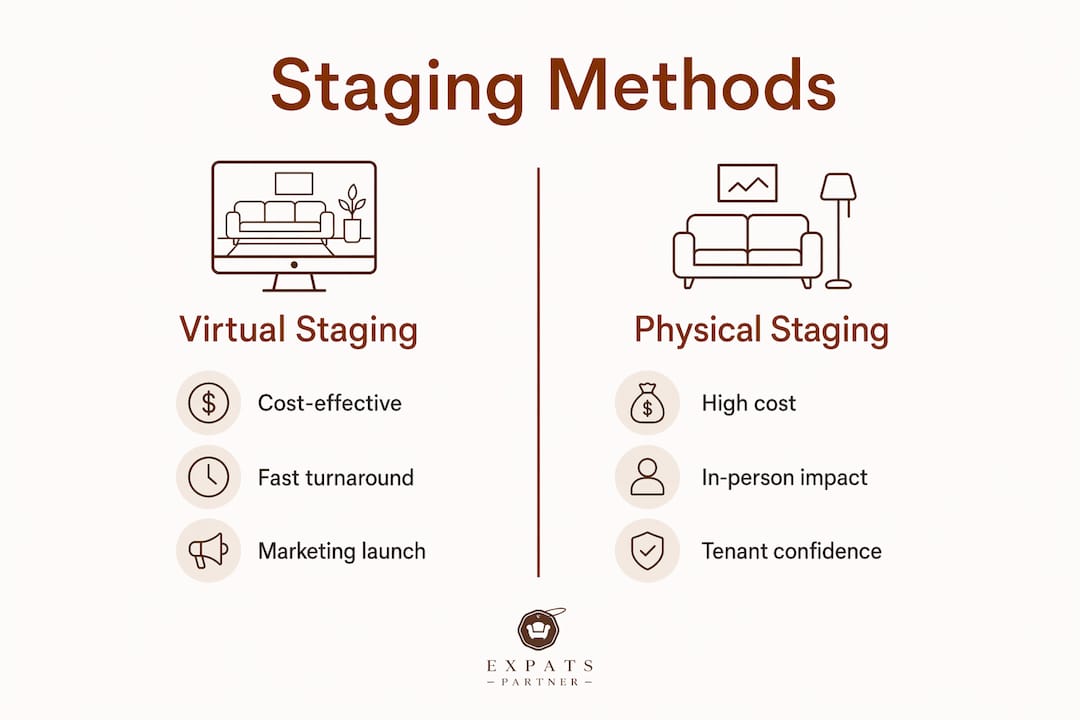
The most effective approach combines both methods. Use virtual staging to publish a compelling listing immediately, then arrange physical staging or a furnished furniture package for viewings once serious enquiries arrive. This segmented staging approach matches the right tool to each stage of the tenant decision process.
Pro Tip: If your unit is already partially furnished, physical staging is often more cost-effective than a full virtual overhaul. Add a few key pieces such as a statement sofa, a dining set, and bedside lamps to complete the look without starting from scratch.
Which tenants value staging most in singapore?
Staging impact on rentals varies significantly by tenant segment. Aligning your staging investment with the right audience is how landlords maximise rental yield without overspending.
Expats and corporate tenants
Expats and corporate tenants represent the highest-value audience for staged rentals in Singapore. Staged properties attract corporate tenants willing to pay 10–15% above market rate, and they lease faster because move-in readiness removes a major friction point for relocating professionals. A foreign professional arriving on a two-year assignment does not want to source furniture, negotiate delivery windows, or wait weeks for a home to feel liveable. A staged, furnished unit solves all of that immediately.
For this segment, staging should prioritise:
- A dedicated workspace with a study desk, ergonomic chair, and accessible power points.
- A clean, well-lit bathroom with clear hygiene cues in photography.
- A fully equipped kitchen or at least a well-presented one.
- Neutral colour palettes that feel calm and professional rather than personalised.
You can read more about staging for expat tenants and how furnishing choices affect leasing outcomes for this group.
Local professionals and families
Local professionals and families often prefer unfurnished or partially furnished units. They typically have their own furniture and want the flexibility to personalise the space. Local tenants frequently choose unfurnished options to avoid paying a furnished premium for items they do not need. For this segment, staging serves a different purpose. It communicates space, proportion, and potential rather than providing a ready-to-live-in solution.
For local tenant audiences, a lighter staging approach works well. A few key pieces in the living room and master bedroom, combined with strong photography, convey the unit’s character without committing to a full furnished package. This keeps staging costs lower while still improving listing performance.
What operational practices make staging work consistently?
Staging delivers the strongest results when it is treated as a repeatable system rather than a one-off effort. Landlords and agents managing multiple units benefit most from building standard processes around staging.
- Build staging templates by unit type. Create a standard furniture layout and photography sequence for each unit size you manage, whether a 1-bedroom condo, a 2-bedroom HDB flat, or a 3-bedroom landed home. Standardised staging templates reduce decision fatigue, cut costs through repetition, and produce consistent listing imagery that builds your brand as a landlord or agent.
- Align staging delivery with listing publication. The staging ROI comes primarily from reduced marketing lag, not just from aesthetics. A unit staged two weeks after listing has already lost its best window of enquiry. Schedule staging setup or virtual staging delivery to coincide with the listing go-live date.
- Photograph with tenant decision points in mind. Key photo angles for Singapore rentals include the doorway wide shot to show usable floor space, the wardrobe interior to show storage access, the study desk area with visible power points, and the bathroom with clean surfaces and good lighting. These shots answer the questions tenants ask before they book a viewing.
- Track enquiry quality, not just volume. Monitor which listings generate viewing requests versus which generate only clicks. Adjust captions and descriptions to filter for your target tenant profile. A listing that attracts 50 clicks but only two viewing requests needs better copy, not more staging.
- Review staging after each tenancy. Furniture wears, colour palettes date, and tenant expectations shift. A brief post-tenancy review of your staging template keeps listings competitive without requiring a full overhaul each time.
For a detailed walkthrough of the physical staging process, the guide on staging a vacant property covers each step from furniture selection to photography briefing.
Key takeaways
Staging is the most direct tool landlords and agents have to increase rental enquiries, shorten void periods, and command higher rents in Singapore’s competitive market.
| Point | Details |
|---|---|
| Staging lifts enquiry rates | Furnished listings attract 40–60% more clicks and 20–30% more viewing requests than empty units. |
| Rent premiums are real | Staged units in prime Singapore locations achieve 10–20% higher monthly rents than unfurnished equivalents. |
| Void periods shrink significantly | Staging compresses vacancy from 3–6 weeks to approximately one week, protecting rental income. |
| Match staging to tenant type | Expats and corporate tenants value move-in readiness; local tenants often prefer partial or no furnishing. |
| Treat staging as a system | Standardised templates and timed listing launches deliver consistent results across a property portfolio. |
Staging is a marketing tool, not a magic rent lever
From our experience working with landlords and agents across Singapore, the biggest misconception about staging is that it automatically increases rent. It does not work that way. Staging improves your position in the market. It makes your listing more visible, your viewings more convincing, and your vacancy periods shorter. The rent premium follows from those outcomes, not from the furniture itself.
We have seen landlords invest heavily in physical staging for units in locations where the tenant pool is primarily local families who prefer unfurnished options. The staging looked excellent, but it did not move the needle on rent because the audience did not value it. Matching the staging level to the actual tenant demand in your area is what separates a smart investment from an expensive one.
Virtual staging has changed the economics considerably. For landlords managing several units, the ability to publish a polished furnished listing within hours of a vacancy is genuinely valuable. It compresses the marketing window and keeps the unit visible during the peak browsing period after a listing goes live. We recommend virtual staging as the default first step for almost every vacancy, with physical staging reserved for high-value units targeting expat or corporate tenants where the viewing experience is critical to closing.
The landlords and agents who get the best results from staging treat it as a process, not a project. They have templates, they have photographers they trust, and they know which furniture configurations work for each unit type they manage. That consistency compounds over time. Each tenancy cycle gets a little faster and a little more profitable.
— Expats Partner
Ready to stage your rental property in singapore?
Expats Partner supports landlords and property agents across Singapore with professional home staging services and flexible furniture rental packages designed for the local rental market. Whether you are preparing a condo for an expat tenant or refreshing a HDB flat between tenancies, we provide real inventory, reliable delivery, and practical staging support tailored to your unit type and tenant profile.
Our short-term furniture rental for expats packages are particularly well-suited to landlords targeting corporate and expat tenants who need move-in-ready homes. Transparent pricing, flexible rental terms, and dependable logistics mean your property reaches the market quickly and presents at its best. Get in touch with Expats Partner to discuss a staging or furniture rental plan for your property.
FAQ
Does staging actually increase rental yield in singapore?
Yes. Furnished and staged rentals command 10–20% higher monthly rents in prime Singapore locations, and shorter void periods add further income protection across the tenancy cycle.
How does staging attract quality tenants?
Staging communicates move-in readiness, space, and care for the property. Corporate and expat tenants specifically seek furnished, well-presented homes and are willing to pay a premium for them.
Is virtual staging good enough for singapore rental listings?
Virtual staging is highly effective for the online listing phase, generating significantly more clicks and viewing requests. Physical staging adds value during in-person viewings, particularly for high-value units targeting expat or corporate tenants.
How much does staging cost compared to the rental premium gained?
Virtual staging costs S$25–S$150 per flat, while physical staging runs S$3,000–S$5,000. Against a monthly rent premium of S$500–S$900 on a staged 2-bedroom condo, the payback period is typically one to three months.
Should landlords stage unfurnished units for local tenant audiences?
A light staging approach still improves listing performance for local tenant audiences. Use a few key pieces to communicate scale and proportion, then photograph well. A full furnished package is rarely necessary when targeting tenants who prefer to bring their own furniture.