
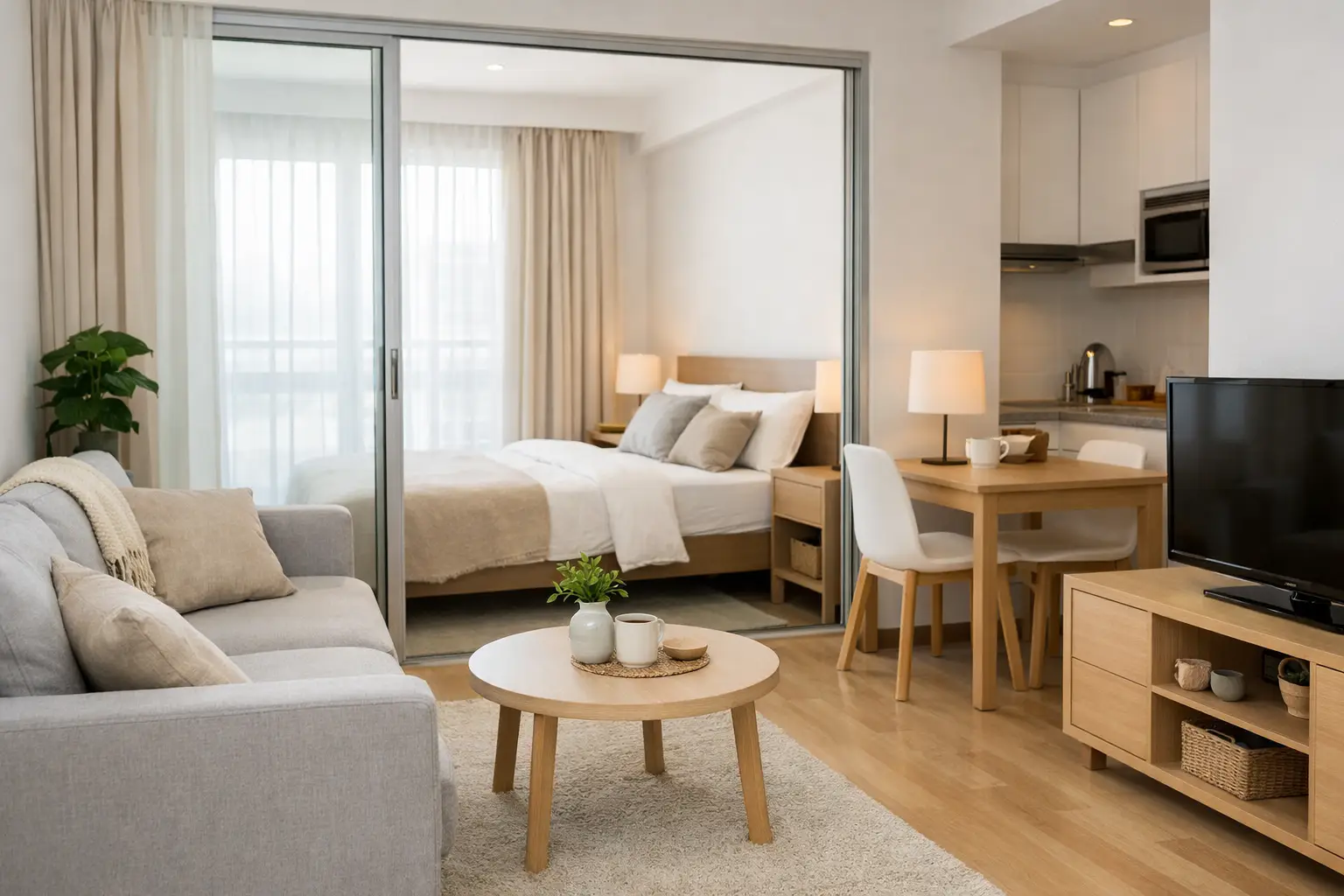
An empty flat asks a viewer to do too much work. They have to guess where the sofa goes, whether the dining area is usable, and how the bedrooms will actually feel day to day. That is why a guide to temporary flat furnishing matters – not as a styling exercise, but as a practical way to make a property easier to understand, easier to market, and easier to choose.
For property agents, landlords and relocation teams, the real question is rarely whether furniture looks nice. It is whether the space feels ready. A furnished flat photographs better, guides movement during viewings, and helps people picture living there without being distracted by the effort of setting it up themselves. When timing matters, temporary furnishing gives you that readiness without the cost and delay of buying everything outright.
When temporary flat furnishing makes the most sense
Temporary furnishing is most useful when the property has a clear commercial purpose and a limited timeframe. A vacant sale listing is one example. A rental unit between tenants is another. Corporate housing, short-term relocation accommodation and newly handed-over units also sit firmly in this category.
In each case, the need is slightly different. A sales listing needs visual structure and emotional appeal. A rental listing needs to feel practical and move-in ready. Corporate housing often needs to balance function, comfort and speed. The furniture package should reflect that purpose rather than follow a generic formula.
That is where many projects either work well or become more complicated than they need to be. If you furnish for the wrong outcome, you can spend money without improving the result. A unit prepared for viewings does not need the same level of personalisation as a unit intended for immediate occupation. On the other hand, a relocation flat cannot rely on appearance alone. It has to function from day one.
A practical guide to temporary flat furnishing decisions
The first step is to decide what the flat needs to achieve. That sounds obvious, but it changes everything from furniture quantity to layout style. If the objective is better listing performance, the furnishing should define each zone clearly and keep the overall look neutral, spacious and easy to read in photos. If the objective is short-term living, comfort and usability need more weight.
The second step is to identify the rooms that actually influence decision-making. In most flats, the living area, main bedroom and dining space carry the most visual and practical value. These are the rooms that shape first impressions and help viewers understand scale. Secondary bedrooms may only need light furnishing, depending on whether they are large enough to benefit from it.
The third step is to be realistic about density. One of the most common mistakes in temporary flat furnishing is trying to prove a room can do too much. A small living room does not become more attractive because it contains extra chairs, side tables and decorative pieces. Usually the opposite happens. The room feels tighter, and viewers start focusing on limitations instead of possibilities.
What to include and what to leave out
A good furnishing plan is selective. In many cases, you need less than people expect.
For a market-ready flat, the essentials are usually a sofa, coffee table, rug, dining set, bed frames, mattresses, bedside tables and basic soft furnishings. Artwork and accessories can help, but only when they support the layout rather than clutter it. The goal is to create visual cues that say, this room works.
For a lived-in temporary setup, you may need to go further with storage pieces, work desks, occasional seating and practical household items. Even then, restraint matters. Temporary does not mean sparse, but it also should not feel over-furnished. A clean and balanced setup is easier to maintain and easier for incoming occupants to adapt to.
There is also a trade-off between styling impact and operational simplicity. More pieces can create a fuller look, but they also mean more delivery coordination, more placement decisions and more risk of wear. The right answer depends on how long the flat will be in use and who it is intended to attract.
Why layout matters more than expensive pieces
Most viewers do not assess a property by separating the furniture from the floor plan. They experience both at once. If the layout flows, the flat feels easier to live in. If circulation is blocked or proportions feel awkward, even high-quality furniture will not rescue the impression.
That is why temporary flat furnishing should begin with placement, not products. The sofa should support the room’s shape. The bed should make the bedroom feel restful and usable, not cramped. Dining furniture should show that meals can happen comfortably without making the passageway feel narrow.
This matters even more in compact urban flats, where every piece has to justify the space it takes up. A smaller, well-proportioned dining set will often perform better than a larger one that technically fits but disrupts movement. The same is true of beds, media consoles and storage units.
In practical terms, layout is what turns furniture into a sales tool. It helps viewers understand how they would move, sit, work and rest in the home. That clarity often does more for perceived value than adding another decorative layer.
The role of temporary furnishing in marketing and viewings
Online listing performance is usually the first place the benefit shows up. Furnished spaces tend to read more clearly in photographs because they provide scale and purpose. A viewer scrolling through listings can immediately tell whether the living room is substantial, whether the bedroom can hold a proper bed, and whether the unit feels bright or constrained.
Then comes the viewing itself. Empty flats can feel colder, more echoing and harder to interpret. Furnished ones tend to slow people down in a useful way. They pause by the dining table, notice sightlines from the sofa, and get a better sense of how the main bedroom functions. That shift in behaviour matters because stronger engagement often leads to more confident decisions.
For agents, this can support better conversations during viewings. Instead of explaining how a room might work, you can show it. For landlords, it can reduce the uncertainty that causes prospective tenants to keep looking. For relocation clients, it shortens the gap between handover and usability.
Budget, timing and flexibility
A guide to temporary flat furnishing would be incomplete without the operational side. The appeal is not just appearance. It is speed, flexibility and cost control.
Buying furniture for a short-term requirement often creates more work than expected. Someone has to source it, receive it, assemble it, place it and eventually remove or dispose of it. That may make sense for a long-term plan, but it is inefficient when the property’s needs are temporary or uncertain.
Rental-based furnishing shifts that equation. It allows the flat to be prepared quickly, usually with a coordinated set of pieces that already work together. It also keeps the commitment aligned with the actual use period. If the listing sells sooner than expected or the tenant profile changes, the setup can often be adjusted more easily than an owned inventory.
Of course, not every property needs a full package. Some flats only need key rooms furnished. Others may already have partial pieces that can be supplemented. The best approach is usually the one that solves the actual presentation problem without overcommitting budget.
Common mistakes to avoid
The most costly mistake is treating furnishing as an afterthought. If the furniture arrives too late, the listing may already have gone live with weaker photos, or viewings may begin before the space feels ready. Timing affects outcomes.
Another issue is furnishing to personal taste instead of market appeal. Strong colours, highly specific décor and oversized pieces can narrow the audience. A more neutral, design-conscious setup usually works better because it leaves room for buyers or tenants to imagine their own life in the space.
Finally, there is the temptation to furnish every corner. Not every area needs a statement. Some spaces benefit from breathing room. A property that feels calm, clear and functional often performs better than one trying too hard to impress.
Temporary flat furnishing works best when it is tied to a clear purpose. If the goal is to improve listing performance, support viewings or make short-term accommodation feel ready from day one, the furniture should help people say yes more easily. Good presentation does not need to be complicated. It just needs to make the next decision simpler.
Contact us now at: Kevin Chang – 80119753 sales@expatspartner.com.sg Sales Specialist