
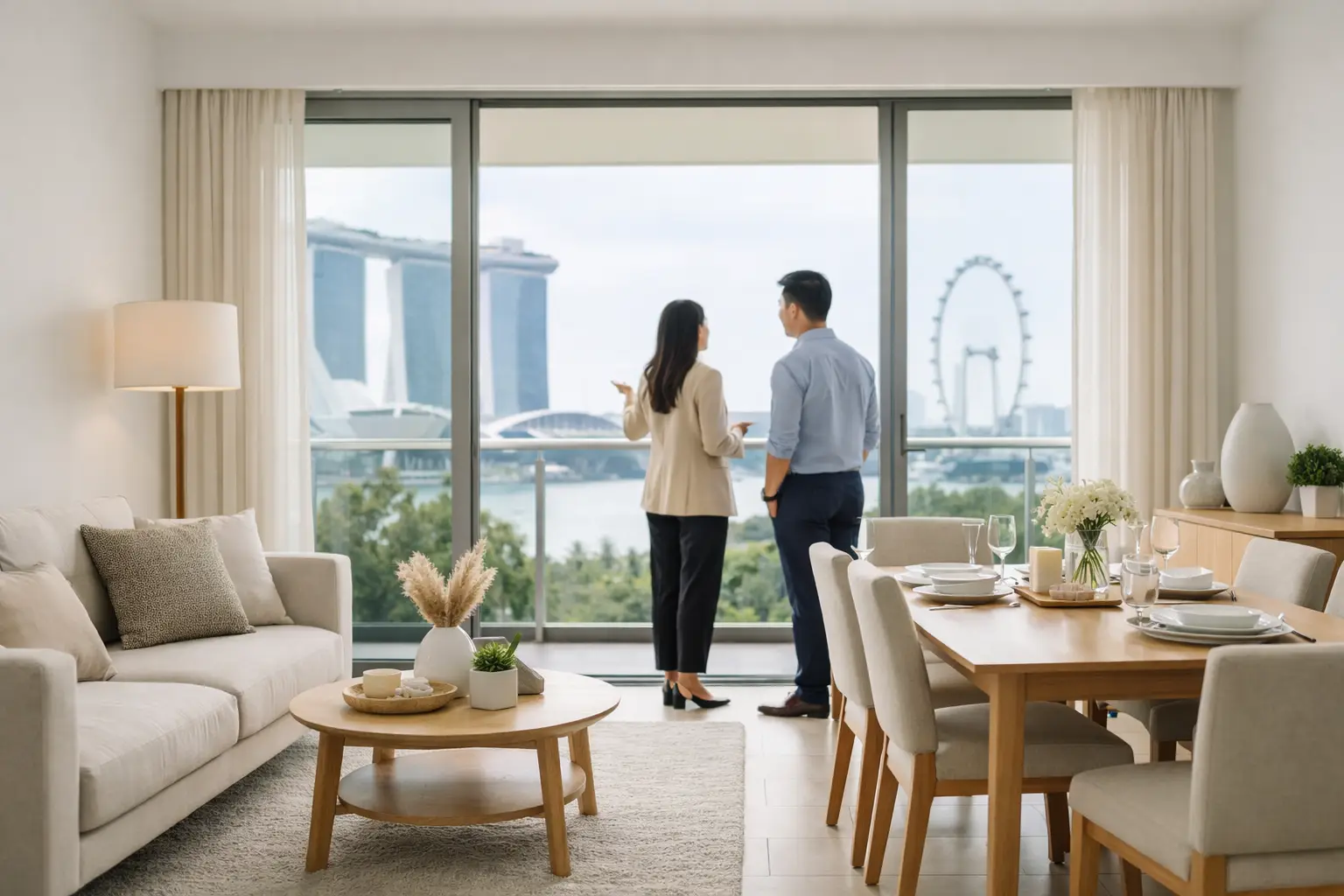
A vacant flat can look larger in floor plans and smaller in person. That gap between expectation and reality is exactly why home staging trends Singapore agents are following now matter so much. Presentation is no longer just about making a unit look tidy. It is about helping buyers and tenants understand how a space lives, how it flows, and whether it feels worth shortlisting.
What is changing is not only style. It is also speed, practicality, and the way people browse property. Most first impressions now happen on a screen, often in a matter of seconds. If a listing feels cold, cluttered or difficult to read, interest drops before a viewing is even booked. The strongest staging today is designed for both online attention and in-person confidence.
The home staging trends Singapore listings are moving towards
The most noticeable shift is away from decorative staging for its own sake. Agents and owners are increasingly looking for setups that feel polished but believable. A unit should look aspirational, but not so styled that it feels artificial or too personal.
That is why warm minimalism continues to perform well. Clean lines still matter, especially in condos and newer flats where buyers expect a contemporary feel. But stark white spaces with barely any furnishing can now come across as flat in photos. Softer neutrals, layered textures and a little warmth make a room feel finished without making it feel busy.
This matters in Singapore where many homes need to appeal to a broad mix of viewers, including investors, local families, overseas buyers and tenants relocating on a timeline. A balanced scheme tends to do more work than a highly specific one.
Warm, neutral palettes are replacing colder showroom looks
Beige, taupe, soft grey, sand and muted wood tones are showing up more often in effective staging. They photograph well, soften artificial lighting and help reduce the clinical look that some empty units can have. This is particularly useful in properties with strong daylight, glossy flooring or compact rooms that can otherwise feel harsh on camera.
There is a practical reason too. Neutral styling helps buyers focus on the property rather than the furniture. If the sofa colour becomes the main talking point, the staging is probably too dominant. The aim is to support the sale or rental, not compete with it.
Rooms are being staged for clearer purpose
One of the more useful trends is purpose-led furnishing. Instead of filling every corner, staging now tends to define how each area should be used. A spare bedroom may be styled as a study if that is more relevant to likely viewers. A dining nook may be presented as a compact work-from-home setup if the layout suits it better.
This approach works because many viewers struggle to judge scale in empty rooms. They also want help imagining daily use. When the purpose of a room is obvious, the property feels easier to understand and easier to choose.
There is a trade-off, of course. Overly specific styling can narrow appeal if it pushes one lifestyle too heavily. The best solution is usually flexible staging that suggests a use without locking the room into one identity.
Why practical staging is outperforming decorative styling
In the current market, presentation needs to work quickly. Agents do not always have the luxury of long lead times, and vacant units often need immediate support before photography and viewings. That has pushed demand towards staging that is operationally efficient as well as visually effective.
Furniture rental has become central to this. It allows a property to be styled without a large upfront spend, and it removes the hassle of sourcing, transporting and later disposing of furniture. For landlords and owners who simply need the unit market-ready, that flexibility is often more valuable than buying pieces outright.
From a commercial point of view, this is one of the most relevant home staging trends Singapore property professionals should pay attention to. The trend is not just about colour palettes or cushions. It is about reducing friction in the sales or leasing process.
Faster setup is now part of the value
A well-staged unit that misses its listing window loses momentum. That is why speed has become part of staging quality. Good presentation still matters, but the ability to install quickly, adapt to unit type and support photography on schedule is often what makes the difference in practice.
This is especially true for agents managing multiple listings or landlords turning over tenancies. They need a setup that looks considered but does not create another project to manage.
Less furniture, better placement
Another shift is restraint. Buyers do not need every room fully dressed. In many cases, fewer, well-proportioned pieces create a stronger result. A living room with a correctly scaled sofa, coffee table and rug usually performs better than one packed with extra chairs and accessories.
This is particularly important in smaller units, where too much furniture can shrink the room visually. Staging should help the property breathe. Good placement gives viewers a sense of movement and proportion, which is often more persuasive than adding more items.
What buyers and tenants are responding to now
Viewers are increasingly sensitive to whether a property feels ready. That does not mean fully furnished in every case. It means emotionally legible. They want to walk in and feel that the space is usable, cared for and easy to settle into.
For sales listings, that often translates into calm, uncluttered interiors with enough warmth to feel inviting. For rental listings, especially those aimed at expats or corporate tenants, functionality matters even more. A unit that looks move-in-ready tends to reduce hesitation because it answers practical questions before they are asked.
Lifestyle cues matter, but only when they are subtle
Soft furnishings, simple artwork, table styling and lighting can all help a listing feel more complete. But the strongest results usually come from restraint. A few cues that suggest comfort and liveability are enough. Too many decorative touches can start to feel staged in the wrong way.
This is where experienced styling earns its value. The goal is not to impress with design trends alone. It is to create the right level of aspiration for the likely buyer or tenant.
Photography is shaping staging decisions more than ever
Because the listing photo gallery often determines whether someone books a viewing, staging is increasingly being planned with photography in mind. That means clearer sight lines, stronger room definition and furniture layouts that read well from the camera angle.
It also means paying attention to details that may seem minor in person but stand out online, such as empty corners, poor rug sizing or furniture that is out of scale with the room. What feels acceptable standing in the unit may look unresolved in photos.
How to apply these trends without overcomplicating the process
For most agents and owners, the best approach is not to chase every new look. It is to use current staging principles in a way that supports the property type, target market and timeline.
A luxury condo, a family-sized resale unit and a rental flat awaiting tenants should not all be staged the same way. The styling needs to reflect the likely viewer. A family-oriented property may benefit from a grounded, spacious layout that shows practical living. A city-fringe flat aimed at professionals may work better with a cleaner, lighter scheme and a defined work area.
The common thread is clarity. Each room should have a purpose. The furniture should fit the scale. The styling should support, not distract. And the setup should be efficient enough to help the listing go live without delay.
That is why service-led staging is becoming more valuable than one-off decorating. Clients want design sense, but they also want coordination, reliability and a straightforward route from vacant unit to market-ready listing. For many, that combination is what turns staging from a nice extra into a sensible selling tool.
Expats Partner approaches staging with that balance in mind – practical enough for tight timelines, considered enough to improve how a property is perceived from the first photo to the final viewing.
The most useful trend to follow, then, is not a colour or a shape. It is the move towards staging that helps people decide faster and with more confidence. When a property feels easier to understand, it usually feels easier to choose.
Contact us now at: Kevin Chang – 80119753 sales@expatspartner.com.sg Sales Specialist