
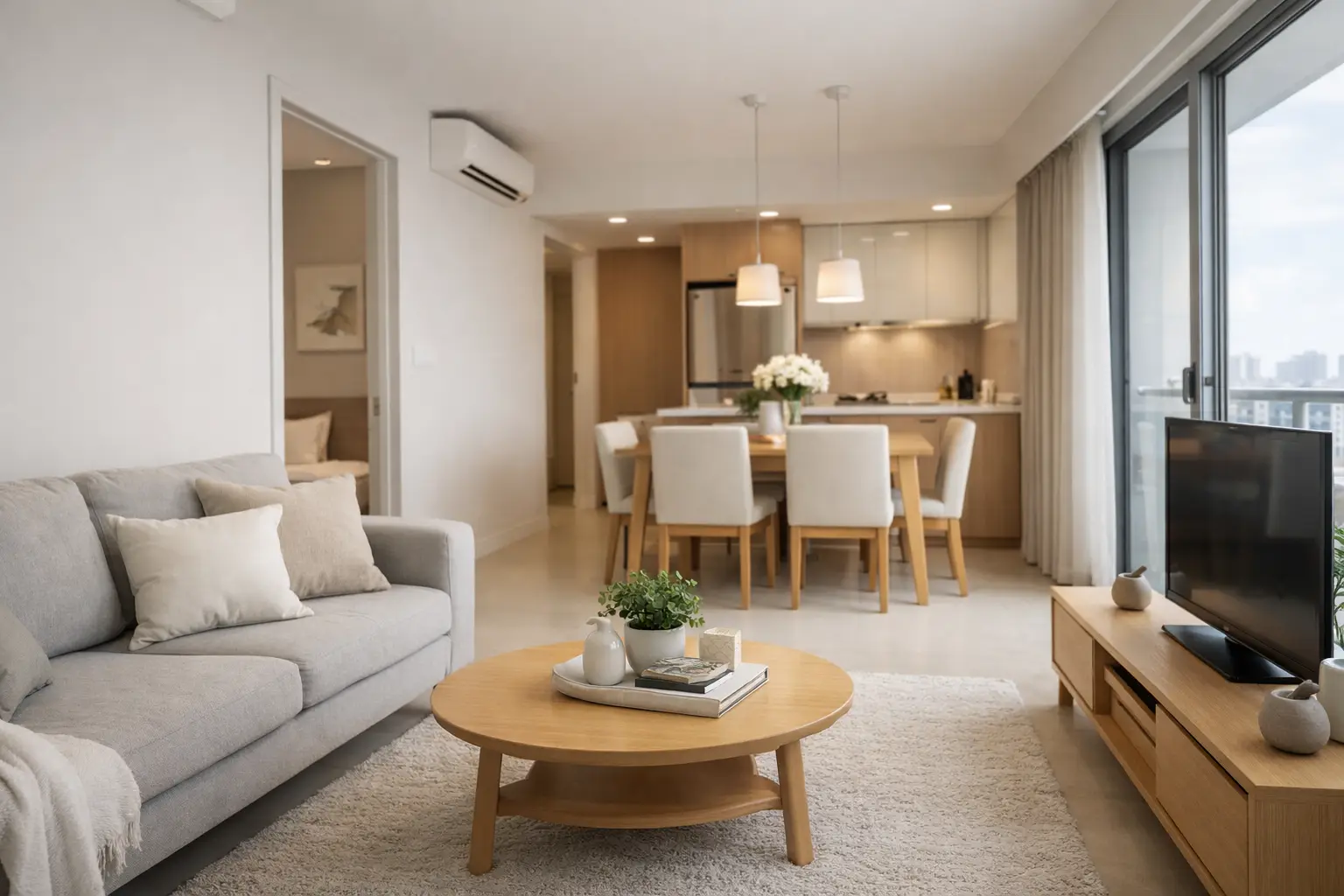
A listing can be let down long before the first viewing. One dim photo, one empty room with no sense of scale, or one overfurnished living area can make a buyer or tenant scroll past without a second thought. If you are working out how to stage a property listing, the real goal is not to decorate it. The goal is to help people understand the space quickly, imagine living there, and feel that the property is ready.
That matters because most interest now starts online. By the time someone steps through the door, they have already made early judgements about value, upkeep and fit. Good staging shapes those judgements in your favour without making the home feel forced or overly styled.
How to stage a property listing with the listing itself in mind
The best staged homes are not the ones with the most furniture. They are the ones where every room reads clearly in photographs and feels easy to move through during viewings. That starts with the listing strategy, not the cushions.
Before anything is brought in or taken out, look at the property the way a buyer or tenant will. What is the strongest selling point? It might be a generous living area, a practical study corner, a good-sized main bedroom or a balcony that makes the unit feel brighter and more open. Your staging should support that feature rather than compete with it.
It also helps to be honest about the likely audience. A compact one-bedroom unit aimed at investors or young professionals should not be staged like a family home. A larger landed property should not feel sparse or unfinished. Staging works best when it gives the right cues to the right audience.
Start by editing, not adding
One of the most common mistakes is assuming a property needs more in order to look better. Often it needs less.
If the home is owner-occupied, remove anything that distracts from the room itself. Personal photographs, excess décor, bulky storage pieces and oddly scaled furniture all make it harder for viewers to read the layout. If the property is vacant, resist the urge to fill every corner. Empty rooms can look cold, but crowded ones look smaller.
Think in terms of visual function. The living room should clearly look like a place to sit and gather. The dining area should show where meals or informal work might happen. Bedrooms should feel restful, with enough furniture to establish scale but not so much that storage and floor area are visually reduced.
This is where staging has a practical edge over general interior styling. It is less about personality and more about performance.
Focus on the rooms that drive decisions
Not every space carries equal weight. If budget or time is limited, prioritise the rooms that influence first impressions and perceived value most strongly.
Living room
This is usually the anchor of the listing. It should feel open, balanced and easy to understand in a single glance. A sofa, coffee table, rug and a few restrained accessories are often enough. The arrangement should define the room without blocking movement or natural light.
Main bedroom
A well-staged bedroom adds emotional pull. It helps viewers picture comfort, not just square footage. Bedding should be simple and crisp, with neutral tones that brighten the room and photograph well.
Dining area
Even a small dining setup gives shape to the floor plan. In open-plan homes especially, a dining table helps viewers understand how the space can be used day to day.
Study nook or secondary room
If a room could be read in more than one way, staging should remove that uncertainty. A small spare room can become a compact home office or guest room depending on the target market. Ambiguity weakens listings. Clarity helps them.
Use furniture to show scale and flow
A vacant property often looks smaller in photos than it does in person. Buyers and tenants have no visual reference for proportion, so they guess – and they often guess conservatively.
That is why furniture rental and staging work so well together. The right pieces show how a room can function without requiring permanent furnishing. For agents, landlords and homeowners, this can be a faster and more sensible option than buying pieces outright for a sale or rental campaign.
Scale matters here. Furniture that is too large makes the room feel tight. Furniture that is too small can make the home feel awkward or underwhelming. The aim is to create a clean, believable layout that leaves enough breathing room around each piece.
Flow matters just as much. When someone walks through a property, they should not need to mentally rearrange it. A staged layout should quietly guide them from one zone to the next, making the property feel coherent and easy to live in.
Keep the styling neutral, but not lifeless
Neutral does not mean bland. It means broad appeal.
When you stage for sale or rent, you are not trying to reflect one person’s taste. You are creating an environment that feels calm, clean and flexible enough for different viewers to project themselves into. Soft greys, warm whites, timber tones and muted textiles tend to work well because they brighten spaces and keep attention on the property itself.
That said, a home still needs warmth. Cushions, artwork, lamps and greenery can soften the room and keep it from feeling sterile. The balance is important. Too little styling and the property feels unfinished. Too much and it begins to feel staged in the wrong way – decorative rather than convincing.
Prepare for photography as carefully as for viewings
A staged property is only effective if the photography captures it properly. In many campaigns, the photos do more work than the viewings because they determine whether enquiries happen at all.
Before the shoot, check sightlines from the doorway of each room. Remove anything that interrupts the frame, from visible cables to extra chairs that tighten the composition. Open curtains fully if the light is good. Turn on lamps where needed to reduce dark corners, but keep the overall look natural.
This is also why staging should be done before photography, not after the listing goes live. If the first set of photos underperforms, you may already have lost attention in the opening days of marketing, when a listing often gets its strongest burst of visibility.
How to stage a property listing when it is occupied
Occupied homes need a slightly different approach. You are working around real life, which means the task is usually to refine rather than fully reset.
Start with storage. Kitchen counters, bathroom surfaces and bedside tables often collect the small items that make a home feel busy on camera. Pack away anything non-essential. Then look at furniture density. Many owner-occupied homes have more pieces than they need for a sale or rental campaign.
There is also a trade-off to manage. A property still has to function for the people living in it. In those cases, staging should focus on the most visible rooms and on changes that are easy to maintain between viewings. Practicality matters as much as appearance.
Vacant properties usually need more help
An empty property can feel clean and full of possibility, but it can also feel cold, echoing and hard to read. This is especially true in online listings, where blank rooms struggle to create emotional pull.
Staging gives vacant units a sense of purpose. It helps viewers understand where to place their sofa, how a bedroom fits comfortably, or how an open-plan area can be zoned. For developers, landlords and agents managing vacant stock, this can make the difference between a listing that feels overlooked and one that feels market-ready.
In Singapore’s fast-moving property environment, speed also matters. Flexible staging and furnishing arrangements help get a unit photo-ready and viewable without the delay and cost of sourcing permanent furniture for a short marketing period.
Small details affect perceived value
People rarely say, “I did not like the property because the rug was wrong.” But they do respond to the overall impression created by many small cues.
Fresh linens suggest cleanliness. Properly sized curtains can make ceilings feel taller. A lamp in a dim corner makes the room feel more complete. Even simple symmetry on bedside tables can create a sense of order and care.
These details influence perceived value because they shape how finished and well-handled the property appears. Buyers and tenants are not only judging the space. They are judging how easy it will be to move forward with confidence.
The best staging supports that confidence quietly. It makes the property feel clear, considered and ready for the next step.
If you need support staging a sale listing, rental unit or show property, a practical setup with flexible furniture rental can save time and reduce guesswork while improving how the home is presented online and in person.
Contact us now at: Kevin Chang – 80119753 sales@expatspartner.com.sg Sales Specialist