
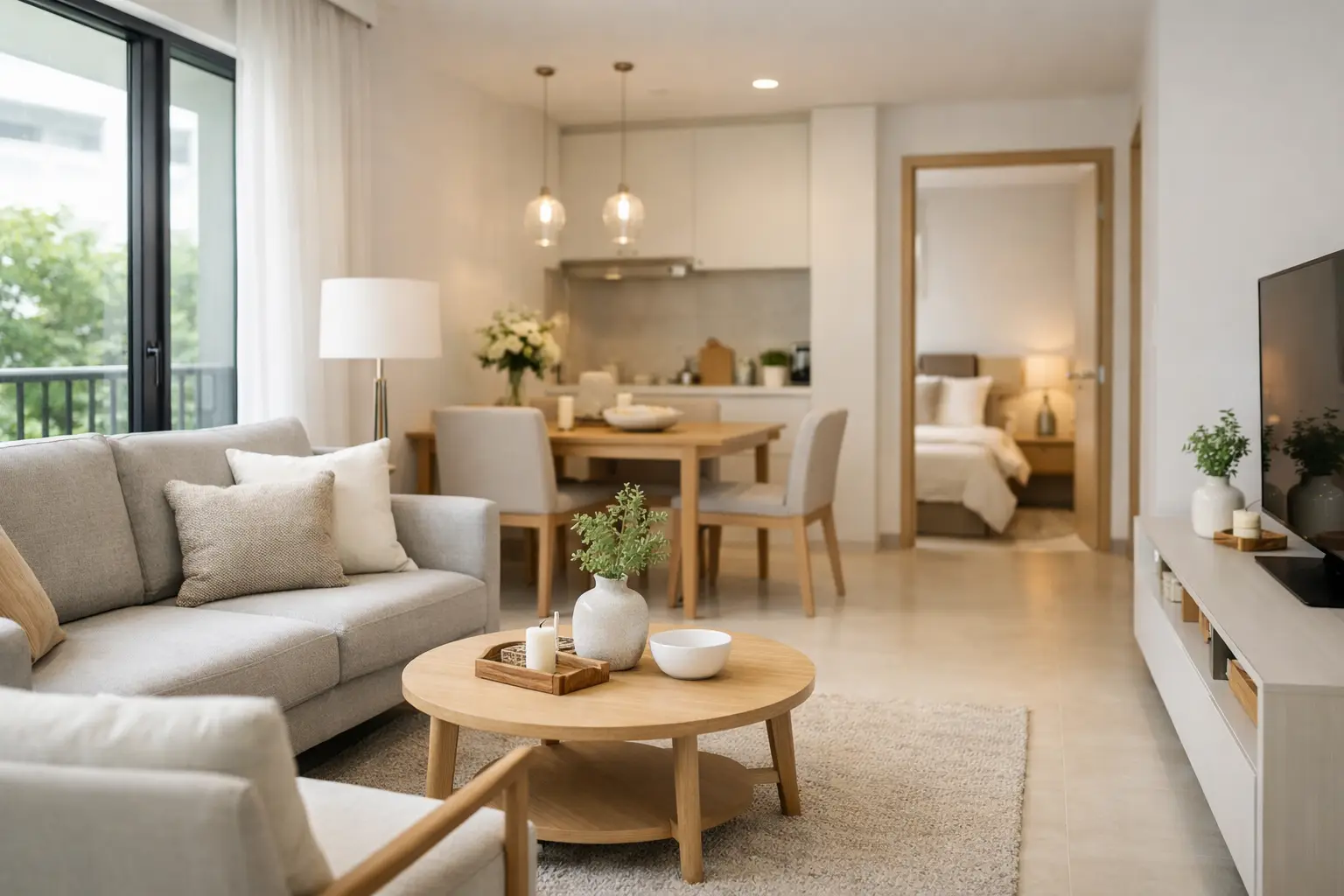
A vacant flat can feel bigger in photos but smaller in person. That mismatch is where many rental listings lose momentum. Prospective tenants arrive, struggle to picture daily life in the space, and leave without urgency. When the goal is leasing faster with staged homes, the real value is not decoration for its own sake. It is helping people understand the property quickly, feel comfortable in it, and make a decision with less hesitation.
For property agents and landlords, that matters because delays are rarely caused by one dramatic flaw. More often, they come from a string of small doubts. Is the living room too narrow? Will a bed fit in the second bedroom? Does the unit feel cold, temporary, or difficult to settle into? Staging answers these questions visually before they become objections.
Why leasing faster with staged homes often comes down to clarity
Leasing decisions tend to move quickly when a unit feels easy to read. A staged property gives shape to each room, shows how the layout works, and makes proportions easier to understand. Tenants do not need to mentally furnish an empty shell. They can see a living area, a dining corner, a work spot, and a restful bedroom. That shift from abstract space to liveable home is often what shortens the decision cycle.
This is especially true in rental markets where tenants are comparing several listings in a short period. If one home feels immediately usable and another feels unfinished, the more complete presentation usually creates a stronger impression. That does not mean every staged unit will lease instantly. Price, location, condition, and timing still matter. But presentation affects whether a tenant stays engaged long enough to seriously consider those factors.
A well-staged home also changes the tone of a viewing. Instead of spending the appointment explaining what could go where, the agent can focus on fit, lifestyle, and practical questions. The conversation becomes more confident because the property is already doing part of the work.
Online performance starts before the viewing
Most rental decisions begin with a shortlist, and that shortlist is usually built from photos. This is where staging has a commercial role that is easy to underestimate. Empty rooms can look flat, echoey, and uncertain in listing images. Even when they are spacious, they may not photograph in a way that feels inviting.
Staged rooms tend to read better on screen because they provide scale and context. A sofa shows the width of the living room. A bed gives the bedroom purpose. Lighting, soft furnishings, and layout help the unit feel balanced rather than bare. For the audience scrolling quickly through multiple listings, that matters. The property has only a few seconds to feel worth enquiring about.
The strongest results usually come from staging that supports the listing rather than overwhelms it. Prospective tenants are not looking for a showroom. They are looking for a home they can imagine living in. Clean lines, neutral styling, and practical furniture choices usually perform better than heavily themed interiors because they leave room for the viewer’s own preferences.
What staged homes do that empty units cannot
A staged unit reduces friction. That is the simplest way to put it. It helps viewers process the property with less effort, and lower effort often leads to quicker decisions.
An empty bedroom can raise doubts about size, especially in compact homes. Add a properly proportioned bed, side tables, and clear circulation space, and the room feels more resolved. A blank living room can seem awkward if there is an unusual corner or window placement. Stage it with a sensible furniture arrangement and the layout starts to make sense.
There is also an emotional element, even in a practical leasing decision. People respond differently to spaces that feel cared for. A staged home suggests readiness. It tells prospective tenants that the property has been prepared thoughtfully, not simply put on the market and left to explain itself.
That said, staging is not a cure for every listing issue. If a property is overpriced, poorly maintained, or badly marketed, furniture alone will not solve the problem. The point is that staging helps good properties perform closer to their actual potential.
The best staging for rentals is purposeful, not excessive
Rental staging works best when it reflects the likely tenant and the way the unit will be used. A compact city flat may benefit from a dining setup that doubles as a work area. A family-sized home may need clearer bedroom definition and a living room layout that feels practical for everyday use. The aim is not to fill every corner. It is to remove uncertainty.
This is where a service-led approach makes a difference. Staging for rental performance is not the same as styling for editorial impact. The furniture should support movement, proportion, and function. It should also feel neutral enough to appeal to a broad market. Strong personal taste can narrow interest, while a calm and balanced setup tends to widen it.
In Singapore, where many viewings happen under time pressure and tenants often compare several units in one day, a clear, polished presentation can help a listing stay memorable. It gives the property a finished quality without requiring the owner to purchase furniture outright or manage a complicated setup.
Leasing faster with staged homes depends on timing as much as design
One of the practical advantages of furniture rental and home staging is speed. Vacant listings lose time when preparation drags on. If an agent is waiting on multiple vendors, or a landlord is unsure what to furnish, the marketing window can slip. Flexible rental-based staging solves that by making the unit presentable quickly, without creating a long-term commitment.
That speed matters most in a few common situations. A newly vacant property needs to go live without delay. A listing has had weak enquiry and needs a sharper presentation. A relocation or corporate housing unit must feel move-in ready on a tight timeline. In each case, the question is not whether the furniture will stay forever. It is whether the setup can support leasing performance right now.
There is also a cost judgement involved. Some owners hesitate because staging feels like an extra expense. But the better comparison is often between staging cost and the cost of a longer vacancy period, repeated viewings, price reductions, or low-confidence offers. It depends on the property and rental level, of course, but for many listings, a faster and smoother lease-up more than justifies the investment.
What agents and landlords should look for
The most effective staging support is operationally simple. It should reduce coordination, not add to it. That means clear scope, reliable setup, suitable furniture, and a look that fits the market. If the process is too complex, the benefit of staging gets diluted by delay and decision fatigue.
It also helps to think beyond appearance alone. Ask whether the staged layout highlights the unit’s strengths. Does it improve photo quality? Does it help viewers understand room sizes? Does it make the property feel immediately usable? Those are stronger measures than whether the styling looks fashionable.
For landlords, especially those managing vacant units, the appeal is often flexibility. Renting furniture for staging avoids a larger upfront purchase and removes the question of what to do with furnishings after the lease is secured. For agents, the value is in faster readiness and a better viewing experience with less explanation required on site.
Expats Partner approaches staging in that practical way – as a performance tool that helps listings feel clear, liveable, and ready for decision-making.
A better viewing experience usually leads to better conversations
When a home is staged well, viewings tend to become more productive. Prospective tenants ask more specific questions because they are engaging with the property as a place to live, not just a floor plan. They are more likely to discuss how soon they can move, how the rooms would suit their routine, and whether the unit meets their day-to-day needs.
That shift matters. Better questions usually signal stronger interest. And stronger interest often means fewer viewings wasted on people who never got past the uncertainty of an empty space.
Leasing is rarely just about getting attention. It is about helping the right tenant feel confident enough to act. Staging supports that confidence by making the home easier to understand, easier to remember, and easier to say yes to.
If a listing is sitting vacant, the next step may not be louder marketing. It may be a clearer presentation that lets the property speak properly for itself.
Contact us now at: Kevin Chang – 80119753 sales@expatspartner.com.sg Sales Specialist