
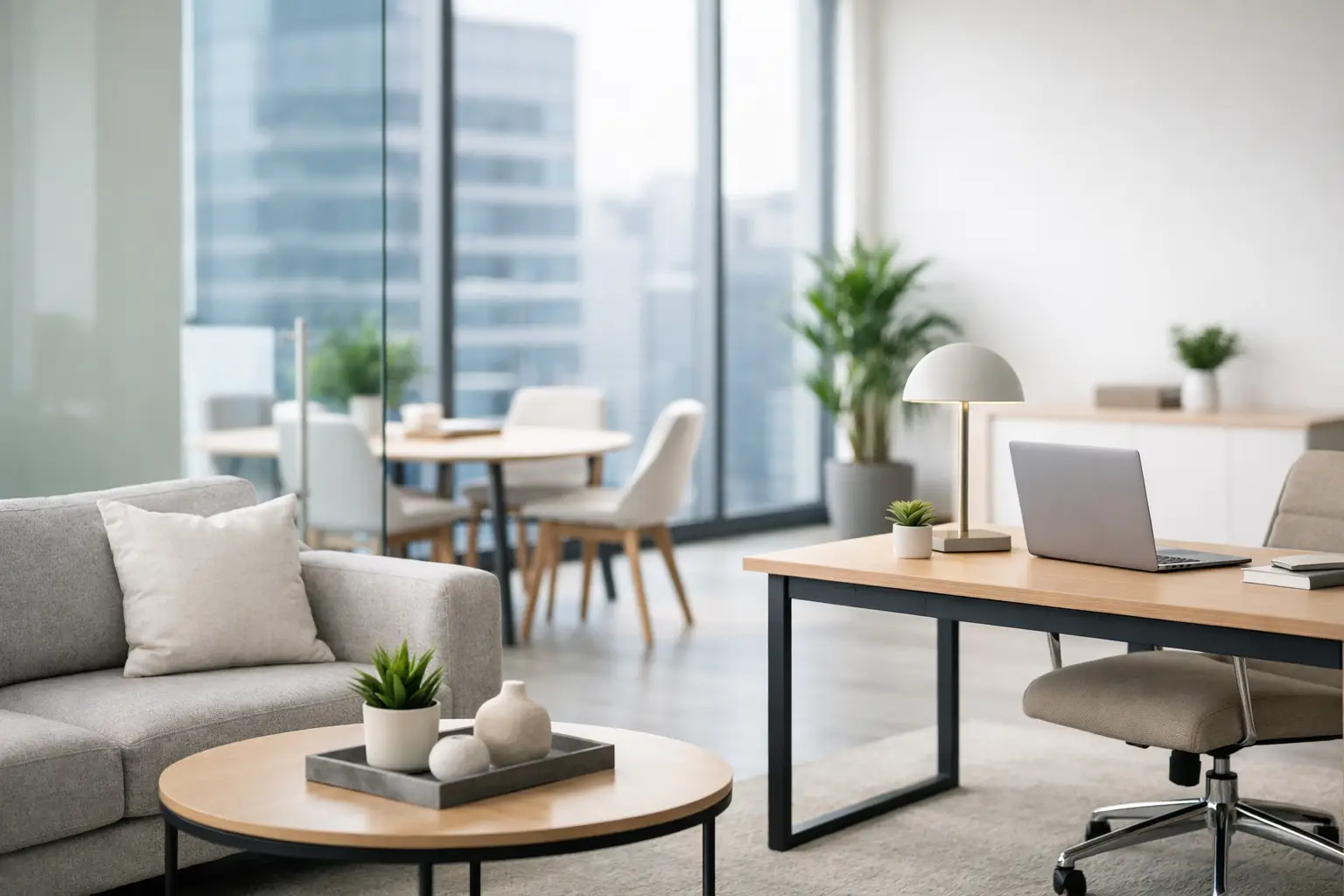
A bare office can feel smaller than it is. A cluttered one can feel harder to take over. When a potential tenant, buyer, or corporate decision-maker walks into a workspace, they start forming a view within seconds. That is where office staging services make a practical difference. They help a space read clearly, function visually, and support the kind of response you want from a listing or viewing.
For agents, landlords, and corporate clients, the point is not decoration for its own sake. It is to remove uncertainty. An empty floor plate may show square footage, but it rarely shows how the space could work. Thoughtful staging adds enough structure for viewers to picture teams, meetings, reception flow, and day-to-day use without making the office feel overly specific or expensive.
What office staging services actually do
Office staging services prepare a workspace so it presents better both online and in person. That can include temporary furniture, layout planning, styling, and practical setup that gives the office a more complete and market-ready look. In many cases, the real value lies in helping the property feel easier to understand.
A prospective occupier is not just looking at walls, windows, and flooring. They are asking themselves whether clients would feel comfortable visiting, whether staff could work there productively, and whether the office reflects the right level of professionalism. Staging helps answer those questions without saying a word.
This matters just as much for photographs as it does for physical viewings. Listing images of empty offices often feel cold and flat. Once a reception desk, meeting table, seating area, and workstations are in place, the same space tends to appear more proportionate and more usable. That can improve the quality of enquiries before anyone has even booked a viewing.
Why presentation matters in office leasing and sales
Commercial decisions are rational, but they are not purely technical. People still respond to atmosphere, clarity, and ease. A well-presented office suggests that the property is cared for and ready for serious consideration.
For property agents, this can make viewings more productive. Instead of spending the first ten minutes explaining how a vacant unit might fit six desks or where a breakout area could go, the space starts doing part of the work itself. Viewers can grasp the intent quickly, which often leads to better conversations about suitability, timing, and next steps.
For landlords, staging can be especially useful when a unit has been vacant for a while or when the layout is good but not immediately obvious. Some offices have awkward corners, long narrow zones, or open areas that need visual definition. Furniture placement can solve that by creating a sense of order and proportion.
For corporate and relocation clients, staged offices or temporary workspaces can support a different need. The goal may be less about marketing and more about getting a team into a functional, presentable environment quickly. In those situations, staging overlaps with short-term furnishing and practical occupancy planning.
When office staging services make the most sense
Not every office needs full staging. It depends on the condition of the space, the target audience, and how the property will be marketed.
An entirely empty office is often the clearest case. Empty spaces can work for some buyers or tenants who are used to reading plans, but many viewers struggle to judge scale. A modest furniture scheme can make a large difference here.
Dated but serviceable offices can also benefit. If the finishes are not brand new, staging can shift attention towards usability and away from minor visual weaknesses. It will not hide serious issues, nor should it try to, but it can help the space feel more balanced and intentional.
There are also cases where partial staging is enough. A reception area, one meeting room, and a small workstation setup may be all that is needed to frame the rest of the office. This can be a sensible option when budgets are tight or when the unit already has some built-in features worth highlighting.
What good staging looks like in practice
The best office staging services are usually restrained. The aim is not to impose a strong design personality. It is to create a clean, neutral, credible setting that suits the likely occupier.
That often means practical desks, simple seating, a defined meeting zone, and light styling that softens the environment without distracting from the property itself. A reception area may need to feel welcoming but professional. A boardroom may need to suggest scale and usefulness. An open-plan office may need just enough furniture to demonstrate capacity without making circulation feel tight.
There is a trade-off here. If the styling is too sparse, the office still feels unresolved. If it is too polished or too branded, viewers may focus on taste rather than layout. Good staging sits in the middle. It helps the office feel ready, but leaves room for the next occupier to imagine their own operation in the space.
Lighting, proportion, and visual flow matter as much as furniture. A room with oversized pieces can feel cramped. One with furniture that is too small can feel oddly vacant. The right setup makes dimensions easier to read, especially in photographs.
Office staging services and furniture rental
In practical terms, office staging services often rely on furniture rental. This is what makes the process efficient. Rather than purchasing items outright, clients can bring in the right pieces for the marketing or occupancy period, then remove them when they are no longer needed.
For agents and landlords, that keeps the commitment flexible. You are not investing in permanent fit-out just to support a campaign. You are using furniture as a presentation tool with a defined purpose.
For businesses setting up temporary offices, project spaces, or transitional workplaces, rental also reduces operational friction. There is no need to source, transport, assemble, and later dispose of everything independently. That matters when timelines are short and the priority is to get the space usable quickly.
This is where service quality counts. A staged office only works if setup is timely, the items are in good condition, and the installation looks considered rather than improvised. Reliability is part of the presentation.
How to judge whether staging is worth the spend
The simplest question is this: what is the cost of the office sitting idle, photographing poorly, or underperforming in viewings?
If a vacant workspace is slowing down leasing conversations or attracting weak interest, staging may be a relatively small intervention compared with the wider cost of delay. That does not mean every property needs the same level of investment. A premium office in a competitive market may justify a fuller setup, while a smaller unit may only need a focused furnishing plan.
It also depends on how the office will be used in the short term. If the goal is a quick campaign, the staging should be sharp and efficient. If the space will support interim staff use, then comfort and function matter more. The right approach balances visual impact with practical purpose.
In Singapore, where many listings compete for attention online before a viewing is ever arranged, that first visual impression carries real weight. Presentation affects not just whether someone enquires, but what they expect before they arrive.
Choosing the right partner for office staging services
A good staging partner should understand more than furniture. They should understand the job the space needs to do. For some offices, that means helping a listing feel more premium. For others, it means making a vacant unit easier to read. For corporate clients, it may mean setting up a clean and dependable working environment with minimal coordination.
Look for clear communication, realistic timelines, and a practical eye for layout. The process should feel straightforward. You should know what is being installed, why it is being used, and how long it will stay in place.
It also helps to work with a team that is comfortable moving between staging and short-term furnishing. The needs are related, and that flexibility can save time when a property shifts from marketing mode to active use. Expats Partner approaches this with a service-led mindset, focused on presentation that supports outcomes rather than decoration that simply fills space.
Office presentation has a direct effect on how quickly people understand a property and how confidently they respond to it. When the space feels clear, functional, and ready, decisions tend to move more easily.
Contact us now at: Kevin Chang – 80119753 sales@expatspartner.com.sg Sales Specialist