
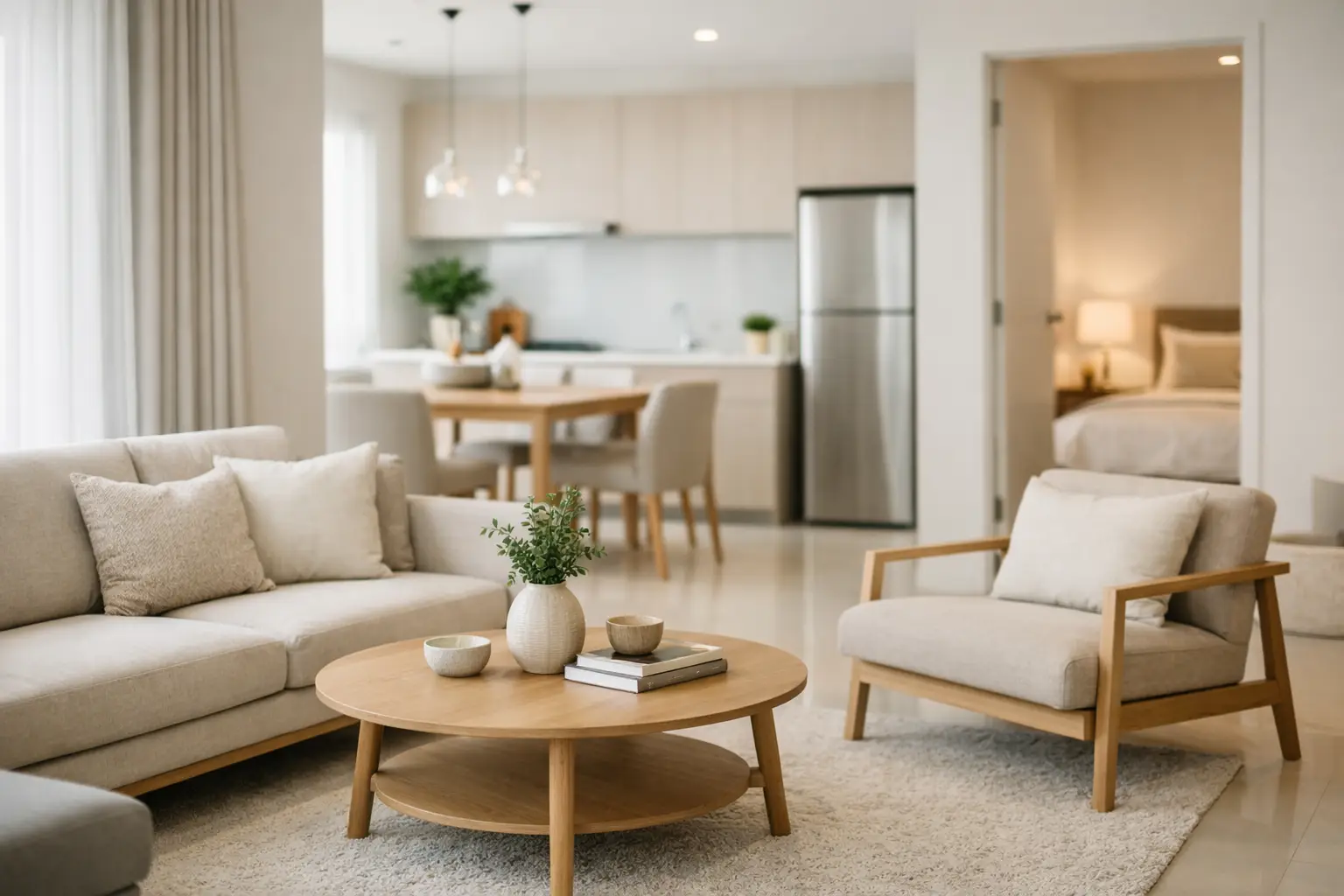
A vacant unit can look bigger in person yet weaker in photos. That is the problem model unit staging furniture is meant to solve. When a space has no visual cues for living, buyers and tenants often struggle to judge scale, flow and purpose, which can quietly reduce interest before a serious conversation even begins.
For property agents, developers and homeowners, this is rarely a design issue alone. It is a performance issue. A listing needs to attract attention online, hold interest during a viewing and help people picture themselves moving forward. Furniture in a model unit is not there to fill space for the sake of it. It is there to shape perception.
What model unit staging furniture actually does
Model unit staging furniture gives an empty property a clear story. It shows where the sofa sits, how a dining area functions and whether a bedroom feels restful rather than leftover. That sounds simple, but in practice it changes how people move through a space and what they remember afterwards.
Most viewers do not walk into a vacant unit and mentally furnish it with accuracy. They guess. Some underestimate room sizes. Others focus on minor imperfections because there is nothing else guiding the eye. A staged model unit reduces that uncertainty. It helps the viewer understand proportion, lifestyle and liveability within seconds.
This matters even more in online marketing. Listing photos are often the first viewing. A well-staged unit reads as complete, cared for and ready. An empty one can feel cold, unfinished or harder to compare favourably against similar listings.
Why staging furniture influences buyer behaviour
People respond to homes emotionally before they justify decisions logically. Even investment-minded buyers are still influenced by first impressions, comfort and ease. If a property feels effortless to understand, it tends to feel easier to act on.
That is why model unit staging furniture works best when it is restrained. The goal is not to impress with dramatic styling. The goal is to remove friction. A neutral sofa, correctly scaled coffee table and properly placed rug can make a room feel settled. Once a space feels settled, viewers spend less mental energy decoding it and more energy imagining ownership or tenancy.
There is also a practical layer. Furniture helps define use. In compact homes, this is especially important. An open area might be mistaken for being awkward or too small until it is staged as a workable living and dining zone. A spare room may seem uncertain until it is presented as a guest room, study or child’s bedroom, depending on the likely audience.
Choosing the right model unit staging furniture
The best staging choices are usually the least distracting ones. Furniture should fit the unit, the target market and the expected price point. Oversized pieces make a flat feel cramped. Pieces that are too small can make the home feel underfurnished and oddly scaled.
Colour also needs judgement. Neutral palettes tend to perform well because they broaden appeal and keep attention on the property itself. That does not mean every room should feel beige and forgettable. Texture, contrast and a few controlled accents can add warmth without making the unit feel personalised.
Practicality matters just as much as appearance. In a model unit, every item should have a role. A bed frames the bedroom. A sideboard gives balance to a dining wall. Occasional chairs can help a larger living area feel complete. Decorative items should support the setting, not crowd it.
Scale matters more than style trends
A common mistake is selecting furniture based on what looks fashionable in isolation. Staging is different from furnishing a personal home. What matters most is whether the proportions help the room read clearly in photos and in person.
A low-profile sofa may work well in a unit where natural light and view are selling points. A round dining table may improve circulation in a tighter layout. In some cases, fewer pieces create a stronger impression than a fully packed room. It depends on the architecture and on what the listing needs to communicate.
The look should match the market
Luxury units, family homes and investor-focused flats should not all be staged in the same way. The furniture package needs to align with the buyer or tenant profile. A premium property can carry more layered styling and slightly richer finishes. A practical rental listing often benefits from a cleaner, lighter and more universal approach.
The aim is credibility. When the furniture feels right for the property, the unit appears more coherent and better positioned.
Model unit staging furniture versus buying furniture outright
For sales and rental campaigns, buying furniture outright is often unnecessary. The property does not need a permanent furnishing plan. It needs a presentation plan with a clear time frame and reliable execution.
This is where rental-based staging makes commercial sense. It reduces upfront spend, avoids storage questions and removes the burden of sourcing separate pieces from multiple suppliers. For agents handling several listings, or owners preparing a vacant home quickly, that operational ease is not a side benefit. It is often the main reason staging gets done at all.
There are trade-offs, of course. Purchased furniture may suit owners who want to keep using the pieces after the sale period or who are furnishing a unit for actual occupancy straight after marketing. But for many vacant properties, staging furniture is most valuable as a temporary tool that supports a transaction.
When staging makes the biggest difference
Not every property needs the same level of intervention. Some occupied homes only need editing, styling and layout adjustment. Others, especially vacant units, benefit immediately from a full staging approach.
Model unit staging furniture is especially useful when the space is newly completed, between tenants or struggling to generate strong enquiry from photos alone. It can also help when a unit has an unusual layout, compact rooms or premium pricing that needs stronger visual support. In these cases, presentation is doing real commercial work.
Timing matters too. If staging happens early, the listing photography, online launch and physical viewings all benefit together. If it happens after weeks of weak response, it can still help, but you may already have lost momentum.
What agents and owners should look for in a staging setup
Speed, consistency and clarity matter as much as the furniture itself. A good staging setup should be easy to coordinate and easy to remove once the property is sold or let. That means clear package scope, dependable installation and a style direction that suits the unit without overcomplicating decisions.
It also helps to work backwards from the listing goal. Is the unit aimed at a family buyer, a single professional tenant or an investor comparing yield and ease of rental? The answer should shape the rooms that get the most emphasis. In one property, the main bedroom may carry the emotional weight. In another, the living-dining area may be what sells the layout.
A staged unit should feel finished, but not overly designed. Viewers should notice the space first and the furniture second.
The real value is in decision-making
Staging is often talked about in visual terms, but its real value sits in decision-making. Good model unit staging furniture reduces hesitation. It helps viewers understand what they are seeing, imagine how they would live there and feel more confident discussing next steps.
That does not guarantee a sale or tenancy on its own. Pricing, location, condition and market timing still matter. But presentation can either support those strengths or weaken them. In a competitive market, that difference is not minor.
For agents, staging can make a listing easier to market and easier to show. For homeowners and landlords, it can turn an empty property into one that feels ready. And for corporate or relocation cases, it can bridge the gap between bare possession and a space that feels immediately usable.
The most effective model units do not feel staged in an obvious way. They feel understandable, balanced and ready for someone to say yes.
If you are preparing a vacant property, it helps to think less about furniture as décor and more about furniture as context. The right pieces can clarify a room, strengthen first impressions and give your listing a better chance of landing well from the very first photo.
Contact us now at: Kevin Chang – 80119753 sales@expatspartner.com.sg Sales Specialist