
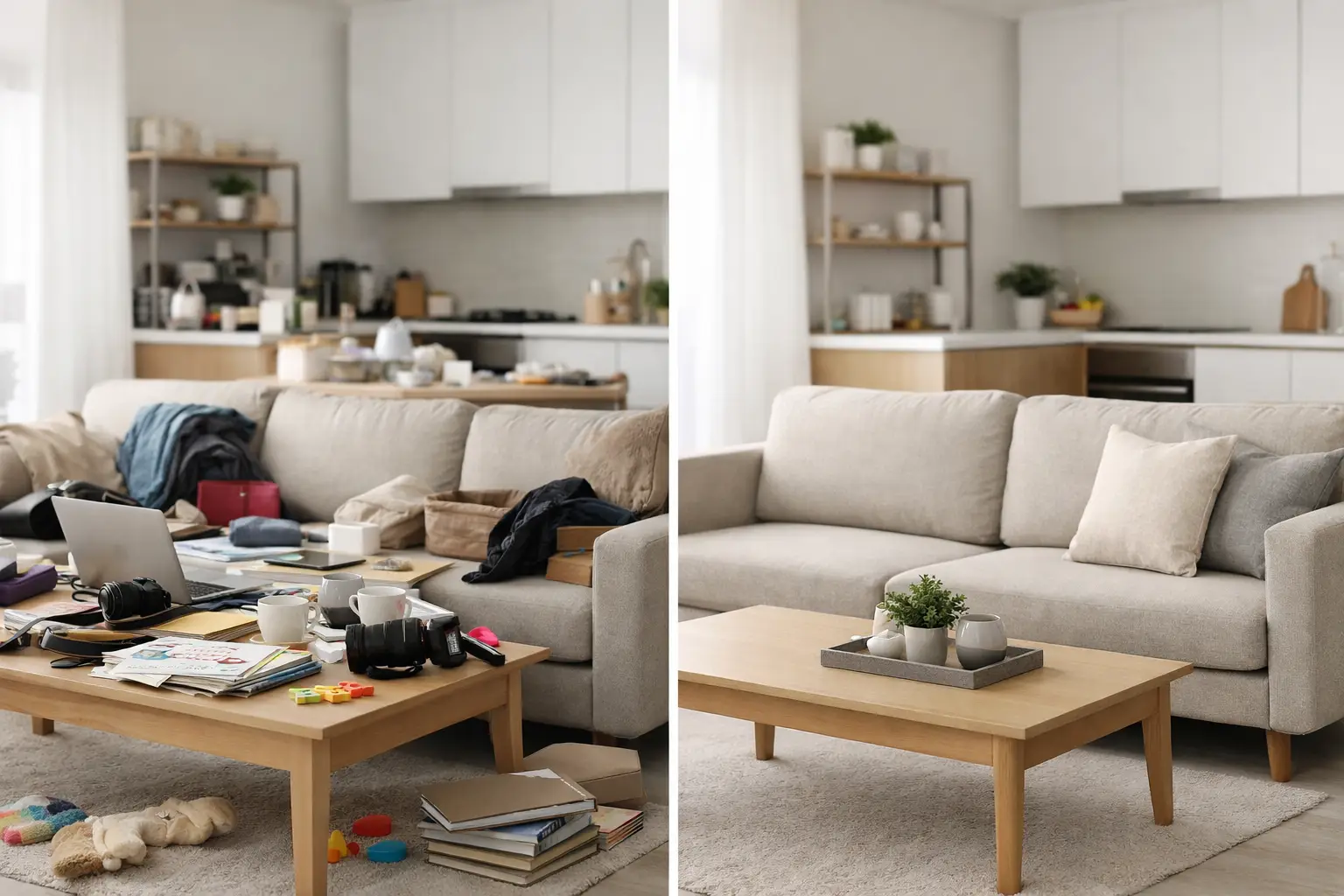
A camera is less forgiving than a viewing. What feels normal when you walk into a home – shoes by the door, chargers on the counter, children’s books on the sofa – can look distracting and chaotic in photographs. That is why decluttering before property photography matters so much. It is not about stripping a home of personality. It is about helping buyers and tenants see the space clearly, quickly and with fewer visual objections.
For agents and owners, the practical value is straightforward. Better photographs attract stronger attention online, and online attention shapes who books a viewing in the first place. In a busy market, people often make an early judgement from a small gallery of listing images. If a room looks crowded, dark or difficult to use, interest drops before the property has had a fair chance.
Why decluttering before property photography changes results
Property photography does not simply record a room. It interprets it. Wide-angle lenses, lighting adjustments and composition can improve presentation, but they cannot fully compensate for clutter. Everyday items pull the eye away from the architecture, interrupt clean lines and make rooms appear smaller than they are.
This matters especially in smaller flats, rental units and investment properties, where every square foot needs to read clearly. A side table covered in cables, papers and half-used candles may seem harmless in person. In a photograph, it becomes the focal point. The buyer or tenant is no longer thinking about layout or liveability. They are thinking about mess.
Decluttering also influences perceived value. Clean, edited spaces suggest care, readiness and easier handover. When a listing looks orderly, viewers tend to assume the property has been better maintained. That may not always be true, but presentation affects judgement long before anyone asks technical questions.
What buyers and tenants actually notice in photos
Most viewers are not consciously assessing styling details. They are making fast decisions based on ease. Can they understand the room at a glance? Does it feel bright? Does it seem spacious enough for their needs? Could they picture themselves living there?
Clutter gets in the way of all three. It reduces visual breathing room, makes storage feel inadequate and creates uncertainty about scale. If a bedroom is packed with extra chairs, loose items and bulky personal storage, the viewer starts to wonder whether the room is too small. The issue may not be the room itself. It may simply be poor editing before the shoot.
There is a balance, of course. An over-cleared home can feel cold or vacant, particularly in higher-value homes or family properties where warmth helps. The goal is not emptiness. The goal is clarity. A property should feel lived-in enough to be relatable, but tidy enough to feel easy to move into.
A practical room-by-room approach
The most effective decluttering before property photography is selective rather than aggressive. Start by removing anything that interrupts the room’s main purpose. In the living room, that often means excess remotes, toys, piles of magazines, drying laundry, pet accessories and visible charging cables. Keep a few considered pieces if they support the room, such as a cushion, a throw or one simple decorative object.
In the kitchen, worktops matter most. Buyers and tenants read clear counters as usable counters. Small appliances, dish racks, soap bottles, food packets and fridge magnets all add visual noise. Leaving one or two attractive, neutral items is usually enough. The kitchen should look easy to maintain, not fully stocked for daily life.
Bedrooms need even more restraint. Clothes on hooks, bags on chairs, multiple pillows, children’s items and open shelving full of personal effects make the room feel busy. Clear the floor as much as possible, simplify bedside tables and reduce what is visible on wardrobes or dressers. If under-bed storage boxes are peeking out, remove them. They suggest a lack of storage, even if the rest of the room is generous.
Bathrooms benefit from the same treatment. Toiletries, cleaning products, hanging towels and laundry baskets all make the room feel more cramped. Keep only the essentials needed to make the space feel fresh and functional.
The items most worth removing before a shoot
Some clutter is more damaging than others. Personal items are high on that list because they make it harder for viewers to imagine the property as their own. Family photographs, children’s name labels, very specific hobby equipment and visible paperwork should be packed away first.
Bulky but unnecessary furniture is another common issue. A room may be properly furnished, yet still photograph poorly because there is simply too much in it. Removing one armchair, a side cabinet or an extra lamp can improve the sense of space immediately. This is where staging decisions become commercial rather than decorative. You are not furnishing for daily convenience. You are furnishing for buyer perception.
Then there are the objects that quietly date a room – worn bath mats, faded bins, tired dish cloths, mismatched storage tubs and frayed extension leads. These are easy to overlook because they are functional. In photos, they make the property feel less ready.
Decluttering is not the same as staging
This is where many listings stop too early. Decluttering removes distractions. Staging adds structure, balance and purpose. A cleared room can still feel awkward if the furniture layout is poor, the scale is off or the space looks incomplete.
For example, an empty corner may be clutter-free but still visually dead. A bedroom with only a mattress may be tidy but difficult to interpret. A living room with sparse, mismatched furniture may feel temporary rather than desirable. Decluttering creates the foundation, but staging helps buyers and tenants understand how the property works.
For vacant properties, show units, rental turnovers and homes with dated furniture, this difference becomes even more important. In those cases, a styling and furniture rental approach often does more than a tidy-up alone, because it gives each room a clear role and a more polished visual hierarchy.
When speed matters, focus on the visual hotspots
Not every property has the luxury of a full reset before photography. Some homes are occupied, some are tenanted and some are being prepared on a tight agency schedule. If time is limited, prioritise the parts of the home that carry the listing.
The living room, main bedroom, kitchen and balcony usually do the most work in online galleries. Clear surfaces, simplify furniture, hide personal items and make sure sightlines are clean. Entrance areas also matter more than many people expect, because the first image sets the tone for the rest of the listing.
Storage is often the hidden challenge here. If owners are still living in the property, decluttering may require temporary off-site storage rather than simply moving items between rooms. Shifting clutter from one area to another can create new problems when the photographer changes angles.
Common mistakes that weaken property photos
One of the biggest mistakes is leaving too much because it feels harmless. A few extra items in every room quickly become dozens of distractions across a gallery. Another is cleaning without editing. A spotless home can still photograph badly if every surface is full.
There is also a tendency to overcorrect. Removing everything can make a space feel flat, especially in premium rentals or sale listings where warmth influences response. The better approach is to edit down to essentials, then add back only what supports the room.
Lighting and maintenance issues should not be ignored either. Decluttering helps, but it will not hide a blown bulb, stained grout or peeling edge trim. Photography magnifies those details too. Presentation works best when tidiness, styling and basic upkeep are handled together.
A stronger listing starts before the camera arrives
Decluttering before property photography is one of the most cost-effective ways to improve listing performance because it changes how quickly people understand the space. That affects click-through interest, viewing quality and the tone of conversations that follow. For agents, it can mean fewer wasted enquiries. For owners and landlords, it can mean a property that feels more market-ready from the start.
In practice, the best results usually come from treating photography prep as part of the sales or leasing strategy, not as a last-minute tidy-up. When the property is edited with intention, every image works harder. And when needed, staging can take that further by turning clean space into convincing space.
If you need support preparing a home for photography, viewings or launch, Expats Partner can help create a clearer, more appealing presentation with practical staging and furniture rental solutions.
Contact us now at: Kevin Chang – 80119753 sales@expatspartner.com.sg Sales Specialist