
An empty flat can feel smaller than it really is. A fully furnished one can feel cramped if the pieces are too bulky, too personal or simply in the wrong place. That is why choosing the best furniture for house viewings is less about filling a room and more about shaping how people read the space within a few seconds of walking in.
For property agents, landlords and homeowners, that first impression does a lot of heavy lifting. Viewers are not just assessing square footage or finishes. They are deciding whether the home feels easy to live in, worth the asking price and ready for the next step. The right furniture helps them get there faster.
What makes the best furniture for house viewings?
The best furniture for house viewings does three jobs at once. It defines each room clearly, improves flow, and softens the empty feel that can make a property seem cold or impractical. Good staging furniture should also look neutral enough to suit a broad audience while still giving the home some warmth.
That balance matters. If the styling is too sparse, viewers struggle to understand how the room works. If it is too decorative, attention shifts away from the property itself. The aim is not to impress people with furniture. It is to help them imagine their own life in the space.
This is why practical, medium-scale furniture usually performs better than dramatic statement pieces. A simple sofa, a proportionate dining set and well-sized bedroom furniture do more for a viewing than oversized luxury items that dominate the room.
Start with the rooms that influence decisions most
Not every room needs the same level of furnishing. In most properties, the living area, dining area and main bedroom carry the strongest emotional and visual impact. If time or budget is limited, these are usually the spaces worth prioritising first.
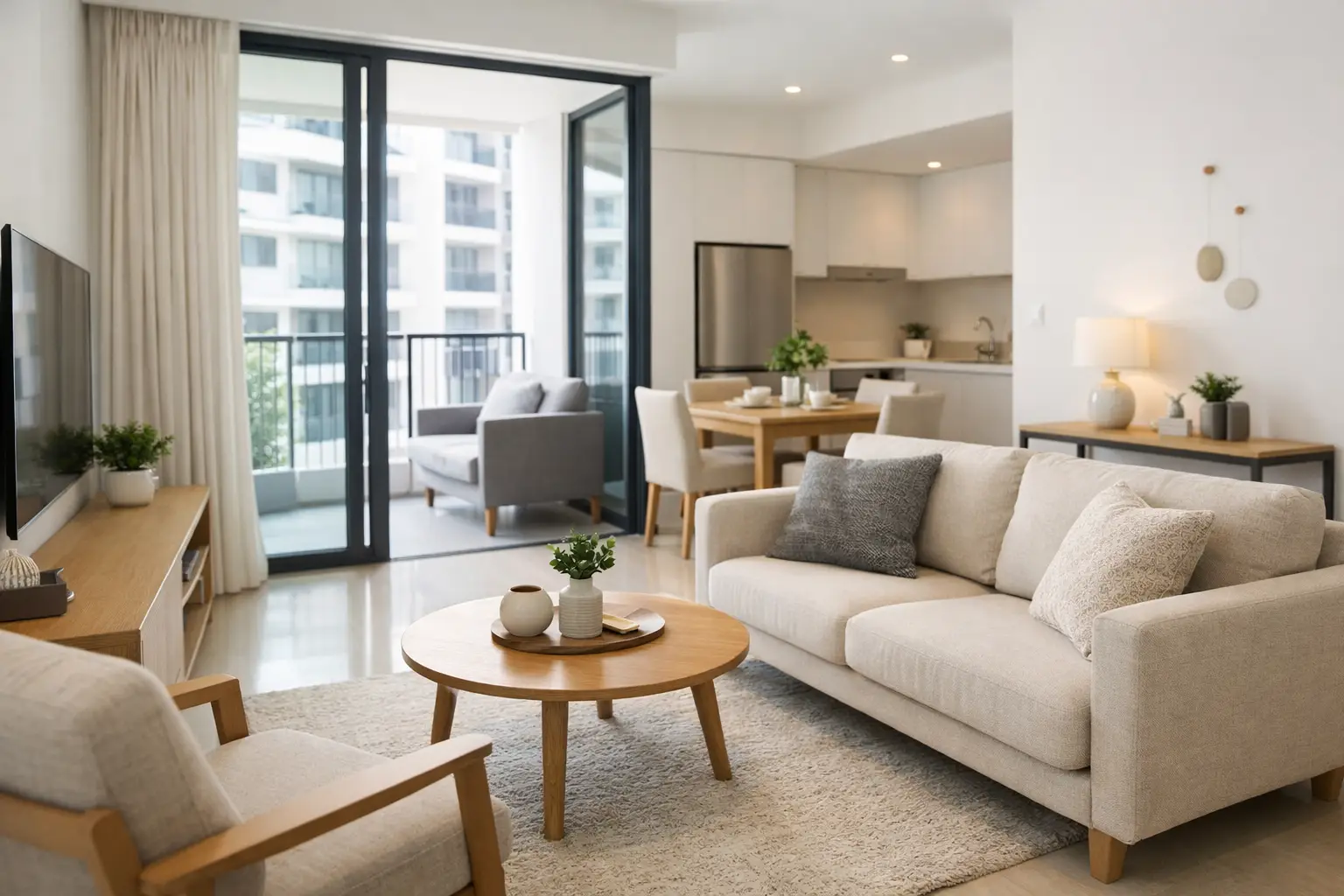
The living room often sets the tone for the entire viewing. A compact sofa, a coffee table and a rug can establish scale quickly and make the room feel anchored. In open-plan layouts, this also helps define the lounge zone without needing physical dividers.
The dining area supports the lifestyle story of the home. Even a small round table with four chairs can show that there is space to host, eat comfortably or gather as a household. Without it, buyers and tenants may assume the layout is tighter than it really is.
The main bedroom should feel restful and functional. A bed frame, side tables and soft furnishings usually do enough. Too many extra pieces, especially in smaller bedrooms, can have the opposite effect and make the room feel constrained.
Choose furniture that shows scale honestly
One of the most common mistakes in property presentation is using furniture that is the wrong size for the room. Pieces that are too small can make a home feel oddly empty and underwhelming. Pieces that are too large shrink the room visually and disrupt movement.
The best approach is to choose furniture that reflects how the room would be used in real life, while still allowing generous walking space around it. A two- or three-seater sofa often works better than a sectional for viewings. A queen bed is usually a safer choice than a king in tighter rooms. Slim dining chairs and lighter-profile tables help maintain openness.
There is a trade-off here. Minimal furniture can make a room look bigger in photographs, but if it feels unrealistic during an in-person viewing, viewers may question functionality. The goal is believable liveability, not just emptiness with polish.
Neutral styling usually wins
House viewings are not the place for strong personal taste. Furniture should support broad appeal, especially in sale and rental listings where the audience may vary widely. Neutral tones such as beige, taupe, light grey, off-white and muted wood finishes tend to work well because they brighten spaces and sit comfortably with most interior palettes.
That does not mean everything should be bland. Texture matters. Upholstered seating, clean-lined tables, soft rugs and a few controlled accents can make a property feel finished without becoming distracting. The atmosphere should feel calm, tidy and move-in ready.
In Singapore, where many buyers and tenants view multiple units in a short period, visual clarity is especially useful. Clean, neutral furniture helps a property feel easier to absorb and easier to remember.
The best furniture pieces for viewings
Some furniture categories consistently do more work than others during viewings. A sofa is one of them, because it gives immediate context to the main living area. A coffee table helps centre the room and makes the setup feel intentional. A rug can add warmth and define boundaries, particularly in open-plan spaces.
Dining furniture matters because it demonstrates practical use of floor area. Even in compact flats, a small dining arrangement often improves perceived function. In bedrooms, a properly dressed bed frame is usually more effective than leaving the room empty or adding scattered loose items.
Storage furniture should be used carefully. A slim console table, bedside tables or a simple TV console can support the layout, but heavy cabinets and bulky shelving are rarely necessary for house viewings unless the room genuinely needs them to make sense.
Accent chairs can be useful, though they depend on the layout. In some living rooms they complete the composition neatly. In others they only clutter circulation space. This is where staging should respond to the actual property, not a fixed furniture package.
Why rented furniture often makes more sense
For short marketing windows, buying furniture outright is not always the practical choice. House viewings usually need speed, flexibility and a result that works now, not a long-term furnishing plan. Furniture rental suits that need because it allows a property to be staged quickly, professionally and without the commitment of ownership.
This matters for landlords between tenancies, agents preparing vacant listings and owners selling an unfurnished home. It also reduces the usual coordination burden. Instead of sourcing, transporting, assembling and eventually removing multiple items, the setup can be handled as part of one staging process.
That convenience is not just operational. It affects the listing timeline. A property that is furnished and camera-ready sooner can go to market in better condition and start attracting stronger enquiry earlier.
Good furniture supports photography as well as viewings
Most viewings begin online. That means the best furniture for house viewings also needs to perform well in photos. Rooms should look balanced from the camera angle, but still feel natural in person. This is where staging experience matters more than simply placing attractive items in a room.
Furniture helps the lens read depth, proportion and purpose. A living room with a sofa, rug and table is easier to understand in a listing gallery than an empty rectangle with blank walls. Likewise, a bedroom with a bed and side tables feels finished, which raises perceived readiness.
There is a difference between decorating a home and preparing it for market. For sales and rentals, furniture should support the viewer journey from online browsing to physical viewing to decision-making.
It depends on the property type
There is no single furniture formula that fits every listing. A compact city flat may benefit from lighter, space-conscious pieces that make movement feel effortless. A larger family home may need fuller room setups so the scale does not feel lost. A premium property may require more refined finishes, but still within a restrained and neutral scheme.
The audience matters too. Owner-occupiers often respond to warmth and lifestyle cues. Rental viewers may focus more on practicality and move-in readiness. Corporate or relocation housing may need furnishing that feels efficient, clean and immediately usable.
This is where a practical staging plan pays off. Instead of asking how much furniture can be added, it is better to ask what each room needs in order to read clearly and confidently during a viewing.
Presentation should feel effortless, even when it is carefully planned
The strongest staged homes rarely look staged at first glance. They feel settled, proportionate and easy to understand. That is exactly what furniture should do during house viewings. It should remove uncertainty, not add visual noise.
For agents and owners, the commercial value is straightforward. Better presentation can improve click-through from listings, increase engagement during viewings and help viewers connect with the property more quickly. It may not change the floor plan, but it can change how that floor plan is experienced.
When furniture is selected with purpose, a room feels larger where it should, warmer where it needs to, and more useful overall. That quiet clarity is often what moves a viewer from interest to action.
At Expats Partner, we see this every day in staged homes prepared for sale, rental and relocation use. The furniture that works best is not necessarily the most expensive or the most eye-catching. It is the furniture that helps the property make sense immediately.
If you are preparing a listing, think less about filling space and more about guiding perception. The right pieces can help a home feel ready before a single word is spoken during the viewing.
Contact us now at: Kevin Chang – 80119753 sales@expatspartner.com.sg Sales Specialist