
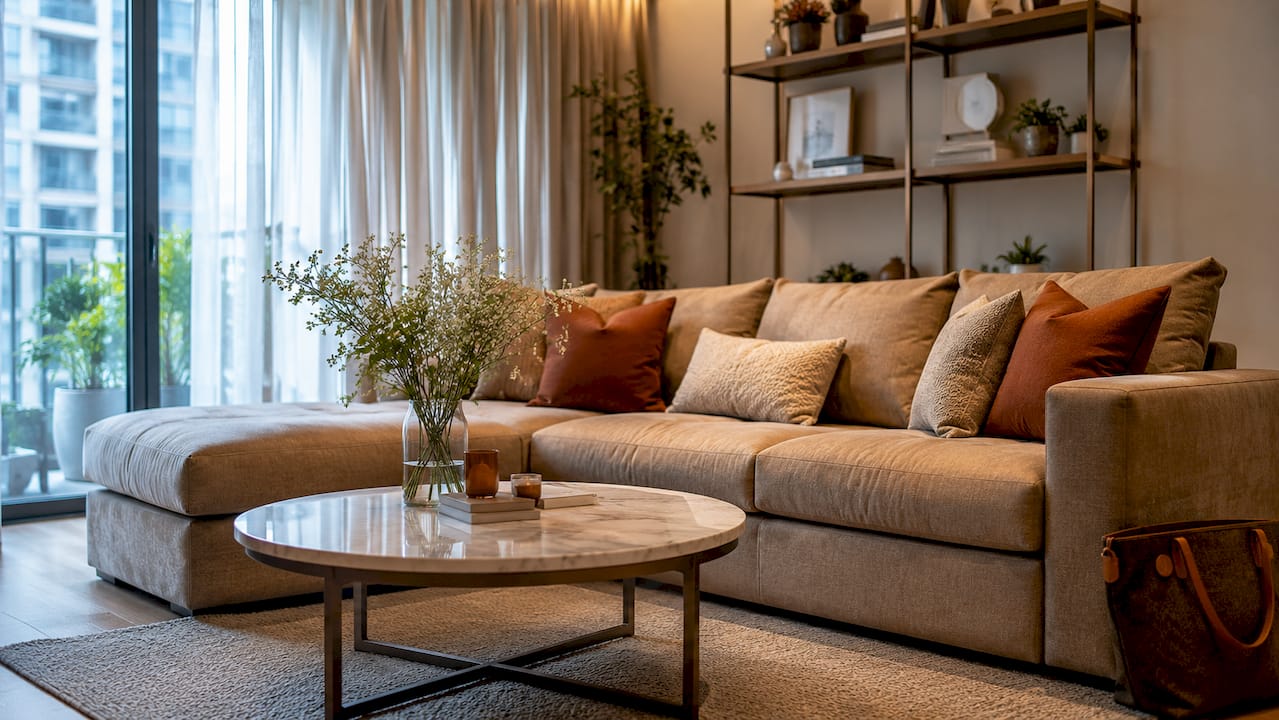
Real furniture staging is the practice of furnishing a property with physical pieces to help buyers understand scale, flow, and lifestyle potential during an in-person viewing. 83% of buyers’ agents say staging helps buyers visualise the home better, and staged homes sell 73% faster. That figure from the National Association of REALTORS tells you something important: buyers do not simply look at a space. They feel it. Real furniture staging is the most direct way to give them that feeling, and why real furniture staging helps buyers feel the space better is a question every Singapore seller and investor should understand before listing.
How does real furniture staging improve buyers’ ability to visualise space?
Buyers rarely ask “Do I like this space?” when they walk through a property. They ask “What would I do here?” Real staging answers that question before it is spoken. A sofa placed at the right angle tells a buyer exactly how the living area functions. A dining table with four chairs confirms whether the space fits their family. Without furniture, buyers must do all of that mental work themselves, and most cannot.
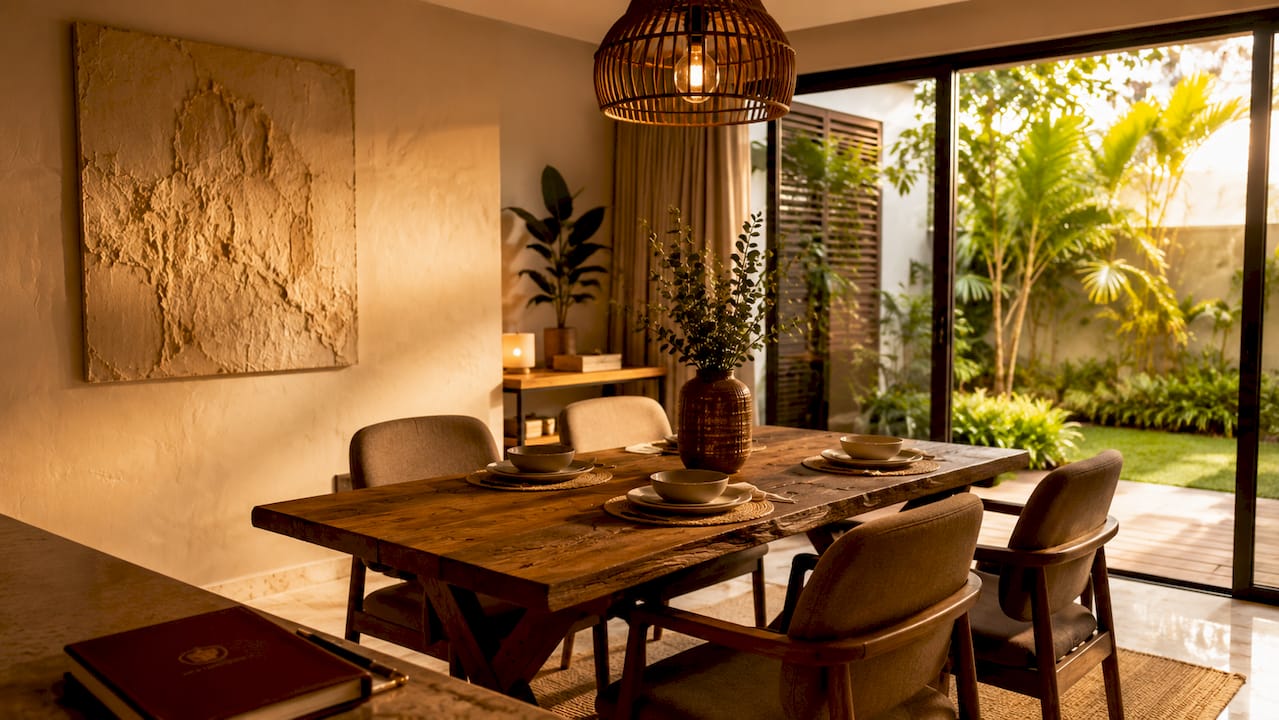
This is what staging professionals call the “visualisation gap.” An empty room offers no spatial cues. Buyers struggle to judge whether their own furniture will fit, whether the bedroom is large enough, or whether the layout supports how they actually live. Real furniture closes that gap by providing immediate, physical reference points.
Effective staging also guides movement through the home. The technique known as “space therapy” focuses on sensory cues, including lighting, circulation paths, and focal points, rather than simply filling a room with pieces. A clear walkway of at least 12–18 inches clearance between furniture and walls signals openness. A well-lit reading corner suggests comfort. These cues work on buyers at an emotional level, building confidence that the home fits their life.
- Scale clarity: Real furniture shows buyers exactly how much floor space remains after furnishing.
- Flow and navigation: Staged walkways guide buyers naturally from room to room, making the home feel logical and easy to live in.
- Emotional comfort: A warm, furnished space feels safe and familiar, reducing buyer anxiety during viewings.
- Lifestyle storytelling: Curated furniture and decor communicate a way of living, not just a set of rooms.
Pro Tip: Place a statement piece, such as a well-chosen armchair or a piece of artwork, in each room to give buyers a visual anchor. This prevents the eye from wandering and keeps attention on the room’s best feature.
What evidence shows real staging increases property value and reduces time on market?
The financial case for real furniture staging is well established. 85% of staged homes sold for between 5% and 23% over asking price, with an ROI of 8–10%. That range is significant. On a Singapore condo priced at S$1.2 million, a 5% uplift represents S$60,000 in additional proceeds.
Nearly 30% of agents report that staging leads to a 1–10% higher final sale price. A further 47% say staging positively affects buyer perception. These are not marginal improvements. They reflect a consistent pattern: buyers who feel confident in a space make stronger, faster offers.
“Staging shifts competition from square footage to lifestyle experience. Buyers stop comparing floor plans and start imagining their lives. That shift is what drives competitive offers and shorter listing times.”
The table below summarises the measurable impact of real furniture staging on sale outcomes.
| Metric | Without staging | With real staging |
|---|---|---|
| Time on market | Longer, buyer uncertainty | 73% faster sales |
| Sale price vs asking | At or below asking | 5%–23% above asking |
| Buyer offer competitiveness | Single or low offers | Multiple, higher offers |
| Buyer confidence | Low, requires imagination | High, space is clear |
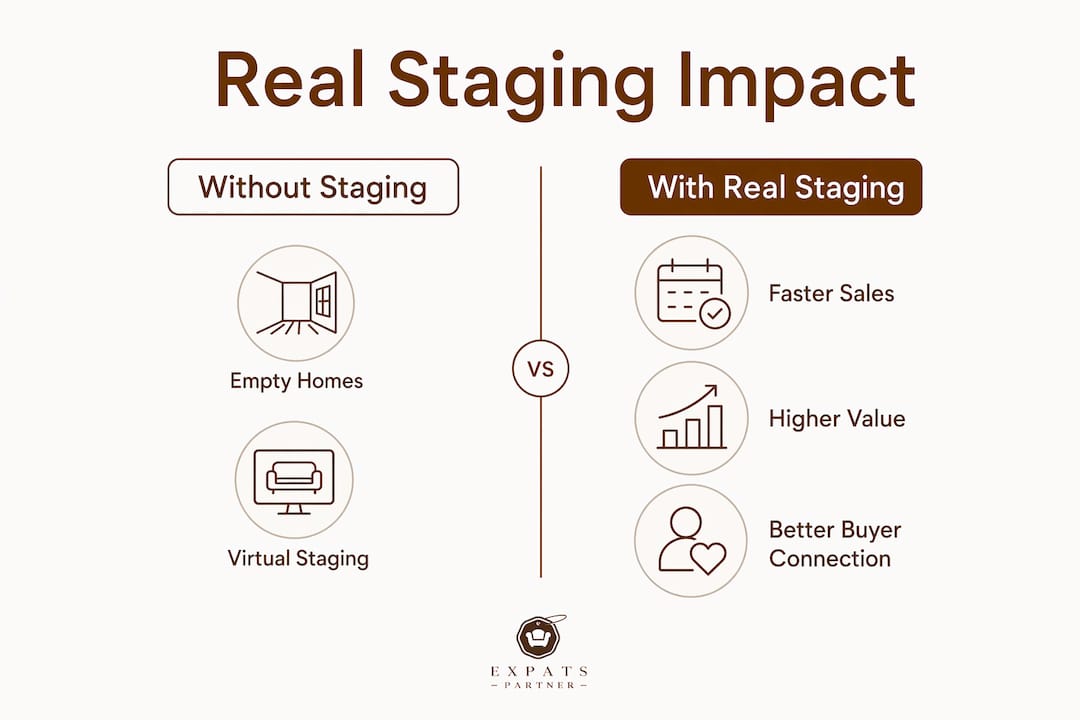
Sellers who invest in professional home staging consistently see these results reflected in their final sale figures. The data is consistent across markets, and Singapore’s competitive condo and landed home segment is no exception.
How does real staging outperform virtual staging and empty homes?
Virtual staging has grown in popularity because it is cheaper and faster to produce. However, it creates a specific problem: a “trust deficit” when buyers arrive at a property and find it empty. The online photos showed a beautifully furnished living room. The physical space is bare. That gap between expectation and reality damages buyer confidence at the exact moment it matters most.
41% of agents say staging is most beneficial in vacant homes. Vacant properties without physical staging suffer from buyer uncertainty and emotional disconnect. Buyers cannot feel the scale of a room from a digitally rendered image. They can only feel it when they stand inside a properly furnished space.
Real staging also delivers consistency between listing photos and in-person viewings. That consistency builds trust. Buyers who arrive and find the property exactly as photographed feel reassured. Their emotional engagement begins before they step through the door, and it continues throughout the viewing.
- Virtual staging limitation: Digital renders cannot replicate the physical experience of moving through a furnished room.
- Empty home drawback: Vacant spaces force buyers to imagine everything, and most buyers underestimate space without furniture present.
- Real staging advantage: Physical furniture provides consistent, trustworthy cues that align online photos with the in-person experience.
- Offer quality: Budget and virtual staging often lack the effect that generates multiple or higher offers. Real staging produces stronger buyer competition.
Pro Tip: When listing photos are taken with real staged furniture in place, ensure the furniture remains identical during viewings. Any change between photos and the physical visit weakens buyer trust and can reduce offer values.
What practical staging techniques optimise perception of space and flow?
Good staging is not about filling a room. It is about making a room feel purposeful, calm, and easy to imagine living in. These five techniques produce the most consistent results in Singapore residential properties.
-
Maintain clear walkways. Keep at least 12–18 inches of clearance between furniture and walls. This prevents rooms from feeling cramped and guides buyers naturally through the space.
-
Use mirrors strategically. Mirrors reflect natural light and deepen the visual field of a room. A well-placed mirror on a side wall makes a bedroom feel wider and draws attention away from minor imperfections.
-
Define every room clearly. A clearly staged home office or guest room prevents buyer confusion. When a room has no obvious purpose, buyers disengage. Label each space with the right furniture and buyers immediately understand its function.
-
Avoid overcrowding. Fewer, well-chosen pieces create more perceived space than a room full of furniture. Scale matters. Oversized sofas in a compact condo living room make the space feel smaller, not larger.
-
Control lighting. Layer natural and artificial light to create warmth. Open curtains fully during viewings. Add a floor lamp in darker corners. Bright, warm light makes every room feel more welcoming and spacious.
These techniques apply directly to Singapore’s most common property types: condos, HDB resale flats, and landed homes. Each property type has its own spatial constraints, and staging must work with those constraints rather than against them.
How can Singapore sellers and investors apply real staging effectively?
Singapore’s property market is competitive. Buyers in the condo and landed home segment are experienced, and they compare multiple listings before making a decision. Real furniture staging gives your property a clear advantage at the viewing stage, where decisions are made.
- Match staging to buyer profile. Expat buyers and high-net-worth investors respond strongly to lifestyle-led staging. Practical, well-organised staging works best for HDB resale buyers who prioritise function.
- Use quality furniture. Worn or mismatched pieces undermine the staging effect. Furniture rental solutions, such as those offered by Expats Partner, provide access to quality, viewing-ready pieces without the cost of purchasing.
- Stage before photography. Listing photos taken in a staged property perform better online and attract more viewings. More viewings mean more competitive offers.
- Consider staging duration. Properties that take longer to sell benefit from short-term or long-term staging arrangements that keep the home viewing-ready throughout the listing period.
The staged listing advantage is clearest in Singapore’s mid-to-upper market, where buyers expect a polished presentation and respond to lifestyle cues. Sellers who invest in real staging consistently report faster sales and stronger final prices.
Key takeaways
Real furniture staging is the most effective way to help buyers feel, understand, and connect with a property’s space, producing faster sales and stronger offers.
| Point | Details |
|---|---|
| Staging speeds up sales | Staged homes sell 73% faster and achieve 5%–23% above asking price. |
| Buyers need spatial cues | Real furniture answers buyers’ implicit questions about layout, scale, and lifestyle function. |
| Virtual staging creates risk | A trust deficit forms when online photos do not match an empty in-person property. |
| Space therapy techniques work | Clear walkways, mirrors, and defined room purpose maximise perceived space and buyer confidence. |
| Singapore market benefits | Condo, landed, and expat rental properties all perform better with real furniture staging. |
What I have learned from staging properties in Singapore
Having worked with landlords, agents, and developers across Singapore’s condo and landed home market, I have seen the same pattern repeat itself. Properties that sit on the market for weeks are almost always empty or poorly staged. Properties that sell quickly are almost always well-furnished and clearly presented.
The most common misconception I encounter is that staging is a cosmetic exercise. Sellers assume it is about making a home look pretty for photographs. It is not. Staging is about removing doubt. Buyers who walk into an empty property spend their viewing time worrying about what will fit and how the space will work. Buyers who walk into a well-staged property spend their time imagining their life there. That shift in mental state is what produces offers.
I have also seen sellers underestimate the damage that virtual staging does to buyer trust. A buyer who arrives expecting a furnished living room and finds bare concrete floors does not simply adjust their expectations. They question everything else about the listing. That doubt is very difficult to recover from during a viewing.
Real staging is a tactile, emotional experience that technology cannot replicate. In Singapore’s competitive market, where buyers have many options and limited patience, that experience is not a luxury. It is a practical necessity.
— Expats Partner
Real furniture staging for your Singapore property
Expats Partner provides home staging in Singapore for condos, landed homes, HDB resale flats, and expat rental units. Our real furniture inventory is viewing-ready, professionally selected, and delivered with full setup and collection support.
Whether you are a landlord preparing a rental unit, an agent listing a vacant condo, or a homeowner selling in a competitive market, Expats Partner’s furniture rental solutions give you access to quality staging pieces without the cost or commitment of purchasing. Flexible rental terms mean your property stays presentation-ready for as long as it needs to be. Contact Expats Partner to discuss your staging requirements and get a clear, no-obligation quote.
FAQ
Does real furniture staging actually increase sale price?
85% of staged homes sold for 5%–23% above asking price, with an ROI of 8–10%. Real staging consistently produces stronger buyer offers than empty or virtually staged properties.
How is real staging different from virtual staging?
Real staging uses physical furniture during in-person viewings, while virtual staging adds digital furniture to listing photos only. Virtual staging creates a trust deficit when buyers arrive and find an empty property, whereas real staging delivers a consistent experience from online photos to the physical visit.
What rooms should be staged first in a Singapore condo?
The living room, master bedroom, and dining area have the greatest impact on buyer perception. These are the spaces buyers spend the most time in during viewings and where spatial clarity matters most.
How long does staging furniture need to be in place?
Staging duration depends on how quickly the property sells. Expats Partner offers both short-term and long-term furniture rental arrangements, so the property remains viewing-ready throughout the listing period without any unnecessary cost.
Is real staging worth the cost for a rental property?
Yes. Staged rental properties attract higher-quality tenants and shorter vacancy periods. Expat tenants in particular respond strongly to well-presented, furnished properties that feel move-in ready from the first viewing.