
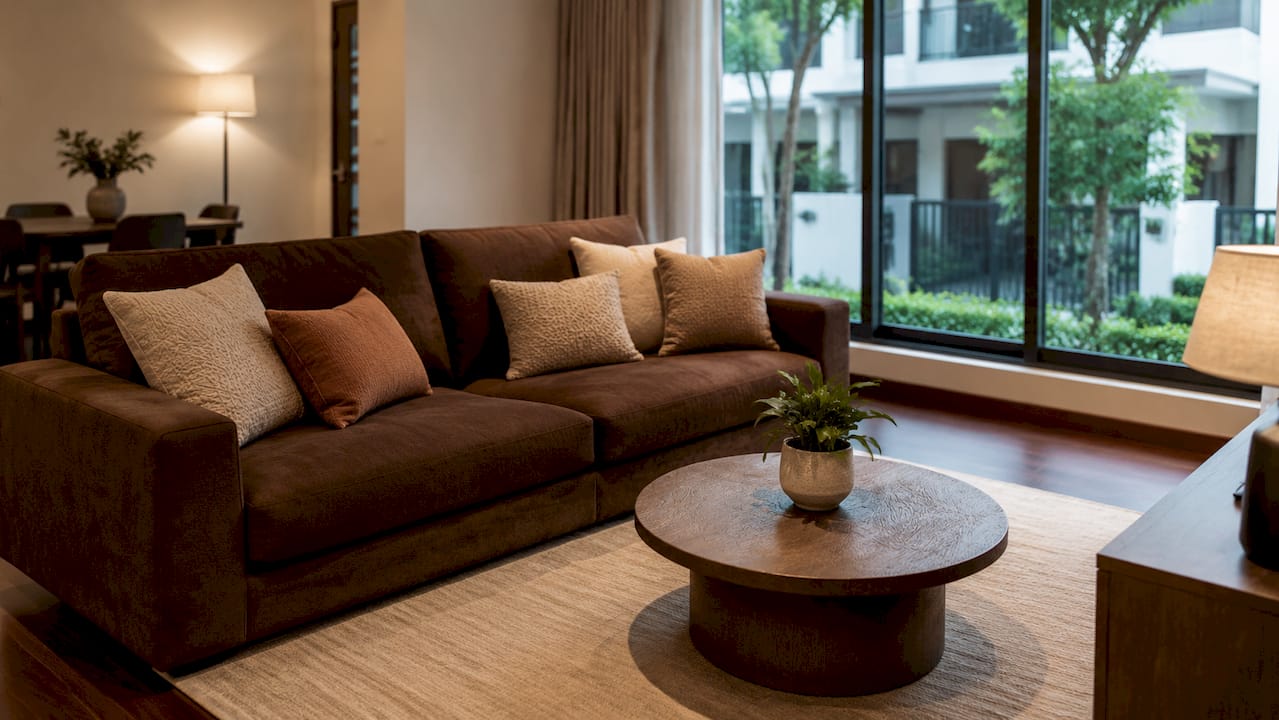
Home staging for vacant landed homes is the practice of furnishing and presenting an empty property to help prospective tenants picture their life there. The answer to whether landlords should stage is clear: yes, and the financial case is compelling. Professionally staged rentals typically lease within 6–18 days, while unstaged properties average 3–6 weeks of vacancy, with rent premiums reaching up to 39%. In Singapore’s competitive landed home market, where void periods directly erode annual yield, vacant property staging is not a luxury. It is a deliberate marketing decision with measurable returns.
How does staging reduce vacancy periods and improve rental income?
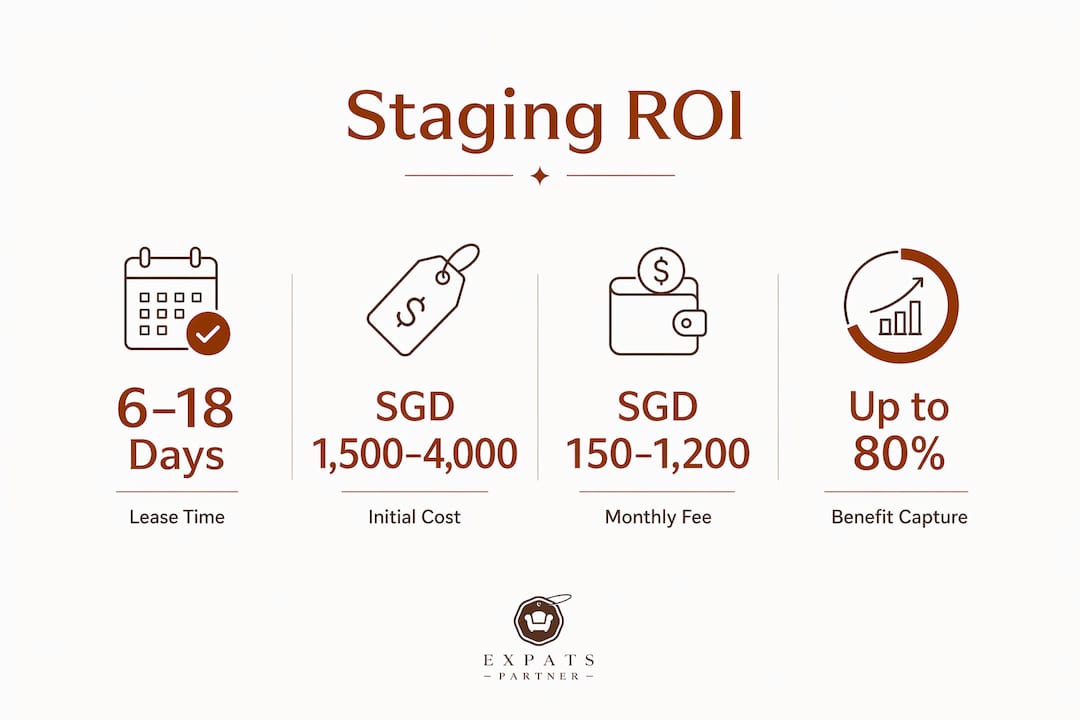
Staged properties lease faster because they remove the cognitive work tenants must do when viewing an empty space. A staged property helps tenants visualise daily life, reducing uncertainty and speeding up rental decisions. That psychological clarity converts viewings into signed tenancies more reliably than an empty shell ever can.

The financial impact is direct. Every week a landed home sits vacant costs the landlord real money in lost rent. A property renting at SGD 8,000 per month loses roughly SGD 2,000 for every week it sits empty. Against that baseline, staging becomes a straightforward calculation rather than a discretionary spend.
The benefits of staging rental homes extend beyond speed:
- Rent premium: Staged rentals command premiums of 10–39% above comparable unstaged properties, depending on the quality and completeness of the staging.
- Shorter void periods: Staged homes lease within 6–18 days on average, compared to 3–6 weeks for unstaged equivalents.
- Higher tenant quality: Tenants willing to pay a premium for a well-presented home tend to be more financially stable and treat the property with greater care.
- Stronger listing performance: Staged homes photograph better, which improves click-through rates on property portals and drives more viewings per listing.
Staging is a strategic marketing investment that often pays for itself by reducing void periods, which cost landlords more than basic staging package fees. The maths consistently favours action over inaction.
What are the realistic costs and budgeting considerations for staging vacant landed homes?
The average cost for staging a vacant home in Singapore ranges from SGD 1,500 to SGD 4,000 for the first month, with ongoing monthly fees from SGD 150 to SGD 1,200 depending on furnishing volume. Landed homes, which are typically larger than condos, sit towards the upper end of that range when fully furnished.
Landlords have three practical staging options, each suited to a different budget and property profile:
| Staging approach | Typical cost range | Best suited for |
|---|---|---|
| Full staging | SGD 3,000–SGD 4,000 per month | Large landed homes targeting premium tenants |
| Partial staging | SGD 1,500–SGD 2,500 per month | Mid-range properties; key rooms only |
| Virtual staging | SGD 300–SGD 800 one-off | Listings with limited budget; online-only impact |
Full staging furnishes every room and creates a complete lifestyle impression. Partial staging focuses on the living room, master bedroom, and dining area, which are the three spaces that most influence tenant decisions. Virtual staging adds furniture digitally to listing photographs but has no impact during physical viewings.
Partial staging of key rooms can capture 80% of the benefits of full staging at a fraction of the cost. For landlords managing their first staged property, partial staging is the most practical entry point.
Pro Tip: Prioritise the living room and master bedroom above all other spaces. These two rooms drive the majority of tenant decisions. A well-staged living area and a calm, well-lit master bedroom will do more for your rental outcome than a fully furnished property with a weak presentation in those two rooms.
The cost-benefit analysis is straightforward. A one-month staging fee of SGD 2,500 is recovered within the first week of avoided vacancy on a SGD 8,000 per month property. Landlords who frame staging as a cost miss the point entirely. It is a yield protection tool.
What practical staging tips maximise tenant appeal in landed homes?
Landed homes present unique staging opportunities that condos do not. The additional space, outdoor areas, and multi-level layouts require a deliberate approach to guide tenants through the property and help them picture how each space functions.
- Stage the living room first. The living room sets the tone for the entire viewing. Use a sofa, coffee table, and a side lamp to create a warm, proportionate arrangement. Avoid oversized furniture that makes the room feel cramped or undersized pieces that make it feel cold and empty.
- Define every room’s purpose clearly. Functional clarity in room staging reduces tenant hesitation, especially in spaces like home offices for remote workers. A spare room with a desk, chair, and shelf communicates “study” immediately. Without furniture, tenants are left guessing, and uncertainty slows decisions.
- Prioritise curb appeal before the front door. Exterior presentation, including landscaping and driveway condition, strongly influences tenant perceptions before they enter the home. Mow the lawn, clear the driveway, and add potted plants near the entrance. The first impression begins at the gate, not the living room.
- Fix every maintenance detail. Dripping taps, scuffed skirting boards, and flickering lights signal neglect. Tenants notice these details and use them to negotiate rent downward or walk away entirely. A viewing-ready property is clean, fully functional, and freshly painted where needed.
- Use lighting deliberately. Open curtains fully during daytime viewings. Add floor lamps to darker corners. Bright, well-lit spaces feel larger and more welcoming. This is particularly relevant for landed homes with internal rooms that receive limited natural light.
- Balance neutral style with warmth. Neutral tones in grey, white, and beige appeal to the widest range of tenants. Add warmth through cushions, a rug, or a simple table centrepiece. The goal is a space that feels lived-in and aspirational without being personalised to one taste.
Pro Tip: For landed homes with an outdoor terrace or garden, stage that space too. A simple outdoor table and two chairs signal that the outdoor area is usable, not just decorative. Expat tenants in particular place high value on outdoor living space, and a staged garden can be a genuine differentiator.
What are common landlord misconceptions about staging?
Several persistent myths discourage landlords from investing in vacant property staging. Addressing them directly helps landlords make better decisions.
- “Tenants can imagine the space themselves.” Most cannot, and most will not make the effort. Research confirms that a staged property reduces uncertainty and speeds decisions. Empty rooms look smaller in photographs and feel cold during viewings. Tenants comparing multiple properties will favour the one that feels like a home.
- “Staging is too expensive to justify.” Lost rent from a four-week void on a SGD 7,000 per month property equals SGD 7,000. A partial staging package for the same period costs a fraction of that. The staging pays for itself before the tenancy even begins.
- “Staging is just about making things look pretty.” Staging is a marketing tool, not interior decoration. Its purpose is to reduce cognitive load for tenants, shorten the decision cycle, and protect the landlord’s yield. Aesthetics are the mechanism, not the goal.
- “My property will rent eventually without staging.” It may. But every additional week of vacancy reduces annual yield, and a slow-letting property often attracts lower-quality enquiries as it ages on the portal. A listing that sits for four weeks signals to tenants that something is wrong, even when nothing is.
- “I only need to stage once.” If a property remains vacant after 14 days, a listing reset via re-staging and updated photography can recover momentum and attract fresh interest. Staging is not a one-time event. It is an active part of the rental marketing cycle.
How can landlords measure staging success and optimise their rental strategy?
Staging success is measurable. Landlords who track the right indicators can refine their approach across multiple properties and rental cycles.
The two primary metrics are vacancy days and achieved rent. Vacancy days measure how long the property sat empty between tenancies. Achieved rent measures whether the final agreed rent met, exceeded, or fell below the asking price. Together, these two figures tell you whether your staging and pricing strategy is working.
| Metric | What to track | What it tells you |
|---|---|---|
| Vacancy days | Days between tenancies | Staging and marketing effectiveness |
| Achieved vs asking rent | Final rent vs listed price | Pricing accuracy and tenant demand |
| Viewing-to-offer ratio | Offers received per viewing | Staging conversion quality |
| Days to first enquiry | Time from listing to first contact | Listing quality and photography impact |
If a rental property remains vacant after 30 days despite staging, the usual problem lies in pricing or marketing reach rather than presentation. Staging alone cannot compensate for an unrealistic asking rent or a listing with poor photographs and minimal portal exposure. Landlords should treat staging, pricing, and marketing as three interdependent levers, not independent variables.
A practical rule: if you have had fewer than three viewings in the first two weeks, the issue is marketing reach or pricing. If you have had multiple viewings but no offers, the issue is presentation or price. Staging addresses the second problem directly. For the ultimate guide to home staging and how it fits into a broader rental strategy, landlords will find detailed frameworks that cover both scenarios.
Key takeaways
Staging a vacant landed home before renting is a proven strategy that reduces void periods, protects rental yield, and attracts higher-quality tenants in Singapore’s competitive market.
| Point | Details |
|---|---|
| Staging reduces vacancy time | Staged homes lease within 6–18 days versus 3–6 weeks for unstaged properties. |
| Rent premiums are real | Staged properties command up to 39% more in rent than comparable unstaged homes. |
| Partial staging is cost-effective | Staging key rooms captures 80% of full staging benefits at a fraction of the cost. |
| Curb appeal matters first | Exterior presentation shapes tenant expectations before they enter the property. |
| Staging alone is not enough | Correct pricing and strong marketing must accompany staging for best results. |
Staging vacant landed homes: what experience actually teaches
Landlords consistently undervalue staging because they see it as an optional extra rather than a core part of their rental marketing. That framing is the mistake. A vacant landed home is not a neutral canvas. It is a liability generating zero income while accumulating holding costs.
What I have observed working with landlords across Singapore is that the ones who stage consistently outperform those who do not, not just on vacancy speed, but on the quality of tenants they attract. A well-staged home draws tenants who are prepared to pay for quality. Those tenants tend to stay longer, cause fewer issues, and renew more often.
The most common pitfall is staging the wrong rooms. Landlords sometimes focus on the kitchen or utility areas because they are worried about condition, when the living room and master bedroom are the rooms that actually close the deal. Stage where the decision is made, not where the anxiety is.
The second pitfall is treating staging as a one-time effort. If a property is not leasing after two weeks, the instinct is to drop the price. The better first step is to refresh the staging and update the listing photographs. A listing reset strategy costs far less than a rent reduction compounded over a 12-month tenancy.
Staging is an investment in the quality of your rental outcome. Landlords who adopt it as a standard part of their process, not a last resort, consistently achieve better results.
— Expats Partner
Furniture rental for staging: a practical option for Singapore landlords
Staging a landed home does not require purchasing furniture outright. Expats Partner provides flexible furniture rental for staging in Singapore, with packages designed specifically for landlords who want a viewing-ready home without long-term furniture commitments.
Expats Partner’s home furniture rental options cover full-home packages and partial room setups, with transparent pricing, reliable delivery, and professional setup included. Landlords can stage a landed home quickly, rent it out, and return the furniture once the tenancy begins. There are no storage headaches and no resale concerns. For landlords ready to reduce vacancy and protect their rental yield, Expats Partner is the practical next step.
FAQ
Does staging really help rent out a landed home faster?
Yes. Staged rentals lease within 6–18 days on average, compared to 3–6 weeks for unstaged properties. The difference comes from tenants being able to visualise the space and make faster decisions.
How much does home staging cost for a landed property in Singapore?
Staging costs range from SGD 1,500 to SGD 4,000 for the first month, with ongoing monthly fees from SGD 150 to SGD 1,200 depending on furnishing volume. Partial staging of key rooms is the most cost-effective starting point for most landlords.
What rooms should landlords prioritise when staging a landed home?
The living room and master bedroom have the greatest influence on tenant decisions. Staging these two rooms, along with the entryway and any outdoor area, delivers the strongest return on staging investment.
Can staging compensate for an overpriced rental listing?
No. If a property remains vacant after 30 days despite staging, the problem is typically pricing or marketing reach rather than presentation. Staging, correct pricing, and strong listing quality must work together.
Is furniture rental a practical way to stage a vacant landed home?
Yes. Furniture rental allows landlords to stage a property for the duration of the marketing period without purchasing or storing furniture. Expats Partner offers property staging packages in Singapore with flexible terms suited to short rental marketing windows.