
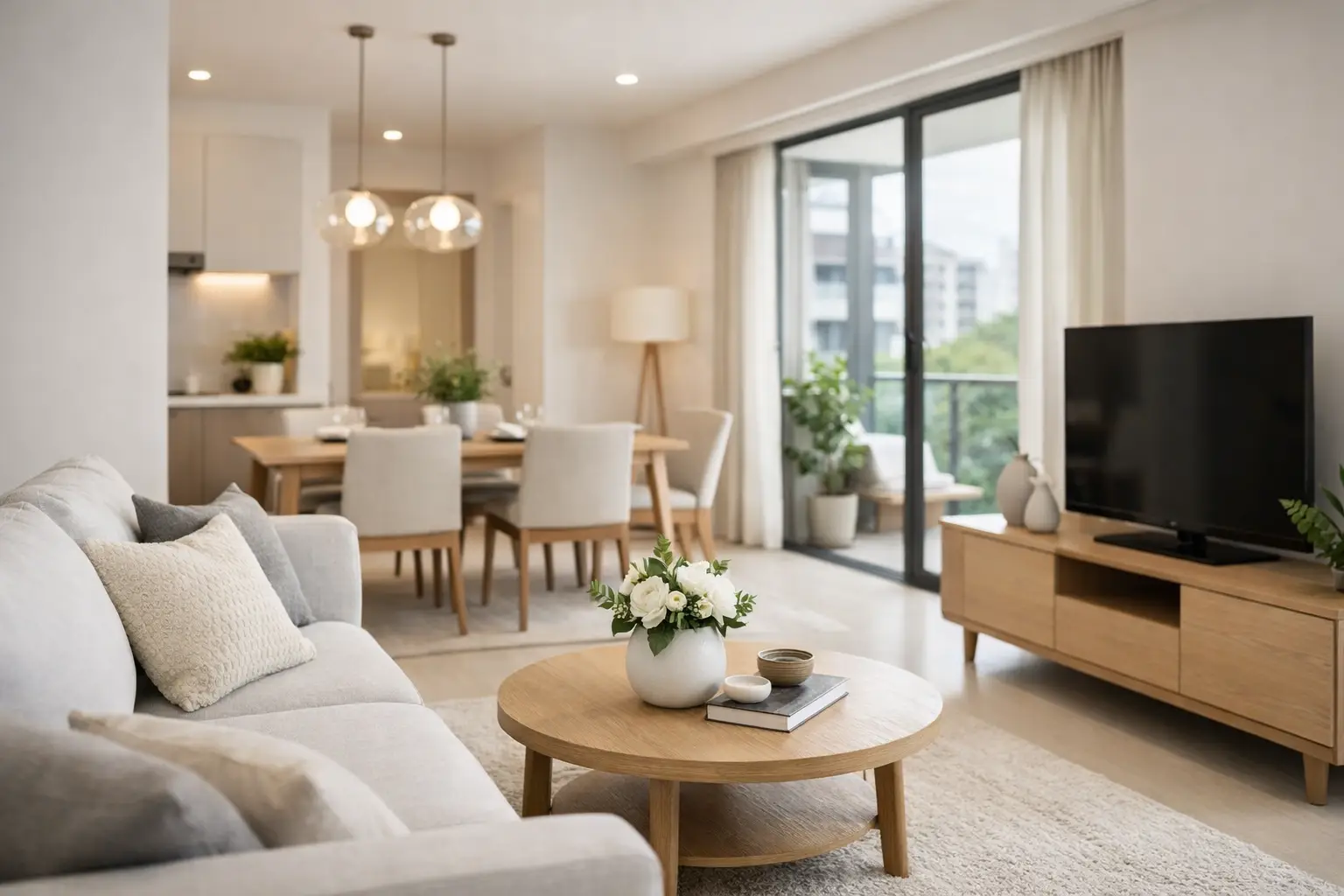
A vacant property rarely looks as good in photos as it does in a floor plan. Rooms feel smaller, corners look awkward, and buyers or tenants are left doing too much mental work. That is where furniture for property staging earns its place – not as decoration, but as a practical sales tool that helps people understand how a home can live.
For agents and owners, this matters because most decisions start before a viewing is even booked. If the online listing feels cold, unfinished or difficult to read, interest drops quickly. Once someone does step through the door, the same issue follows. Empty rooms do not guide attention well. Staged rooms do.
Why furniture for property staging affects buyer behaviour
People do not assess a property only by size, price and location. They also respond to ease. A well-staged space feels simpler to interpret. Buyers can see where the sofa goes, how the dining area works, and whether the bedroom feels calm rather than cramped.
That clarity changes the viewing experience. Instead of trying to solve the room, visitors start imagining themselves in it. That shift is subtle, but commercially important. When a property feels ready, it often feels more valuable.
This is especially true in vacant units, newly completed homes and investment properties between tenants. In each case, the lack of furniture can make a listing appear less inviting than it really is. Good staging corrects that without pretending the property is something it is not.
What good staging furniture actually does
The best staging furniture is not chosen to show off the furniture itself. Its job is to support the property. That means getting scale right, defining purpose and creating flow from room to room.
A compact sofa can make a living area feel balanced rather than overcrowded. A dining set can show that an open-plan layout has room for both living and entertaining. In a bedroom, the right bed frame, side tables and soft furnishings can make proportions feel intentional instead of uncertain.
This is where staging differs from ordinary furnishing. If you are furnishing a home to live in, personal taste carries more weight. If you are staging a home for sale or rental, the goal is broader appeal. Neutral, well-proportioned pieces tend to work best because they help more viewers picture their own routines in the space.
Choosing furniture for property staging with purpose
Not every room needs to be fully furnished, and not every property needs the same treatment. The right approach depends on the audience, the price point and the layout itself.
For a one-bedroom flat aimed at young professionals, the priority may be a clear living area, a comfortable-looking bedroom and enough styling to make the home feel polished in photos. For a larger family property, buyers are often looking for cues about dining, entertaining and practical day-to-day use. In that case, the staging needs to show how the main spaces connect and support family life.
It also depends on what the property is struggling with. Some homes need warmth. Others need structure. A long narrow living room, for example, may need furniture that breaks up the space and gives it direction. A bedroom with an awkward wall may need a bed placement that reduces visual uncertainty.
The point is not to fill space for the sake of it. It is to remove doubt.
The most important rooms to stage
If time or budget is tight, start where decisions are most influenced. In most properties, that means the living room, main bedroom and dining area. These are the spaces buyers notice first in listing photos and remember most clearly after a viewing.
A secondary bedroom or study can also be useful when the room’s purpose is unclear. An empty spare room often raises questions. A simple setup that suggests guest use, work-from-home practicality or a child’s room can answer those questions quickly.
Kitchens and bathrooms usually need less furniture, but they still benefit from restraint and styling discipline. The aim is to keep them clean, bright and easy to read.
Rental furniture vs buying furniture
For staging projects, rental is often the more sensible route. Buying furniture for a short sales cycle ties up budget, creates storage problems and adds another layer of coordination once the property is sold or let.
Rental furniture keeps the process lighter. It allows a property to be staged quickly, presented professionally and removed when no longer needed. For agents managing multiple listings or owners trying to prepare a vacant unit without long-term commitment, that flexibility makes a real difference.
There is also a practical benefit in consistency. Staging furniture packages are usually selected to work together, which helps create a coherent look across the property. Buying piece by piece often leads to mismatched results, especially when speed is a factor.
That said, it depends on the intended use. If the property is moving straight into long-term occupation, buying may make sense. If the main goal is to improve listing performance and support faster decisions, rental is usually the cleaner option.
How staged furniture should look
The most effective staging style is usually calm, neutral and current. That does not mean bland. It means controlled.
Furniture should feel appropriate to the property’s size and likely buyer. Oversized pieces can make rooms shrink. Undersized ones can make a home feel mean or temporary. Colour should support the architecture rather than compete with it. Soft textures, simple shapes and balanced layouts tend to photograph well and hold up during in-person viewings.
This is particularly relevant in Singapore, where many buyers and tenants are evaluating layout efficiency very closely. A staged room needs to show comfort without wasting space. It should feel liveable, but not crowded.
Common mistakes that weaken the result
One common mistake is over-furnishing. Too many items can make a property feel busy and reduce the sense of space that buyers are looking for. Another is styling too personally, with bold tastes that narrow the audience rather than widen it.
A third mistake is treating staging as an afterthought. If furniture is brought in without a clear plan for photography, traffic flow and visual balance, the property may look better than empty, but not nearly as strong as it could.
Good staging is usually quieter than people expect. It works because nothing feels forced.
What agents and owners should expect from a staging setup
The value of staging is not only visual. It is operational too. A strong setup should reduce hassle, not create more of it.
That means clear timelines, straightforward scope and furniture that arrives ready to serve the listing rather than needing adjustment after installation. For agents, reliability matters because campaigns often move quickly. For homeowners and landlords, convenience matters because they do not want to manage transport, assembly, styling and removal separately.
A service-led staging partner brings those parts together. Expats Partner approaches this with the same focus clients need from the listing itself – speed, clarity and presentation that supports a better outcome.
When furniture for property staging is worth the investment
Not every listing needs full staging, but many benefit from it more than expected. If a home is vacant, photographs poorly, has been sitting on the market, or needs help justifying its asking price, staging can improve how the property is understood.
It is also useful when the target audience is making quick comparisons across similar listings. In that environment, presentation becomes part of the decision. The property that feels easiest to imagine often gets shortlisted first.
For rental listings, the effect can be just as useful. Tenants are not only assessing square footage. They are asking whether the property feels practical, pleasant and worth viewing in person. Furniture helps answer that faster.
The best way to think about staging is not as an added layer of polish. It is a way of removing friction between the property and the person considering it. When the space makes sense at first glance, the conversation tends to move forward more easily.
A well-staged home does not need to shout for attention. It only needs to help the right viewer feel at ease enough to say yes.
Contact us now at: Kevin Chang – 80119753 sales@expatspartner.com.sg Sales Specialist