
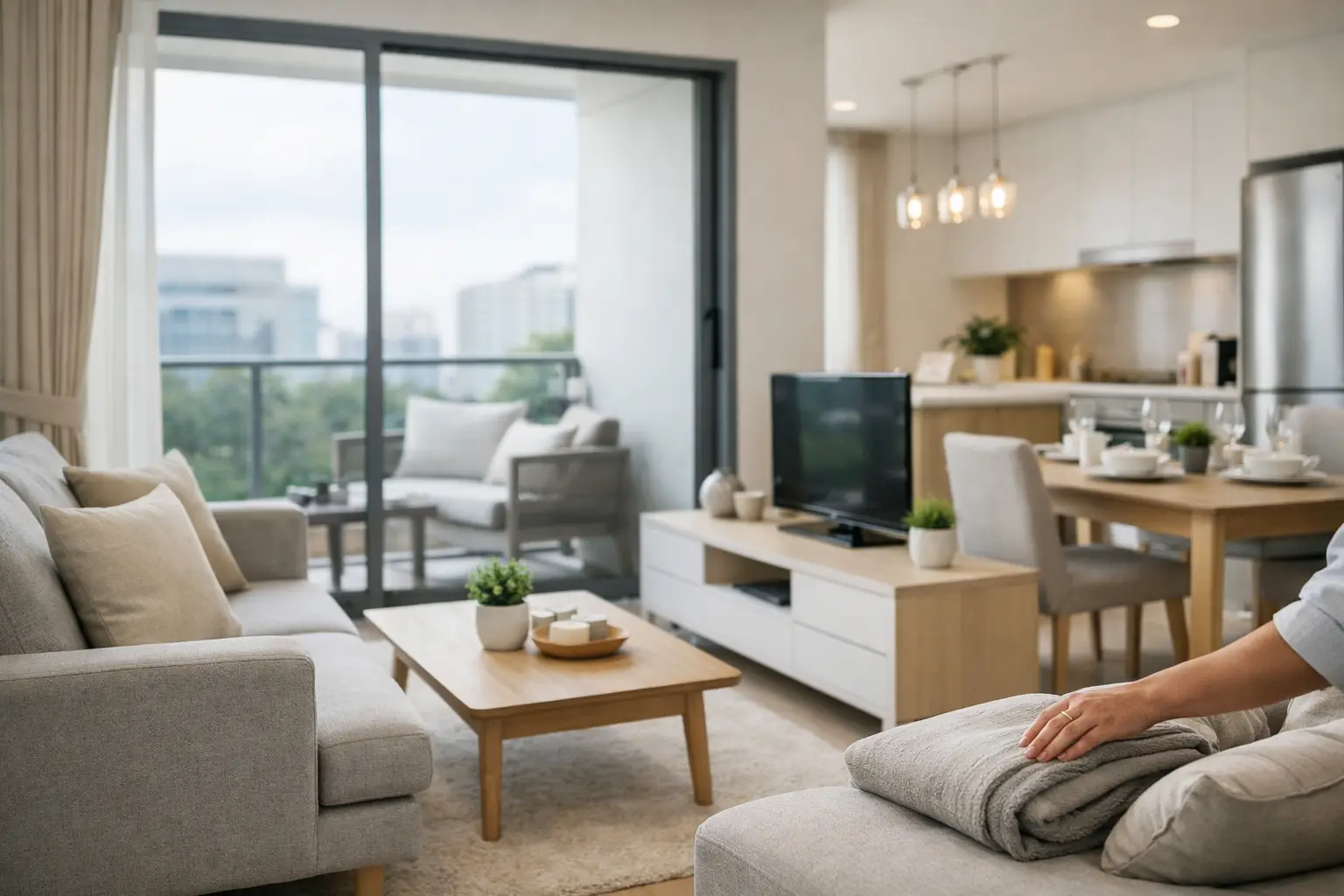
A vacant flat can look bigger in person than it does online, yet still feel harder to rent. In photos, empty rooms often read as cold, smaller than they are, or simply forgettable. That is why a guide to staging rental listings matters – not as decoration, but as a practical way to shape first impressions, improve enquiry quality, and help tenants picture daily life in the home.
For agents and landlords, the challenge is rarely just about making a unit look nice. It is about reducing hesitation. A well-staged rental listing helps answer unspoken questions before a viewing is even booked: Will my sofa fit here? Does this bedroom feel usable? Is this a place I could move into without compromise? When those questions are resolved visually, listings tend to generate stronger interest and more purposeful viewings.
Why staging rental listings affects results
Rental decisions move quickly, but they are still emotional. Tenants scroll through dozens of listings in one sitting, often comparing similar layouts, price points, and locations. In that environment, presentation becomes part of the value story. A staged unit can feel more complete, better maintained, and easier to understand.
That does not mean every rental needs a full designer treatment. In fact, over-styling can work against you, especially in a market where tenants want clarity more than personality. The goal is to make the space readable. Good staging shows scale, function, and flow. It helps a living area feel like a living area, rather than an empty box with unknown possibilities.
There is also a commercial benefit that agents recognise quickly. Better presentation tends to attract better-matched enquiries. Instead of drawing broad but vague interest, staged listings often appeal to tenants who can already see themselves in the property. That can shorten decision cycles and reduce wasted viewings.
A practical guide to staging rental listings
The first step is to stage for the likely tenant, not for the owner. A compact city unit aimed at young professionals needs a different approach from a family-sized flat near schools. In one case, a small dining area might be better presented as a work-friendly nook. In another, showing a proper dining setup can make the layout feel more useful. Staging works best when it reflects how the target renter is likely to live.
Next, focus on the rooms that carry the listing. Usually that means the living room, main bedroom, and dining area if there is one. These spaces do most of the work in both photos and viewings. Secondary bedrooms can be kept simpler, but they still need to show purpose. A spare room with nothing in it often raises uncertainty. A modest bed setup or a clean study arrangement can remove that friction.
Furniture choice should be neutral, proportionate, and easy to read on camera. This is where many listings go off course. Pieces that are too bulky make rooms feel tight. Pieces that are too sparse can make the home feel incomplete. The right mix gives shape to the room without crowding it. Think functional seating, a properly scaled bed, lighting where needed, and enough soft furnishings to create warmth without clutter.
Colour matters too, but usually in a restrained way. For rental listings, calm neutrals tend to do the job best because they widen appeal. That does not mean everything must be beige. Texture, contrast, and a small amount of colour can help a space feel considered. The key is balance. Strong styling choices may suit editorial photography, but rentals benefit more from a clean, liveable look that does not alienate viewers.
What to stage and what to leave out
The best rental staging is selective. You are not trying to furnish every possible corner. You are trying to guide attention.
In the living room, anchor the space first. A sofa, coffee table, rug, and occasional chair are often enough to define the room. If the layout is awkward, staging can correct perception by showing a natural seating arrangement. This is especially useful in open-plan units where buyers and tenants often struggle to judge where one zone ends and another begins.
In bedrooms, the bed does most of the visual work. Once that is in place, side tables and lamps can finish the picture. A bench or compact chair may help in larger rooms, but only if space allows. Crowding a bedroom to make it feel luxurious usually backfires.
Dining areas should be staged only if they genuinely support the layout. If the space is too tight for comfortable dining, forcing a table into it can make the property feel compromised. In some cases, a compact desk setup is the smarter choice because it speaks to how many tenants actually use space.
Leave out anything too personal, too trendy, or too specific. Rental staging should not feel like someone else already lives there. It should feel ready for the next person.
How staging supports both listing photos and viewings
A listing is judged twice – first on screen, then in person. Staging needs to work for both.
For photography, shape and proportion matter more than detail. The arrangement should read clearly from the camera angle, with obvious pathways and no visual noise. Cushions, throws, and accessories help, but only if they support the room rather than distract from it. Clean surfaces, open curtains, and consistent lighting make the staging work harder.
During viewings, the role of staging shifts. It becomes less about image and more about confidence. Prospective tenants can walk through the property and understand how it functions. They can judge circulation space, furniture scale, and how the rooms connect. This is especially valuable in vacant units, where emptiness can amplify every minor flaw. Staging softens that effect by giving structure to the experience.
Common mistakes in rental listing presentation
One of the most common issues is assuming that any furniture is better than none. Poorly matched or tired pieces can lower perceived value faster than an empty room. If the styling feels improvised, viewers may assume the property itself is being managed the same way.
Another mistake is staging without a clear purpose. A beautiful vignette is not the same as a useful room. If a unit is likely to attract corporate tenants, relocation clients, or young couples, the setup should support that profile. Presentation needs to align with market intent.
There is also the question of budget. Not every listing justifies the same level of staging investment. A higher-end unit with strong rental potential may benefit from a more complete setup, while a simpler property may only need key rooms furnished to improve readability. The right approach depends on price point, location, target audience, and how competitive the listing is.
When furniture rental makes more sense than buying
For many agents and landlords, speed and flexibility matter as much as appearance. Buying furniture for a vacant rental often creates unnecessary delay, storage issues, and sunk cost – especially if the property rents quickly or if the styling needs to change between listings.
Furniture rental solves a practical problem. It allows a property to be staged quickly, with the right pieces for the space, without committing to long-term ownership. That is particularly useful when timelines are short, when a unit is between tenants, or when a landlord wants a market-ready look without adding operational burden.
In Singapore, where many rental decisions are made quickly and listings compete heavily online, the ability to prepare a unit fast can make a real difference. A staged setup that is delivered, arranged, and removed efficiently is not just convenient. It supports the broader goal of keeping the property active, presentable, and commercially ready.
The real measure of good staging
Good rental staging should never overpower the property. If people remember the accessories but not the layout, something has gone wrong. The most effective setups feel natural enough that viewers stop noticing the staging itself. They simply respond better to the space.
That is where a service-led approach matters. The work is not about filling rooms. It is about presenting them with intention, based on how listings perform and how tenants make decisions. For agents, that means better support for the sales process. For landlords, it means less friction between vacancy and occupancy.
If you are deciding whether to stage a rental listing, the useful question is not whether the unit can be photographed empty. It is whether an empty presentation is helping the property compete. In many cases, a clear, well-planned setup gives the listing a better chance to be understood quickly and chosen with confidence.
If you need a rental listing to look market-ready without adding complexity, a practical staging plan can do more than improve appearance. It can make the next step easier for everyone involved.
Contact us now at: Kevin Chang – 80119753 sales@expatspartner.com.sg Sales Specialist