
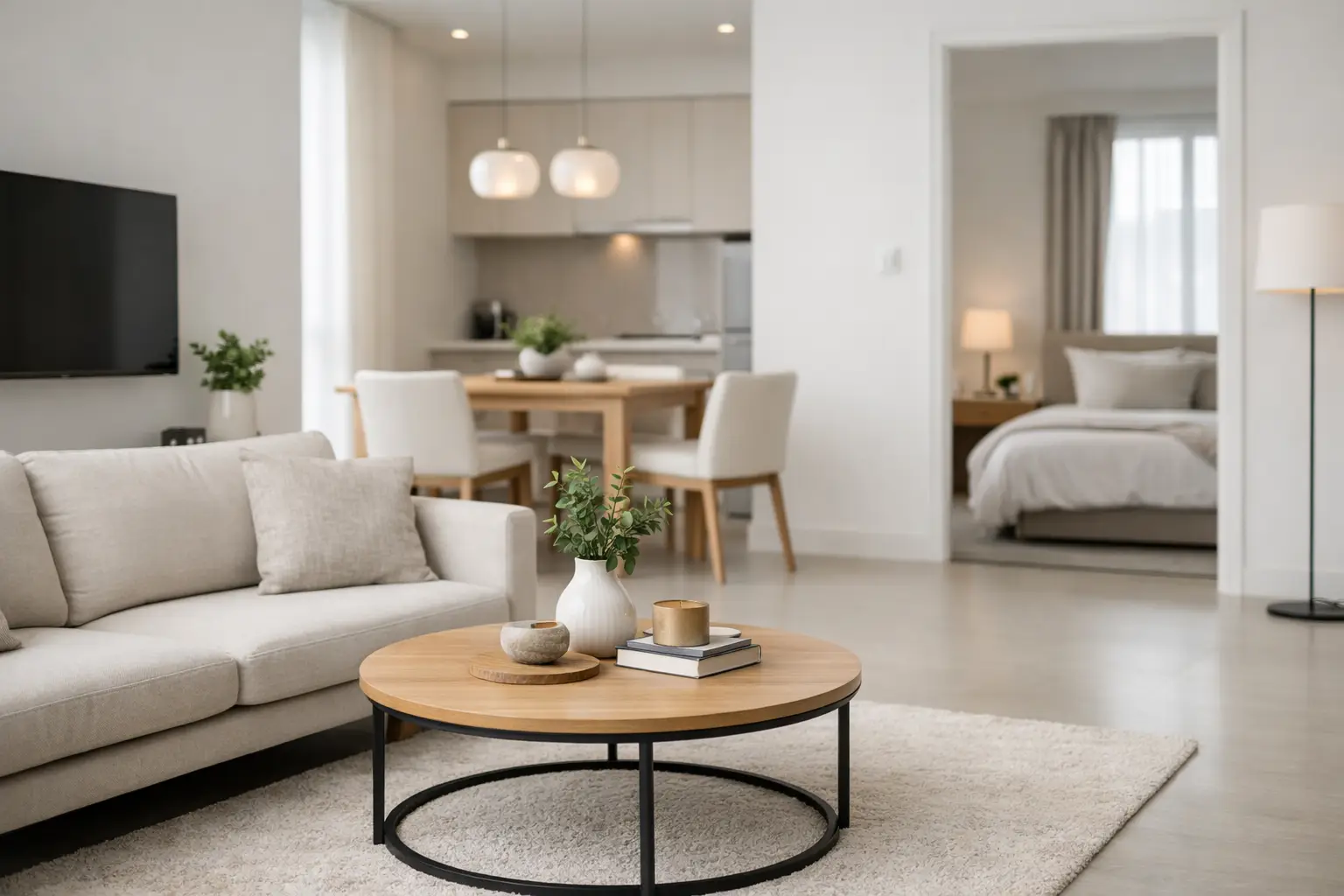
A vacant flat can look larger in photos and smaller in person – often in the same viewing. That gap matters. Buyers and tenants do not assess a space only by square footage or finish quality. They react to whether the home feels workable, comfortable, and easy to imagine living in. If you are deciding how to furnish a vacant flat, the goal is not to fill every corner. It is to give the space purpose, proportion, and a stronger reason to act.
For agents, landlords, and homeowners, this is usually a commercial decision as much as a design one. An empty unit can appear cold, unfinished, or difficult to plan around. A properly furnished flat photographs better, reads more clearly during viewings, and often creates a stronger sense of value. That does not mean every unit needs full-scale interior styling, but it does mean the furnishing plan should match the outcome you want.
How to furnish a vacant flat with a clear objective
The first decision is not the sofa. It is the role the flat needs to play.
If the property is for sale, furnishing should help viewers understand the layout quickly and feel the unit is move-in ready. If it is for rent, the focus may be more practical – showing day-to-day liveability, especially for expats or relocating tenants who need a home that feels settled from the start. If the flat is for short-term corporate housing, comfort and function usually matter more than decorative detail.
This is where many furnishing projects lose direction. Owners start choosing pieces they personally like, rather than selecting furniture that supports the listing. A compact one-bedroom meant for rental enquiries needs a different approach from a higher-value sale listing where perception and first impressions carry more weight. The right brief keeps the whole setup focused.
Start with the rooms that influence decisions
In most flats, not every room needs equal attention. The living area, dining area, main bedroom, and sometimes the study corner do most of the work. These are the spaces that help people judge whether the unit suits their routine.
A living room without furniture is hard to read. Viewers often underestimate what fits, especially in smaller units. A modest sofa, coffee table, rug, and TV console can define the zone immediately. It also stops the room from feeling like a corridor or leftover space.
The dining area is similar. Even a small round table with two to four chairs can show that there is space to eat, work, or host casually. In many flats, this area competes with the living zone, so furnishing helps settle the question of how both functions can coexist.
The bedroom is where scale matters most. An empty main bedroom may look generous online but uncertain in person. A properly sized bed, bedside tables, and soft furnishings give the room balance. They also help potential buyers or tenants understand circulation, which is often one of their unspoken concerns.
Secondary bedrooms depend on the likely audience. For family tenants, showing at least one additional bedroom as a proper sleeping space can help. For younger professionals or investor-oriented units, a study setup may be the smarter choice. It depends on who you are trying to attract.
Choose furniture that fits the flat, not the catalogue
Good furnishing is less about quantity and more about proportion. In flats, oversized furniture is one of the quickest ways to make a unit feel cramped. Pieces should define the room without swallowing it.
That usually means slimmer sofas, lighter-profile dining chairs, beds with clean lines, and side tables that leave enough breathing room. Furniture with exposed legs often works better than heavy block forms because it keeps the room visually open. Neutral colours also tend to perform better, especially if the unit is being marketed to a broad audience. Cream, taupe, soft grey, light wood, and muted black details create a clean look without making the home feel flat.
There is a trade-off here. If the styling is too minimal, the flat can still feel temporary. If it is too personalised, viewers may focus on the styling rather than the space. The best middle ground is a calm, lived-in look that feels polished but not overly designed.
Why furniture rental often makes more sense
When people think about how to furnish a vacant flat, they often assume buying is the standard route. In practice, that is not always the most efficient one.
If the property is on the market, buying furniture means committing capital to pieces that may only be needed for a short period. You also need to manage delivery, assembly, removal, and storage once the unit is sold or leased. For landlords between tenancies, the same issue appears again. Furnishing can help attract stronger interest, but permanent ownership is not always necessary.
This is why furniture rental is often the practical choice. It allows the flat to be presented well without a large upfront purchase, and it reduces the coordination involved in setup and collection. For agents and owners working to a campaign timeline, speed matters. A staged or furnished flat can be prepared quickly, marketed promptly, and adjusted if the strategy changes.
For relocation and corporate housing, rental is even more straightforward. The furniture serves a functional purpose for a defined period, so flexibility has real value.
Add styling that supports the viewing experience
Furniture creates structure, but styling creates ease. The right soft furnishings and accessories make a flat feel considered rather than simply occupied.
That does not mean adding clutter. A rug can anchor the seating area. Cushions and bedding add softness. Curtains, where appropriate, can improve how the space reads in photographs. A few decorative pieces, such as simple artwork or table styling, can help break the sterile feel of an empty shell.
The key is restraint. Styling should support the architecture and layout, not compete with them. In a sale or rental setting, the viewer should remember the flat, not a dramatic vase arrangement.
Lighting also deserves attention. If a unit lacks warmth, table lamps and floor lamps can soften the atmosphere during viewings and improve visual balance in photos. This matters especially in flats with strong daylight in one area and dimmer corners elsewhere.
Think about photography before the first viewing
A flat is often judged twice before anyone walks through the door – once in the listing gallery and once in the viewer’s mind on the way to the appointment. Furnishing directly affects both moments.
Rooms with defined zones photograph more clearly. Buyers and tenants can understand where to sit, dine, sleep, or work without effort. That clarity tends to produce better online engagement because the unit feels easier to picture as a home.
This is especially relevant in Singapore, where many listings compete for attention within the same development, district, or price band. If the finishes are similar, presentation becomes a key differentiator. A vacant unit may still have excellent fundamentals, but it often asks too much of the viewer’s imagination.
Common mistakes when furnishing a vacant flat
The most common mistake is trying to furnish every room at once without a plan. That often leads to unnecessary pieces, mismatched scale, and a setup that feels expensive without being effective.
Another is using furniture that is too bulky or too sparse. Both create uncertainty. One tells the viewer the flat is small; the other gives them no reference point at all. Poor styling choices can also weaken the result. Bright colours, highly specific themes, or overly decorative accessories can narrow the appeal of the home.
There is also the timing issue. Furnishing should not be left until after weak listing performance forces a change. If the unit is vacant from the start, presentation should be part of the launch strategy. Early momentum in a listing often shapes the quality of enquiries that follow.
A practical way to approach the project
If you want a straightforward method, begin with the target audience, then define the key rooms, then choose furniture by scale and function. After that, add only enough styling to make the flat feel complete.
For some units, partial furnishing is enough. For others, full staging or rental furnishing is the better route because it removes guesswork and helps the property come to market faster. The right level depends on the value of the listing, the likely tenant or buyer profile, and how quickly you need the space ready.
For clients who need fast, dependable setup, Expats Partner approaches this as a presentation and performance decision, not just a furniture exercise. That distinction matters when timing, viewing quality, and perceived value are all part of the outcome.
A vacant flat does not need more furniture. It needs the right amount of clarity. When people can see how the space works, they are more likely to picture themselves in it – and more likely to move forward.
Contact us now at: Kevin Chang – 80119753 sales@expatspartner.com.sg Sales Specialist