

Replacing worn furniture in a rental property is best handled as a planned, budgeted rolling refresh rather than a reactive scramble between tenancies. Landlords and property managers in Singapore who treat furnishings as operational assets with defined service lives spend less on emergency replacements, retain tenants longer, and keep their properties competitive in a market where presentation directly affects rental yield. This guide covers practical replacement schedules, durable material choices, tenant charge protocols, and the Singapore tax reliefs available when you replace domestic items in a furnished rental.
What are the best practices for planning furniture replacement schedules?
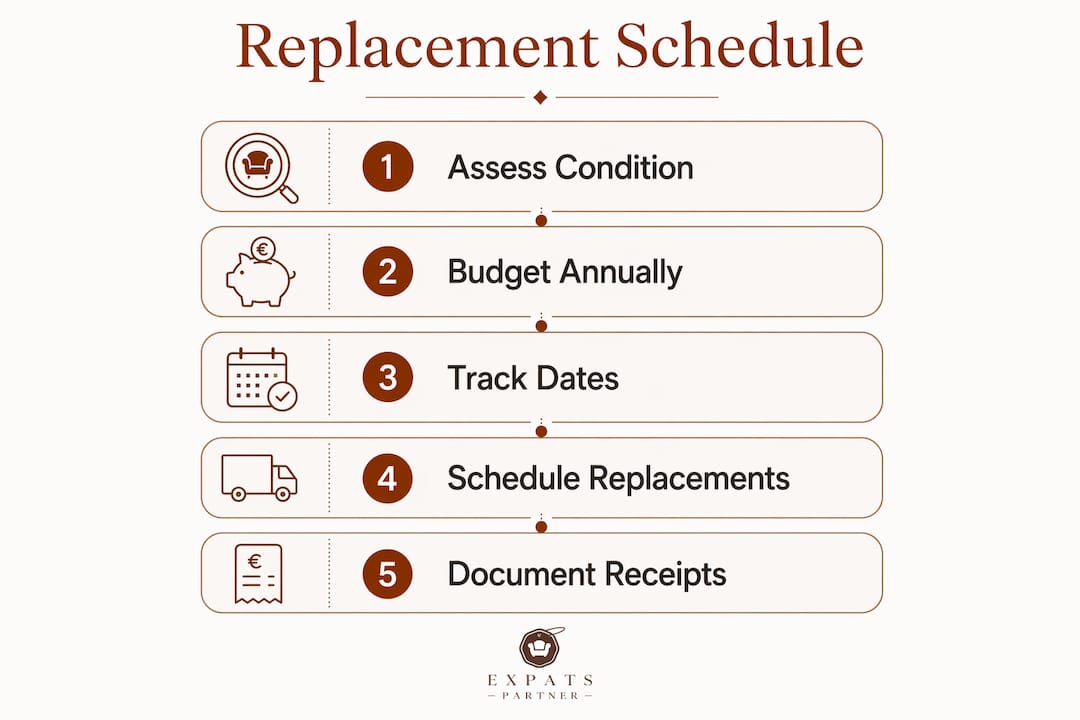
A rolling refresh budget set at 5–8% of original furnishing cost annually is the most reliable way to keep a furnished rental in good condition without facing large, unplanned expenditure. For a unit furnished at S$15,000, that means setting aside S$750 to S$1,200 each year for planned replacements. This figure is not arbitrary. It reflects the reality that different items wear at different rates and need replacing on different cycles.
Replacement timelines by item category
The most useful planning tool is a simple schedule that maps each item to its expected service life. Based on HUD life-expectancy data, the following timelines apply to most furnished rentals:
- Linens and pillows: Replace annually. These absorb the most wear and are the cheapest items to refresh. They account for roughly 35% of a typical annual refresh budget.
- Curtains and window coverings: Replace every 3 years. Fabric fades, hems fray, and dated curtains are one of the first things prospective tenants notice.
- Carpets and rugs: Replace every 5 years. Carpet fibres flatten and stain permanently well before structural failure, which means the visual decline happens faster than the physical one.
- Upholstered furniture: Replace every 4 to 5 years. Sofas and armchairs in rental use receive far heavier traffic than in owner-occupied homes.
- Mattresses: Replace every 5 to 7 years. Tenant satisfaction is directly tied to sleep quality, and a sagging mattress generates complaints and negative reviews faster than almost any other item.
Scheduling replacements in advance prevents the most expensive outcome: an emergency purchase between tenancies when you have no time to compare prices or quality. Standardised brand kits and bulk sourcing reduce furnishing costs by 20 to 30% and cut replacement project timelines from six weeks to ten days. For landlords managing more than one unit, this operational efficiency compounds quickly.
Pro Tip: Build your replacement schedule into a simple spreadsheet with item name, purchase date, expected replacement year, and estimated cost. Review it at each tenancy renewal so you are never caught unprepared.
Which furniture and textile choices work best for rental homes?
Selecting the right materials at the point of purchase is the single most effective way to reduce the frequency and cost of furniture replacement for rentals. The wrong fabric on a sofa can mean replacing it after two tenancies instead of four. The right choice is rarely about aesthetics alone.
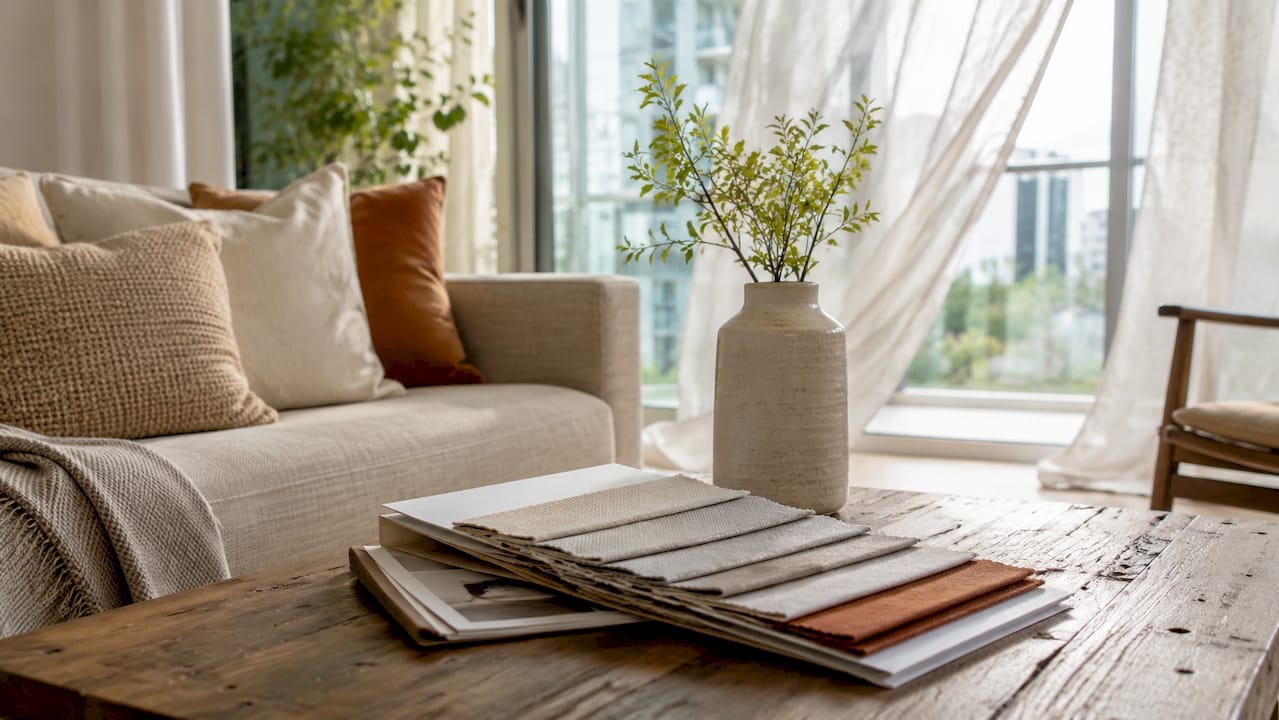
- Performance upholstery fabrics: Choose commercial-grade synthetics such as microfibre, solution-dyed polyester, or olefin. These resist staining, clean easily with a damp cloth, and hold their colour under heavy use. Avoid linen, velvet, or loosely woven natural fibres, which mark easily and are difficult to clean between tenancies.
- Quick-change bedding systems: Fitted sheet sets with duvet covers and pillow protectors allow full bedding refreshes in minutes. Tracking replacement cadence by unit keeps linen quality consistent across a portfolio without requiring a full audit each time.
- Rugs for high-traffic areas: Choose flat-weave or low-pile rugs in mid-tone colours. Deep pile rugs trap dirt and are difficult to clean professionally. Mid-tone colours hide everyday dust and light soiling between cleans without looking neglected.
- Hard-wearing dining and study furniture: Solid timber or powder-coated steel frames outlast MDF or particleboard in rental conditions. Tabletops in laminate or tempered glass are practical choices because they wipe clean and resist scratching better than painted wood.
Pro Tip: When updating rental property decor, choose a neutral colour palette for upholstery and soft goods. Neutral tones photograph well for listings, appeal to a wider range of tenants, and make it easier to replace individual items without mismatching the overall scheme.
How do you manage wear and tear versus damage with tenants?
The distinction between normal wear and damage is one of the most common sources of dispute between landlords and tenants in Singapore. Getting this right protects your relationship with tenants and keeps your replacement costs fairly distributed.
Normal wear is defined as the gradual deterioration that occurs through ordinary, reasonable use. It is a landlord’s cost of doing business, and charging tenants for it is not justified and is prone to dispute without proper evidence. Damage, by contrast, is caused by negligence, misuse, or accidents and can be charged back to the tenant on a prorated basis.
The standard approach to calculating prorated charges follows these steps:
- Establish the item’s total useful life. Use HUD Handbook useful life tables as a reference. A carpet with a five-year life that was new at move-in has a known baseline.
- Determine how much useful life remains at the point of damage. If the carpet was two years old when damaged, three years of useful life remain. The tenant is responsible for 60% of the replacement cost, not 100%.
- Document condition at move-in and move-out. Detailed inventories with photographs are the only reliable way to distinguish pre-existing wear from tenant-caused damage. Without photographic evidence, disputes are almost impossible to resolve fairly.
- Keep records of purchase dates and costs. Linking each item in your inventory to its purchase date and original cost makes prorating straightforward and defensible.
- Communicate the process to tenants at move-in. Sharing your inventory list and explaining how damage charges are calculated builds trust and reduces the likelihood of disputes at the end of a tenancy.
A well-documented inventory also supports your tax claims and replacement budgeting. Linking furniture items to documented service life prevents disputes and improves replacement planning across your portfolio.
What Singapore tax reliefs apply to furniture replacement in rentals?
Singapore landlords renting out furnished residential properties can claim a deduction for the cost of replacing domestic items under the Inland Revenue Authority of Singapore’s rules for rental income expenses. This is commonly referred to as Replacement of Domestic Items Relief, and it applies specifically to replacements, not initial purchases.
The deduction formula is straightforward: cost of new item plus delivery and installation, minus any disposal proceeds received for the old item. If you replace a sofa that cost S$1,200 to buy and deliver, and you received S$50 from a second-hand buyer for the old one, your deductible amount is S$1,150.
| Scenario | Deductible amount | Notes |
|---|---|---|
| Like-for-like replacement (same quality) | Full cost plus delivery, minus disposal proceeds | Most straightforward claim |
| Upgrade to a superior item | Capped at the equivalent like-for-like cost | Excess above like-for-like is not deductible |
| Initial purchase of furnishings | Not deductible under this relief | Capital expenditure rules apply instead |
| Repair of existing item | Deductible as a repair expense, not replacement relief | Different category; keep receipts separately |
Keeping receipts for every purchase, delivery invoice, and disposal transaction is non-negotiable. IRAS requires documentary evidence to support any deduction claim. If you upgrade to a better item than the one replaced, the deduction is capped at the cost of a like-for-like equivalent, so it is worth noting the market price of a comparable replacement at the time of purchase.
Items that qualify include furniture, furnishings, household appliances, and kitchenware used in the rental property. Items that do not qualify include structural fixtures, initial furnishing costs, and items used partly for personal purposes.
Key takeaways
Replacing worn furniture in a rental property is most cost-effective when managed as a scheduled, documented process rather than a reactive one.
| Point | Details |
|---|---|
| Budget a rolling refresh | Set aside 5 to 8% of original furnishing cost annually to cover planned replacements without financial surprises. |
| Follow item-specific timelines | Linens annually, curtains every 3 years, carpets every 5 years, upholstery every 4 to 5 years, mattresses every 5 to 7 years. |
| Choose durable materials | Commercial-grade, stain-resistant fabrics and hard-wearing frames reduce replacement frequency and cleaning costs. |
| Document everything | Detailed move-in and move-out inventories with photographs protect you in disputes and support tax claims. |
| Claim tax relief correctly | Deduct replacement costs minus disposal proceeds; upgrades are capped at like-for-like equivalent cost. |
What we have learned from managing rental furniture in Singapore
From our experience working with landlords and property managers across Singapore, the biggest operational mistake we see is treating furniture replacement as a one-off event rather than a recurring process. A landlord who buys a full set of furnishings, uses them until they fail, and then replaces everything at once faces a large, disruptive cost at the worst possible time, usually between tenancies when the unit is already generating no income.
The landlords who manage this most effectively think about their furnishings the way a facilities manager thinks about building maintenance. They have a list, they have dates, and they have a budget line. When a sofa reaches year four, they are already planning its replacement, not reacting to a tenant complaint.
Standardised furniture kits make this even more manageable. When every unit in a portfolio uses the same sofa model, the same bed frame, and the same dining set, procurement becomes a repeatable process rather than a design project each time. Bulk relationships with suppliers reduce cost, and the operational knowledge of what works in your specific units accumulates over time.
Documentation is the other area where we see landlords underinvest. A thorough move-in inventory with photographs takes perhaps two hours to complete properly. That two hours can save weeks of dispute resolution and thousands of dollars in contested charges. It also makes your tax claims cleaner and your replacement budgeting more accurate.
The practical takeaway is this: treat your rental furnishings as operational assets, build a simple replacement schedule, choose materials that perform under real rental conditions, and keep records that support both your tenant relationships and your tax position. That combination is what separates landlords who manage their properties efficiently from those who are always reacting to the last problem.
— Expats Partner
How Expats Partner supports landlords with furniture replacement
For landlords who want to sidestep the capital outlay and logistical complexity of replacing worn furniture outright, furniture rental offers a practical alternative. Rather than purchasing new pieces, you access quality furnishings on a flexible rental basis, with delivery, setup, and collection handled for you.
Expats Partner provides furniture rental for landlords in Singapore, covering everything from single-item replacements to full-home packages for condos and apartments. For landlords managing frequent tenant turnover, short-term rental options allow you to furnish a unit quickly between tenancies without committing to a purchase. Packages are available across one, two, and three-bedroom configurations, with transparent pricing and reliable logistics support. Get in touch with Expats Partner to discuss the right approach for your property.
FAQ
How often should I replace furniture in a rental property?
The standard replacement cycle is linens annually, curtains every 3 years, carpets and upholstered furniture every 4 to 5 years, and mattresses every 5 to 7 years. Budgeting 5 to 8% of original furnishing cost each year covers most planned replacements without financial strain.
What is the difference between wear and tear and damage in a rental?
Normal wear is gradual deterioration from ordinary use and is the landlord’s responsibility. Damage caused by tenant negligence or misuse can be charged back on a prorated basis, calculated against the item’s remaining useful life at the time of damage.
Can I claim tax relief for replacing furniture in my Singapore rental?
Yes. Singapore landlords can deduct the cost of replacing domestic items, calculated as the cost of the new item plus delivery and installation, minus any disposal proceeds. Initial purchases are not deductible; only replacements qualify under this relief.
What furniture materials last longest in rental properties?
Commercial-grade synthetic upholstery fabrics such as microfibre and solution-dyed polyester, solid timber or powder-coated steel frames, and laminate or tempered glass tabletops offer the best durability in rental conditions. They resist staining, clean easily, and maintain their appearance across multiple tenancies.
Is furniture rental a practical option for replacing worn items in a rental unit?
Furniture rental is a practical option for landlords who want to avoid large upfront replacement costs or need to furnish a unit quickly between tenancies. Flexible rental terms, professional delivery, and setup support make it a cost-manageable alternative to outright purchase, particularly for furnished condos and serviced apartments in Singapore.