
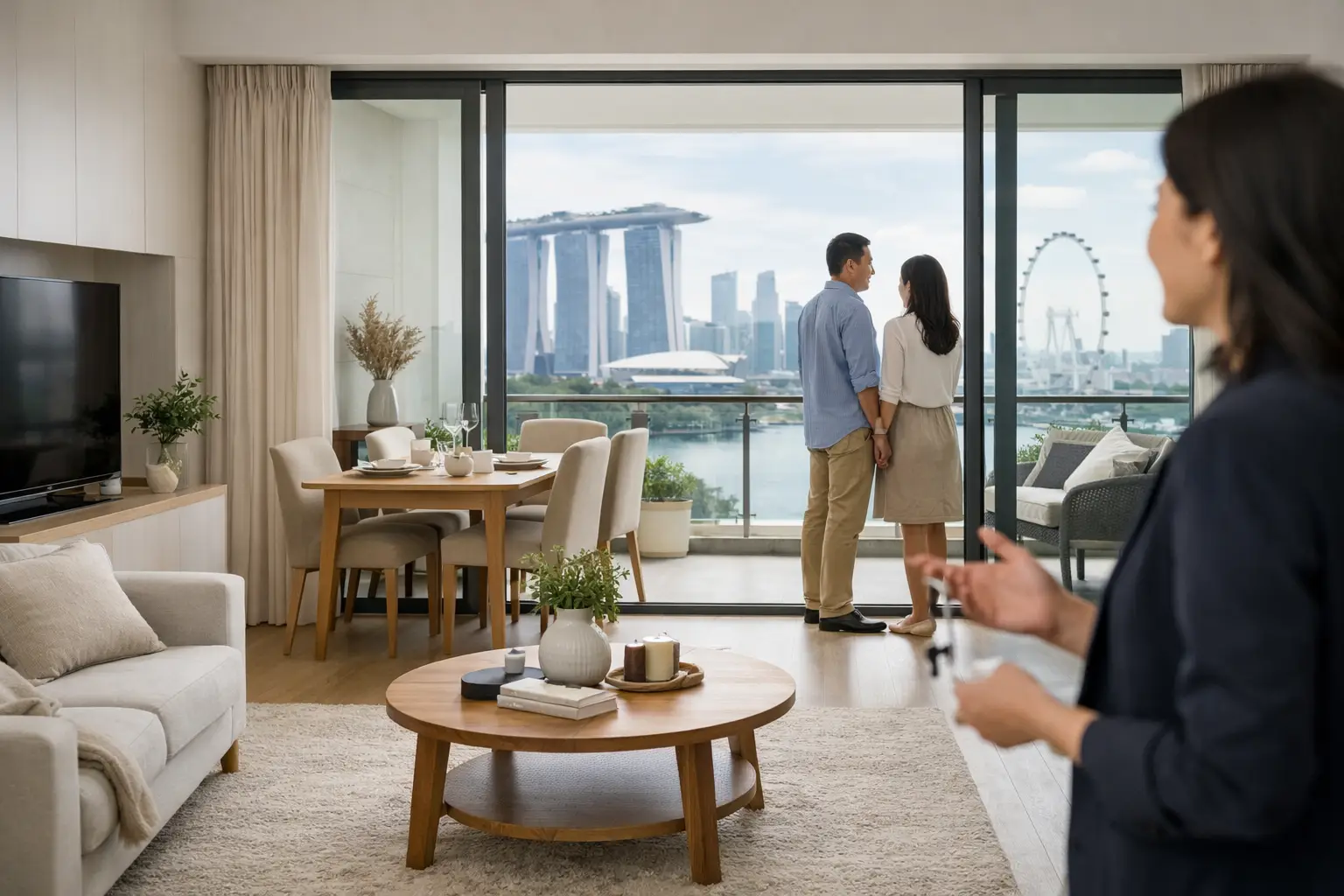
A vacant living room can be perfectly clean, freshly painted and well priced, yet still leave viewers asking themselves, “Would I actually live here?” That hesitation matters. Property styling Singapore gives buyers and tenants the visual cues they need to understand a home quickly, from how a lounge can be used to whether a second bedroom works for family, guests or a home office.
For agents, landlords and homeowners, styling is not about making a listing look fashionable for its own sake. It is a practical way to improve photography, create a stronger first viewing and help people picture the next stage of their life in the property. When done well, it makes the space feel considered, liveable and proportionate without distracting from the home itself.
Why presentation changes property decisions
Most property searches begin on a screen. Potential buyers and tenants scroll through dozens of listings, often within minutes. A bright, tidy image has more stopping power than an empty room with bare walls and difficult-to-read proportions. Once a person books a viewing, the same principle continues: the property must feel easy to understand from the moment they enter.
Furniture establishes scale. A sofa shows the true size of the living area. A dining table confirms that daily meals can happen comfortably. Beds, bedside tables and lamps make bedrooms feel restful rather than like spare boxes. These details answer practical questions before a viewer needs to ask them.
Styling also reduces the mental work required during a viewing. Some buyers can visualise an empty space immediately, but many cannot. In a competitive sale or rental market, a listing should not rely on every prospect having strong spatial imagination. A well-styled home communicates its potential clearly and gives the viewer a more positive starting point.
That does not mean every property needs an elaborate interior scheme. The right level of styling depends on the type of home, target audience, listing price and whether it is being marketed for sale or rent. The aim is always to support the commercial objective, not to impose a decorative identity.
What effective property styling in Singapore looks like
Effective styling begins with the property rather than a fixed furniture package. A compact one-bedroom condominium, a family-sized landed home and a newly completed show unit need different solutions. The furniture should fit the floor plan, complement the light and make circulation around the home feel natural.
Start with the rooms that influence the decision
The living and dining areas usually carry the greatest weight because they establish the first impression and are frequently the focus of listing photographs. A properly sized sofa, coffee table, rug and a simple dining setting can transform an open-plan room from undefined floor space into a believable daily environment.
Bedrooms matter just as much, especially in homes aimed at families, professionals or expatriates relocating to Singapore. The primary bedroom should feel calm and usable, with a bed size that suits the room rather than overwhelms it. Secondary rooms should have a clear purpose. Depending on the likely tenant or buyer, that might be a child’s room, guest room or study.
Smaller areas should not be ignored. An entrance console, balcony seating or a neatly arranged study corner can make a layout feel more complete. However, adding furniture to every available spot is not the answer. Clear walkways and visible floor area often make a home feel more generous.
Keep the style neutral, but never anonymous
Neutral styling is commercially useful because it gives more viewers room to imagine their own belongings in the home. Warm timber tones, light upholstery, soft textures and restrained artwork tend to photograph well while appealing across different preferences.
Neutral does not have to mean plain or sterile. Cushions, plants, a rug and considered accessories bring warmth, especially in properties with a lot of hard surfaces. The balance is important: too little styling leaves the property flat, while too much personal detail can make viewers feel like they are visiting somebody else’s home.
Make light, proportion and flow do the work
Good styling respects what is already working in the property. If a room has generous windows, furniture should not block the light. If a home has an attractive view, seating should subtly direct attention towards it. Where a room is narrow, lower-profile pieces and careful placement can preserve a sense of openness.
Proportion is one of the most overlooked factors. An oversized sofa can make a respectable lounge appear cramped. A tiny dining table in a large dining zone can make the same room feel oddly underused. Styling is most convincing when every piece looks like it belongs there.
Sale staging and rental styling have different priorities
The core principle is similar for both: help the audience understand the home. The emphasis, however, can change.
For a sale listing, styling often focuses on perceived value, lifestyle and emotional connection. Buyers may be comparing several homes within the same development or neighbourhood. The presented property needs to feel memorable, cared for and ready for the next owner. The styling should bring out selling points such as an entertaining area, a flexible study, storage potential or a family-friendly layout.
For rental listings, speed and practical liveability are often more important. Tenants want to see whether the home will work immediately after move-in. A functional dining area, comfortable bedroom setup and suitable work-from-home space can help them make a faster decision. For landlords, furniture rental can avoid the cost and commitment of purchasing pieces that may not suit the next tenant or the next property.
This is particularly relevant for vacant units between tenancies, newly completed homes and properties where an owner does not want to manage delivery, assembly, storage and future disposal. A flexible rental arrangement allows the property to be furnished for its marketing period, then adjusted, extended or collected as required.
When to arrange styling
The best time is before photography and before the listing goes live. Marketing images shape the first wave of enquiries, so staging after the campaign has already started can mean losing valuable momentum. Ideally, the property is cleaned, minor repairs are complete and personal belongings have been removed or reduced before furniture arrives.
For occupied homes, full staging may not always be necessary. A targeted refresh can still make a meaningful difference. Removing excess furniture, rearranging existing pieces, adding selected rental items and preparing the home for photography may be enough. It depends on the property’s current condition, timeline and the amount of work needed to create a consistent look.
Agents should also consider the viewing schedule. A staged unit is most effective when it remains presentation-ready throughout the active marketing period. That means coordinating photography, viewings and furniture collection around the expected campaign length, rather than treating staging as a one-day exercise.
A practical brief for your styling partner
Clear information leads to a faster, more appropriate setup. Before arranging property styling, share the floor plan, current photographs, property type, number of bedrooms, target buyer or tenant and expected marketing dates. It is also useful to flag lift access, loading restrictions, parking arrangements and building management requirements.
The right brief is not simply “make it look nice”. It should explain the outcome you need. For example, an agent may need a two-bedroom condominium to appeal to young professional tenants, while a developer may need a show unit that demonstrates how a compact layout can function for a couple. A relocation team may require a fully furnished home that is ready for an incoming employee with minimal coordination.
At Expats Partner, the focus is on practical staging and furniture rental that supports the property’s purpose. Delivery, setup and collection are managed as part of a clear process, helping clients spend less time coordinating suppliers and more time focused on viewings, enquiries and decisions.
Common mistakes that weaken a listing
The most common mistake is treating vacancy as a neutral condition. Empty rooms are not necessarily wrong, but they place more work on the viewer and often photograph without warmth or scale. Another is using furniture that is unsuitable for the room, either because it is too large, too sparse or mismatched in style.
Overpersonalisation can also work against a sale or rental. Strong themes, excessive ornaments and highly specific artwork may attract a narrow group while putting off everyone else. Finally, a poorly maintained staged space quickly loses its effect. Cushions should be arranged, surfaces cleared and lights checked before each viewing.
A property does not need to look like a magazine spread. It needs to feel like a home where the right person can picture a good life. When presentation makes that decision easier, every photograph and viewing has a better chance of doing its job.
Contact us now at: Kevin Chang – 80119753 sales@expatspartner.com.sg Sales Specialist