
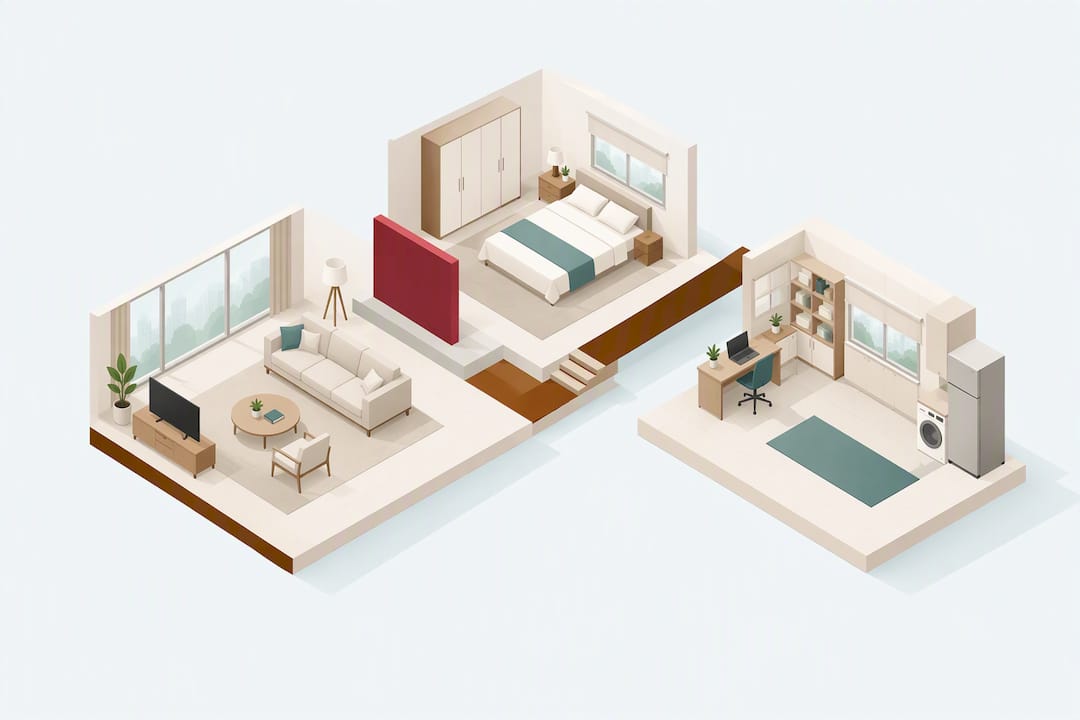
A complete 3 bedroom furnishing list centres on three anchor rooms: living, master bedroom and kitchen or dining, plus a flexible third bedroom and everyday essentials like lighting, window coverings and basic appliances. This guide gives you a printable checklist for every room, a sensible buying order, and budget bands so you can plan without guesswork.
TL;DR:
- Most three-bedroom homes should prioritize furnishing the living room, master bedroom, and kitchen first, with a focus on essential, functional pieces.
- Accurate measurements of doorways, lift dimensions, and room layout are critical to avoid delivery delays or furniture that cannot fit into the home.
- Rental furniture packages offer a flexible alternative, especially for expats, temporary stays, or landlords, and can be coordinated for quick, whole-home setup.
- Budgeting should emphasize the first furniture essentials such as mattress, sofa, and dining table within the first week, while decorative and secondary items can be added later.
- Practical adjustments like removable window coverings, light layering, and furniture on wheels help create a comfortable, adaptable living space suitable for various needs.
Table of Contents
- Whole-home 3 bedroom furnishing checklist at a glance
- Living room checklist: anchor pieces and immediate-use items
- Kitchen and dining essentials: cookware, basics and suitable appliances
- Master bedroom essentials: sleeping, storage and bedside basics
- Second bedroom checklist: guest, child or tenant setups
- Third bedroom as a flexible space: office, nursery or guest room in one
- Bathrooms, laundry and cleaning essentials for move-in readiness
- Entry, storage and organisational pieces that make daily life easier
- Lighting, textiles and window coverings: quick practical choices
- Measurements, access and delivery checklist to avoid ordering mistakes
- Buying order and budgeting: what to buy first and where to save
- How Expats Partner solves the 3 bedroom furnishing job without the upfront cost
- Get a quote or browse packages: the practical next step
- Primary sources and further reading
- FAQ
Whole-home 3 bedroom furnishing checklist at a glance
Before you tackle each room in detail, scan this whole-home version. It works as a printable reference or a quick screenshot to take with you when you’re shopping or briefing a rental supplier.
Living room: sofa, coffee table, TV console, side tables, rug, floor or table lamps.
Dining and kitchen: dining table and chairs, cookware set, small appliances, bin, dish rack.
Master bedroom: bed frame and mattress, wardrobe, bedside tables, lamps, blackout curtains or blinds.
Bedrooms two and three: bed or daybed, storage unit, desk or flexible workspace, lamp.
Bathrooms: towels, bath mat, shower caddy, toilet brush, bin.
Entry and utility: shoe rack, coat hooks, laundry basket, basic cleaning kit.
Every zone also needs the quieter essentials that rarely make anyone’s shortlist until they’re missing: bin liners, a spare lightbulb or two, and curtain or blind hardware that suits the wall type. Before you order anything from this checklist, check your room measurements and confirm the delivery route into the unit. Singapore’s HDB and condominium developments vary in lift size, corridor width and door height, and a sofa that fits the floorplan on paper doesn’t always fit through the actual doorway.
Living room checklist: anchor pieces and immediate-use items
The sofa is the piece that decides how the rest of the living room behaves, so get its size right before anything else. A three-seater sofa typically fits most HDB and condo living rooms comfortably, while an L-shaped sectional needs more floor space to avoid crowding a walkway. Measure your room’s longest clear wall first, then work outward.
A rug anchors the seating area visually and acoustically, softening hard flooring that’s common in newer developments. As a rule of thumb, the rug should extend at least partway under the front legs of the sofa, not float in the middle of the room looking like an afterthought. Pair it with a coffee table sized to leave 45 centimetres of walking clearance around it.
The smaller pieces are what make a living room feel finished rather than furnished:
- A TV console or media unit, sized to the wall rather than the television.
- Two side tables, one within reach of the sofa for drinks and phones.
- A floor lamp and at least one table lamp, since overhead lighting alone tends to feel clinical.
- A storage basket or ottoman for throws, remotes and the clutter that otherwise piles on the coffee table.
For rentals or short stays, choose pieces that assemble quickly and don’t require wall fixings. Rental packages are worth considering here precisely because sofas and consoles are bulky, awkward to dispose of later, and expensive to buy new for a home you might leave in a year or two.
Pro Tip: Measure your lift interior, not just the room. A sofa that fits through your front door can still get stuck if the lift car is shallower than the sofa’s depth, which is a common problem in older Singapore blocks.
Kitchen and dining essentials: cookware, basics and suitable appliances
A functional kitchen doesn’t need to be extensive on day one, but it does need the right core pieces. Start with cookware that covers the basics: a frying pan, a saucepan, a pot large enough for soup or pasta, and a chopping board with at least one good knife. Add measuring items, a colander and basic utensils, and you can cook a full meal within an hour of moving in.
For appliances, prioritise by how often you’ll actually use them:
- A refrigerator and a microwave are non-negotiable from day one.
- A kettle and toaster follow close behind for most households.
- A washing machine matters early too, since laundry backs up fast in a new home.
- Items like a stand mixer, air fryer or slow cooker can wait until week two or later without disrupting daily life.
Dining furniture depends heavily on your layout. A standard four-seater table works for most three-bedroom units, but if your dining area doubles as a workspace or overflow storage, consider an extendable table or a bar-style counter with stools instead. Smaller layouts benefit from multi-use pieces, such as a console table that folds out for guests, rather than a fixed table that eats floor space every day of the week.
Master bedroom essentials: sleeping, storage and bedside basics
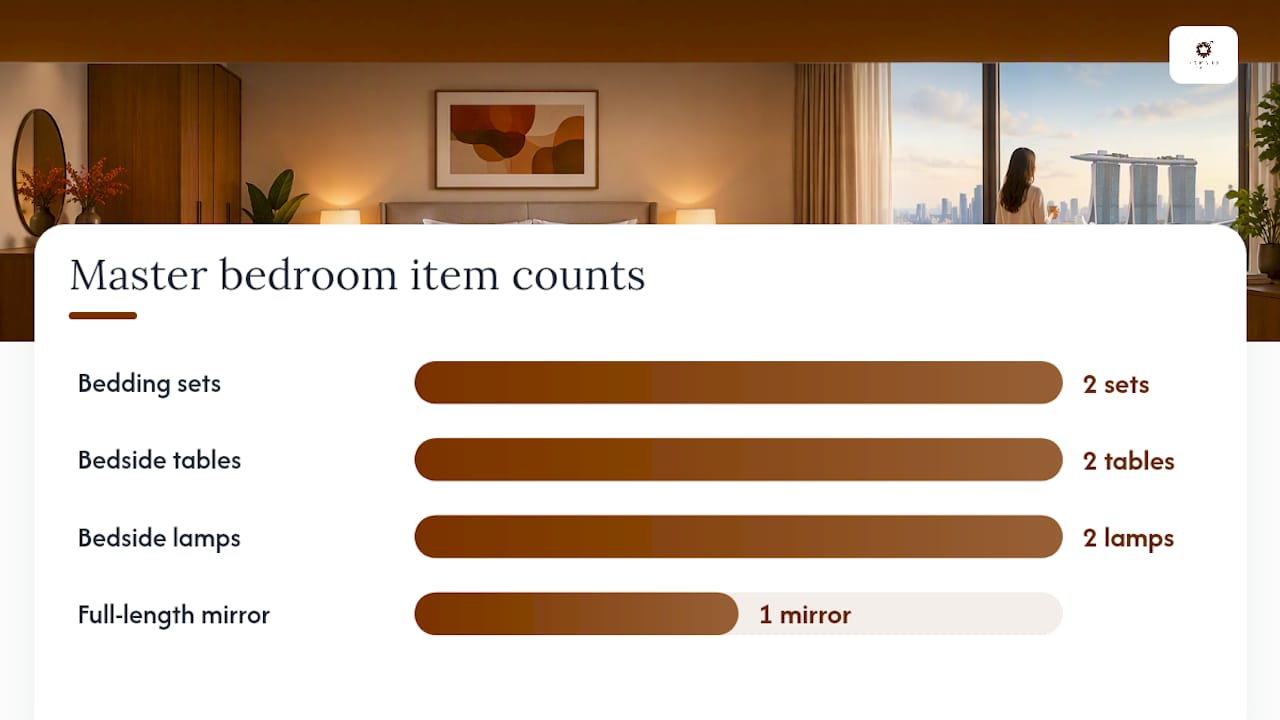
Sleep quality depends more on the mattress than almost any other single purchase in the home, so this is one item worth prioritising over style. Choose a mattress firmness suited to how you actually sleep, and pair it with a mattress protector from day one, since replacing a stained mattress is far costlier than protecting a new one. Budget for at least two sets of bedding so you can wash one while sleeping on the other.
The wardrobe needs to match what you’re storing, not just the room’s aesthetic. A couple sharing a master bedroom typically needs a wardrobe with at least 1.2 to 1.5 metres of hanging space, plus drawers for folded items. If the built-in storage in your unit is generous, as many newer HDB flats now offer, you may need less freestanding furniture than you’d expect.
Round out the room with:
- Two bedside tables, even simple ones, for lamps, water and everyday items.
- A pair of bedside lamps, since overhead lighting before bed rarely suits winding down.
- Blackout curtains or blinds, particularly important for east or west-facing units that catch strong morning or afternoon sun.
- A full-length mirror, which most bedrooms lack until someone remembers it on moving day.
Lighting and window coverings do more for how “finished” a bedroom feels than most people expect, often more than the furniture itself.
Second bedroom checklist: guest, child or tenant setups
What goes into the second bedroom depends almost entirely on who’s using it, so decide the room’s job before buying anything.
Guest room setup: a comfortable bed (single or queen depending on space), a bedside lamp, and a small chest of drawers or shelf unit for a guest’s belongings. Keep it simple. Guests don’t need a full wardrobe, just somewhere to put a suitcase down.
Child’s room: prioritise safety and growth room. Choose furniture with rounded edges, anchor tall bookshelves or dressers to the wall, and pick a bed frame that can transition from toddler to older child rather than needing full replacement in two years. Storage should be low enough for a child to use independently.
Tenant or room-to-rent setup: if you’re renting this bedroom out separately, note that HDB sets specific rules on renting out bedrooms, including occupancy limits that vary by flat type. Furnish with a lockable wardrobe or storage unit, a study desk, and a bed suited to single occupancy, and confirm your flat’s eligibility before advertising the room.
Third bedroom as a flexible space: office, nursery or guest room in one
The third bedroom is where most three-bedroom homes lose or gain the most practical value, because it rarely serves one fixed purpose for long. Furnish it to flex rather than to commit.
A sofa-cum-daybed is the single most useful anchor piece here: it works as a guest bed at night and a reading or lounging spot by day, without needing a full bedroom swap. Pair it with:
- A fold-away or wall-mounted desk that disappears when the room needs to switch roles.
- Modular shelving units that can be reconfigured as the room shifts from office to nursery to guest space.
- Storage on castors, so boxes and equipment move easily when you need the floor clear.
- A single, adjustable lamp rather than a fixed overhead fitting, since task lighting needs change with the room’s use.
If you’re setting this room up as a home office even part-time, desk depth matters more than most buyers realise. Aim for at least 60 centimetres of depth to fit a laptop and monitor comfortably, and choose a chair with adjustable height rather than a dining chair pulled in as a stopgap.
Pro Tip: Keep everything in this room on wheels or easily liftable. The rooms that switch use most successfully are the ones where nothing weighs more than one person can move alone.
Bathrooms, laundry and cleaning essentials for move-in readiness
Bathrooms need less furniture than any other room, but the small items matter disproportionately to how “lived in” the space feels. Stock at least two full towel sets per bathroom, a bath mat, a shower caddy or wall-mounted basket, and a toilet brush and holder. If the shower is enclosed rather than screened, add a shower curtain and liner.
A laundry corner comes together with a basket or hamper, a drying rack if your unit lacks external drying space, and enough detergent and softener to get through the first fortnight without an urgent supermarket run.
For move-in cleaning, a compact kit covers most first-day needs: an all-purpose cleaner, a mop and bucket, a vacuum or broom, microfibre cloths, and bin liners for every room. New BTO flats in particular benefit from a thorough clean before furniture arrives, since construction dust settles into corners and skirting that are far harder to reach once beds and wardrobes are in place.
Entry, storage and organisational pieces that make daily life easier
A shoe rack or cabinet just inside the door, paired with a row of hooks for bags and jackets, stops the entryway from becoming a dumping ground within the first week. A small console or bench nearby gives you somewhere to sit while removing shoes, which matters more in Singapore households than in most.
Inside the bedrooms, closet organisers and under-bed storage boxes multiply your usable space without adding furniture footprint, particularly useful in HDB layouts where floor area is tighter than the room count suggests. Keep a basic toolbox on hand too: a screwdriver set, a hammer, spare screws and picture hooks cover most quick fixes without a hardware run.
Lighting, textiles and window coverings: quick practical choices
Every room needs at least one ambient light source and one task light, since relying on a single ceiling fitting leaves most rooms feeling flat. Bedrooms typically need two lamps (bedside), living rooms benefit from three light sources at different heights, and kitchens need brighter, cooler light over prep areas specifically.
For window coverings in a rental, removable or tension-mounted curtain rods avoid drilling into walls you don’t own, while blackout blinds with adhesive brackets suit bedrooms without damaging the frame. Layer in rugs, cushions and throws last. They’re the cheapest way to make a newly furnished room feel settled rather than staged, and they’re easy to swap later if your taste changes.
Measurements, access and delivery checklist to avoid ordering mistakes
Getting furniture into a Singapore home is often the hardest part of the whole exercise, harder than choosing it. Work through this before you order anything bulky:
- Measure every internal doorway height and width the furniture must pass through, not just the room it ends up in.
- Check lift dimensions and corridor turns, especially in older HDB blocks where lifts can be narrower than expected.
- Note outlet positions and door swing directions in each room before finalising furniture placement.
- Photograph tricky corners, staircases and lift interiors to send to your vendor or delivery team in advance.
- Confirm assembly service, lead times, and whether the delivery team will remove packaging or old furniture on the same visit.
Skipping this step is one of the most common causes of delayed or failed deliveries, and it’s entirely avoidable with a five-minute walk-through before you order.
Buying order and budgeting: what to buy first and where to save
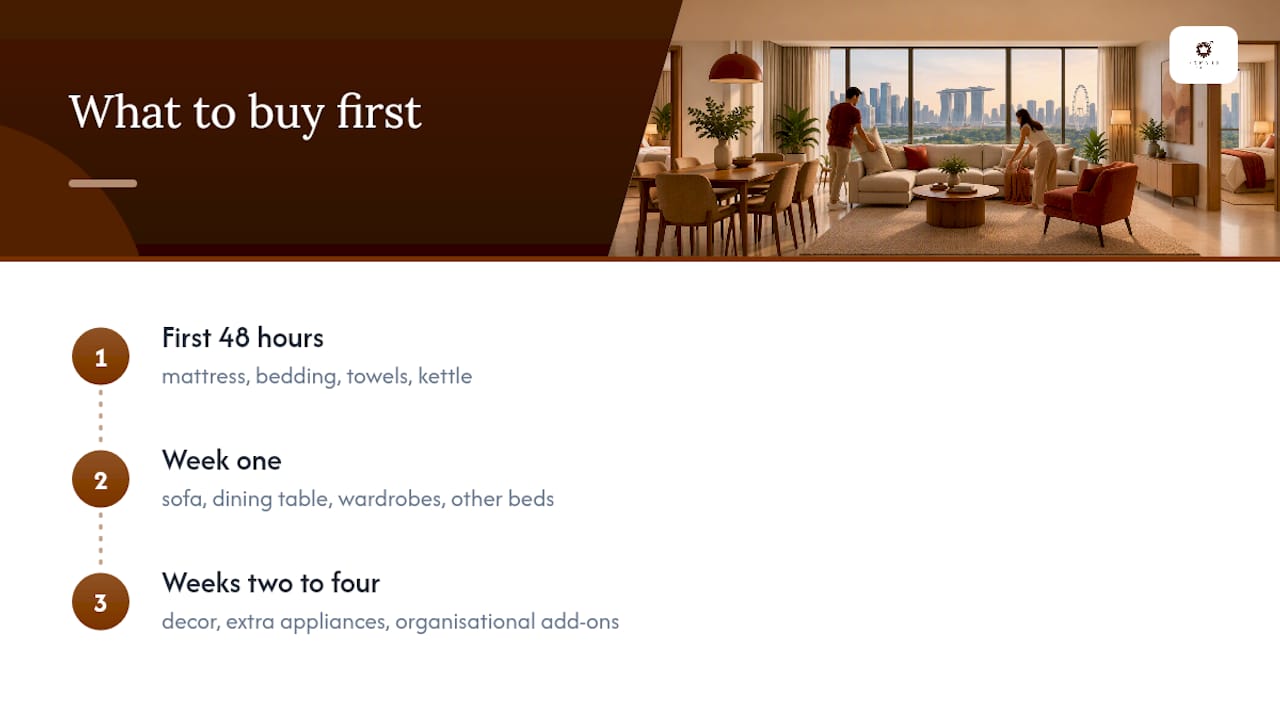
The first 48 hours after moving in should cover sleep, a shower and basic cooking, nothing more. That means a mattress, bedding, towels and a kettle at minimum. Week one adds the anchor pieces: sofa, dining table, wardrobes and the beds for other bedrooms. Everything else, decor, extra appliances, organisational add-ons, can follow across weeks two to four without disrupting daily life.
On budget, prioritise anchor pieces (mattress, sofa, dining table) over decorative items, and avoid pouring your entire budget into one room while others sit empty. A useful split is to weight roughly half your furnishing budget toward the living room and master bedroom combined, since these see the heaviest daily use, with the rest spread across the remaining rooms and essentials.
Combining new purchases for high-contact items like mattresses with second-hand or rented pieces for anchors you’ll replace later is a common way to hit full functionality without overspending in month one.
How Expats Partner solves the 3 bedroom furnishing job without the upfront cost
Buying every item on this checklist outright, then storing or disposing of it later, is exactly the cost and hassle rental packages exist to remove. There are full-home furniture packages built around Singapore floorplans, with coordinated delivery and installation handled end to end rather than left to you to schedule.
This route tends to suit a specific set of readers particularly well:
- Expats relocating on a fixed-term contract who don’t want to own furniture they’ll sell at a loss.
- Landlords staging a unit for tenants who need it rental-ready fast, without buying stock that sits between tenancies.
- Temporary occupants, corporate housing teams and short-term lets where flexibility matters more than ownership.
When comparing a package against buying room by room, check three things: what’s actually included in the inventory, how flexible the rental term is if your plans change, and whether delivery and installation are coordinated as one visit rather than several. Expats Partner’s full-home rental packages are built around exactly this kind of flexible, relocation-first thinking, and landlords furnishing a unit between tenants may also find it worth reviewing furniture rental guidance for landlords before committing to a purchase-based approach.
Get a quote or browse packages: the practical next step
If working through this checklist has you leaning toward renting rather than buying, the process is straightforward. Measure your rooms and access points as outlined above, choose the package size that matches your household, then book a delivery slot that suits your move-in date.
The Family package for a two-bedroom apartment is listed at 718 SGD per month, and the Comfy package for a one-bedroom apartment runs 338 SGD per month, giving you a rough sense of scale before requesting a three-bedroom quote. Rather than buying every anchor piece outright and finding storage or a buyer for it later, a package puts a functioning home together in one coordinated delivery. Browse the current furniture rental packages to see what’s included, or start with the full range of furniture rental options if you’re still comparing rental against buying. If you’d rather talk through a bespoke three-bedroom setup, the Expats Partner team can put together a quote based on your exact layout and move-in date.
Primary sources and further reading
Rules on renting out bedrooms, occupancy limits and move-in finishes come from official guidance rather than general advice, so check the primary source before making decisions that touch tenancy or renovation.
- HDB’s terms and conditions for renting out bedrooms, covering occupancy limits by flat type.
- MyNiceHome’s HDB move-in guide, useful for understanding finishes and fittings before you drill or mount anything.
- A practical home staging checklist for sellers for readers preparing a property for sale rather than a straightforward move-in.
- Expats Partner’s home furniture rental inventory, for browsing specific pieces mentioned throughout this checklist.
FAQ
What are 20 things commonly found in a bedroom?
A typical bedroom holds a bed frame, mattress, pillows, bedding, a wardrobe, a chest of drawers, bedside tables, lamps, curtains or blinds, a mirror, a rug, a laundry basket, storage boxes, a desk (in flexible rooms), a chair, hooks, an alarm clock or charging station, artwork or decor, a bin, and a fan or air conditioning unit. Not every bedroom needs all twenty, but this covers most standard setups across a three-bedroom home.
How much does it cost to fully furnish a 3 bedroom home?
Costs vary widely depending on whether you buy new, mix in second-hand pieces, or rent. Expats Partner’s published packages give a useful benchmark: the one-bedroom Comfy package is 338 SGD per month and the two-bedroom Family package is 718 SGD per month, so a three-bedroom equivalent would sit above that scale. Current three-bedroom package pricing is available directly from Expats Partner’s package listings.
What should I include in my bedroom decor list?
Beyond core furniture, prioritise blackout or light-filtering window coverings, a bedside lamp for each side of the bed, a rug to soften hard flooring, and layered textiles like a throw and cushions. These items do the most to make a bedroom feel finished without requiring large furniture purchases.
What are the essential things to furnish a bedroom?
At minimum, a bedroom needs a bed frame and mattress, bedding, a wardrobe or storage unit, a bedside table, a lamp, and window coverings for privacy and light control. Everything else, decorative textiles, a desk, additional storage, can be added once the room is functional.