
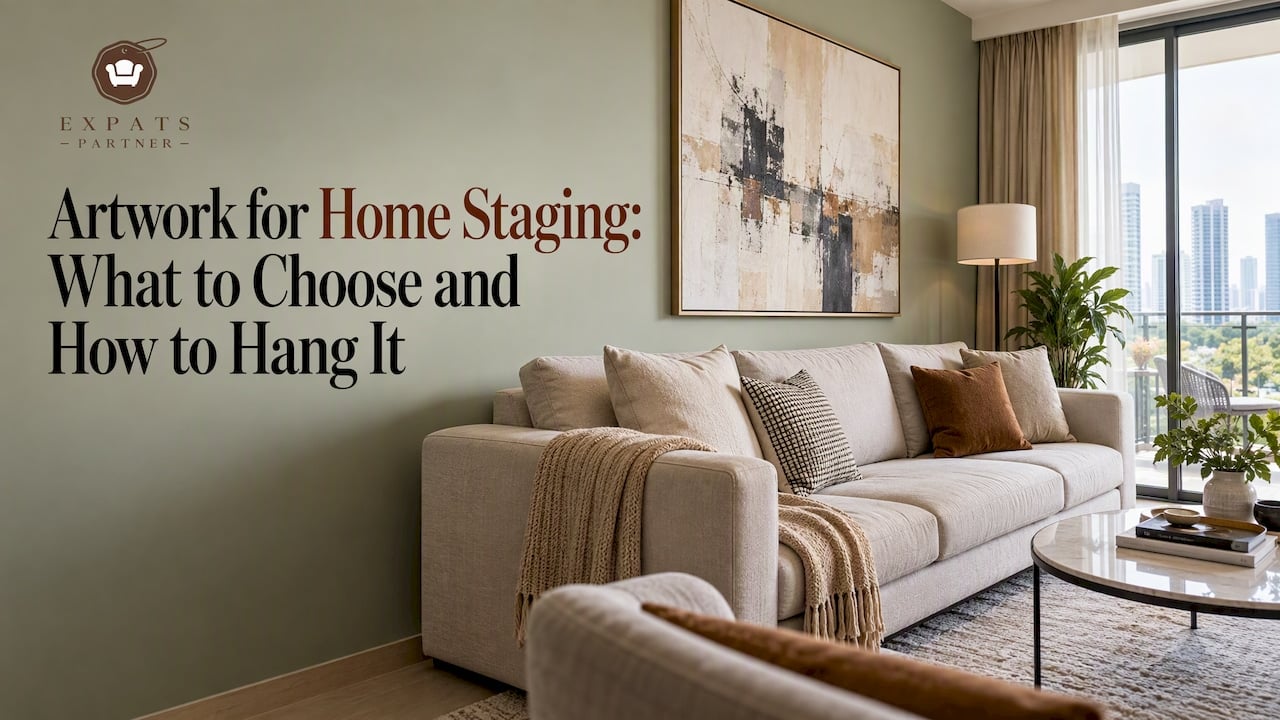
The best artwork for home staging is calm, neutral and generously scaled. Think abstract compositions, soft landscapes, botanical prints or black-and-white photography, hung at a sensible height so the room looks finished and easy to imagine living in. Art should never compete with the home. Its job is to make the space feel warm and complete in photographs and at the viewing, without telling buyers or tenants whose home it used to be.
This guide is for Singapore owners, landlords, agents and developers who want a viewing-ready home. It covers what to choose, what to remove, how to size and place each piece, how HDB flats, condominiums and landed homes differ, and what to think through if you rent decor rather than buy it.
TL;DR
- Choose neutral, non-polarising art: abstracts, serene landscapes, botanicals, architectural studies or black-and-white photography.
- Remove family photographs, religious or political imagery and anything highly personal, so viewers can picture their own life in the space.
- Go larger rather than smaller: one well-scaled piece usually looks better than a cluster of small frames, especially in compact Singapore homes.
- Hang the centre of a piece at roughly 145 to 150 cm from the floor, and keep art 10 to 25 cm above a sofa or bed.
- If you rent or borrow decor for staging, agree in writing who owns it, who insures it and what condition it should come back in.
Table of Contents
- Why artwork matters in a staged home
- What kinds of art suit a staged home
- What to take down before viewings
- Sizing, height and placement
- Room by room: where art helps most
- Art for HDB flats, condominiums and landed homes
- Staging for rental listings
- Renting or buying artwork for staging
- How we help with staging
- A simple process for choosing staging art
- Common mistakes to avoid
- FAQ
Why artwork matters in a staged home
Furniture tells a viewer what a room is for. Art tells them how the room should feel. A bare wall behind a sofa reads as unfinished, and in photographs it leaves the eye with nowhere to land. A well-chosen piece gives the room a focal point, adds colour and gives the wall some depth.
Styling professionals describe the same effect in similar terms. Art sets the mood, adds personality and gives a room layers. Stagers also use placement deliberately: a large piece can draw attention toward a feature you want buyers to notice, such as a good window or a generous dining area, and away from a corner that is less flattering.
There is also a practical reason. Most buyers and tenants first meet your home through listing photographs. Empty walls look cold on a screen. Art that is clean, balanced and in the right proportion helps a listing photograph look finished without adding visual noise.
If you are planning the whole presentation, our guide on how to stage a property listing well shows where art fits in the wider sequence: declutter, clean, furnish, then style.
What kinds of art suit a staged home
The guiding idea is simple. Staging art should be agreeable to as many people as possible. A piece you love is not always a piece a stranger will love, so choose pictures that feel pleasant and say very little.
Abstract compositions
Abstract art is the safest all-rounder. It has no subject to like or dislike, it can pick up the colours already in the room, and it suits modern condominiums and older flats alike. Choose soft, low-contrast palettes in warm neutrals, muted blues, sage or sand rather than loud reds or heavy blacks.
Serene landscapes and nature
Forest scenes, misty fields, calm water and coastal horizons add a sense of openness and quiet. This works well in Singapore, where many homes are compact and buyers respond to anything that makes a room feel more spacious. Keep the horizon level, the colours gentle and the scene generic rather than tied to one famous place.
Botanical prints
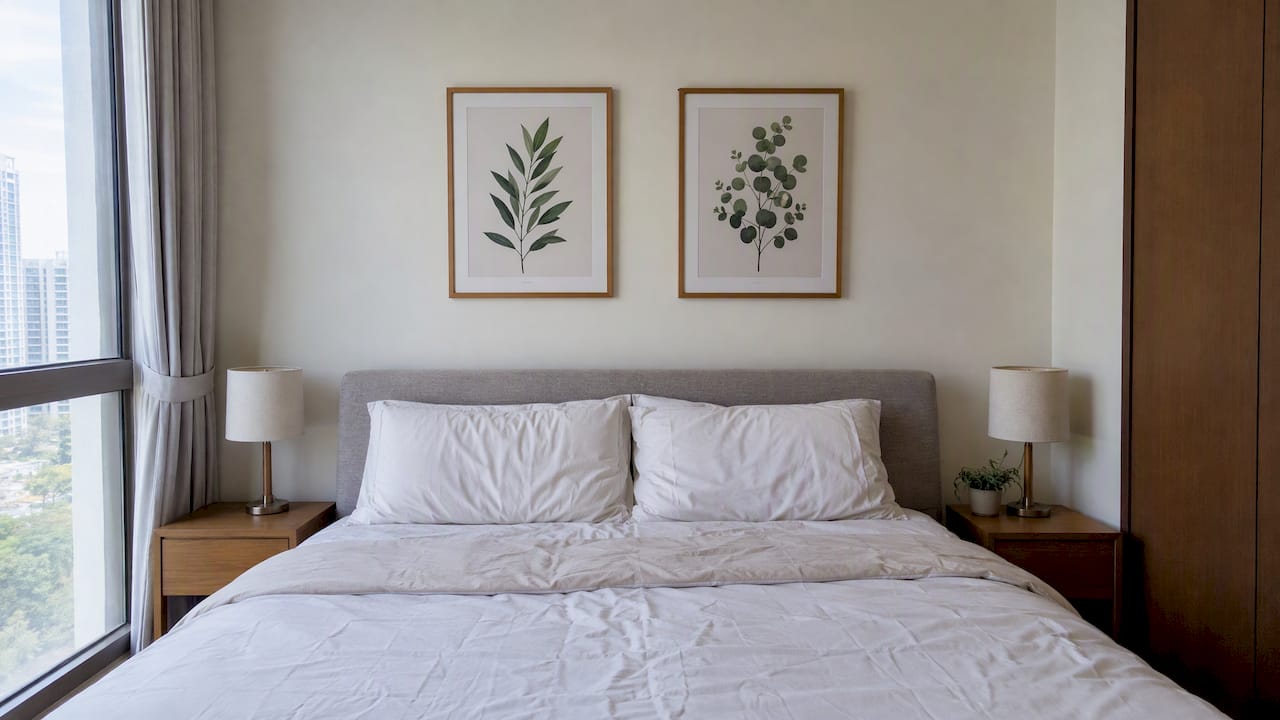
Leaves, ferns, palms and simple flower studies suit our climate and bring a fresh look to bedrooms and dining areas. They also work well beside real greenery. Pairing a botanical print with a few plants gives a room a cohesive, natural feel.
Black-and-white photography
Monochrome images are a dependable default because they sit comfortably with almost any floor, wall colour or sofa fabric. Architectural details, textures and abstract close-ups work better than portraits or street scenes, which bring people and stories into the frame.
Original or distinctive pieces for higher-end homes
In a luxury listing, a generic framed print can make the home feel interchangeable with every other staged property. One carefully chosen original, used selectively to anchor a living or dining room, can suggest care and intention. A common comment among show-suite designers is that art hinting at a realistic, well-travelled personality can make a space feel like a home rather than a product. The key word is hint: the piece should suggest taste without telling a specific story.
For colour decisions around the art, read our guide to the best staging colours for sellers in Singapore before you buy or borrow anything.
What to take down before viewings
Removing the wrong pieces matters as much as adding the right ones. Viewers need to imagine their own furniture, routines and family in your rooms. Anything that reminds them it is someone else’s home gets in the way.
Take down:
- Family photographs and portraits. Images of people draw attention to the current occupants and make viewers feel they are intruding.
- Religious imagery and politically charged pieces. Even tasteful examples can divide opinion, and Singapore’s mix of cultures makes it wise to keep walls neutral.
- Highly specific or quirky art. A strongly themed piece may be loved by one viewer and disliked by ten.
- Nudes and anything that could unsettle a family viewing. Stay with subjects that work for every age.
- Poor-quality prints, curled posters and chipped frames. Worn art lowers the perceived quality of the whole room.
- Too many small frames. A gallery wall of twenty photos is the opposite of a calm, easy-to-imagine home.
A useful test: if a viewer could describe the picture in a sentence and form an opinion about the owner, replace it.
Our article on neutral styling for home viewings covers the same principle across the whole home, from shelves to bathrooms.
Sizing, height and placement
Most staged rooms fail on scale, not on taste. Art that is too small floats on the wall and makes the room look under-furnished. The rules below are the ones stylists use as a starting point. Adjust them by eye once the piece is up.
| Situation | Guideline |
|---|---|
| Centre height of any piece | About 145 to 150 cm from the floor |
| Above a sofa or headboard | Bottom edge about 10 to 25 cm above the furniture |
| Width above furniture | Roughly 60 to 75% of the furniture’s width |
| Above a bed or sofa | Landscape orientation |
| Narrow walls and hallway ends | Portrait orientation |
| Small wall | One larger piece rather than several small ones |
| Heavy frames | Fix into a solid wall or stud, not a weak surface |
Go bigger than your instinct
Most people choose art that is too small. If you are choosing between two sizes, take the larger. On a compact wall in a one-bedroom flat, a single large piece reads as intentional, while three small ones read as clutter.
Group with care
If you do pair or group pieces, treat them as one shape. Keep equal gaps, matching frames and a shared colour thread. A pair of identical botanical prints on either side of a bedhead is a classic staging move because it looks balanced and calm.
Use art to direct the eye
Place your strongest piece on the wall viewers see first when they walk in, usually the main living wall or the wall facing the entrance. Leave side walls quieter. Do not hang art where it competes with a good view or a window.
Hang it securely
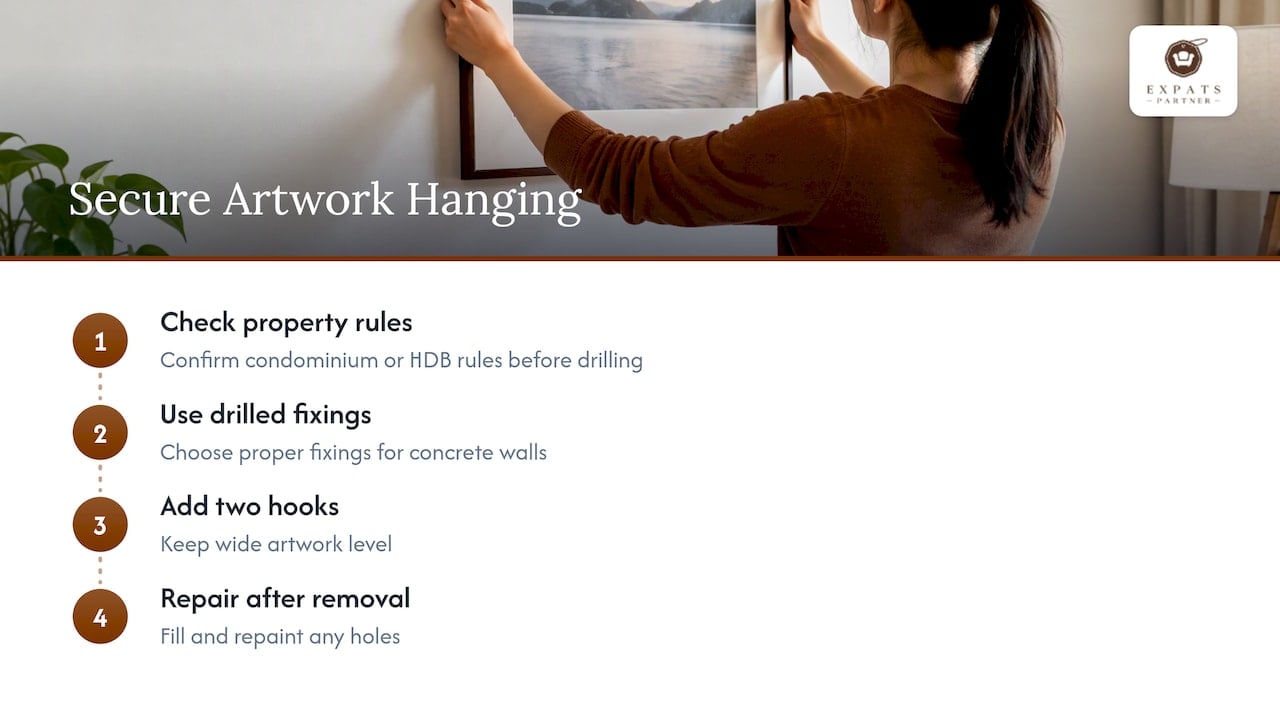
Framing and hanging are part of the presentation. A crooked frame is noticed instantly. Use two hooks for wide pieces so they stay level. Singapore flats typically have concrete walls, so use proper drilled fixings rather than adhesive strips for anything of weight, and check the rules of your condominium management or HDB flat before you drill. Fill and repaint any holes if you remove art after staging.
Room by room: where art helps most
Living room
This is where your best piece goes. Hang one large landscape or abstract above the sofa and keep the rest of the wall clear. Pair it with a lamp and a plant to complete the corner. For layout, see our notes on the best furniture layouts for viewings.
Bedrooms
A calm piece above the headboard completes the bed in photographs. Choose soft colours and gentle subjects. Avoid anything dramatic or dark, because the bedroom should read as restful.
Dining area
Botanical prints, abstracts or a still-life with muted colours suit dining spaces. If the table sits against a wall, hang art centred on the table, not on the wall.
Hallways and entrances
Portrait-orientation pieces suit a narrow wall or the end of a corridor. A good piece at the end of a hallway draws viewers through the home and makes the space feel longer.
Home offices and study corners
Keep art simple and light. A clean abstract or monochrome print makes a small workspace look organised and not cramped.
Bathrooms and kitchens
Usually leave these bare or add a single small, moisture-tolerant piece. Clean surfaces and good lighting matter more here than decoration.
Art for HDB flats, condominiums and landed homes
The kind of property changes how much art you need and how it should be used.
HDB flats. Rooms are efficient and walls are limited. Use one strong piece in the living room and a quieter piece in the main bedroom. Too much decoration makes a flat feel smaller. Our guide to HDB resale home staging explains how to prioritise a limited staging budget.
Small condominium units. Single, well-scaled pieces work best. Pair with light furniture so the home feels open. Our home staging ideas for small condos in Singapore cover this in more detail.
Landed homes and larger condominiums. Larger rooms can handle statement pieces, and double-height or long walls can take oversized art. Here the risk is the reverse: walls that look under-dressed. Use bigger scale, and consider one original piece to anchor the main living area. See how to stage landed property for faster sales.
If you are unsure which approach fits your property type, why HDB and private property staging differs is a useful comparison.
Staging for rental listings
Art for a rental listing follows the same principles but with one change: tenants are often expatriates arriving from overseas who will likely add their own belongings. Light, tidy, neutral walls tell them the home is ready to live in. Avoid pieces that feel too decorative or too hard to live with, and keep frames simple so a landlord is not worried about damage or loss. Our guide to staging rental listings covers what landlords and agents should prioritise.
Renting or buying artwork for staging
Many owners ask whether to buy prints, borrow from a friend or rent decor. The answer depends on how long the home will be on the market and how much you want to keep afterwards.
Buying makes sense if you like the pieces and will reuse them in your next home or another property. Choose affordable framed prints in neutral subjects. The risk is that you end up with art you do not want after the sale.
Renting suits owners who want a styled, ready look for a defined period without storing or disposing of anything afterwards. This is the same logic as furniture rental: you pay for the period you need and avoid the cost of ownership.
Using what you already own is fine if the pieces pass the neutrality test above and are in good condition.
If you rent or borrow art for staging, agree these points in writing before anything is hung:
- Ownership. The art stays the provider’s property unless you agree otherwise.
- Insurance and liability. Who is responsible if a piece is damaged or lost during the period, and whether your home insurance covers it.
- Condition. A simple condition list with photographs at delivery and collection.
- Duration and extension. The rental term, and what happens if the sale or tenancy takes longer than planned.
- Sale conditions. Whether any item can be purchased by the buyer, or must be removed before handover.
- Hanging and wall repairs. Who installs, who removes and who fills any holes.
Because pricing for artwork varies with the pieces and the period, ask for a written quotation, and compare it with the cost of buying a set of framed prints.
How we help with staging
At Expats Partner, we stage homes, offices and properties in Singapore with real furniture inventory, coordinated delivery and collection, and flexible rental periods. Our catalogue includes lamps and lighting, florals and plants, and appliances and decors, which are the finishing touches that make a staged room feel complete next to the art on your walls. Tell us about your property and what you already own, and we will advise what the home needs for viewings.
Our published home staging packages start at S$888 per month for HDB flats and S$1,888 per month for semi-detached and landed homes, and for condominiums, penthouses and apartments. You can see them on our packages page.
If you want to see what staging can do, read our home staging results example, or contact us through the Expats Partner website to discuss your property and timeline. More advice is collected in our home staging tips.
A simple process for choosing staging art
Use this order when you are preparing a home for viewings:
- Walk each room as a stranger would. Note every wall viewers see first.
- Remove everything personal. Photographs, souvenirs, religious items and unusual pieces come down first.
- Repair and repaint the walls. Fill old holes so the background is clean.
- Choose one hero piece for the main living wall. Size it to about two-thirds of the furniture width below.
- Add one supporting piece in the main bedroom. Keep it quiet and soft.
- Check colour harmony. Art should pick up one or two tones already in the room.
- Hang at the right height. Centre at roughly 145 to 150 cm, level and secure.
- Photograph the room. Look at the picture on a phone screen. If anything draws the eye for the wrong reason, adjust or remove it.
The final test is the calm test: does the room feel quiet, bright and easy to imagine living in? If so, the art is doing its job.
Common mistakes to avoid
- Art hung too high. The most frequent error. Lower it so it relates to the furniture below.
- Mismatched frames. A mix of finishes looks accidental. Choose one or two frame tones.
- Too many pieces. A few well-chosen items beat a busy wall.
- Colour clashes. Strong accents that fight the sofa or floor will date the photograph.
- Leaving nail holes. Visible old marks suggest neglect.
- Forgetting lighting. Art in a dark corner is wasted. Good lighting makes the whole scene look more inviting.
FAQ
What is the best artwork for home staging?
Neutral, non-polarising pieces work best: abstracts, calm landscapes, botanical prints and black-and-white photography. They suit the widest range of buyers and tenants and sit comfortably with different furniture and wall colours. Avoid personal, political or religious subjects.
Should I remove family photos when staging a home?
Yes. Family photographs make viewers feel they are in someone else’s home and make it harder for them to picture their own. Replace them with neutral art or leave the wall clear, and store the photographs until after the sale or tenancy begins.
How high should I hang artwork when staging?
A good starting point is to centre the piece at about 145 to 150 cm from the floor. Above a sofa or bed, leave a gap of roughly 10 to 25 cm between the furniture and the bottom of the frame. Adjust by eye, and use secure fixings suited to concrete walls.
Is it better to rent or buy art for staging?
Buy if you will reuse the pieces, and rent if you want a styled look for a set period without storage or disposal. Whichever you choose, agree ownership, insurance, condition and return terms in writing before anything goes on the wall.
Does every room need art?
No. Prioritise the living room and main bedroom, add one piece to the entrance or dining area if it helps, and leave kitchens and bathrooms mostly bare. A few well-placed pieces look more deliberate than art in every room.