
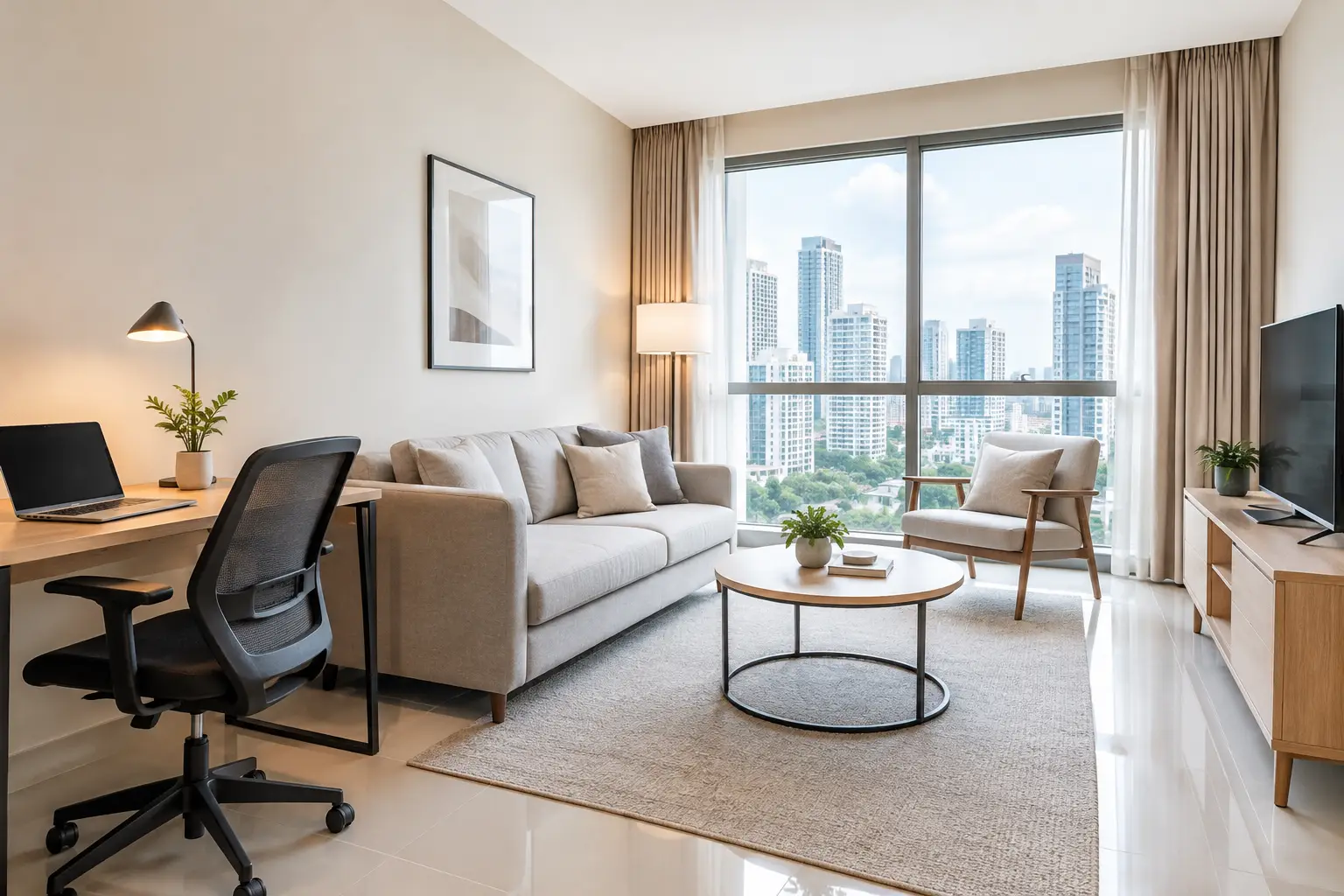
A corporate flat can be ready for its first occupant within days, but only if the furnishing plan is decided before delivery day. Corporate flat furnishing is not simply about filling rooms with furniture. It is about creating a comfortable, practical home for someone arriving with limited time, while keeping costs, logistics and the expected tenancy period under control.
For landlords, relocation teams and incoming professionals in Singapore, the best result is a flat that feels considered from the first evening. It should photograph well, support everyday routines and avoid the costly clutter that comes from buying pieces in a hurry.
Start with the tenant’s likely routine
A furnishing brief should begin with how the flat will be used, not with a shopping list. A one-bedroom unit for a single professional needs a different balance from a three-bedroom home for a relocating family. The first may need a proper work area and compact dining space. The second may need generous storage, durable seating and a dining table that makes family life easier.
Consider the expected tenant profile, lease length, location and rent level together. A city-fringe condominium aimed at professionals may benefit from a clean, contemporary scheme with a desk and good lighting. A larger home close to international schools should allow for family meals, children’s rooms and flexible storage. Furnishing should support the market position of the property rather than follow a generic template.
It also helps to consider what is already supplied. Built-in wardrobes, curtains, white goods and kitchen appliances change the scope of the project. Measuring each room, noting power points and checking lift access early prevents awkward substitutions later.
What a move-in-ready corporate flat needs
The priority is to make daily living straightforward from the moment keys are handed over. This means beginning with the rooms that carry the most value: the living area, bedrooms, dining space and work zone. A sofa, coffee table, television console, dining set, bed frame, mattress, bedside tables and wardrobes or storage form the practical base.
Lighting and window treatments deserve the same attention as larger items. Harsh ceiling lighting can make an otherwise pleasant flat feel temporary, while floor and table lamps create a warmer evening setting. Rugs, cushions, artwork and simple accessories add character, but they should never make the home feel over-styled or difficult to maintain.
The kitchen and laundry arrangements matter too. Tenants often judge a furnished property on small practical details: whether there is room to prepare a meal, enough seating to host a colleague, or a drying rack and laundry basket ready to use. These additions are modest, yet they help a flat feel properly prepared rather than partially furnished.
Choose furniture for the lease, not forever
Buying furniture can make sense for a long-term owner-occupier plan or a property with a stable, recurring tenant profile. However, ownership also brings the responsibility of sourcing, storing, repairing, replacing and eventually disposing of every item. For a corporate lease or a landlord testing demand for a furnished unit, that commitment is not always necessary.
Furniture rental offers more flexibility where the tenancy period is uncertain, the property needs to be ready quickly, or the owner prefers to preserve capital for other costs. It can also reduce the pressure to select every piece at once. A curated package gives the home a coherent look while allowing the furnishing level to match the lease and rental expectation.
There is a trade-off. Rental furniture should be selected with the intended term and service arrangement in mind, rather than treated as a one-size-fits-all answer. A short relocation assignment may call for a complete package, including household essentials. A longer tenancy may justify a more tailored arrangement with additional storage or a dedicated study setup.
Plan the layout before confirming the pieces
Even good furniture can make a flat feel smaller if it is the wrong scale. Oversized sofas reduce circulation in compact living rooms, and a large dining table may block a route to the balcony. Before any delivery is arranged, create a simple room plan based on accurate measurements.
Leave clear paths between the entrance, seating area, bedrooms and kitchen. In smaller Singapore flats, consider furniture that works harder without adding visual weight: a round dining table, a slim console, nesting tables or a compact desk. The aim is not to squeeze in every possible item. It is to make each room’s purpose immediately clear.
For corporate tenants, a defined work area has become particularly useful. It does not need to be a separate study. A well-positioned desk, supportive chair and practical lighting can be enough, provided the setup does not take over the living room or bedroom.
Keep the look neutral, warm and easy to maintain
A furnished corporate home should appeal to a broad range of people without feeling impersonal. Neutral foundations in soft grey, beige, timber and muted textiles tend to work well because they photograph clearly and suit different tastes. Add interest through texture, greenery and a limited number of thoughtful accessories rather than strong themes or highly personal décor.
Durability is equally important. Choose upholstery, dining chairs and mattresses that can withstand regular use and be maintained between tenancies. Delicate finishes may look attractive at handover, but they can create unnecessary repair costs in a rental property. The most suitable furniture is usually comfortable, well-proportioned and easy to care for.
A consistent style across the flat also supports better listing photographs. When the living room, bedrooms and dining area feel connected, prospective tenants can understand the home more quickly online and during a viewing.
Build timing into the furnishing plan
Corporate flat furnishing often sits within a tight sequence: the previous tenant leaves, cleaning is arranged, repairs are completed, photography is booked and a new resident is due to arrive. Delays usually happen when access, measurements, building rules or delivery timing are left until the last minute.
Confirm the inventory and layout before the property is vacant where possible. Check condominium requirements for lorry access, loading bays, lift protection and approved delivery hours. Schedule cleaning before installation, then allow time for final styling, quality checks and photographs after the furniture is in place.
An end-to-end furnishing partner can simplify this process by coordinating the furniture selection, delivery, installation and eventual collection. For time-sensitive relocations and rental turnovers, this reduces the number of suppliers a landlord or agent needs to manage. Expats Partner can also help align the furnishing level with the property’s purpose, whether that is a corporate lease, a newly marketed rental or a temporary relocation home.
Set a budget around outcomes
The lowest furnishing cost is not always the best value if the flat feels sparse, photographs poorly or requires repeated additions after a tenant moves in. A clearer approach is to set the budget around the intended rental level, likely lease term and target occupant.
Spend where comfort is noticed most: mattresses, sofas, dining chairs, lighting and a usable workspace. Be more restrained with decorative items that do not improve day-to-day living. If the property is positioned at a higher rental level, the finish and condition of the furniture should support that expectation. If it is a practical, mid-market corporate rental, clean design and reliable function may matter more than premium statement pieces.
The right plan makes a corporate flat feel ready rather than merely furnished. When every room has a clear purpose and the delivery process is properly managed, the incoming tenant can focus on settling into Singapore instead of making a series of urgent purchases.