
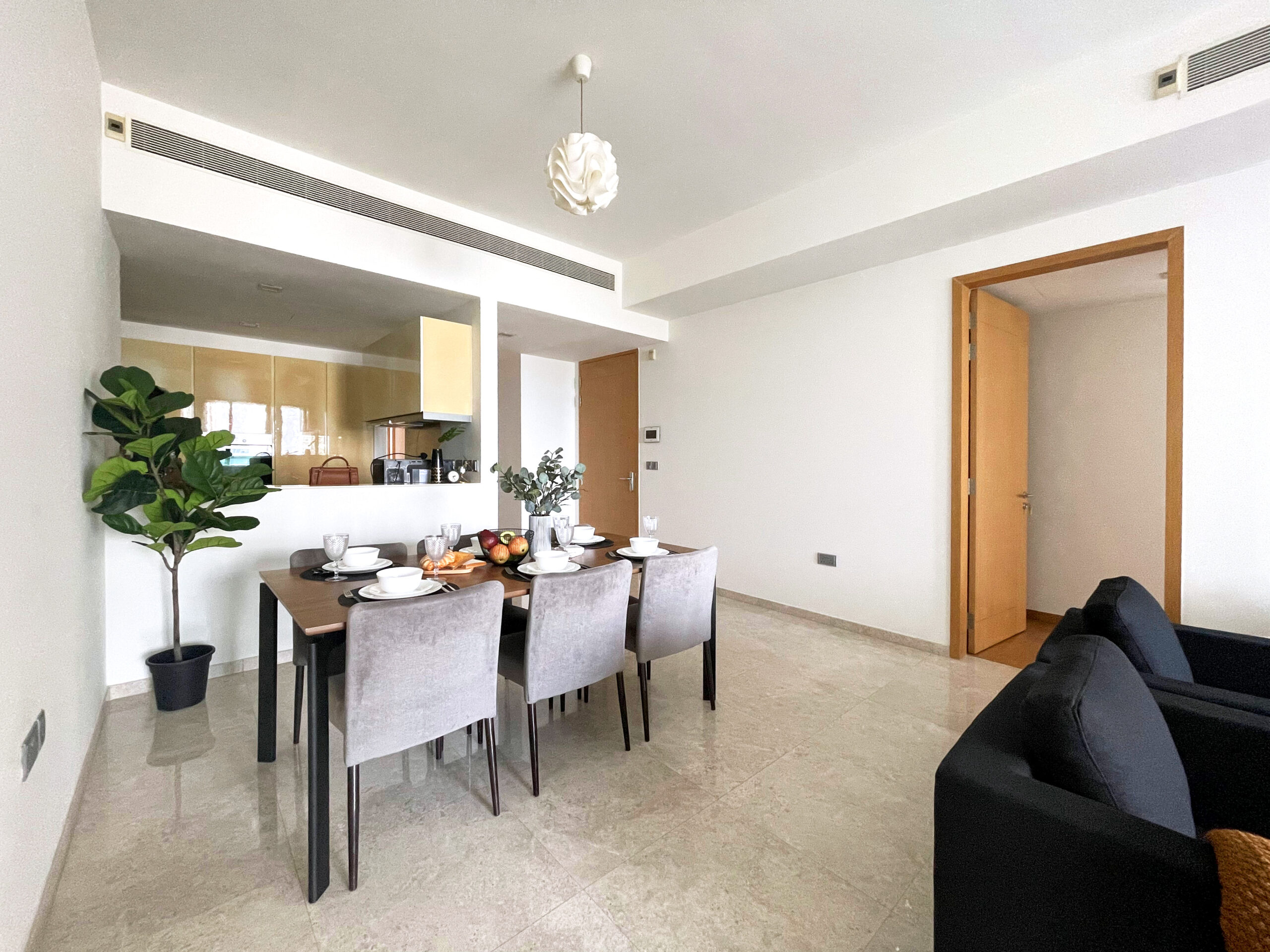
When people see the final photos of a beautifully staged home, it often looks effortless. Clean lines, tidy styling, and a space that feels ready for viewings.
What you do not see is the staging day itself. The logistics, the access constraints, the careful handling, and the team coordination that makes the end result feel seamless.
Here is a behind-the-scenes look at what it really takes to stage a home professionally in Singapore.
1) Getting to the unit is part of the job
Every staging day starts with a practical question: how do we access the property smoothly?
Some units have straightforward loading bays and lift access. Others require a bit more navigation, from finding the right entrance to checking with security or management on where unloading is permitted.
These details matter because staging is not only about styling. It is also about moving items safely and efficiently, without disrupting the building or the homeowner.
2) Unloading and moving, with real-world constraints
Once on-site, unloading begins. Furniture and décor are brought out in a planned sequence so the team can work methodically.
In this particular apartment, there was only one lift available for use. That created a natural bottleneck and some delay, especially during peak building activity.
Rather than forcing the schedule, the team adjusted. Items were hand-carried where needed and staged in a way that kept pathways clear and reduced the risk of damage.
3) Protection and handling, always
All furniture is wrapped with cling wrap before it is moved. This protects surfaces from scuffs, dust, and accidental knocks during transport and lift transfers.
Once inside the unit, items are never simply dropped into place. Each piece is brought in carefully, gently placed on the floor, and positioned with purpose.
This is one of the quiet differences between casual furnishing and professional staging. The handling standards are consistent, because the property must stay pristine.
4) Assembly and setup on-site
Many staging items require on-site assembly, especially larger furniture pieces. The team works in roles, with some members assembling while others plan placement and flow.
This approach keeps the setup efficient and reduces unnecessary movement within the space. It also helps ensure that each room is built up cleanly, step by step.
5) Turning logistics into a viewing-ready home
The goal of staging is not just to fill a space. It is to help buyers or tenants understand how the home can live, photographed, and presented during viewings.
That means:
- Clear pathways and usable layouts
- Balanced proportions and practical furniture placement
- Styling that feels warm, neutral, and easy to imagine living in
- A finished look that supports strong listing photos
By the end of the setup, the apartment shifts from “empty unit” to “viewing ready”, with a calm, cohesive feel that supports faster decision-making.
Why this behind-the-scenes work matters
Professional home staging is a combination of design and operations. It takes planning, manpower, and attention to detail to deliver a final result that feels simple.
Because the best staging is the kind you hardly notice. It just feels right.
If you are preparing your home for sale or rental, staging can help you present it at its best from the very first viewing.
Interested in staging support in Singapore?
Reach out to our team, and we will recommend a staging approach that fits your unit, timeline, and listing goals.