
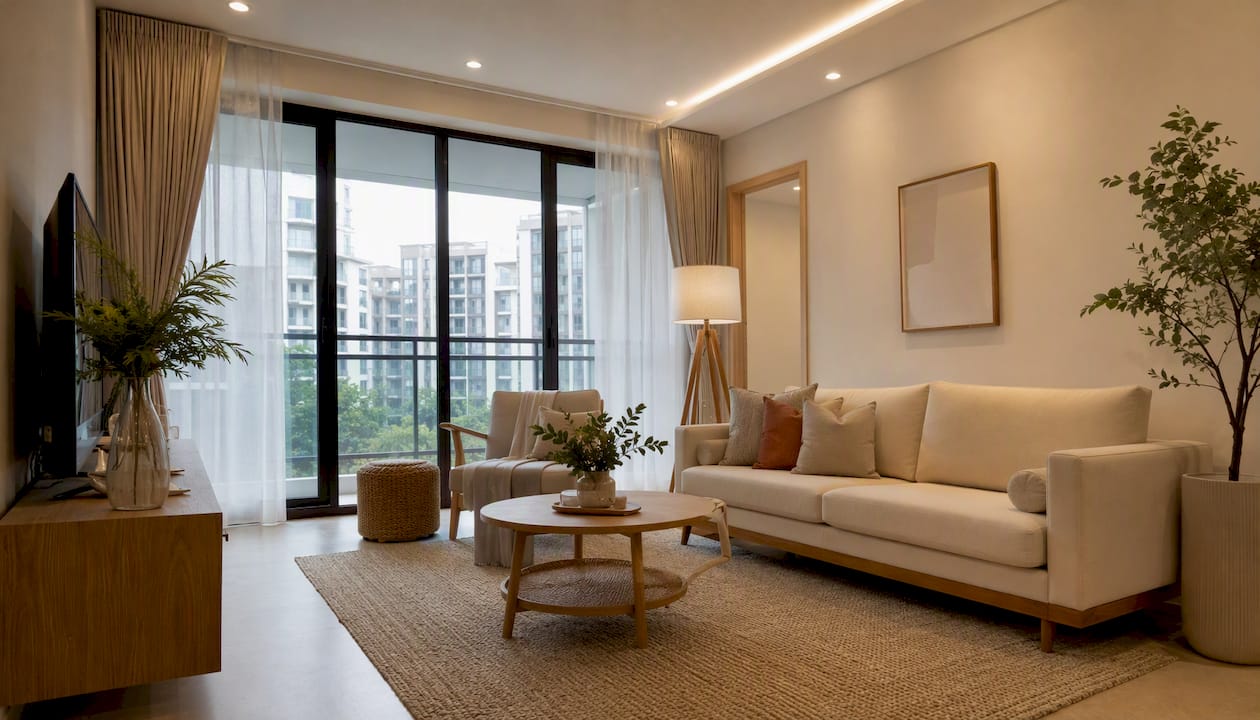
Use a cohesive warm-leaning neutral palette, layered lighting, and durable well-proportioned furniture to increase rental appeal and reduce vacancy. That single decision widens your tenant pool, improves listing photographs, and supports a higher achievable rent. Here is what to do right now, and how to hand it to a contractor or stager in Singapore.
Three actions to start this week:
- Repaint key rooms in a tested warm neutral such as a soft greige or warm off-white.
- Replace or slipcover tired large upholstery in a neutral fabric.
- Set up layered lighting (ambient plus at least one accent lamp) before your next viewing.
Immediate measurable goals:
- Better listing photographs that perform well on PropertyGuru and 99.co.
- Shorter time on market through broader tenant appeal.
- Higher-quality enquiries from tenants who see the unit as move-in ready.
Key takeaways
A cohesive warm-leaning neutral palette, layered lighting, durable furniture with replaceable covers, and a staged, photography-ready presentation are the four pillars of rental appeal in Singapore’s competitive condo market.
| Point | Details |
|---|---|
| Match undertone first | Identify the warm or cool cast of fixed finishes before choosing paint or fabric. |
| Use a multi-step palette | Apply the 3-5-7 rule: three dominant tones, five textures, seven accent points for a finished result. |
| Layer lighting at 2700–3000K | Consistent warm LED across all rooms improves both viewings and listing photographs. |
| Invest in key durable pieces | Prioritise sofa, bed, and dining set; keep coffee tables and side tables simple and replaceable. |
| Expats Partner staging packages | Flexible furniture rental and home staging for Singapore landlords, delivered and set up within days. |
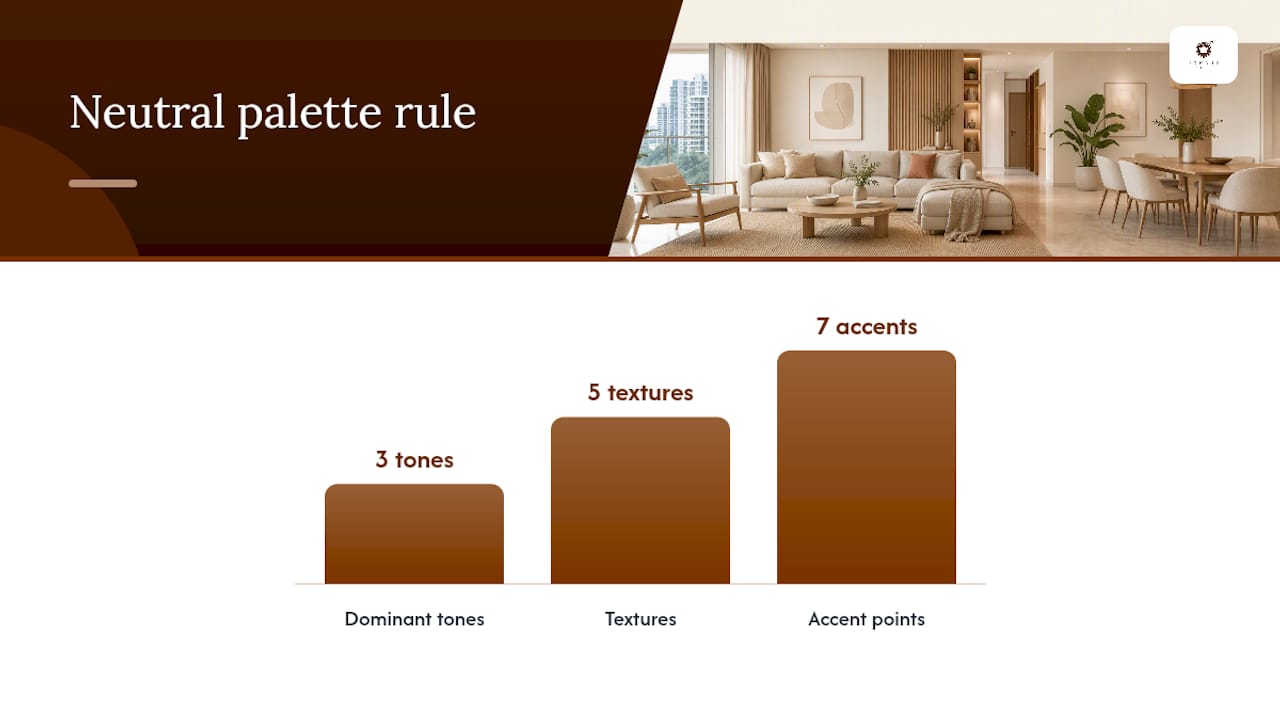
Table of Contents
- Why neutral interiors increase your rental appeal
- How to choose the right neutral palette for your rental
- Which paint finishes work best for rental walls?
- Furniture choices and layouts that look high-value and survive tenancies
- How layered lighting and texture add warmth without strong colour
- Staging for listings and viewings: what to show and what to hide
- Tenant-proofing, maintenance, and budget guidance
- Room-by-room checklist to hand to your stager or contractor
- How Expats Partner applies these neutral principles in Singapore
- Your 7-day action plan to prepare a unit for listing
- A practitioner’s view on neutral staging in Singapore
- Ready to stage your rental? Expats Partner can help
- Further reading and useful tools
- FAQ
Why neutral interiors increase your rental appeal
Neutral interiors widen the pool of prospective tenants and improve perceived value. The reason is partly psychological and partly practical. When a room carries no dominant colour statement, a prospective tenant can mentally place their own belongings into the space without having to mentally “undo” someone else’s choices. That lower cognitive load reduces the risk of a tenant dismissing a unit at the viewing stage.
Warm off-whites and greiges photograph well under the warm LED lighting common in Singapore condos, producing listing images that feel inviting rather than clinical. Industry reporting consistently shows that well-designed, move-in-ready interiors attract better enquiries and support willingness to pay a premium.
Staging impact: Design-led neutral interiors tend to attract higher-quality tenants and can increase achievable rent while reducing vacancy. Professional staging has been shown in industry reporting to improve listing performance and tenant quality.
The ROI rationale is straightforward. A modest spend on paint, key furniture, and lighting typically pays back through a shorter vacancy period and a rent that sits at or above the market median. The fixed costs of staging are recovered quickly when even one additional month of vacancy is avoided.
Why neutral design works for Singapore landlords:
- Broader appeal across expat nationalities, corporate tenants, and local professionals.
- Better listing photographs on Singapore property portals.
- Faster lets and reduced void periods.
- Perceived “move-in ready” quality that supports higher rent negotiations.
- Lower tenant turnover because the space feels calm and liveable from day one.
How to choose the right neutral palette for your rental
Start by identifying the dominant undertone of your fixed finishes — flooring, cabinetry, and bathroom tiles — and select a warm-leaning neutral family if you are undecided. Undertone consistency is the most common reason a neutral scheme feels “off.” A greige wall next to a cool-grey tile reads as mismatched even when both colours are technically neutral.
How to test undertone in-situ:
Take a phone photograph of the fixed finish in natural daylight and again under the unit’s existing artificial light. Warm finishes (honey timber, beige tile, cream cabinetry) pull yellow or orange. Cool finishes (grey stone, white laminate, silver hardware) pull blue or green. Match your paint and fabric selections to the dominant cast, not against it.
The multi-step neutral palette formula:
- Dominant base (~70%): Walls and large surfaces. Choose a warm off-white or soft greige. This is the room’s breathing room.
- Secondary mid-tone (~20%): Upholstery, rugs, and curtains. One step darker or warmer than the base. Creates visual separation without contrast.
- Darker anchor (~10%): Cushions, throws, artwork frames, and small accessories. Grounds the scheme and prevents it from reading as washed out.
- Surface neutral: Worktops, shelving, and cabinetry fronts. Match the undertone of the base; vary the finish (matt vs satin) rather than the hue.
- Trim and ceiling: Ceilings in Singapore condos often benefit from a pure white one shade lighter than the wall. Timber skirtings can stay natural if they match the floor undertone.
- Accent (optional): One muted accent in a complementary tone — dusty sage, warm terracotta, or soft navy — introduced only through replaceable accessories.
The 3-5-7 rule is a practical guide for visual weight in neutral rooms: use three dominant tones, five supporting textures, and seven accent points. It prevents the flat, unfinished result that comes from using a single neutral across every surface.
Temperature relationships: Warm neutrals (cream, greige, warm white) pair well with cool metal accents (brushed brass, matte black) for a contemporary feel. Cool neutrals (light grey, cool white) need warm wood tones and linen textiles to avoid reading as cold. For Singapore’s expat market, warm neutrals tend to read as more welcoming and perform better in listing photography.
Pro Tip: Paint a 30 cm isolation patch on the wall and photograph it at three times of day: morning, midday, and early evening under artificial light. A colour that reads warm at noon may shift cool under LED downlights. Only commit once it passes all three tests.
For more on neutral styling for viewings, Expats Partner’s guide covers undertone testing in detail for Singapore condos.
Which paint finishes work best for rental walls?
Use durable satin or eggshell finishes in high-contact zones and matt in low-contact areas, matched to the chosen neutral undertone. The finish affects both how the wall wears and how it reads in photographs.
Finish selection by room:
- Living room and bedrooms: Low-sheen eggshell or matt. Hides minor surface imperfections, photographs softly, and is wipeable enough for most marks.
- Kitchen: Satin or semi-gloss on splashback areas and around the hob. Resists grease and steam; cleans with a damp cloth.
- Bathrooms: Satin throughout. Singapore’s humidity makes matt finishes in bathrooms prone to mould and staining.
- Hallways and entry: Satin. High-traffic zones need a surface that can be wiped repeatedly without losing sheen.
- Ceilings: Flat/matt white. Ceilings are rarely touched and matt reduces glare in photographs.
- Timber skirtings and aluminium door frames: Semi-gloss or gloss in a white or warm cream that matches the trim undertone.
| Finish | Where to use | Why it works for rentals |
|---|---|---|
| Matt / flat | Bedrooms, living room ceilings | Hides imperfections, photographs softly, low glare |
| Eggshell | Living rooms, bedrooms (walls) | Wipeable, durable enough for most marks, good photo performance |
| Satin | Hallways, kitchens, bathrooms | Moisture-resistant, easy to clean, holds colour well |
| Semi-gloss | Skirtings, door frames, kitchen splashbacks | Highly durable, easy to wipe, reflects light cleanly |
| Gloss | Feature trims only | High durability but shows surface flaws; use sparingly |
In Singapore’s climate, any finish in a bathroom or kitchen must be moisture-resistant. Warm neutrals in satin hold their undertone better under humidity than cool greys, which can shift visually as the light changes through the day.
Furniture choices and layouts that look high-value and survive tenancies
Choose mid-priced, well-proportioned pieces in neutral upholstery, prioritise strong frames and replaceable covers. A sofa with a removable slipcover is worth more to a landlord than a premium fixed-upholstery piece that shows every mark.
Where to invest and where to keep it simple:
- Sofa: Invest here. It is the room’s focal point in photographs and the first thing a tenant sits on. Choose a frame with good lumbar support and a fabric cover in warm linen, oatmeal, or mid-grey.
- Bed and mattress: Invest. Hotel-weight bedding in white or warm ivory photographs well and signals quality. A solid timber or upholstered bedhead in a neutral tone completes the look.
- Dining set: Mid-range. A four-seater round or rectangular table in natural timber or white with simple chairs reads well in smaller Singapore condos and scales to the space.
- Coffee tables and side tables: Keep simple. Nested tables or a single low table in natural timber or white are easy to replace and do not date.
- Storage: Modular and concealed where possible. Visible clutter is the single biggest detractor in listing photographs.
Layout rules to make rooms look larger:
- Keep furniture legs visible where possible; pieces that float off the floor open up the sightline.
- Leave at least 90 cm of circulation path around the main furniture grouping.
- Anchor the sofa with a rug that extends at least 30 cm beyond each side; this defines the zone and prevents the room from looking underscaled.
- Place the bed with the headboard against the longest unbroken wall, leaving equal space on both sides where the room allows.
- Use a single focal point per room: artwork above the sofa, a pendant above the dining table, a bedhead as the bedroom’s anchor.
Multifunction pieces for rental flexibility: A sofa bed in a one-bedroom unit appeals to tenants who host guests. An extendable dining table suits couples who may need to seat four occasionally. Nested storage ottomans double as seating and keep the floor clear.
Pro Tip: For Singapore landlords, renting furniture rather than buying outright removes the capex burden, eliminates disposal costs at tenancy end, and lets you refresh the package between tenants. Explore rental furniture options for landlords to compare the cost of a 12-month rental package against the depreciation on purchased pieces.
How layered lighting and texture add warmth without strong colour
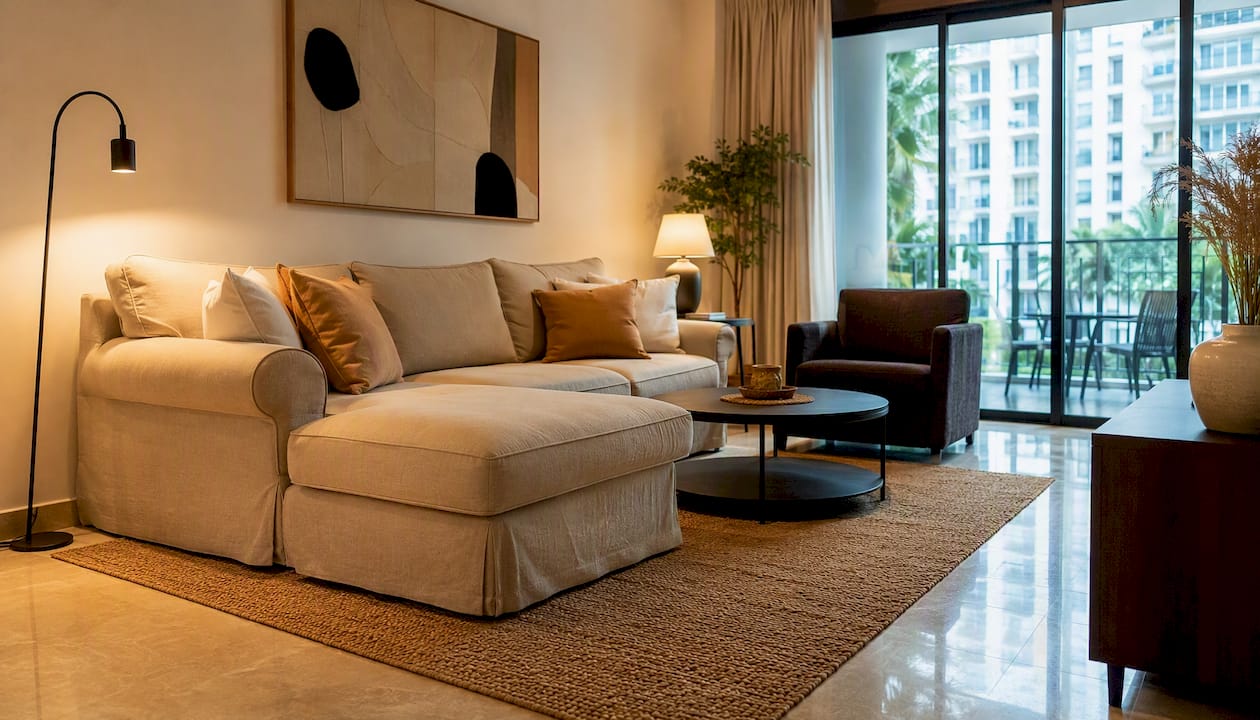
Layered lighting and texture are the fastest ways to make neutrals feel rich rather than flat. A room painted in a single warm greige with no texture and a single overhead light reads as unfinished. Add a floor lamp, a woven rug, and linen cushions, and the same room photographs as a considered, liveable space.
Practical lamp choices and colour temperature:
- Ambient (overhead): Warm white LED, 2700–3000K. This is the primary light source and sets the room’s overall warmth in photographs.
- Task (reading, desk, kitchen under-cabinet): Slightly cooler, 3000–3500K, but keep it consistent with the ambient source to avoid jarring colour shifts in photos.
- Accent (table lamps, floor lamps): 2700K. These create pools of warm light that add depth and dimension, particularly in living rooms and bedrooms.
Warm bulbs at 2700–3000K photograph significantly better in Singapore condos than cool daylight bulbs (5000K+), which produce a clinical, flat result that makes neutral walls look grey and uninviting. Consistency across all rooms matters: a warm living room followed by a cool-lit bedroom creates a disjointed impression in a listing gallery.
Lighting note: Staged listings with consistent warm LED lighting and layered light sources see measurable engagement lifts on property portals, with more saves and shares compared to listings photographed under a single overhead source.
Texture recipe per room:
- One hard surface: timber, stone, or ceramic.
- One soft textile: linen curtains, a wool or cotton rug, or upholstered seating.
- One organic material: a woven basket, a timber tray, a terracotta pot.
Textured designs photograph better than flat minimalism and age better in the rental market. Warm neutrals with layered texture also support tenant satisfaction over longer tenancies, which reduces turnover.
Staging for listings and viewings: what to show and what to hide
Stage for lifestyle, not personal taste. Show rooms set up for their primary use: sleeping, working, cooking. A tenant viewing a unit needs to picture their daily routine in the space, not admire the landlord’s aesthetic.
Room set-up checklist for listing shoots and viewings:
- Declutter every surface. Remove personal items, excess appliances, and anything that competes with the room’s focal point.
- Dress the bed in white or warm ivory hotel-weight linen. Add two pillows per side and a folded throw at the foot.
- Place one statement artwork above the sofa or bed. Keep it abstract or landscape; avoid portraits or culturally specific imagery.
- Set a functional vignette on the dining table: two place settings, a simple centrepiece (a plant or a timber bowl).
- Add one plant or organic element per room. A small potted plant on a kitchen worktop or a trailing plant on a shelf adds life without colour.
- Ensure all lights are on and all bulbs match in colour temperature.
- Open blinds or curtains to maximise natural light, then supplement with lamps.
Photography tips:
- Shoot during golden hour or with consistent warm LED lighting switched on throughout.
- Clear the foreground of every shot; clutter in the foreground reads as disorder even when the background is tidy.
- Use vertical framing for smaller rooms to emphasise ceiling height.
- Assign one hero element per photograph: the bedhead, the dining pendant, the sofa arrangement.
What to hide: Personal toiletries, dated light fittings that cannot be replaced before the shoot, bulky furniture that blocks sightlines, and any item that dates the unit (old curtain rails, worn door handles).
For a detailed guide on rental listing photography styling, Expats Partner covers shot-by-shot staging for Singapore condos and apartments.
Tenant-proofing, maintenance, and budget guidance
Targeted spend on paint, key furniture, and lighting typically yields the fastest return through better photographs and shorter vacancy. The order of priority matters: paint first (highest visual impact per dollar), then lighting, then key furniture.
Maintenance tips for Singapore rentals:
- Choose stain-resistant textiles: performance linen blends, microfibre, or Crypton-treated fabrics for sofas and dining chairs.
- Specify replaceable covers on sofas and dining chairs so worn or stained covers can be swapped without replacing the frame.
- In kitchens, specify sintered stone or porcelain stoneware over marble for worktops and splashbacks. Both resist staining, heat, and scratching far better than natural stone in a high-turnover rental.
- In bathrooms and wet zones, use porcelain stoneware tiles rather than timber-effect vinyl, which lifts at the edges in Singapore’s humidity.
- Use satin paint throughout so walls can be wiped between tenancies without repainting.
Budget guidance for Singapore condos (indicative ranges):
- 1-bedroom unit, low spend (S$1,500–S$3,000): Repaint walls in one warm neutral, replace key lighting with warm LED, add neutral bedding and two accent cushions.
- 1-bedroom unit, medium spend (S$3,000–S$6,000): Above, plus a new sofa or slipcover, a rug, and a set of neutral curtains.
- 2-bedroom unit, medium spend (S$5,000–S$10,000): Full repaint, new key furniture pieces (sofa, bed frame, dining set), layered lighting, rugs, and staging accessories.
- 2-bedroom unit, high spend (S$10,000–S$18,000): Above, plus professional staging, photography, and a full furniture rental package.
ROI note: A professional arrangement applied to a previously unformatted unit has been cited in industry project examples as improving rental value by 15–25%. Even at the low-spend bracket, avoiding one month of vacancy on a S$4,000/month condo recovers the entire paint-and-lighting budget.
Timeline for common jobs: A repaint of a standard 3-room condo takes 2–3 days. A furniture delivery and set-up from a rental package typically takes one day. A full staging and photography session can be completed in a single morning, with listing-ready photographs delivered within 24–48 hours.
Room-by-room checklist to hand to your stager or contractor
A precise room checklist speeds execution and removes ambiguity. Print this and hand it directly to your contractor, handyman, or staging team.
Living room:
- Walls: warm greige or soft off-white in eggshell finish.
- Sofa: neutral upholstery (oatmeal, warm grey, or linen), scale appropriate to the room (two-seater for rooms under 12 sqm, three-seater for larger).
- Rug: extends at least 30 cm beyond sofa sides; warm tone (jute, wool, or cotton in cream or warm grey).
- Lighting: one overhead warm LED (2700–3000K) plus one floor or table lamp.
- Artwork: one piece above the sofa, abstract or landscape, framed in natural timber or matte black.
Kitchen:
- Cabinet fronts: neutral (white, cream, or light grey); replace or repaint if dated.
- Worktops: sintered stone or porcelain stoneware preferred; clear all appliances except one (kettle or coffee maker).
- Splashback: plain subway tile or large-format porcelain in white or warm grey, satin finish.
- Hardware: brushed brass or matte black; consistent throughout.
- Lighting: warm LED downlights plus under-cabinet strip lighting if possible.
Bedroom:
- Bed linen: hotel-weight white or warm ivory; two pillows per side, one folded throw.
- Blackout solution: roller blind in white or warm linen behind sheer curtains.
- Bedside lighting: one lamp per side at 2700K; consistent height and style.
- Built-in storage: declutter fully; leave wardrobe doors closed or remove if they are dated.
- Walls: same warm neutral as living room or one shade lighter.
Bathroom:
- Grout: clean or regrout if discoloured; white or warm grey grout only.
- Tiles: neutral (white, warm grey, or soft stone); replace cracked tiles before photography.
- Fixtures: chrome or brushed nickel; replace aged taps if budget allows.
- Mirror: frameless or simply framed; ensure it is clean and well-lit.
- Lighting: warm LED above or beside the mirror; avoid cool fluorescent tubes.
| Room | Priority finish | Key material swap | Lighting target |
|---|---|---|---|
| Living room | Eggshell warm greige | Neutral sofa cover or new rug | 2700K ambient + 1 accent lamp |
| Kitchen | Satin white/cream | Sintered stone worktop if replacing | Warm LED downlights + under-cabinet |
| Bedroom | Matt warm off-white | Hotel-weight white linen | 2700K bedside lamps x2 |
| Bathroom | Satin throughout | Porcelain stoneware tiles | Warm LED above mirror |
| Hallway | Satin warm neutral | Replace worn flooring if possible | Warm LED downlights |
Hand-off notes for contractors: Photograph every existing finish before work begins. Note the undertone (warm or cool) of the floor, cabinetry, and any fixed tile. Share these photographs with your painter and furniture supplier so all new materials are matched to the same undertone family. This single step prevents the most common neutral-scheme failure: mismatched undertones that make a room feel unsettled even when every individual piece is attractive.
For guidance on furnishing a vacant condo quickly, Expats Partner’s practical guide covers package selection and logistics for Singapore landlords.
How Expats Partner applies these neutral principles in Singapore
A local staging and furniture-rental partner can deliver neutral, tenant-appropriate interiors faster and with less upfront cost than buying outright. The process removes the logistics burden from the landlord and produces a viewing-ready home within days rather than weeks.
Service process:
- Consultation: A brief walkthrough (in person or via photographs) to assess fixed finishes, room dimensions, and target tenant profile.
- Material and palette testing: Undertone identification, paint sample recommendations, and finish selection matched to existing floors and cabinetry.
- Package selection: Furniture and staging package chosen by unit size and rental duration (short-term or long-term).
- Delivery and set-up: Furniture delivered, assembled, and positioned to the agreed layout plan.
- Photography and listing styling: Staging accessories placed, lighting confirmed, and the unit prepared for a professional photography session.
Sample package outline:
- 1-bedroom move-in package: Sofa, coffee table, dining set, bed frame, mattress, bedside tables, and key lighting. Neutral upholstery and finishes throughout.
- 2-bedroom viewing package: Above, plus a second bed set, study table, and additional lighting points. Staged with neutral bedding, rugs, and artwork.
- Short-term rental staging package: Furniture rental for 1–3 months, including delivery, set-up, and collection. Suited to landlords staging for photography and viewings before a long-term tenant moves in.
“Before working with a staging partner, our condo sat on the market for six weeks with minimal enquiries. After a neutral staging package was applied, we received three serious offers within ten days. The photographs made the difference.”
Portfolio and before-and-after examples are available on the Expats Partner before and after property styling page.
Expats Partner works with landlords, property agents, and developers across Singapore’s condo and landed residential market. Packages are available for short-term and long-term rental periods, with transparent pricing and reliable delivery, set-up, and collection support.
Your 7-day action plan to prepare a unit for listing
Follow this plan to prepare one unit for listing or to brief a contractor. Each day has a single clear task so nothing is left to chance.
- Day 1: Walk the unit and photograph every fixed finish (floor, cabinetry, tiles). Note the dominant undertone (warm or cool). Identify the two or three items that most need attention: tired paint, worn upholstery, poor lighting.
- Day 2: Purchase paint samples in two or three warm neutral options. Apply 30 cm isolation patches on the main living room wall. Photograph at morning, midday, and evening under artificial light.
- Day 3: Confirm paint colour and book a painter. Simultaneously, decide on furniture: buy, replace, or rent. If renting, contact a furniture rental partner for a package quote.
- Day 4: Declutter the unit fully. Remove personal items, excess furniture, and anything that will not appear in the listing photographs. Box and store off-site.
- Day 5: Painting day (or first day of a two-day paint job). Arrange delivery of any new or rented furniture to coincide with paint completion.
- Day 6: Furniture set-up, lighting installation, and staging. Dress beds, add rugs and cushions, place artwork, and confirm all bulbs are warm LED at 2700–3000K.
- Day 7: Final walkthrough using the room-by-room checklist above. Book the photographer. Confirm the listing is ready for portal upload within 24 hours of the shoot.
If you prefer a hands-off approach, Expats Partner can manage steps 3 through 7 as a single coordinated package, from furniture selection to a viewing-ready home.
A practitioner’s view on neutral staging in Singapore
Neutral staging works in Singapore’s rental market for a reason that goes beyond aesthetics. The tenant pool here is unusually diverse: expat professionals from Europe, the US, and across Asia, alongside local PMETs and corporate housing tenants. A room with a strong colour identity appeals to a narrow slice of that pool. A room in a considered warm neutral appeals to almost all of it.
The most common mistake landlords make is treating “neutral” as “no decision.” They leave the walls in a builder’s white that photographs cold and flat, keep a dated brown sofa, and wonder why enquiries are slow. Neutral design is an active choice. It requires selecting the right undertone, building a multi-step palette, and adding texture and light so the space reads as warm and finished rather than empty and waiting.
In Singapore condo showings, expat tenants in particular respond to spaces that feel hotel-like without being impersonal. Warm off-whites, natural timber accents, quality linen bedding, and layered lighting hit that register consistently. The best furniture for house viewings is rarely the most expensive; it is the most proportionate and the most cohesive.
Before-and-after portfolio work consistently shows the same pattern: units that were sitting on the market for weeks let within days of a neutral staging refresh. The photographs improve, the portal engagement rises, and the quality of enquiries shifts noticeably toward tenants who are ready to commit.
Ready to stage your rental? Expats Partner can help
Landlords and agents in Singapore who want a viewing-ready neutral interior without the hassle of sourcing, buying, and disposing of furniture have a practical alternative. Expats Partner provides flexible furniture rental and home staging packages sized for one-bedroom and two-bedroom condos, with transparent pricing, real inventory, and reliable delivery and collection.
A typical 1-bedroom staging package covers a sofa, dining set, bed frame, bedside tables, key lighting, and neutral accessories, delivered and set up within one to two working days. A 2-bedroom package adds a second bed set, study table, and additional staging layers. Short-term rental options are available for landlords who need a furnished, photography-ready unit for a defined period before a long-term tenant moves in.
Pricing is quoted per package and rental duration, with no hidden fees and a clear collection process at the end of the rental term. For landlords weighing the cost of a rental package against purchasing furniture outright, the short-term furniture rental options page sets out the terms clearly.
To request a quote or schedule a staging consultation, visit the home staging Singapore service page or contact Expats Partner directly. Most consultations can be arranged within 48 hours.
Further reading and useful tools
- Coolors neutral palette generator — (coolors.co): fast visual sampling and contrast checking for neutral colour schemes; useful for testing palette combinations before committing to paint.
- Expats Partner neutral styling guide: Neutral styling for home viewings covers undertone testing and palette selection for Singapore condos.
- Expats Partner staging portfolio: Before and after property styling provides visual proof of staging impact across condo and landed property types.
- Expats Partner photography guide: Rental listing photography styling covers shot-by-shot staging and lighting for Singapore rental listings.
- Expats Partner furniture rental overview: Home furniture rental sets out package options and rental terms for landlords and agents.
FAQ
What does “neutral” mean in interior design?
Neutral colours are hues with low saturation that do not dominate a room: whites, off-whites, creams, greiges, beiges, warm greys, and taupes. In rental design, the term specifically refers to tones that photograph well and appeal to a broad tenant audience without requiring a personal colour commitment.
What is the 3-5-7 rule in interior design?
The 3-5-7 rule distributes visual weight across a neutral room using three dominant tones, five supporting textures, and seven accent points. It prevents a single-neutral scheme from reading as flat or unfinished by building hierarchy through texture and value contrast rather than colour.
What is the 70/30 rule in decorating?
In rental interiors, this keeps the scheme cohesive while allowing enough variation to feel considered and warm.
What is the 3-colour rule in interior design?
The 3-colour rule limits a room’s palette to three colours: a dominant base, a secondary tone, and one accent. For rental properties, all three should sit within the neutral family, with the accent introduced only through easily replaceable accessories such as cushions or a throw.
How much does neutral staging cost for a Singapore condo?
A low-spend refresh (paint and lighting) for a 1-bedroom Singapore condo typically starts from around S$1,500–S$3,000. A full furniture rental and staging package for a 2-bedroom unit ranges from S$5,000–S$10,000 depending on rental duration and package scope. Expats Partner provides itemised quotes based on unit size and requirements.