
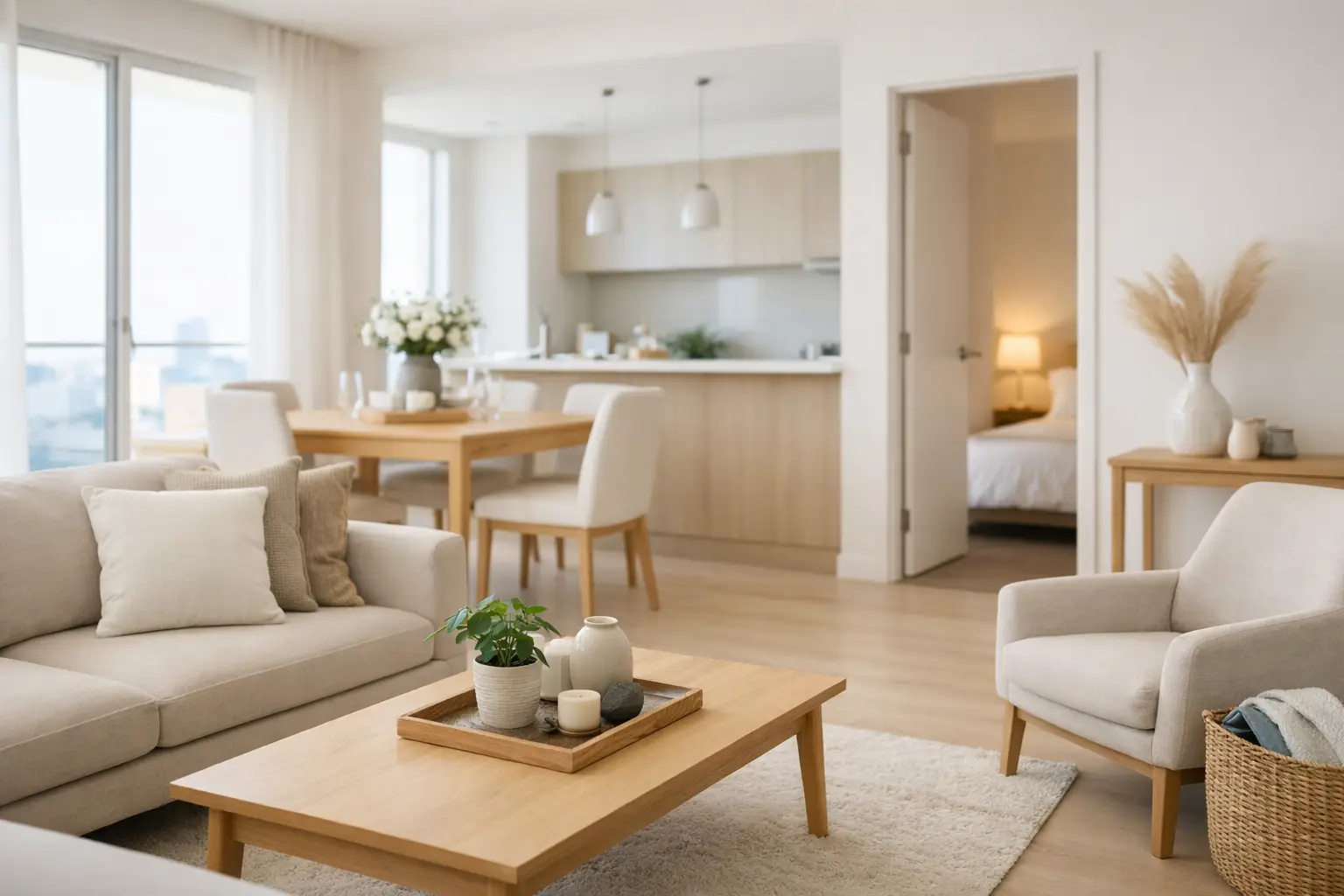
An empty property rarely looks as promising in person as it did in the agent’s pitch. Rooms feel smaller, buyers struggle to read the layout, and even a well-finished home can come across as cold or forgotten. That is why knowing how to style vacant listings matters. The goal is not to decorate for decoration’s sake. It is to help buyers and tenants understand how the space lives, flows and feels the moment they walk in.
For agents and owners, the challenge is usually speed. The unit is ready, photography is booked, and enquiries depend on first impressions online. A vacant listing gives you a clean starting point, but it also gives viewers very little help. Good styling closes that gap. It turns blank rooms into readable spaces and helps the property feel move-in ready without making it feel overly personal.
Why vacant homes underperform without styling
A furnished room gives scale straight away. A sofa shows how a living area works. A dining set makes proportions easier to judge. A bed helps buyers understand whether a bedroom feels generous, practical or tight. Without those reference points, people often assume the worst.
This matters even more in online listings. Photos of empty rooms tend to flatten out. Corners look harsh, finishes feel colder, and one room can easily blur into the next. Styling helps each area tell a clearer story. Instead of seeing four white walls, viewers see a main bedroom, a family living area or a work-from-home corner.
There is also a behavioural point here. Most buyers and tenants do not make decisions purely on square footage or floor plans. They respond to ease. If a space feels sorted, functional and appealing, they are more likely to picture themselves living there. That emotional step often happens before they begin comparing details.
How to style vacant listings with purpose
The best approach starts with the listing strategy, not the cushions. A property for owner-occupiers will often need a warmer, more lifestyle-led presentation than a unit aimed at investors. A premium rental may need to feel polished and immediate, while a family home may benefit from softer, more practical styling that makes room use obvious.
When thinking about how to style vacant listings, treat each room according to its selling role. Not every room needs a full set-up. The main living area, dining space and principal bedroom usually do the heavy lifting. If there is a study nook, balcony or awkward corner that tends to confuse viewers, that is where styling earns its keep as well.
The strongest staging plans are selective. Overfurnishing can make a property feel smaller. Underfurnishing brings you back to the original problem. The balance sits in giving enough visual structure for clarity while leaving enough breathing space for the property itself to lead.
Start with the rooms that shape perception
The entry matters because it sets the emotional tone. It should feel clean, open and intentional. In most cases, that means keeping it simple and avoiding any bulky item that interrupts sightlines.
The living room is often the anchor. A correctly scaled sofa, coffee table, rug and side chair can establish proportion within seconds. If the room is long or awkwardly shaped, furniture placement can quietly solve that by showing where conversation, television viewing or circulation naturally sit.
Bedrooms need restraint. The bed frame and linen do most of the work, supported by side tables and light accessories. Too many decorative items can make the room feel staged in the wrong way. Too few and it feels unfinished.
Dining areas are useful because they define open-plan layouts. A compact, well-proportioned dining set can make an uncertain space feel efficient and liveable. In smaller units, this is especially important because buyers often worry about whether the room can handle daily life.
Choose furniture that fits the property, not a trend
Neutral styling generally performs better because it broadens appeal. That does not mean everything should be beige and forgettable. It means the furniture should support the architecture, light and likely buyer profile instead of competing for attention.
Clean lines tend to work well in most vacant listings because they keep the space current without becoming too specific. Texture helps stop the result from feeling flat. A rug, upholstered headboard, layered bedding and a few soft furnishings can warm up a room quickly.
Scale is where many styling decisions go wrong. Large furniture can make a room feel constrained, but furniture that is too small can make the property appear oddly oversized and impractical. This is why staged furniture needs to be chosen for the floor plan, not simply based on what is available first.
Styling for photography and viewings
A listing is usually seen on a screen before it is seen in person, so styling needs to hold up in photographs. This calls for more discipline than many people expect. Strong styling for viewings is not always strong styling for photography, because the camera reads detail, balance and spacing differently.
Rooms should be styled to photograph clearly from the angles most likely to be used. This often means keeping decorative items edited, allowing natural light to move freely and making sure furniture placement frames the room rather than blocks it. Mirrors, artwork and rugs should feel purposeful, not scattered.
For viewings, the question shifts slightly. The property needs to feel easy to walk through. Furniture should define use without interrupting movement. This is particularly relevant in smaller flats or compact rental units, where every centimetre affects how spacious the home feels.
A practical point often missed is consistency. If the styling tone changes dramatically from room to room, the property can feel less coherent. Buyers may not be able to explain why, but they notice when the home does not feel visually settled.
What to avoid when styling a vacant listing
The first mistake is treating staging like interior decoration. Selling and letting are different from personal design. The property is the product, so styling should support that product rather than become the story.
The second is trying to fill every room. Utility rooms, secondary bedrooms or odd corners do not always need complete furniture sets. Sometimes a lighter touch does more. A spare bedroom may be better presented as a tidy guest room than as an overworked office-bedroom hybrid.
The third is ignoring the target market. A family-focused home should not feel like a bachelor pad. A high-end city unit should not be styled as if it belongs in a suburban landed home. Context matters. The most effective styling feels appropriate to the property, the price point and the likely viewer.
Finally, do not underestimate condition. Styling will not hide poor lighting, patchy paintwork or visible maintenance issues. It can improve perception, but it works best when the property is already clean, repaired and presentation-ready.
When furniture rental makes more sense
For most vacant listings, buying furniture purely for staging does not make commercial sense. The property may sell quickly, the styling needs may be temporary, and storage becomes another problem once the campaign ends. This is where rental becomes the practical route.
Furniture rental allows a property to be styled quickly, photographed well and shown properly without a long-term commitment. It also helps agents and owners avoid piecing together mismatched items under time pressure. Where speed matters, a service-led staging set-up can remove a surprising amount of coordination.
In Singapore, this is particularly useful for units that need to move fast between vacancy, marketing and occupancy. A staged property can go from empty shell to listing-ready in a much shorter window when delivery, setup and collection are handled as one process. Expats Partner supports this kind of staging with flexible furniture rental and practical home presentation designed around listing performance rather than decoration alone.
How to style vacant listings when time is tight
If you are working to a short campaign deadline, focus on the spaces that influence buyer judgement first. Style the living room, dining area and main bedroom well. Make sure the lighting is working, curtains are clean if present, and every surface is spotless. Remove anything that feels leftover from handover or renovation.
Then think about the story each room tells in the listing photos. Is the use of space obvious? Does the home feel proportionate? Does it look cared for? Those questions usually matter more than adding one more accessory.
The strongest vacant listings do not look busy. They look resolved. Buyers and tenants can enter the property, understand it quickly and imagine living there without effort. That is the real standard to aim for when deciding how much styling is enough.
A well-styled vacant listing gives people fewer reasons to hesitate. It helps them see function, comfort and value sooner, which is often what moves a viewing towards a serious conversation.
Contact us now at: Kevin Chang – 80119753 sales@expatspartner.com.sg Sales Specialist