
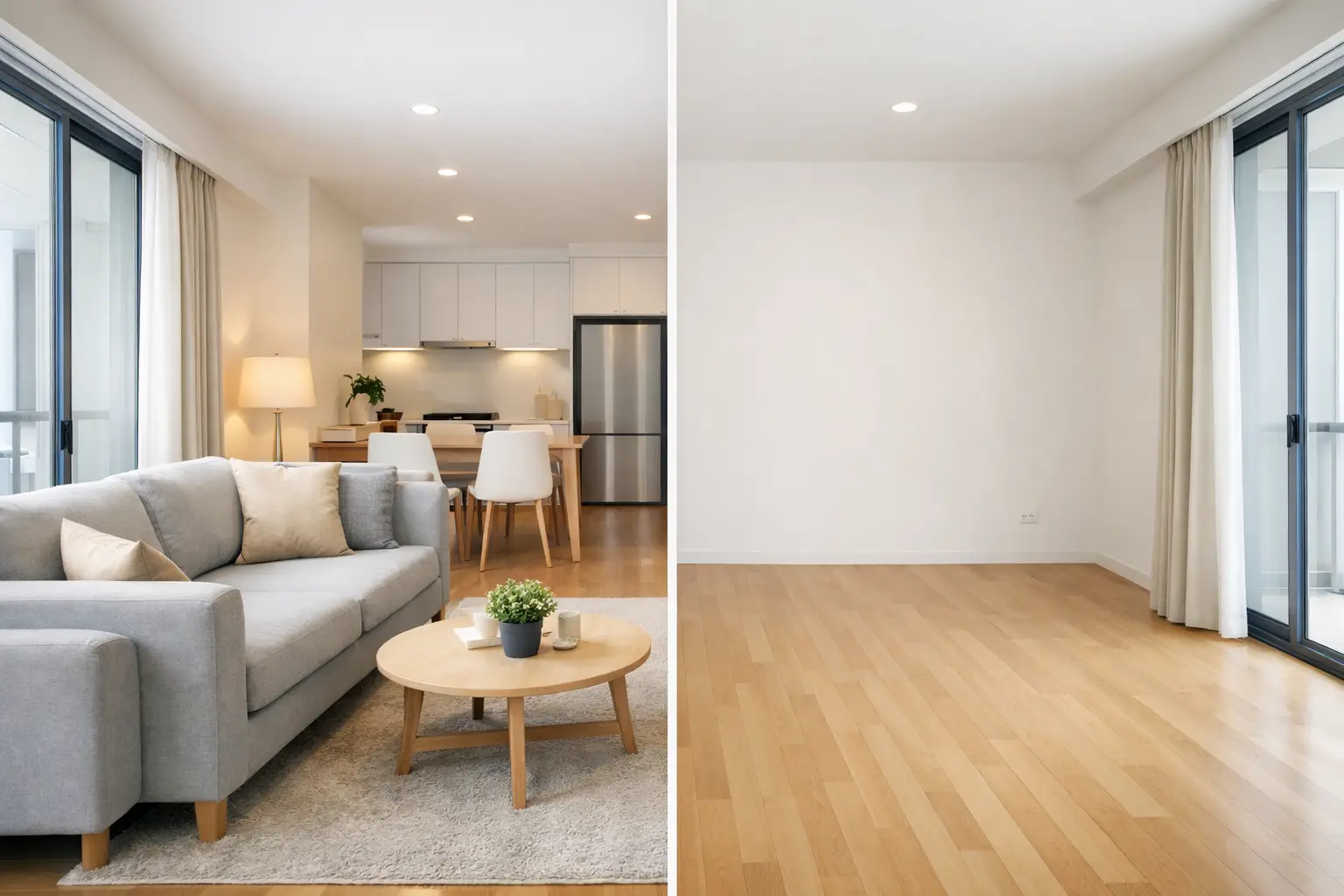
A furnished vs unfurnished rental listing is not simply a question of whether to buy a sofa. It changes who enquires, how quickly a prospect can picture moving in, the rent they may accept and the amount of coordination required before handover. For landlords and agents in Singapore, the right choice begins with the intended tenant and the condition in which the property needs to be presented.
A bare unit can appeal to tenants who want full control over their home. Yet an empty living room can also feel smaller online, less practical during a viewing and harder to compare with move-in-ready alternatives. Furnishing, when it is well judged, gives the listing a clear purpose: this is how the space can support everyday living.
Furnished vs unfurnished rental listings: what tenants see
The distinction is often described in practical terms. A furnished property generally includes the essential pieces needed for daily life, such as beds, seating, dining furniture, storage and key appliances. An unfurnished property may have built-in fittings, kitchen cabinets, bathrooms and major appliances, but leaves the tenant to bring or purchase movable furniture.
In reality, the difference is also emotional. A furnished listing lets a viewer understand the scale of each room immediately. They can see where they would work, eat, rest and store their belongings. This matters particularly when photographs are the first viewing. Empty rooms ask prospective tenants to imagine the finished home; a thoughtfully furnished room does some of that work for them.
That does not mean every property should be fully furnished. A family taking a longer lease may already own substantial furniture and prefer a blank canvas. A tenant relocating from overseas, on the other hand, may value being able to arrive with luggage and settle in quickly. The strongest listing is the one whose furnishing level matches the most likely occupier.
When a furnished listing is the stronger commercial choice
Furnished homes commonly suit expatriates, corporate transferees, short-to-medium-term tenants and professionals who do not want the cost or delay of buying furniture. For relocation teams, a ready-to-live-in home reduces the number of decisions required between lease signing and move-in. For a landlord, that convenience can create more relevant enquiries from the outset.
Presentation also has a direct role in viewing quality. A sofa grounds the living area. A dining set shows whether the space functions for meals or work. Beds and bedside tables give bedrooms proportion. These details help prospective tenants make a faster judgement about whether the unit works for their routine.
For agents, furnished presentation can be especially useful where the property has an unusual layout, compact rooms or a large open-plan area. Without furniture, viewers may misread the available space. With a calm, neutral scheme, each zone becomes clear without imposing a highly personal style on the tenant.
The commercial case should still be tested rather than assumed. Consider the likely rental premium, expected vacancy period, furniture rental or purchase costs, delivery access, storage needs and the risk of replacement or wear. A higher asking rent is useful only if the property attracts suitable applicants and secures a tenancy at that level.
When unfurnished is the better fit
An unfurnished listing can be the more sensible route for longer-term tenants who want to make the home their own. It may also suit larger properties where tenants are likely to arrive with existing furniture, or homes positioned towards local families with established household belongings.
There is a management benefit too. Fewer movable items can mean a simpler inventory, fewer questions over condition at handover and less exposure to accidental damage. Landlords who prefer a lower-touch arrangement may find this appealing, particularly where rent expectations do not materially improve with a full furniture package.
However, an unfurnished property should not be presented as neglected. It still needs to look bright, clean and usable. Worn walls, poor lighting, cluttered built-ins or an echoing empty layout can weaken a listing before a tenant reaches the viewing stage. Even where furniture is not included in the lease, temporary home staging can make marketing photographs and inspections far more effective.
Choose the level of furnishing, not just the label
The choice is rarely limited to fully furnished or completely bare. A practical middle ground can be partly furnished: essential appliances and selected core pieces are provided, while the tenant adds personal items. This can work well where speed matters but the landlord does not want to maintain a large inventory.
Before deciding, look at the property through three lenses. First, identify the tenant profile most likely to rent the unit. A one-bedroom near employment hubs may attract a different audience from a four-bedroom home near schools. Secondly, review comparable listings honestly. If nearby homes are marketed as move-in ready, an empty unit may need a compelling advantage in price, size or location.
Finally, decide what outcome matters most. If reducing vacancy is the priority, furnishing may widen appeal and make the listing easier to understand quickly. If long-term operational simplicity is more valuable, an unfurnished arrangement could be the better fit. There is no universal answer, only a decision that should support the property’s target market.
Presentation affects perceived value
Tenants do not assess a property as a spreadsheet alone. They notice whether the living room feels generous, whether the bedroom has enough circulation space and whether the home appears cared for. Those signals influence perceived value before anyone discusses rent.
This is where furniture selection matters. Oversized pieces can make a compact condominium feel constrained, while too little furniture can make a larger home feel cold and undefined. Neutral, proportionate furnishings help viewers focus on the property itself: the light, layout, storage and finish. They also photograph well without distracting from the features a landlord is trying to sell.
For a vacant property, furniture rental offers a practical way to create this effect without committing to permanent ownership. It can support a staged sales listing, a rental marketing period or a temporary corporate housing requirement. Delivery, placement and collection are coordinated around the project, which keeps the process manageable for agents and owners balancing multiple priorities.
Set clear expectations before the lease starts
Whether the home is furnished, partly furnished or unfurnished, clarity prevents avoidable friction. The listing should state what is included rather than relying on broad labels alone. Prospective tenants need to know whether appliances, mattresses, dining chairs, curtains, television units or outdoor furniture are part of the agreement.
At handover, a detailed inventory with photographs and recorded condition gives both parties a reliable reference point. Explain reasonable care, any maintenance process and how damaged or missing items will be handled. This is particularly valuable for furnished homes, where a clear record protects the landlord’s assets and gives tenants confidence that expectations are fair.
A good furnishing plan also leaves room for tenant comfort. The aim is not to fill every corner. It is to provide the essentials in a way that feels clean, functional and easy to live with. Where possible, choose durable items that are straightforward to maintain and suitable for the likely lease duration.
Make the listing easy to choose
The most effective rental listings reduce uncertainty. They show a home that has a clear audience, a credible rental position and a layout that works in real life. Furnishing can make that decision easier for the right tenant, while an unfurnished approach can be equally compelling when it offers freedom and suits the market.
For landlords and agents, the useful question is not simply, “Should this unit have furniture?” Ask instead, “What will help the right tenant recognise this home as the practical choice?” When the answer is reflected in the photographs, viewing experience and handover plan, the listing has a much stronger chance of generating meaningful interest.
Contact us now at: Kevin Chang – 80119753 sales@expatspartner.com.sg Sales Specialist