
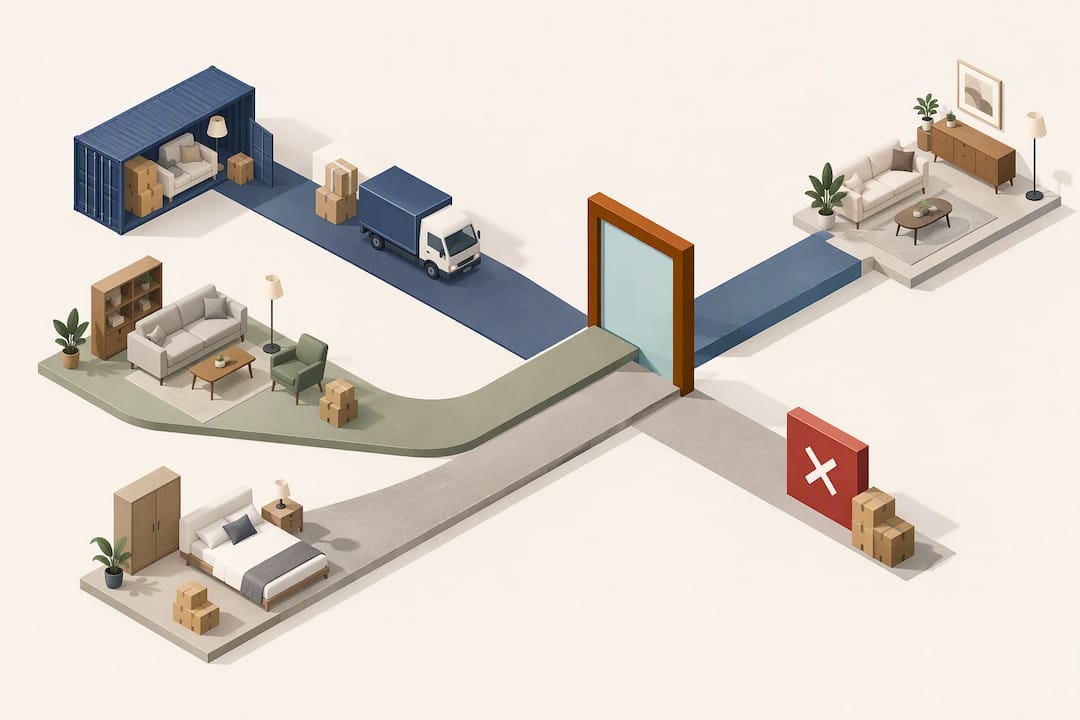
In Singapore, furniture support for expats usually comes as cash, reimbursement or furniture in kind, and each carries distinct tax and practical consequences. Cash allowances are taxed as income in full. For most assignments under three years, renting beats shipping or buying on both cost and convenience.
TL;DR:
- Shipping furniture is generally cost-effective only for assignments longer than three years due to high shipping and clearance costs.
- Furniture-in-kind benefits are valued based on a percentage of the property’s annual value, usually around half for fully furnished units.
- Cash or reimbursement options are simpler to administer but are fully taxable, with cash allowances often being the least tax-efficient for employees.
- Renting furniture for short-term stays in Singapore typically costs from 178 SGD per month for one-bedroom units, offering convenience and avoiding disposal issues.
- Confirm the property’s annual value before accepting in-kind benefits and specify collection dates in writing to avoid disputes at the end of the rental term.
Table of Contents
- How IRAS treats furniture allowances and accommodation benefits
- Cash allowance vs reimbursement vs furniture in kind: which suits you?
- Deciding whether to ship, buy or rent: the three year rule
- What ‘fully furnished’ and ‘partially furnished’ usually include
- How to rent furniture in Singapore: timeline and costs
- How Expats Partner supports furniture allowances and relocation furnishing
- How Expats Partner can help your furniture allowance go further
- FAQ
- Key Singapore authorities and practical sources
How IRAS treats furniture allowances and accommodation benefits
The tax treatment depends entirely on how the benefit is structured, not on how generous it feels on paper. A cash furniture allowance is added straight to employment income and taxed at the employee’s marginal rate, whether or not it gets spent on furniture. Reimbursements for receipted furniture purchases are treated the same way in most cases: the cash still counts as income once it reaches the employee’s pocket.
Furniture in kind works differently. When an employer provides furnished accommodation directly, rather than handing over cash, the taxable value is calculated as a percentage of the property’s Annual Value rather than the furniture’s purchase price.
The deemed value is calculated as a percentage of the Annual Value (AV), typically around half for fully furnished units and slightly less for partially furnished ones. This valuation method comes from the rules governing furniture and fittings provided in a place of residence, and the AV itself is printed on the property tax bill or available through IRAS’s own e‑Valuation List.
For payroll teams and HR, this distinction matters at budgeting stage, not just at filing time:
- Cash and reimbursed amounts need to be grossed into salary calculations from day one.
- Furniture‑in‑kind arrangements need the property’s AV confirmed before the benefit is quoted to a candidate.
- Mixed arrangements (partial cash, partial in‑kind) need both calculations run separately.
Getting this wrong at offer stage is a common source of disputes once the first payslip lands, so it pays to confirm the structure before signing anything.
Cash allowance vs reimbursement vs furniture in kind: which suits you?
Each structure trades simplicity against tax efficiency, and the right choice depends on assignment length and how much administrative friction the employee is willing to accept.
- Cash allowance: straightforward to administer and gives the employee full control, but it is fully taxable and tends to be the most expensive option once gross‑up is factored in.
- Reimbursement: keeps spending receipted and auditable, but still counts as income in most cases and adds paperwork on both sides.
- Furniture in kind or an employer‑leased furnished unit: often lighter on payroll admin day to day, but the AV‑based valuation needs to be worked out in advance so nobody is surprised by the deemed benefit figure.
Pro Tip: Ask HR for the exact AV‑based figure before accepting a furniture‑in‑kind package. A quick calculation against your expected salary band shows whether cash or in‑kind leaves you better off after tax.
In practice, many Singapore employers default to cash allowances because they are easy to budget and explain, even though they are the least tax‑efficient route for the employee. Larger corporate relocation programmes lean towards furniture in kind or a managed rental arrangement precisely because it smooths out that tax exposure while keeping the unit viewing‑ready from day one.
Deciding whether to ship, buy or rent: the three year rule
Mobility specialists commonly apply what is known as the three year rule when advising on furniture decisions: shipping household goods only tends to make financial sense when an assignment is expected to run three years or longer. Below that threshold, the cost of a container, customs clearance and insurance rarely balances against the price of renting locally.
Four practical points to weigh before deciding:
- Check the expected assignment length first. Anything under three years points towards renting or a furniture allowance rather than shipping.
- Factor in the full shipping cost, not just freight. Container shipping, import clearance, temporary storage and eventual disposal all add up, and damage in transit is common.
- Consider the mismatch risk when choosing furniture for Singapore apartments. Furniture sized for a detached house overseas often will not fit a Singapore condominium’s smaller rooms, narrower doorways or lower ceiling heights.
- Weigh renting for speed. A rental arrangement can furnish a unit within days, while shipped goods can take weeks to clear and arrive.
For most expats on a typical two to three year posting, renting through a local supplier or taking a furniture allowance in kind avoids both the upfront outlay and the eventual disposal headache when the assignment ends.
What ‘fully furnished’ and ‘partially furnished’ usually include
The terms “fully furnished” and “partially furnished” are used loosely by landlords and agents, so it is worth asking for a written inventory before signing anything.
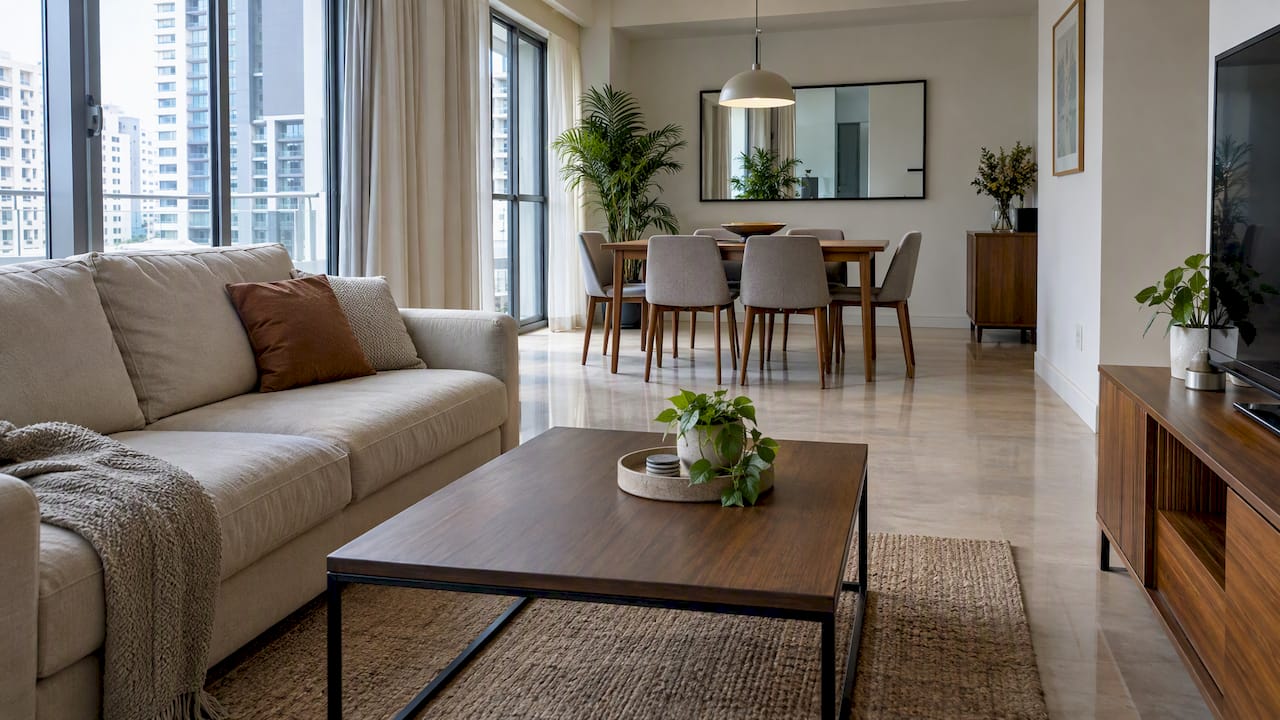
- A fully furnished unit typically includes beds, wardrobes, a sofa, dining table and chairs, plus kitchen appliances such as a fridge, washing machine and cooker.
- A partially furnished unit usually covers the fixed basics only: lighting, air conditioning units and a water heater, with furniture left to the tenant.
- Always request an itemised inventory listing condition and quantity for every piece, attached as a schedule to the tenancy agreement.
| Furnishing level | Typically includes |
|---|---|
| Fully furnished | Beds, wardrobes, sofa, dining set, major appliances |
| Partially furnished | Lighting, air conditioning, water heater only |
Attaching the inventory to the lease protects both sides at handover and at the end of the tenancy, when deposit deductions for missing or damaged items are the most common source of disagreement. A clear checklist settles this before it becomes a dispute, and our complete guide to furnished rentals sets out typical inventory lines room by room.
How to rent furniture in Singapore: timeline and costs
Renting follows a fairly predictable sequence once a unit has been confirmed, and most expats can go from empty flat to viewing‑ready home within a week.
- Request a quote based on bedroom count and the rooms you need furnished.
- Select a package sized to the unit, whether that is a studio, a family apartment or a full house.
- Confirm delivery and setup, usually scheduled within a few days for a standard package and longer for bespoke orders.
- Walk through the inventory with the delivery team and sign off on condition at handover.
- Arrange collection at the end of the rental term, with the same inventory used to close out the agreement.
Check the quote for what it actually covers: delivery, setup labour, end‑of‑term collection, damage policy and whether appliances are bundled in or billed separately.
Pro Tip: Confirm the collection date in writing at the start of the rental, not the end. Lease end dates and furniture collection dates do not always line up automatically.
Our move‑in timeline for renting furniture in Singapore walks through each of these steps with more detail on lead times for short‑term versus long‑term packages.
How Expats Partner supports furniture allowances and relocation furnishing
We work with expats, landlords, agents and corporate relocation teams across Singapore to turn a furniture allowance into a move‑in‑ready home without the cost or hassle of ownership. Packages are sized to common Singapore layouts, from a one‑bedroom unit to a full family apartment, with coordinated delivery, setup and end‑of‑term collection as a single process rather than three separate bookings. That coordination matters most on short assignments, where every extra day without furniture is a day of downtime for a new hire settling into the role.
How Expats Partner can help your furniture allowance go further
A furniture allowance stretches furthest when it goes towards a rental package rather than one‑off purchases that need storing or disposing of later. Our Comfy, Family and Vital+ packages cover one and two bedroom apartments from 178 SGD per month, with delivery, setup and collection built into the arrangement.
- Packages sized for Singapore apartment layouts, from studio to family‑sized units.
- Delivery, setup and end‑of‑term collection handled as one coordinated process.
- Appliance rental available alongside furniture for a fully equipped move‑in.
If your allowance needs to cover a full home quickly, view our packages and request a quote and we will size a solution to your unit and timeline.
FAQ
Can I let my friend stay in my HDB flat for free?
HDB flat owners and tenants generally need approval before letting someone else occupy the unit, and short‑term stays are subject to Housing and Development Board rules on subletting and occupancy. Check the specific conditions on your lease or ownership status before agreeing to any arrangement.
Where can I get free furniture in Singapore?
Town councils run a bulky item collection service for HDB households, and some residents pass on usable furniture through community groups or classifieds before items are collected for disposal. This service is generally free for HDB residents and typically limited to around three items per appointment, while private property residents need to arrange collection through their MCST or a private firm.
How much should I budget for furniture?
Budgets vary widely depending on unit size and whether you rent or buy, but a rental package for a one‑bedroom apartment starts from 178 SGD per month with our Vital+ package, while a two‑bedroom family package runs from 718 SGD per month. Shipping or buying outright usually costs far more upfront once freight, clearance and eventual disposal are included.
What should I do with old furniture in Singapore?
HDB residents can use their town council’s free bulky item collection service, typically limited to a few items per appointment and excluding renovation debris. Private property residents need to arrange removal through their MCST or a private collection firm instead.
Key Singapore authorities and practical sources
For tax and disposal rules, check IRAS guidance on furniture benefits and your town council’s bulky-item service.