

Tenants are typically liable for cleaning and damage costs caused by negligence, misuse or unauthorised alterations, while landlords and rental companies absorb fair wear and tear. The single most important step for avoiding a disputed charge is documenting the furniture’s condition the moment it is delivered, with timestamped photos and a signed checklist. Without that record, disputes tend to favour whoever holds the better evidence.
TL;DR:
- Twenty-four hours is the typical reporting window for pre-existing damage, and missing it can shift liability onto the tenant.
- Fair wear and tear generally covers gradual deterioration from normal use, like fading or softening, which falls on the landlord or rental company.
- Dated photos, signed handover forms, and contractor invoices are essential evidence that strongly supports dispute resolutions.
- Clauses demanding tenant payment for any mark or damage must be fair and reasonable, or they risk being challenged in court.
- Documented delivery and collection processes significantly reduce the likelihood of disputes over furniture condition at move-out.
Table of Contents
- What fair wear and tear means in Singapore and how it affects liability
- Inspection and documentation: how to prove condition before and after
- Common contract clauses in furniture rental agreements
- How disputes and evidence are treated under Singapore law
- Practical handover checklist for tenants and landlords
- How Expats Partner reduces cleaning and damage disputes
- Authoritative Singapore sources and guides
- FAQ
What fair wear and tear means in Singapore and how it affects liability
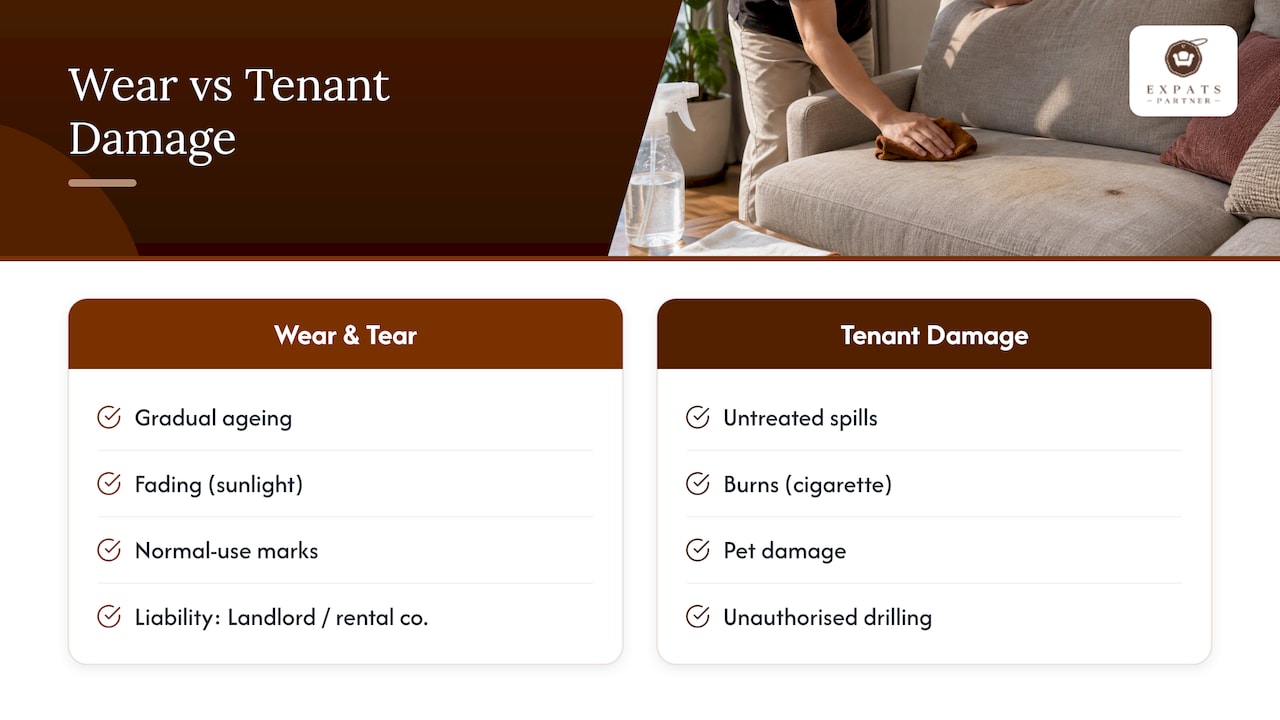
Fair wear and tear describes the gradual decline that comes from normal, reasonable use over time. Under Singapore guidance, this kind of deterioration ordinarily falls on the landlord or rental company, not the tenant, because it happens regardless of how carefully the furniture is treated. Legal advisers writing on this topic stress that a wear and tear clause limits liability but never excuses neglect, so a tenant cannot assume every mark is automatically free of consequence.
Damage that crosses into tenant liability usually includes stains from spills left untreated, burns, pet damage and alterations made without permission, such as drilling into a rented cabinet. These are treated as avoidable harm rather than the ordinary ageing of a sofa or dining table. A faded cushion cover after two years of sunlight is wear and tear. A cigarette burn on that same cushion is not.
A key legal principle: contract terms and notices that limit liability must be fair and reasonable in context, a standard drawn from Singapore’s consumer protection framework. Courts weigh factors including the bargaining power of each party and how practical it would have been to negotiate the term. A clause demanding the tenant pay for any mark whatsoever, regardless of cause, would struggle to meet that reasonableness bar.
This is why a well-drafted rental agreement separates the two categories explicitly. It names what counts as normal ageing and what counts as damage, rather than leaving the distinction to be argued after the furniture has already been collected.
Inspection and documentation: how to prove condition before and after
Liability disputes are rarely won on argument alone. They are won on paperwork, and the paperwork has to start on delivery day, not at the point a disagreement arises.
- Walk through an itemised inventory with the delivery team and check each piece against the list.
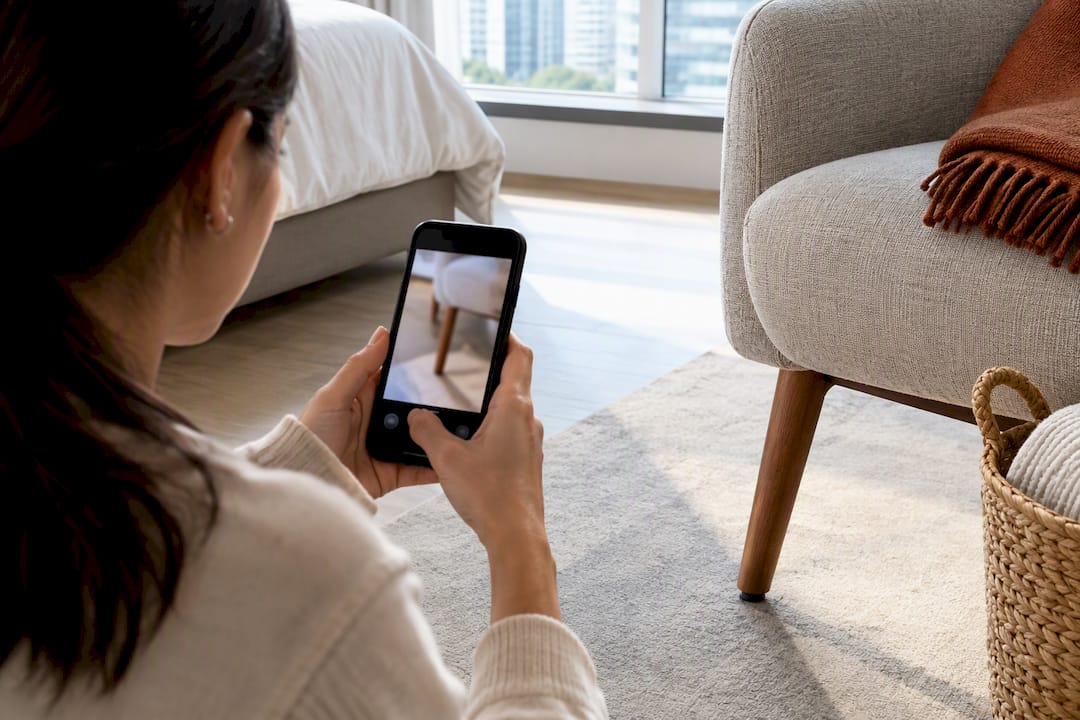
- Take timestamped, 360-degree photos of every item, including close-ups of any existing marks or wear.
- Sign a handover form that explicitly notes pre-existing stains, scuffs or damage.
- Keep copies of the inventory, photos and signed form somewhere retrievable for the full tenancy.
Many rental providers set a short reporting window, sometimes as little as 12 hours, for flagging pre-existing defects after delivery — so it helps to avoid paying GST when shipping personal belongings to Singapore to ensure clear timing and documentation from the start. Miss that window and any damage found later can be assumed to have happened during the tenancy, which shifts the burden of proof onto the tenant even when the mark was already there.
Expats Partner coordinates delivery and collection with a documented handover process at both ends of the rental, which gives tenants and landlords an independent, time-stamped record rather than a memory of who said what. That record is what settles a dispute quickly instead of dragging it out.
Pro Tip: Photograph furniture in daylight from at least two angles per item, since poor lighting can hide the exact damage you are trying to prove.
Common contract clauses in furniture rental agreements
Most Singapore rental agreements for furniture include a recognisable set of clauses, and knowing what they typically cover helps both sides spot something unusual before signing.
- End-of-lease professional cleaning: furniture, and sometimes curtains specifically, must be professionally cleaned before return.
- Deposit deduction clause: sets out how damage costs are deducted from the security deposit once assessed.
- Minor repair cap: limits the tenant’s liability for small, routine repairs below a stated amount.
- Notice for alterations: requires written permission before drilling, painting or otherwise modifying rented pieces.
Courts assessing whether such a clause is reasonable look at factors drawn from Singapore’s Unfair Contract Terms framework, including how the term was negotiated and whether it was buried in fine print. Tenants should push back on clauses that impose indefinite liability with no requirement for the landlord to produce evidence, or that set unreasonably narrow notice periods for reporting pre-existing damage. A clause is far more defensible when it ties any charge to a documented condition report rather than to assumption.
How disputes and evidence are treated under Singapore law
The party seeking to recover cleaning or repair costs carries the burden of proving that the damage goes beyond fair wear and tear, and of quantifying what it will cost to fix. Singapore judgments on landlord and tenant covenants have repeatedly placed that burden on the claimant, with start and end condition evidence treated as decisive.
Judicial decisions in Singapore repeatedly require the claiming party to produce invoices or quotations to prove the cost quantum for rectification; absent that, awards can be nominal.
Strong evidence in these disputes tends to look the same every time: dated photos from delivery and from return, a signed handover list, and a contractor’s invoice or quotation for the actual repair. Weak evidence is the opposite, a verbal claim that something was “fine before” with no photo to back it up, or a repair estimate pulled from memory rather than a real quotation.
Where the courts have set the bar: claims without proper quantum evidence often result in only nominal damages, because the tribunal has no reliable figure to work from. A landlord who claims $2,000 in damage but cannot produce a contractor’s invoice may recover far less, or nothing at all. The lesson for both sides is the same: the paperwork decides the outcome, not the strength of the complaint.
Practical handover checklist for tenants and landlords
A clear sequence at move-in and move-out removes most of the guesswork from a furniture cleaning policy.
- At delivery: walk the inventory item by item, take 360-degree photos, note any existing stains or defects in writing, then sign and keep a copy of the handover form.
- During the tenancy: report any damage or incident as soon as it happens, get a written invoice for any repair carried out, and keep a record of all related messages or emails.
- Before move-out: clean furniture to the standard the contract requires, book any professional cleaning service the agreement stipulates, then attend the final inspection in person and sign the return form only once you agree with its contents.
Landlords planning ahead for worn furniture that may need rectification benefit from the same sequence, since a documented handover trail supports any legitimate claim and protects against one that is not.
Pro Tip: Never sign a return form under time pressure. Note any disagreement on the form itself before signing, since a signature without comment can be read as acceptance of the stated condition.
How Expats Partner reduces cleaning and damage disputes
A furniture cleaning policy only works when the contract is clear and the handover is documented from day one, which is the part of the process Expats Partner builds into every rental. 
- Short and long-term furniture rental with a documented delivery and collection process at both ends.
- Full-home packages, including 1 Bedroom Apartment options available at various prices.
- Optional end-of-lease cleaning arrangements that fit standard tenancy clauses without last-minute scrambling.
- Coordinated pick-up scheduling that avoids the ambiguity that leads to deposit disputes.
For tenants who want a move-in ready rental with documented handover, or landlords comparing furniture rental packages with contract clarity built in, this is the practical difference between a straightforward move-out and a drawn-out argument over a stain. Browse the available packages and get a tailored quote for your property or lease term today.
Authoritative Singapore sources and guides
Guidance on fair wear and tear clarifies the legal test for tenant liability. Singapore judgments on landlord and tenant covenants set the precedent for burden of proof and quantum evidence. Statutory materials on unfair contract terms explain how reasonableness is assessed in rental agreements.
FAQ
Who pays for stains on rented furniture in Singapore?
The tenant is typically liable for a stain caused by spills, negligence or misuse, while ordinary fading or minor marks from ageing usually fall under fair wear and tear. The distinction depends on whether the mark could have been prevented with reasonable care.
What counts as fair wear and tear on furniture?
Fair wear and tear is the gradual deterioration that happens from normal, reasonable use over time, such as slight fading or softening of cushions. It ordinarily falls on the landlord or rental company rather than the tenant.
How long do I have to report existing damage after delivery?
Reporting windows vary by provider, and some set a period as short as 12 hours after delivery to flag pre-existing marks or defects. Missing that window can shift the burden of proof onto the tenant if the same damage is noticed later.
What evidence wins a furniture damage dispute?
Dated photos taken at delivery and return, a signed handover list and a contractor’s invoice or quotation for the repair carry the most weight. Singapore judgments have shown that claims without proper quantum evidence often result in only nominal damages.
Does Expats Partner offer documented delivery and collection?
Yes, Expats Partner coordinates delivery and collection with a documented handover process, giving tenants and landlords a time-stamped record of condition at both ends of the rental. This is designed to reduce disputes over cleaning and damage charges at move-out.