
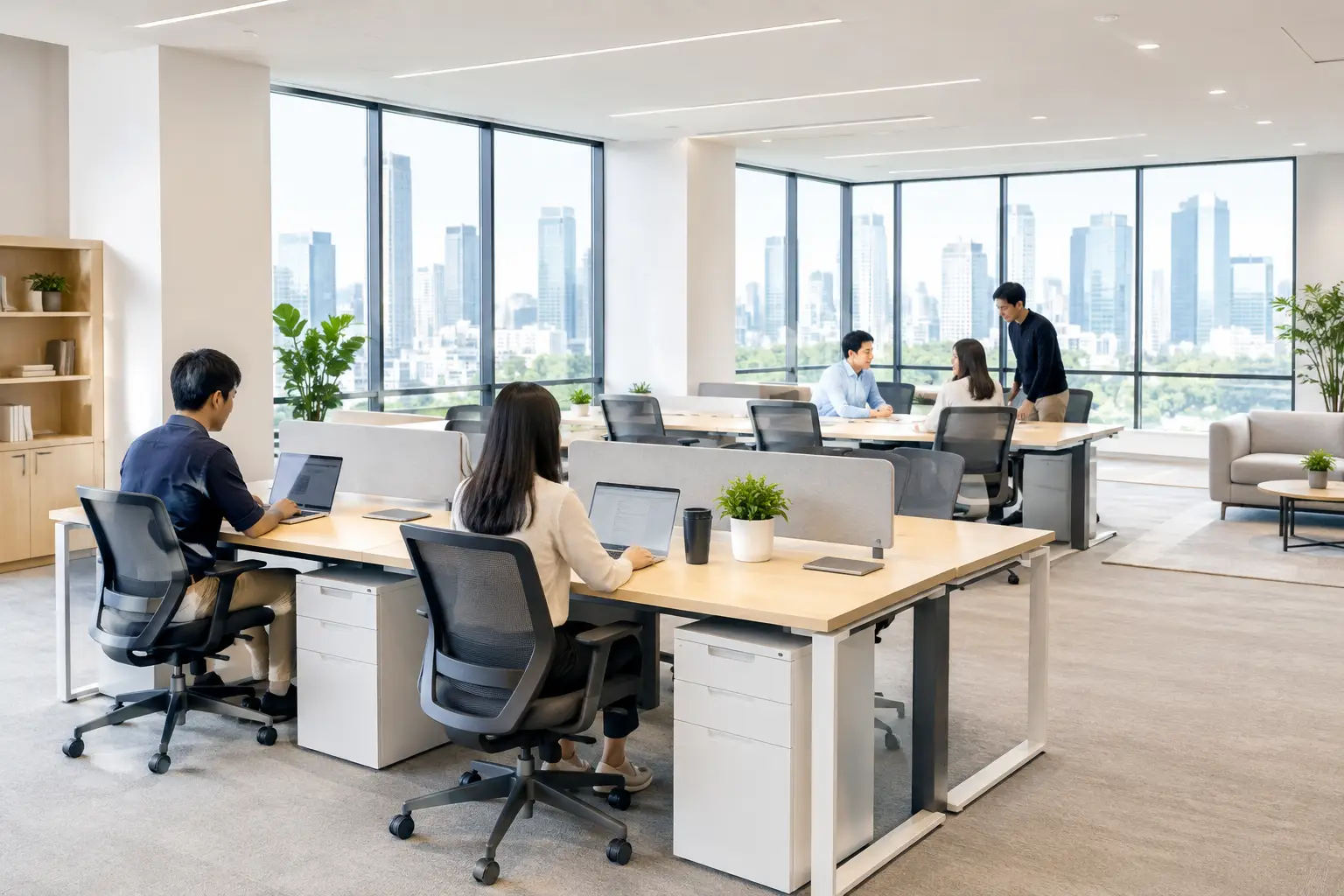
A new office can look ready on paper long before it is ready for people. The lease may be signed, internet arranged and access cards issued, yet the space still needs to support meetings, focused work, visitors and the small daily routines that help a team settle in. Choosing the right office furniture is less about filling a floorplan and more about creating a workplace that feels practical from the first working day.
For businesses in Singapore, this decision often comes with a tight timeline. A growing team may need more desks quickly. A project office may only be needed for several months. A company moving from a serviced office may want a more established setting without tying up too much capital in furniture that may not suit its next location. The best approach depends on how the office will be used, how long it will be occupied and what needs to remain flexible.
Start with how the office will actually work
A floorplan gives dimensions, but it does not show how people will move through the space. Before selecting desks, chairs or storage, consider the team’s working patterns. Is the office mainly a base for individual work, or does it host frequent client meetings? Do employees work at fixed desks, share workstations or split their time between home and office? Is there a need for quiet concentration, informal discussion or both?
These questions shape the furniture plan. A compact team that spends much of the day on calls may need well-spaced desks and a dedicated meeting table. A client-facing consultancy may benefit from a welcoming reception area and a boardroom that looks considered in presentations. A temporary project team may need straightforward workstations, reliable task chairs and lockable storage, without investing in a permanent fit-out.
It is also worth allowing for circulation. Desks that technically fit can still make an office feel cramped if chairs cannot be pulled out comfortably or colleagues have to squeeze past one another. Clear walkways make the space safer, calmer and easier to maintain. They also give visitors a better first impression.
Office furniture should support comfort, not just capacity
It is tempting to focus on desk numbers first. Capacity matters, particularly where rent is high, but crowded seating can affect comfort and concentration. A workstation needs enough room for a laptop or monitor, documents and the everyday items people use without turning the desk into a cluttered surface.
Chairs deserve particular attention. Staff may spend several hours each day seated, so adjustable seating with sensible back support is a practical investment in day-to-day comfort. The aim is not to create a highly specialised setup for every person, but to provide chairs that can be adjusted to suit different users. This matters even more in shared-desk environments.
Storage is another detail that is often left until late in the process. Some teams work almost entirely digitally and require very little. Others still need secure space for files, samples, equipment or confidential documents. Pedestals, cabinets and credenzas can keep work areas tidy, but too much storage can make a smaller office feel heavy. A balanced plan gives people somewhere to put essential items while keeping the room visually open.
Choose durable pieces for high-use areas
Reception seating, meeting room chairs and shared workstations tend to receive the most wear. In these areas, easy-clean surfaces and sturdy construction are usually more useful than delicate finishes. Neutral colours also make it easier to add personality through artwork, plants or accessories without having to replace major pieces when the business changes direction.
That does not mean every office must look identical. A small selection of lounge chairs, a coffee table or a well-proportioned meeting table can make a workplace feel more welcoming. The key is to use these pieces where they have a purpose, rather than treating them as decoration alone.
Plan for meetings, privacy and first impressions
Most offices need more than rows of desks. Even a small team may need a place for interviews, supplier discussions, video calls or private conversations. If a separate meeting room is not available, a compact table positioned away from the busiest workstations can provide a useful alternative.
For client-facing businesses, the furniture around the entrance and meeting space often carries the greatest visual weight. It should feel organised and professional without becoming overly formal. A comfortable pair of chairs, a tidy console or a simple reception desk can help visitors understand where to go and feel looked after on arrival.
Acoustics should be considered too. Furniture cannot solve every noise issue, but soft seating, rugs and fabric panels can reduce the harshness of a bare room. In offices with tiled floors, glass partitions and hard surfaces, these details can make conversations easier and video calls less distracting.
Decide whether renting or buying makes better sense
Buying office furniture may suit an established business with a stable headcount, a long lease and a clear idea of its future space requirements. Ownership gives full control over the selection and can be cost-effective over many years, provided the furniture remains suitable and is maintained well.
However, buying is not always the most practical choice. It requires upfront spending, time spent sourcing items, coordination of delivery and installation, plus a plan for storage or disposal when the office changes. For businesses moving quickly, those tasks can distract from the work of opening or running the office.
Furniture rental offers a different route. It can be particularly useful for temporary offices, relocation periods, new company set-ups, project teams and businesses testing a larger workspace before committing to a long lease. Rental also helps spread costs more predictably, rather than requiring a large payment before the office is operational.
The trade-off is that rental selections may be more curated than a fully bespoke purchase, and terms should be checked carefully to ensure they match the required period. Yet for many businesses, a well-chosen rental package provides the right mix of professional presentation, speed and flexibility.
Make move-in day simpler with a coordinated setup
Office furniture is rarely just a purchasing decision. It is an operational task involving access arrangements, lift bookings, building rules, delivery timing, assembly and positioning. In a busy commercial building, these details can determine whether a move-in feels controlled or unnecessarily stressful.
A coordinated service can remove much of that pressure. Expats Partner can supply curated furniture for offices, arrange delivery and installation, and collect the items at the end of the agreed rental period. This allows business owners, office managers and relocation teams to focus on staff, systems and the practical work of starting in a new space.
Before delivery, prepare a clear seating plan and confirm the location of power points, data ports and meeting-room screens. It is far easier to position desks correctly at installation than to shift a full office once cables and equipment have been set up. If the team will be arriving immediately, arrange for essential workstations and chairs to be installed first, with secondary lounge or storage items following where necessary.
Keep the look current without over-designing it
A polished office does not need to follow every workplace trend. In fact, highly themed interiors can date quickly and may not suit a changing team. A calmer base of practical desks, supportive chairs and clean-lined storage gives the business room to adapt.
Natural light should remain as unobstructed as possible. Avoid placing tall cabinets in front of windows, and use lighter-toned finishes in compact spaces where appropriate. A few plants, framed prints or carefully chosen cushions can add warmth to shared areas, but they should not compete with the purpose of the room.
The strongest office environments are the ones people can use easily. Staff should be able to find a seat, hold a conversation, store their belongings and welcome a visitor without navigating clutter or makeshift arrangements. When those basics are in place, the space feels more settled and the business appears more prepared.
A sensible furniture plan gives an office room to change with the people in it. Rather than buying for an imagined future, choose pieces and arrangements that serve the team you have now while keeping the next move, new hire or project requirement manageable.