
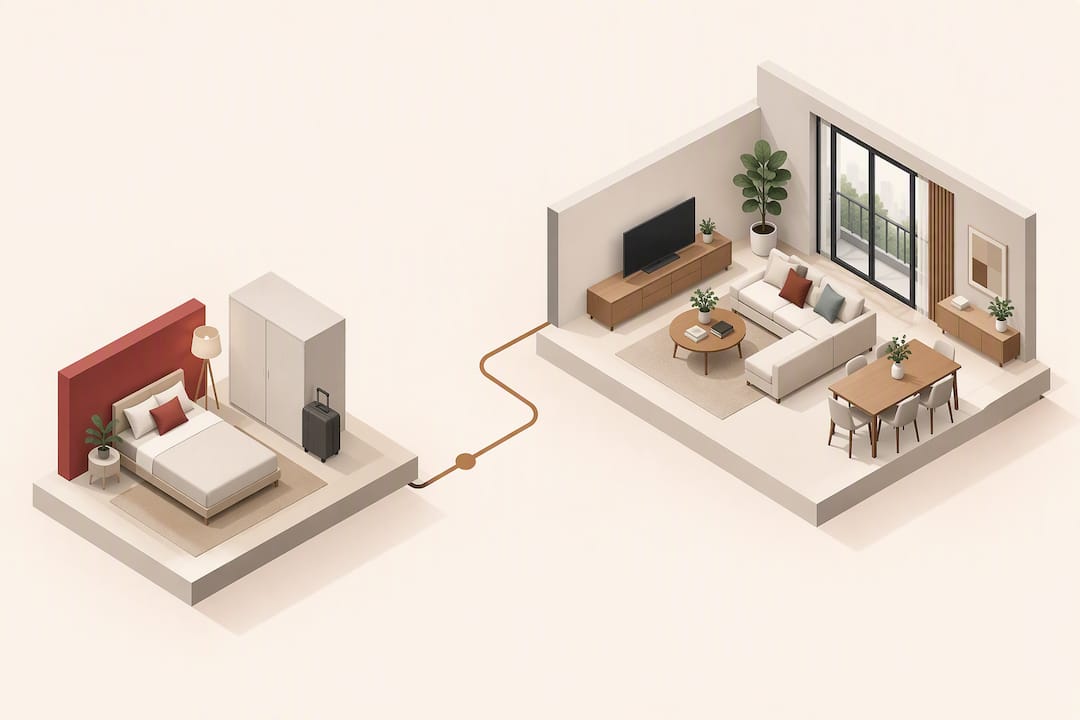
Whether to furnish your rental comes down to three decisions: who you are renting to, how long the lease runs, and what HDB and IRAS rules allow for your unit. As a general rule, we see short-term and expat lets do best fully furnished, while long-term family tenancies often perform better partially furnished or left bare. Landlords who want flexibility without buying can use short-term furniture rental or staging to bridge either scenario.
TL;DR:
- For HDB bedroom sublets, each approved application requires at least six months, so furnishing plans cannot rely on shorter stays.
- IRAS treats furniture rent as taxable rental income; dated, photographed inventories with receipts support expense claims, while signed condition records help resolve deposit disputes.
- Furniture rental suits corporate lets and quick turnovers; buying durable pieces tends to cost less when a tenancy lasts beyond three years.
- Use a hygrometer in bedrooms, place a dehumidifier in persistently damp rooms, and service air conditioning regularly to limit mold and furniture damage.
- HDB owners need approval before subletting and must meet occupancy conditions; supplied appliances should carry valid safety marks and remain in working order.
Table of Contents
- When to furnish: tenant profile and lease length explained
- Essential furniture by room: a practical checklist
- Costs, taxation and depreciation for landlord furnishings
- Practical Singapore-specific maintenance and humidity advice
- Affordable routes: furniture rental, staged packs and when to buy
- Styling and decor tips to enhance rental appeal
- Safety and compliance considerations for rental furnishings
- Furniture arrangement strategies to maximise space
- Recommended furniture brands and rental providers in Singapore
- How to handle furniture damage or wear and tear in tenancy agreements
- Impact of furnishing on property valuation and tenant retention
- How Expats Partner can help landlords furnish or stage units in Singapore
- FAQ
When to furnish: tenant profile and lease length explained
A short-term tenancy, broadly anything under 24 months, changes the maths completely compared with a multi-year lease. Tenants on shorter contracts rarely want to buy and sell furniture for a stint in Singapore, so a fully furnished unit removes a major barrier to signing.
Expats and corporate assignees are the clearest example. They typically arrive with limited notice, need to move in quickly, and value a unit that is ready to live in from day one. A furnished listing tends to attract this group faster, which can shorten the time your property sits vacant between tenancies.
Families and tenants on longer leases behave differently. They often want to bring their own beds, sofas and dining sets, and personalising a space matters more to them than convenience. Over a three or four-year lease, the cumulative cost of renting furniture can also exceed the cost of buying outright, so unfurnished or partially furnished units suit this group better.
HDB rules add another layer for bedroom sublets specifically. Flat owners must follow a minimum rental period of six months for each approved application, which rules out very short stays and shapes how much furnishing is worth installing for a single bedroom let.
A few practical signals help you decide quickly:
- Lease under about one year or a corporate booking: furnished units are preferable.
- Lease of one to a few years with a settled family: partially furnished is often suitable.
- Lease over multiple years, or tenants with their own furniture: unfurnished units work well.
- HDB bedroom sublet: consider the minimum rental period requirement before deciding furnishing.
Essential furniture by room: a practical checklist
Furnishing a rental well means choosing pieces that survive moves through narrow service lifts, cope with Singapore’s humidity, and photograph well for listings. A room-by-room approach keeps the process manageable.
- Living room: a two or three-seater sofa that fits through a standard lift door, a rug to anchor the seating area, and a mix of ambient and task lighting rather than a single overhead bulb.
- Bedroom: a sturdy bed frame, a new mattress or at minimum a fresh mattress protector, built-in or freestanding storage, and blackout curtains for any west-facing room that catches the afternoon sun.
- Dining and kitchen: a compact dining set or a run of barstools for smaller units, plus an essentials-only kitchen kit, kettle, toaster, basic cookware, if you are marketing the unit as fully furnished.
- Study or flex space: a small desk and a proper chair. This single addition carries outsized appeal for the growing number of tenants who work from home some or all of the week.
- Appliances and inventory: a fridge, washing machine and working air conditioning are near-universal tenant expectations in Singapore, furnished or not.
Pro Tip: Attach a dated, photographed inventory annex to the tenancy agreement for every item you provide, it is the single best protection against disputes at handover.
Keep decorative pieces to a minimum and favour neutral, durable choices over anything highly personal. A unit furnished for a broad tenant market rents faster than one styled for a narrow taste.
Costs, taxation and depreciation for landlord furnishings
Rent you receive for furniture and fittings counts as part of your taxable rental income under IRAS rules, not as a separate, untaxed stream.
A commonly used benchmark is a useful life of several years when depreciating furniture for claiming actual expenses rather than opting for the deemed 15% deduction. That timeframe gives you a rough sense of when replacement costs become deductible again.
HDB’s own guidance on renting out flats also stresses record-keeping, which matters beyond tax. A dated inventory with receipts supports both your IRAS claims and any dispute over damage at the end of a tenancy.
A simple way to frame the buy-versus-rent decision:
- A one-year corporate let: furniture rental usually costs less than buying and reselling.
- A two to three year lease: the break-even point depends on resale value, but rental still avoids storage and disposal hassle.
- Anything beyond three years: buying durable, mid-range furniture typically works out cheaper over the full term.
Practical Singapore-specific maintenance and humidity advice
Singapore’s humidity is the single biggest threat to furniture condition, and mould on upholstery or inside wardrobes is one of the most common deposit disputes we see described in landlord guidance. A hygrometer in each bedroom and one dehumidifier per consistently damp room keep moisture in check between tenancies.
Material choice matters just as much. Avoid the cheapest particle board pieces near windows or balcony doors, where condensation and direct sun cause swelling and warping fastest. Wardrobes and desks with a durable core hold up far better over a multi-year rental cycle.
- Service air conditioning units on a regular schedule, not just when a tenant complains.
- Photograph every room at handover and get the tenant to sign off on condition notes jointly.
- Replace mattress protectors between tenancies as a low-cost hygiene and damage-prevention step.
- Check furniture joints and fabric for early signs of damp damage every few months.
Pro Tip: A joint, photographed handover inventory signed by both parties resolves far more deposit disagreements than any written clause ever will.
Affordable routes: furniture rental, staged packs and when to buy
Furniture rental tends to suit short lets, corporate bookings and any situation where you need to turn a unit around quickly. It also works well as a staging tool: a professionally furnished, photography-ready unit tends to generate faster enquiries than an empty one.
Buying outright makes more sense once a tenancy looks stable and long-term, or when higher-quality, durable pieces lower your cost per year of use across several tenancies.
- Choose rental for short-term lets, rapid turnarounds, or staging a unit before photos and viewings.
- Choose buying for tenancies you expect to run several years with low turnover.
- Plan delivery, setup and collection windows ahead of your target listing date.
- Decide your exit strategy for owned furniture, resale, storage or donation, before the lease ends rather than after.
Styling and decor tips to enhance rental appeal
Good styling is less about decoration and more about helping a prospective tenant picture themselves living in the space. Neutral wall tones, light timber or matt finishes, and a restrained colour palette across soft furnishings make a unit feel calm and easy to imagine living in, whatever the tenant’s own taste turns out to be.
Scale matters more in Singapore’s typically compact units than in larger markets. Oversized sofas or heavy dining tables can make a room feel cramped in photographs and in person, so choosing furniture proportioned to the actual floor area pays off at viewing stage.
Layering is what separates a staged unit from a merely furnished one: a rug under the coffee table, two or three cushions in complementary tones, a floor lamp beside the reading chair, and one or two plants near a window. None of these additions needs to be expensive, but together they signal that the unit is cared for.
Lighting deserves particular attention. Warm-toned bulbs in the living and bedroom areas photograph better than cool white light and make viewings in the evening feel considerably more welcoming. Keeping surfaces clear of clutter during photography and viewings, rather than styled with too many objects, also helps tenants focus on the space rather than the furniture.
Safety and compliance considerations for rental furnishings
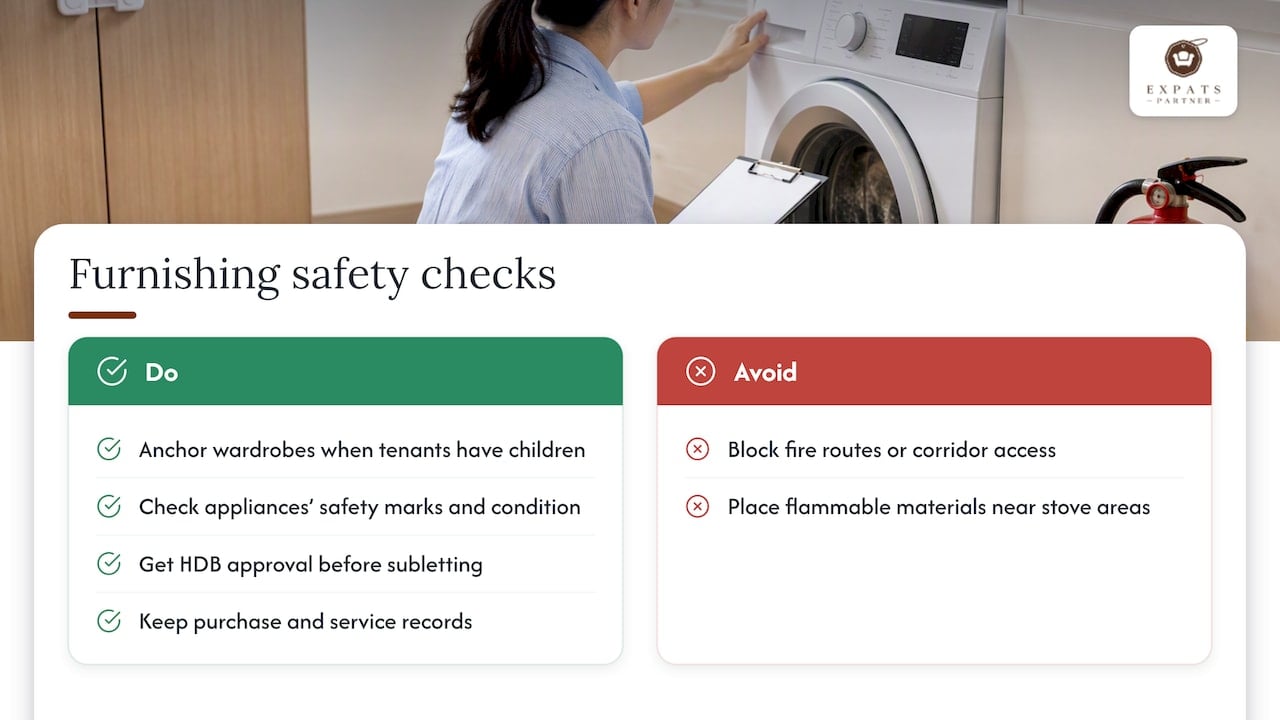
Furniture and fittings in a rental unit need to meet basic safety expectations as much as aesthetic ones. Freestanding wardrobes and bookshelves should be anchored to the wall where tenants have children, and any electrical appliance supplied, from the washing machine to table lamps, should carry a valid safety mark and be in good working condition before handover.
HDB flat owners who sublet rooms or whole units need to stay within the rules set out in HDB’s regulations for renting out flats, including approval requirements before subletting and staying compliant with occupancy conditions. Structural changes, such as removing a wall to create an open-plan layout, fall outside simple furnishing decisions and need the correct statutory approvals before work begins; a permit and approvals guide is worth consulting before any renovation work that goes beyond swapping furniture.
Fire safety is a practical, often overlooked point. Avoid blocking fire escape routes or corridor access with oversized furniture during delivery or storage, and keep flammable materials away from stove areas in open-plan kitchens. For electrical appliances you supply, keeping proof of purchase and service records protects you if a fault is ever raised during a tenancy, and it supports any insurance claim should damage occur.
Taken together, these checks are quick to carry out at the furnishing stage and considerably more troublesome to fix once a tenant has moved in.
Furniture arrangement strategies to maximise space
Most Singapore rental units, whether HDB flats or smaller condominium apartments, reward arrangement choices that keep sightlines open. Positioning the sofa away from the centre of a room and against a wall, rather than floating it in the middle, frees up walking space and makes a modest living room read as larger in photographs.
Multi-functional furniture earns its keep in compact units. A console table that doubles as a desk, a storage ottoman instead of a coffee table, or a daybed in a study that can also host guests all reduce the total footprint needed without sacrificing function.
Vertical storage is underused in many rentals. Wall-mounted shelving and tall, narrow wardrobes free up floor area compared with wide chests of drawers, which matters in bedrooms that are often the smallest room in the unit.
Dining areas benefit from folding or extendable tables in one and two-bedroom units, since a fixed six-seater rarely gets used at full capacity but takes up space every day. Round tables also tend to suit awkward corners better than rectangular ones.
Finally, leaving clear walking paths between the entrance, kitchen and living area, rather than cutting across furniture groupings, makes the biggest practical difference during viewings. Prospective tenants notice flow through a space almost as quickly as they notice the furniture itself.
Recommended furniture brands and rental providers in Singapore
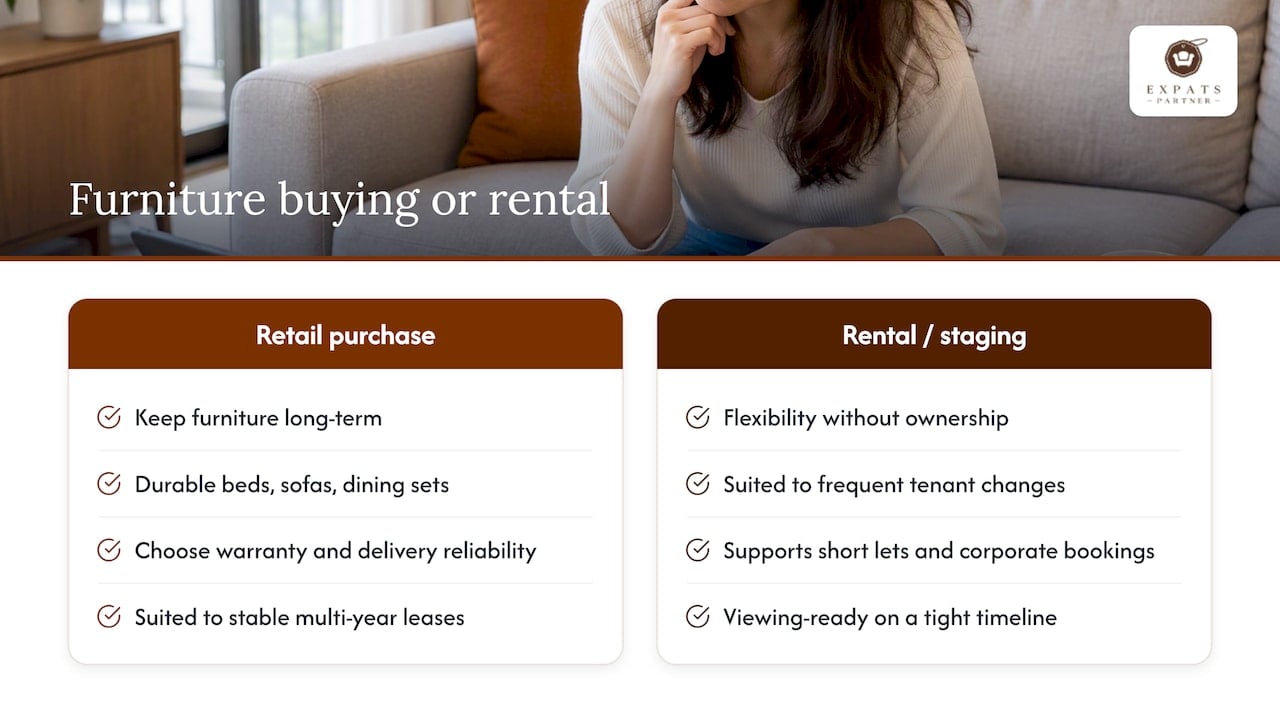
Landlords furnishing a Singapore rental generally choose between retail furniture brands for pieces they plan to keep long-term, and rental or staging providers for flexibility without ownership. Retail options commonly used for durable basics include mainstream Singapore furniture retailers for beds, sofas and dining sets, chosen for warranty terms and delivery reliability rather than price alone.
For landlords who prefer not to buy, we offer furniture rental packages built for landlords, alongside staging services for vacant units ahead of viewings. These routes suit landlords managing short lets, corporate bookings or units that need to look viewing-ready on a tight timeline, without the commitment of purchasing furniture outright.
Choosing between a retail purchase and a rental provider usually comes down to tenancy length and how often the unit turns over. A property with frequent tenant changes benefits more from a flexible rental arrangement, while a unit let to one stable tenant for several years often justifies buying furniture outright from a retailer.
How to handle furniture damage or wear and tear in tenancy agreements
A tenancy agreement should distinguish clearly between fair wear and tear and damage the tenant is liable for. Fair wear and tear covers the gradual, expected decline of furniture through normal use, a sofa cushion softening over two years, for instance, while damage covers stains, breakages or misuse beyond what normal living would cause.
The inventory annex you attach at the start of the tenancy is what makes this distinction enforceable. Dated, photographed condition notes for every furnished item, signed jointly by landlord and tenant at move-in, give both parties a clear reference point at move-out. Without this record, disputes tend to come down to one party’s word against the other’s.
When damage does occur, a practical process works better than an ad hoc argument: compare the move-out condition against the signed inventory, document the difference with photos, and agree a reasonable deduction from the deposit based on the item’s remaining useful life rather than its original purchase price. A sofa nearing the end of its five-year useful life, for example, warrants a smaller deduction for damage than one that was replaced the previous year.
Clear clauses on cleaning standards, furniture placement and who arranges repairs during the tenancy also reduce the number of disputes that reach the deposit stage at all.
Impact of furnishing on property valuation and tenant retention
Furnishing decisions affect two separate things: how quickly you let the unit, and how long a tenant chooses to stay. A furnished unit, particularly one styled and photographed well, tends to generate enquiries faster than an identical unfurnished listing, which shortens the vacancy period between tenancies.
Furnished units in Singapore commonly command a monthly rent premium over unfurnished equivalents, though the exact premium depends heavily on location, unit type and the quality of what is provided. That premium needs to be weighed against the ongoing cost of maintaining or renting the furniture itself.
Tenant retention tells a different story. A tenant who has brought their own furniture, or who has settled into a partially furnished unit they have personalised, often has more reason to renew a lease than one living among generic rental pieces they feel less attached to. For landlords prioritising long occupancy over premium rent, unfurnished or partially furnished units can support better retention, even if the initial rent achieved is slightly lower.
The right balance depends on your own goals: maximise short-term rental yield with furnishing and faster turnover, or prioritise a stable, long-staying tenant with a lower-maintenance, less furnished unit.
How Expats Partner can help landlords furnish or stage units in Singapore
If you would rather skip the buying, storing and eventual disposal of furniture altogether, we offer a direct alternative. Our services cover furniture rental, home and property staging, and appliance rental, all built around the practical needs of landlords.
We aim to coordinate delivery and collection around your tenancy dates without long lead times. Our rental periods stay flexible, so a unit let for six months and one let for three years can both be furnished on terms that suit the tenancy rather than a fixed retail commitment.
- Browse ready-made furniture packages including Comfy, Family and Vital+ options for one and two-bedroom apartments.
- Explore relocation furniture packages built for corporate and expatriate tenants who need a fast turnaround.
- Arrange home or property staging ahead of viewings and photography.
If you are weighing up furnishing options for an upcoming tenancy, you can request a quote on our packages page and see which setup fits your unit and timeline.
FAQ
Should I furnish my HDB flat before renting it out?
It depends on who you expect to rent to: fully furnishing suits short-term and corporate tenants, while families on longer leases often prefer to bring their own furniture. Remember that HDB requires a minimum rental period of six months for approved rental applications, which rules out very short, heavily furnished stays for bedroom sublets.
Is furniture rental income taxable in Singapore?
Yes, rent you receive for furniture and fittings forms part of your taxable rental income under IRAS, alongside the rent for the property itself.
How long should furniture last in a Singapore rental before I replace it?
A five-year useful life is the common benchmark landlords use when depreciating furniture for tax purposes, though humid conditions and heavy tenant turnover can shorten the realistic lifespan of lower-quality pieces. Regular air conditioning servicing and dehumidifying damp rooms help furniture last closer to that benchmark.
Is it cheaper to rent furniture or buy it for a rental property?
For lets under roughly two to three years, furniture rental usually works out cheaper once you account for storage, resale effort and disposal costs at the end of a tenancy. For tenancies you expect to run several years with a stable tenant, buying durable furniture outright typically costs less over the full period.
What is included if I book Expats Partner’s furniture packages?
Our furniture packages include options such as Comfy for a one-bedroom apartment at 338 SGD per month, Family for a two-bedroom apartment at 718 SGD per month, and Vital+ for a one-bedroom apartment at 178 SGD per month. Home staging packages for HDB flats, condominiums and landed homes are also available, priced separately on the same packages page.