
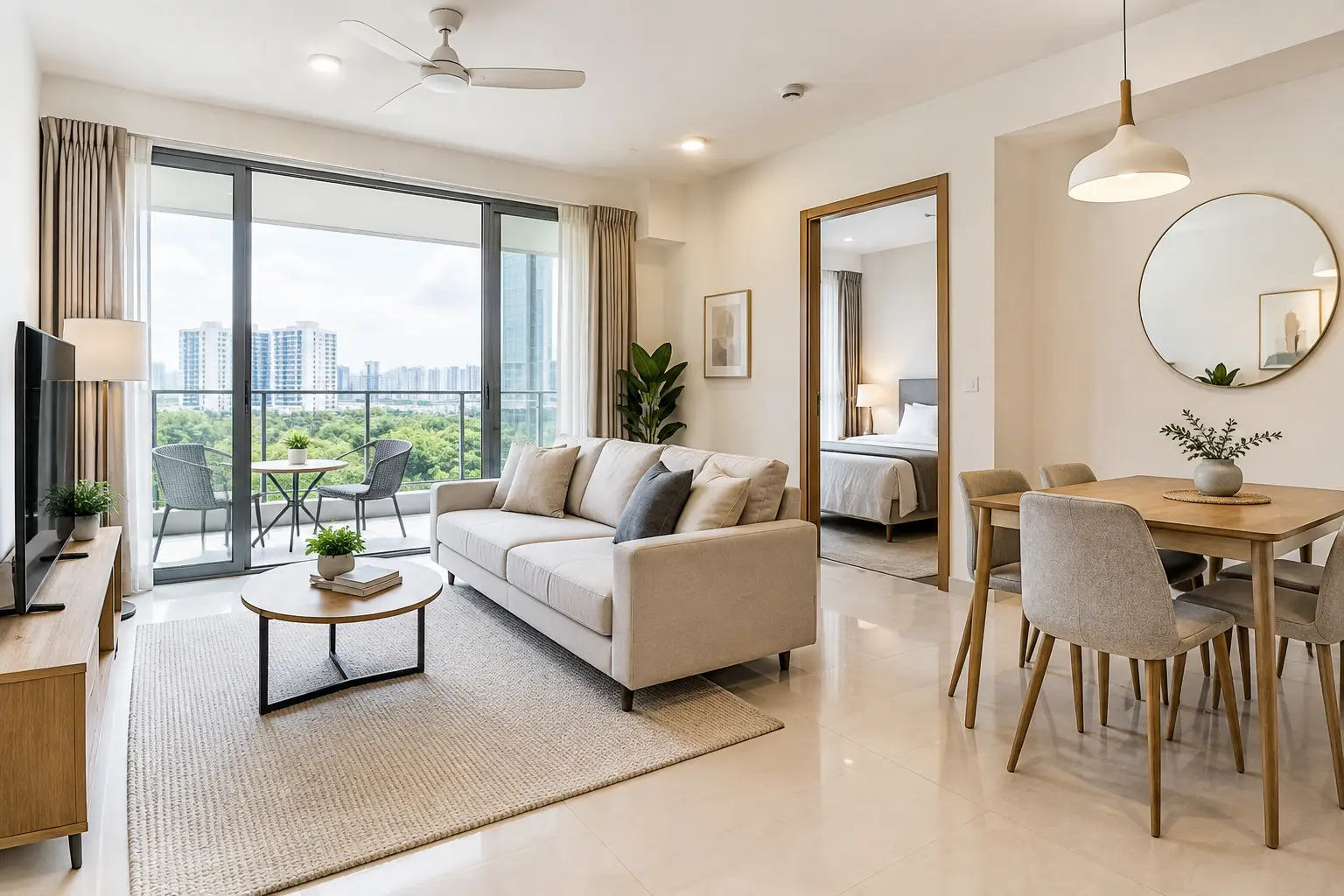
A home can be well loved and still be difficult to market. The dining table may double as a work desk, children’s belongings may be part of daily life, and every cupboard may be needed until moving day. This occupied staging guide is for sellers and property agents who need a home to look its best while someone is still living in it – without turning everyday life upside down.
Occupied staging is not about making a home look empty or pretending that nobody lives there. It is about helping buyers see the property’s space, light and potential before they are distracted by personal belongings, crowded surfaces or furniture that does not suit the room. Done thoughtfully, it supports stronger listing photos and more comfortable viewings while keeping the process manageable for the people at home.
What occupied staging should achieve
A vacant property gives buyers a blank canvas, but it can also feel cold and difficult to judge. An occupied property has the opposite challenge: it shows real life, but sometimes too much of it. The aim is to find a useful middle ground.
Each room should have a clear purpose, a comfortable sense of scale and enough open space for buyers to move through easily. A bedroom should read as a restful bedroom, not a storage area with a bed. A study corner should feel intentional rather than like a collection of cables and papers. In a compact Singapore flat, this clarity can make a meaningful difference to how spacious the layout feels.
Staging also gives the camera a clearer story to tell. Property photos are often a buyer’s first encounter with a listing. When rooms are bright, tidy and simply furnished, it is easier to understand the layout at a glance and decide that a viewing is worthwhile.
Start with an honest walk-through
Before moving a single cushion, walk through the home as if you were seeing it for the first time. Begin at the entrance, where buyers form their first impression, then move through the living area, bedrooms, kitchen and bathrooms. Notice where the eye lands and whether it is on a positive feature or an unnecessary distraction.
Ask practical questions. Can two people walk comfortably through the living room? Does the furniture show the size of the room, or make it feel narrow? Are windows, balconies, built-in storage or views being hidden? Is there a clear purpose for every room?
This walk-through is also the time to identify what can stay. Not every existing piece needs replacing. A well-proportioned sofa, a neat dining set or a neutral bed frame may work perfectly. Staging is often more efficient when it builds around the best existing items and removes only what is competing for attention.
Prioritise the rooms that sell the lifestyle
For most homes, the entrance, living and dining areas, primary bedroom and balcony deserve the greatest attention. These spaces carry much of the emotional weight in photos and viewings. They help buyers picture how they might arrive home, host friends, rest or enjoy a view.
Secondary bedrooms matter too, particularly when they are currently used for storage, work or hobbies. If possible, show their potential as a child’s room, guest room or study. It is not necessary to create a showroom in every corner, but buyers should not have to work hard to understand what a room could be.
Declutter before you decorate
The most effective occupied staging change is often the least glamorous: removing excess belongings. Styling cannot compensate for a room that is too full. Start by clearing floors, dining tables, kitchen counters, bedside tables and open shelving. These surfaces quickly collect visual noise and can make even a generous home feel constrained.
Personal items deserve particular care. Family photographs, collections, religious items, political materials and highly individual artwork can make a home feel strongly tied to its current owner. A few personal touches are fine, but buyers need enough mental space to imagine their own life there.
This does not mean stripping the home of warmth. A simple plant, a bowl of fruit, neatly folded towels or a restrained arrangement of books can make a room feel lived in without feeling overly personal. The difference is intention.
For households preparing over several weeks, use a labelled packing system rather than repeatedly moving items from room to room. Keep one box or cupboard for viewing-day essentials, such as chargers, paperwork, pet supplies and children’s toys. That makes it far easier to reset the home quickly before an appointment.
Make furniture work harder
Furniture should explain the room, not fill it. In occupied homes, the common issue is not a lack of furniture but too much of it, or pieces that are too large for the available floor area. Removing one armchair, side cabinet or unused shelf can improve circulation immediately.
Pay attention to proportion. A bulky sectional sofa may be comfortable for family evenings, but it can obscure a window or make a living room appear smaller in photographs. In some cases, temporarily replacing a few pieces with lighter, appropriately sized rental furniture gives the room better balance without asking the seller to buy anything new.
A dining table is another useful example. If a large table crowds the room, a smaller table with four chairs may show the true dining area more effectively. This is not about reducing a home’s function. It is about presenting the function buyers are most likely to value.
Neutral colours usually work well because they allow architectural features and natural light to lead. However, neutral does not need to mean bland. Layered textures, soft cushions, a rug and carefully chosen artwork can make a space feel welcoming while remaining broad in appeal.
Prepare for photos differently from viewings
Photography and viewings have related but different requirements. For photos, the home needs to look calm, evenly lit and free of small distractions. Hide bins, drying racks, cleaning products, pet bowls and visible cables. Open curtains and blinds where privacy allows, and switch on selected lights if a room has darker corners.
For viewings, think about movement and atmosphere. Buyers will open wardrobes, look out of windows and stand in doorways. Keep walkways clear, close toilet lids, remove laundry and make sure the property smells fresh rather than strongly fragranced. Heavy scents can raise more questions than they answer.
A quick viewing checklist is helpful when time is limited:
- Clear kitchen and bathroom counters.
- Put away laundry, shoes and daily paperwork.
- Open curtains and turn on suitable lights.
- Straighten cushions, bed linen and dining chairs.
- Keep valuables and sensitive documents out of sight.
The goal is not perfection every day. It is a reliable reset that allows a property agent to arrange viewings with confidence.
Plan around real household routines
Occupied staging works best when it respects the seller’s routine. A family with young children, pets or shift work cannot reasonably maintain a show-home standard at all times. Set realistic expectations from the start: which rooms will be prioritised, how much notice is needed for viewings and what level of tidiness is achievable on a normal weekday.
Some homes benefit from a staged approach. Begin with decluttering and photography, then make smaller adjustments for later viewings. Others need a more visible refresh, especially if existing furniture is dated, mismatched or unsuitable for the target buyer. The right approach depends on the property, its price point, the likely audience and how long the seller expects to remain in the home.
For agents, clear communication is as valuable as good styling. Explain why a particular chair needs to move or why a balcony should remain open. When sellers understand that these choices help buyers read the space more easily, they are more likely to support the plan.
When professional support is worth considering
Professional occupied staging can be especially useful when a listing has had limited enquiry, the home is difficult to photograph, or the seller has neither the time nor the furniture needed to make changes. A staging partner can assess the existing layout, recommend what to retain, supply selected pieces and handle delivery, installation and collection.
This can be more practical than purchasing furniture for a short sales period. It also avoids leaving sellers with items they do not need after completion. At Expats Partner, the focus is on creating a considered, market-ready presentation while keeping the process straightforward for owners and agents.
The best occupied staging does not erase the life already happening in a home. It simply makes room for the next buyer to picture theirs.