
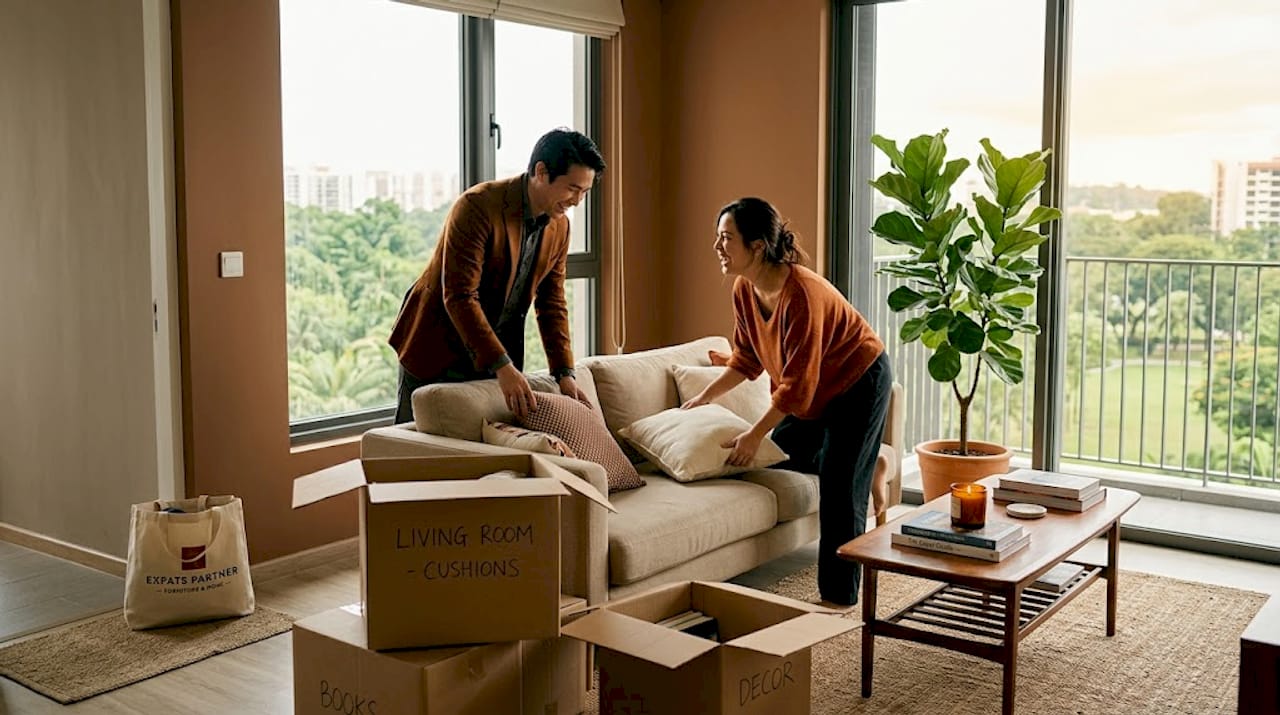
Relocating to Singapore as an expatriate brings both excitement and genuine complexity, particularly when navigating one of Asia’s most competitive property markets. Staged homes sell faster and command stronger offers, yet many expats still underestimate staging as a purely decorative exercise rather than a strategic property tool. Whether you are looking to settle into a premium rental quickly or maximise the value of a property you own, understanding how home staging works in Singapore’s unique real estate environment can make an enormous practical difference to your relocation experience.
Table of Contents
- Why home staging matters for expats relocating to Singapore
- How home staging influences decision-making and property appeal
- Local nuances: Tailoring home staging to Singapore’s premium expat market
- Practical staging steps for expats: Creating a premium home experience
- A fresh perspective on home staging success for expat relocation
- Explore premium staging and relocation solutions for expats
- Frequently asked questions
Key Takeaways
| Point | Details |
|---|---|
| Staging accelerates sales | Homes staged for expats in Singapore typically sell or rent faster due to enhanced visualisation. |
| Premium appeal matters | Targeting premium expat segments requires tailored staging that reflects market and lifestyle nuances. |
| Localisation is essential | Successful staging adapts to Singapore’s cultural and spatial realities for maximum impact. |
| Investment returns | The modest cost of staging often yields substantially higher offers and rental rates. |
| Practical steps for expats | Expats can follow structured staging steps for a smoother relocation and elevated living experience. |
Why home staging matters for expats relocating to Singapore
With an understanding of staging’s general benefits, let’s explore its specific impact in Singapore’s fast-moving real estate market.
Singapore’s property landscape moves quickly. Properties in sought-after districts such as Orchard, Holland Village, and Buona Vista can attract multiple viewings within days of listing. For expats arriving from overseas, the pressure to secure a desirable home in an unfamiliar city is real and time-sensitive. This is precisely where home staging delivers measurable value.
Home staging is the process of preparing and presenting a property so that it appeals immediately to its target audience. It goes well beyond tidying up or adding a few cushions. Professional staging involves deliberate furniture placement, lighting choices, colour coordination, and spatial storytelling that makes a property feel move-in ready. For expats who may only have a short window to view properties before a relocation date, this clarity of presentation is invaluable.
The benefits are well-supported by evidence. Staging reduces time on market and consistently correlates with higher offer values, with some surveys indicating premiums of between 1% and 10% over unstaged equivalents. For a premium Singapore property, that figure represents a significant financial outcome.
Key reasons staging matters specifically for expats include:
- Immediate visualisation: Expats unfamiliar with Singapore’s spatial norms find it far easier to imagine daily life in a thoughtfully presented home.
- Faster decisions: Reducing the cognitive effort required to evaluate a space speeds up the decision-making process, which is critical when relocation timelines are tight.
- Premium positioning: Making spaces liveable through staging positions a property at the top of its category, attracting quality tenants and buyers.
- Reduced stress: A welcoming, well-staged home eases the emotional strain of relocating to a new country.
“A staged home does not just look better. It tells a story that the viewer can immediately see themselves living in. For expats arriving with limited time and high expectations, that story is worth more than any written description.”
Property owners who invest in staging also benefit from selling faster with staging, reducing carrying costs and the anxiety that comes with extended vacancy periods. You can also review property pricing advice to understand how presentation connects directly to valuation in Singapore’s market.
Pro Tip: If you are relocating to Singapore for a fixed assignment, ask your property agent specifically whether the homes on your shortlist have been professionally staged. Staged properties typically reflect a landlord’s commitment to premium presentation and ongoing maintenance standards.
How home staging influences decision-making and property appeal
Moving from staging’s relevance, we can now examine its practical impact on decision-making and property perception.
The mechanism by which staging works is partly emotional and partly functional. When an expat walks into an unstaged, vacant property, the brain must work hard to fill in the blanks. Empty rooms feel smaller than they are. Odd architectural features seem more prominent. Without context, it is difficult to imagine whether a bedroom is large enough for a king-size bed or whether the dining area can accommodate family gatherings. Staging removes that uncertainty entirely.
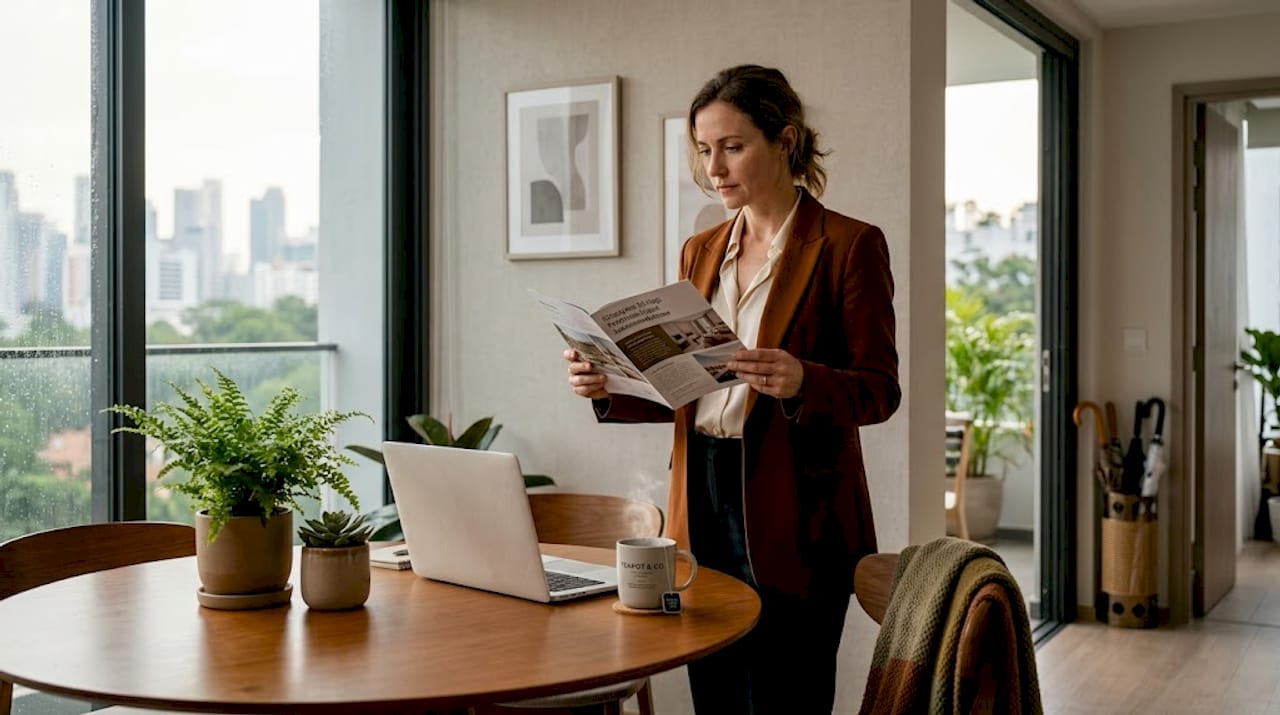
Visualisation through staging is particularly important for expat buyers and tenants who are evaluating properties without the benefit of local knowledge. A well-staged home communicates proportions clearly, demonstrates functional use of space, and creates an emotional warmth that an empty property simply cannot replicate.
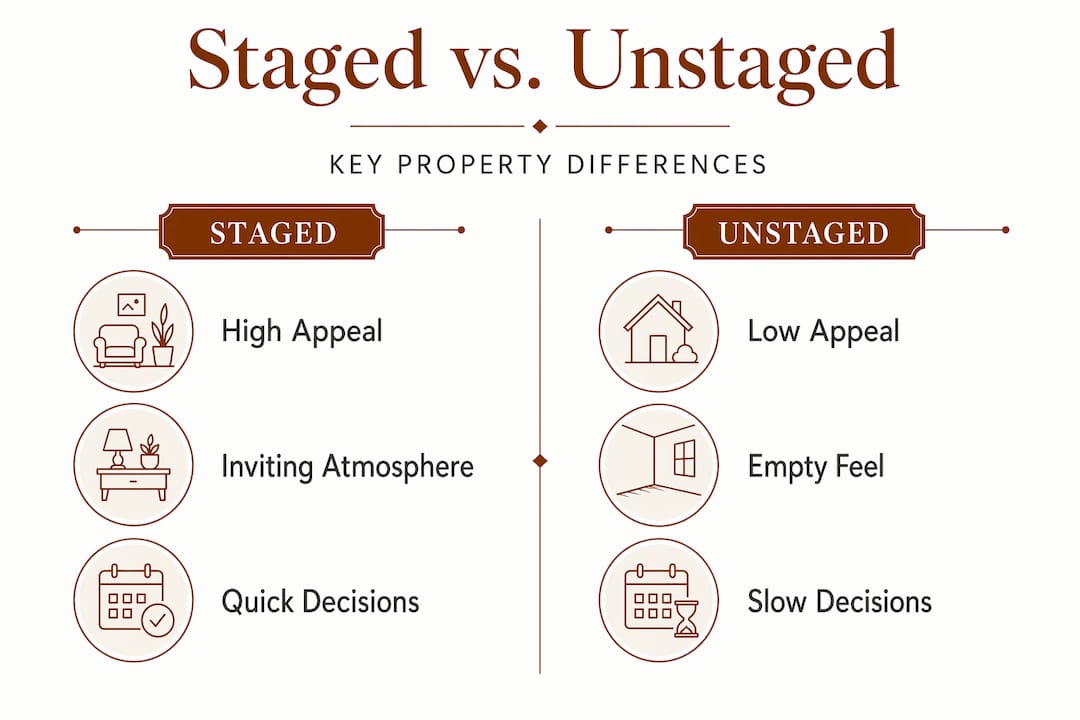
Here is a direct comparison of what staging delivers in practice:
| Factor | Staged property | Non-staged property |
|---|---|---|
| Visual appeal | High, immediate and consistent | Variable, dependent on viewer imagination |
| Perceived space | Optimised through furniture scale | Often underestimated in empty rooms |
| Time on market | Typically shorter | Often longer without compelling presentation |
| Rental rate achieved | At or above market rate | Frequently below market rate |
| Expat buyer confidence | High, due to clear visualisation | Lower, due to ambiguity and uncertainty |
| Emotional connection | Warm, inviting, easy to relate to | Neutral to cold, harder to connect with |
When targeting international tenants, the impact of staging on rentals is especially notable. Expats are accustomed to certain standards from their home countries, and a well-staged property signals that the landlord takes quality seriously. You can explore how transforming rentals through professional staging directly improves tenant quality and reduces vacancy periods.
The features that matter most to expat viewers include:
- Neutral, internationally appealing colour palettes that feel calm and adaptable
- Furniture that demonstrates correct scale for the room dimensions
- Clearly defined functional zones, such as separate working, dining, and relaxing areas
- Quality soft furnishings and accessories that convey a premium standard of living
- Sufficient lighting to make each space feel bright and welcoming
Understanding how to save on commission while still presenting your property at its best is also worth exploring for property-owning expats managing a sale.
Pro Tip: For expats viewing properties, pay close attention to how staging has been done. Professionally staged homes use furniture that is correctly proportioned to the space. If a room feels generous but you are not sure why, it is often because the staging has been calibrated to highlight the room’s actual dimensions rather than fill it arbitrarily.
You can further explore how staging helps create vibrant spaces that feel liveable from the moment you walk through the door.
Local nuances: Tailoring home staging to Singapore’s premium expat market
Understanding the appeal and mechanism, it is crucial to tailor staging to local Singapore conditions for expat success.
Singapore’s property market has characteristics that distinguish it from other global cities. Space is at a premium. Even luxury condominiums in prime districts operate within footprints that may feel compact to expats arriving from North American or European homes. Staging must therefore work harder in Singapore to maximise the perception of space without overcrowding rooms or sacrificing the premium feel that high-end tenants expect.
Cultural sensitivity also plays a role. Singapore’s expatriate community is diverse, drawing residents from Europe, North America, Japan, India, Australia, and beyond. While staging should aim for broad international appeal, it must also avoid design choices that feel strongly anchored to one particular cultural aesthetic. Singapore staging trends favour clean lines, warm neutral tones, and natural materials such as timber, marble, and woven textiles, all of which resonate across nationalities.
The premium segment has its own specific expectations. Expat executives relocating on corporate packages expect a standard of presentation that matches the rental or purchase price. Staging in this segment must reflect that investment, with quality furnishings, attention to detail in every room, and a coherent design language throughout the property.
Here is how popular design elements perform in Singapore’s premium expat market:
| Design element | Appeal level | Why it works for expats |
|---|---|---|
| Neutral tones (warm grey, soft white) | Very high | Universally appealing, easy to personalise |
| Natural timber furniture | High | Warm, premium feel without cultural specificity |
| Statement lighting | High | Communicates quality and elevates the overall atmosphere |
| Dedicated home office setup | Very high | Reflects modern working patterns across nationalities |
| Indoor greenery | Moderate to high | Creates freshness and a tropical Singapore character |
| Oversized art pieces | Moderate | Adds character but must remain culturally neutral |
For those considering different staging approaches, the distinction between short vs. long-term staging is important. A short-term rental property may need flexible, easy-to-maintain staging, while a long-term family relocation benefits from more complete and personalised presentation.
Five localisation tips for staging in Singapore:
- Prioritise multi-functional furniture to address space constraints without sacrificing style or comfort.
- Incorporate subtle tropical references such as organic textures and indoor plants to connect the property with its Singapore setting.
- Stage the balcony or outdoor area where available, as outdoor living space is highly valued by expats from temperate climates.
- Ensure the home office or study corner is well-presented, as remote and hybrid working patterns make this space a priority for many relocating professionals.
- Use layered lighting rather than single overhead sources to create warmth and flexibility across different times of day.
The for sale by owner approach in Singapore also highlights why presentation standards matter so significantly when selling without agent support.
According to the NAR staging report, the mechanism of visualisation and decision-making in premium property segments reinforces the need for staging strategies that are validated in their local context rather than applied generically.
Practical staging steps for expats: Creating a premium home experience
After examining local nuances, it is time to focus on practical steps expats can take to stage their new home for both comfort and investment value.
Whether you are staging a property you own for rental or sale, or working with a landlord to ensure your new home is move-in ready, a systematic approach delivers the best results. Staging accelerates decision-making by reducing uncertainty, which is especially valuable when you are making significant commitments in an unfamiliar market.
Follow these sequential steps to achieve a premium staging outcome:
- Assess the space objectively. Walk through each room and note what currently works and what creates confusion or feels cluttered. Remove anything that distracts from the room’s primary purpose.
- Define each room’s function clearly. Every room should communicate one clear purpose. A bedroom that also serves as a storage room sends mixed signals. Stage it as a restful sleeping space first and foremost.
- Select appropriately scaled furniture. Oversized pieces in small rooms feel oppressive. Choose furniture that allows natural movement through the space while still filling the room sufficiently to demonstrate its dimensions.
- Layer your lighting. Combine ambient, task, and accent lighting to create depth and warmth. Avoid relying solely on harsh overhead lighting.
- Add considered accessories. Fresh flowers, quality towels in the bathroom, a set of elegant tableware in the dining area, and a selection of neutral cushions in the living room all contribute to a premium feel without overwhelming the space.
- Photograph professionally once staging is complete. Quality photography preserves the impact of staging for online listings, where most expats begin their property search.
Must-have features for a premium expat staging experience:
- A fully staged master bedroom with quality linen and bedside lighting
- A functional, well-lit kitchen presented as clean and easy to use
- A clearly defined dining space with an appropriate table and seating arrangement
- A home office or study corner with a proper desk and task lighting
- A welcoming entrance that creates an immediate positive impression
For a thorough overview, the landlord staging guide provides detailed advice on preparing properties to the standard that premium expat tenants expect. You can also explore furniture rental for expats as a practical, cost-effective solution that avoids the complexity of purchasing and shipping furniture internationally.
Pro Tip: Avoid the common pitfall of over-personalising a staged home. Personal photographs, strong cultural artefacts, and highly specific décor choices make it harder for expat viewers to imagine themselves in the space. Keep the staging warm but broadly neutral.
For those managing the sale process independently, understanding fast online selling methods alongside good staging can significantly accelerate results.
A fresh perspective on home staging success for expat relocation
Here is an experienced perspective on what genuinely distinguishes successful home staging for expat relocation, and why conventional thinking often misses the point.
The most common misconception we encounter is that staging is primarily about aesthetics. Property owners spend considerable energy on decorative choices whilst overlooking the fundamental spatial logic that makes staging work. A beautifully styled room that feels difficult to navigate or does not clearly communicate its purpose will not convert viewings into offers, regardless of how attractive the cushions are.
Experienced expat agents and property owners who have operated in Singapore for several years understand something that newcomers often do not: staging mechanisms in premium segments must be validated against local market conditions rather than applied from generic international templates. What works in a London townhouse or a New York apartment does not automatically translate to a Singapore condominium with a different spatial logic and a different cultural audience.
The errors we see most frequently include over-decorating to the point of visual noise, incorporating design elements that feel strongly tied to one nationality’s aesthetic, and underestimating the rental impact of neglecting functional spaces such as home offices and utility areas.
What actually works is more targeted and considered than most people expect. Smart sellers use staging as a strategic investment rather than a cosmetic exercise. They focus on the three or four rooms that genuinely drive decisions (master bedroom, living room, kitchen, and one bathroom) and allocate budget accordingly. They prioritise spatial clarity over decorative abundance. And they brief their staging team on the specific profile of their target tenant or buyer rather than aiming for universal appeal that can dilute impact.
The expats who navigate Singapore’s property market most successfully are those who approach staging as a communication tool. It tells the viewer a clear, credible story about how life in that home will feel. When that story is told well, decisions follow quickly and confidently.
Explore premium staging and relocation solutions for expats
If you are preparing to relocate to Singapore or looking to maximise the appeal of a property you own, professional staging is one of the most impactful steps you can take.
Expats Partner specialises in premium home staging tips and turnkey styling solutions designed specifically for expatriates and property owners in Singapore. From property styling for sale to full interior design styling service, our team brings the expertise, designer furniture, and local market knowledge needed to present your property at its absolute best. We make the process straightforward, stress-free, and results-driven, so you can focus on settling into Singapore with confidence.
Frequently asked questions
Does home staging really help expats sell or rent faster in Singapore?
Yes. Staged properties achieve quicker outcomes in both sales and rentals, with expats benefiting especially from the clarity and visualisation that staging provides in an unfamiliar market.
What staging features attract premium expat tenants?
Neutral décor, functional layouts, dedicated home office space, and quality furnishings are the most effective, as they help international tenants visualise comfort and confident daily living in a new environment.
Is home staging expensive, and is it worth the investment for expats?
The initial outlay is modest relative to the returns, with surveys indicating offer premiums of 1% to 10% above unstaged equivalents and measurably faster completion times.
How do Singapore’s market nuances affect home staging for expats?
Staging must adapt to local space constraints, international cultural expectations, and premium segment standards. Applying generic staging templates without local validation consistently underperforms in Singapore’s market.
Can expats stage their own home or should they hire professionals?
While basic staging is manageable independently, professional stagers offer locally validated strategies, access to quality designer furniture, and the experience to maximise appeal and rental or sale value efficiently.
Recommended
- How Home Staging Transforms Singapore Rentals Into Spaces Tenants Love – Expats Partner
- From Vacant to Vibrant: How Home Staging Creates Liveable Spaces in Singapore – Expats Partner
- Home Staging Trends Singapore Agents Should Watch – Expats Partner
- Singapore: Stage Your Home with Home Staging & Furniture Rental for Expats – Expats Partner