
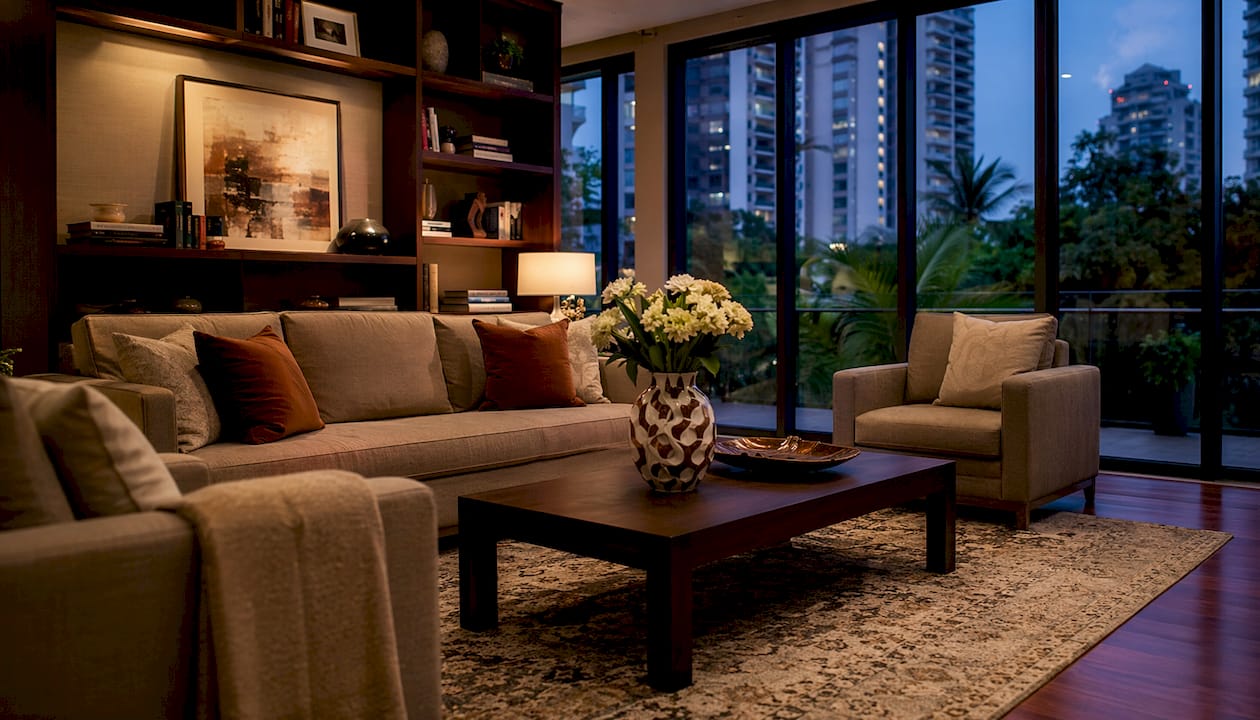
Home staging is the strategic presentation of a property designed to increase buyer interest, shorten time on market, and improve sale prices. Understanding how staging influences buyer conversion rates is no longer optional for property professionals in Singapore. Staged homes sell 73% faster in competitive markets, and 83% of buyers’ agents report that staging helps buyers picture the property as their future home. These figures reflect a clear pattern: staging works at every stage of the buyer’s journey, from the first online scroll to the final offer.
How does staging influence buyer conversion rates at the listing stage?
Staging increases listing views by 23% and online inquiries by 28%. That uplift happens before a single buyer steps through the door. Property portals in Singapore are competitive. Buyers scroll quickly, and a staged listing photograph stops that scroll. An empty room or cluttered space rarely earns a second look.
High-quality staged photography raises click-through rates on portals such as PropertyGuru and 99.co. Buyers shortlist staged homes more frequently because the images communicate scale, warmth, and lifestyle. A well-lit living room with a sofa, coffee table, and soft furnishings reads as a home. An empty concrete box reads as a project.
Staging also earns a property a place on a buyer’s shortlist by strengthening its online visual appeal, particularly in markets where dozens of similar units compete for the same pool of buyers. In Singapore’s condo market, where floor plans are often near-identical, visual differentiation is the primary lever agents can control.
Staged listings generate a 29% higher showing request rate than unstaged equivalents. More showings mean more opportunities to convert interest into offers. The staging investment begins paying back before the first viewing is even booked.
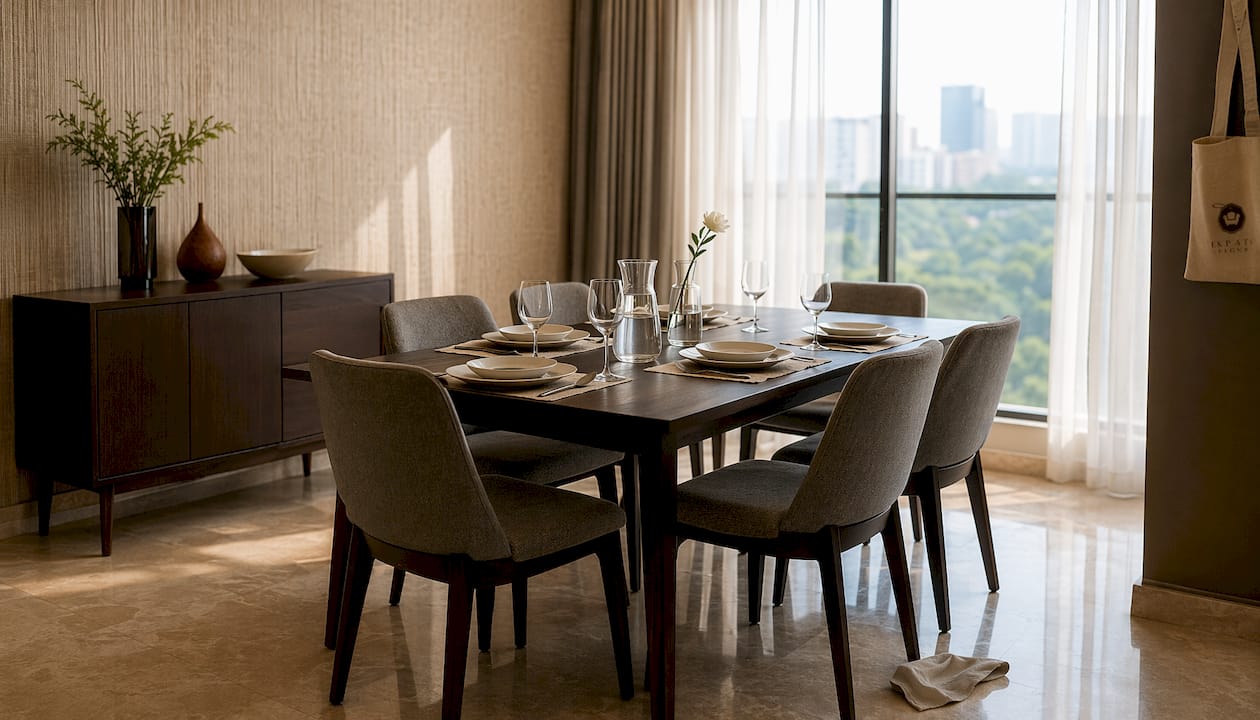
Pro Tip: Stage the property before commissioning listing photography. Photos taken in an empty or cluttered unit cannot be retaken without cost. Get the space viewing-ready first, then photograph it.
How does staging affect buyer decisions during showings and offers?
Staged homes convert 51% more showings into offers than unstaged properties. That figure captures the core of what staging does during an in-person visit. Buyers walk into a staged space and immediately feel at ease. The furniture defines the room’s purpose. The styling removes ambiguity. The buyer stops asking “what would I do with this space?” and starts asking “when can I move in?”
Emotional connection drives purchase decisions in residential property. The National Association of Realtors reports that 83% of buyers’ agents confirm staging helps buyers visualise the property as their own. That visualisation shortens the decision cycle and reduces the buyer’s need to negotiate on price.
Staging also reduces seller concessions. When a buyer feels uncertain about a property, they negotiate harder. A staged home removes that uncertainty. The buyer arrives purchase-ready, having already formed a positive impression from the online listing. Staging moves buyers from emotional ‘unknown’ to purchase-ready before the showing, resulting in faster offers and less price negotiation.
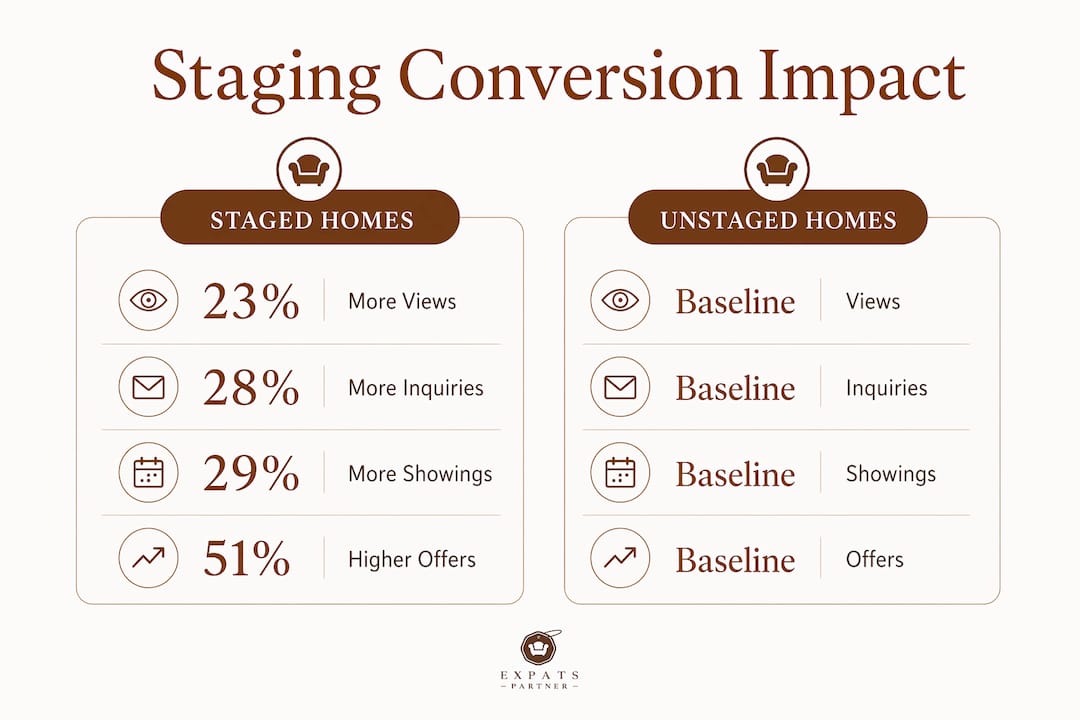
The table below summarises the measurable difference staging makes at the showing and offer stage.
| Metric | Staged homes | Unstaged homes |
|---|---|---|
| Average days on market | 47 days | 79 days |
| Showing-to-offer conversion | 51% higher | Baseline |
| Buyer visualisation rate | 83% (agent-reported) | Significantly lower |
| Price negotiation frequency | Reduced | Higher |
Staged homes average 47 days on market versus 79 days for unstaged equivalents. That is nearly half the time. In Singapore, where carrying costs on an unsold property accumulate quickly, a shorter listing period has direct financial value beyond the sale price itself.
Pro Tip: Focus staging effort on the living room, master bedroom, and dining area first. These are the three spaces buyers spend the most time evaluating during a showing. A strong impression in these rooms carries the rest of the property.
What financial return does staging deliver for sellers?
Staging can raise the final sale price by 1%–5%, with an average ROI of approximately 99%. On a S$1.5 million Singapore condo, a 1% price uplift represents S$15,000. A 5% uplift represents S$75,000. The cost of staging that same unit is a fraction of either figure.
The financial case for staging extends beyond the sale price. Sellers who skip staging often face price reductions 5 to 20 times greater than the cost of staging itself. A S$3,000 staging investment that prevents a S$30,000 price reduction delivers a return that no other pre-sale activity can match.
A full ROI calculation for staging should include reduced carrying costs, avoided price reductions, and a faster sale timeline, not just the sale price uplift. A property that sells in 47 days instead of 79 days saves the seller roughly one month of mortgage payments, maintenance fees, and property tax. In Singapore’s market, that saving alone can exceed the staging cost.
63% of staged homes avoid any price reductions during the listing period. That statistic reflects the confidence staging gives sellers. A well-presented property commands its asking price. An unstaged property invites negotiation from the first viewing. You can read more about staging’s effect on property value in the Singapore context.
How can property professionals in Singapore apply staging strategically?
Staging works best when treated as a digital marketing system, beginning with listing photos that emotionally engage buyers and generate clicks and showings. The following steps outline a practical staging approach for Singapore’s residential market.
-
Stage before photography. Every listing photograph should show a furnished, styled space. Empty rooms underperform consistently. Arrange furniture to define each room’s purpose clearly before the photographer arrives.
-
Declutter and depersonalise. Remove personal items, excess furniture, and anything that makes the space feel occupied by someone else. Buyers need to picture themselves in the home, not the current owner.
-
Create emotional storytelling in key rooms. The living room should feel calm and welcoming. The master bedroom should feel restful. The dining area should suggest a place for family meals. Each room tells a story that the buyer steps into.
-
Use furniture rental for cost-effective staging. Purchasing furniture solely for staging is rarely practical. Renting a full furniture package for the listing period keeps costs low and allows the property to be staged to a professional standard without a long-term commitment.
-
Apply AI virtual staging for online listings. Virtual staging improves online click-through rates and engagement, converting online impressions into higher-quality leads. For vacant properties or units being marketed before physical staging is arranged, AI virtual staging provides an immediate visual uplift.
-
Avoid common staging pitfalls. Over-furnishing a small space makes it feel cramped. Using dark or heavy colours in low-light rooms reduces perceived size. Ignoring the entrance area misses the first impression entirely. Staging should create space, light, and clarity, not fill every corner.
Pro Tip: In Singapore’s condo market, neutral tones and light-coloured furniture photograph better and appeal to a wider buyer profile. Avoid bold statement pieces that may alienate buyers with different tastes.
Agents who apply consistent staging across their listings report stronger brand recognition and shorter average listing times. The staged listing advantage compounds over time: buyers begin to associate an agent’s listings with quality presentation, which generates more enquiries per listing.
Key takeaways
Staging is the single most cost-effective pre-sale action a property owner or agent can take to increase buyer conversion rates and shorten time on market.
| Point | Details |
|---|---|
| Online engagement uplift | Staging increases listing views by 23% and online inquiries by 28%, generating more showings. |
| Faster sale timelines | Staged homes sell in an average of 47 days versus 79 days for unstaged properties. |
| Higher offer conversion | Staged homes convert 51% more showings into offers than unstaged equivalents. |
| Strong financial return | Staging delivers an average ROI of approximately 99% and helps 63% of sellers avoid price reductions. |
| Singapore market application | Furniture rental and AI virtual staging provide practical, cost-effective staging solutions for local property professionals. |
Staging as a conversion tool: what experience has taught us
Staging is often described as decoration. That framing undersells it considerably. From working with landlords, agents, and developers across Singapore’s residential market, the pattern is consistent: the properties that generate the most interest and the fastest offers are the ones that communicate a clear lifestyle from the very first photograph.
The most common mistake we see is treating staging as the final step before a listing goes live. Staging should be the first step. It shapes the photography, the online presentation, and the buyer’s emotional response before they ever visit in person. An agent who stages consistently builds a reputation for quality listings. That reputation generates more enquiries, which compounds the conversion advantage over time.
AI virtual staging has changed the economics of staging for vacant properties. Listings with consistent AI staging show shorter days on market and higher showing-to-offer conversion rates than empty-room photographs. For agents managing multiple vacant units, this is a practical and affordable way to maintain visual standards across an entire portfolio.
The local nuances matter too. Singapore buyers respond well to clean, light-filled spaces that feel functional and calm. Staging that reflects the practical lifestyle of a Singapore condo resident, with a clear dining area, a defined study space, and a restful bedroom, performs better than generic international staging styles. Knowing your buyer profile and staging to their expectations is the detail that separates a good result from a great one.
— Expats Partner
Staging support for Singapore property professionals
Expats Partner provides home staging services in Singapore for condos, landed homes, HDB resale units, and rental properties. Whether you are preparing a unit for sale or making a rental property viewing-ready, the team offers professional styling support backed by a real furniture inventory and flexible rental terms.
Property agents and landlords can choose from full-home furniture packages or room-by-room staging solutions, with delivery, setup, and collection all handled directly. Rental terms are flexible, making it practical to stage a property for the listing period without a long-term commitment. For agents managing multiple listings, Expats Partner offers consistent staging support that keeps presentation standards high across an entire portfolio. Contact Expats Partner to discuss a staging plan suited to your property and timeline.
FAQ
Does staging really increase the sale price?
Staging can raise the final sale price by 1%–5%, with an average ROI of approximately 99%. On a Singapore condo priced at S$1.5 million, that represents a meaningful financial gain relative to staging costs.
How much faster do staged homes sell?
Staged homes sell in an average of 47 days compared to 79 days for unstaged properties. That is a reduction of roughly 40% in time on market.
Does staging help with online listing performance?
Staging increases listing views by 23% and online inquiries by 28%, and generates a 29% higher showing request rate. Better online performance means more showings and more opportunities to receive offers.
What is the most cost-effective way to stage a property in Singapore?
Furniture rental is the most practical option for most sellers and agents. It avoids the cost of purchasing furniture outright and allows the property to be staged to a professional standard for the duration of the listing period only.
Does virtual staging work as well as physical staging?
Virtual staging significantly improves online click-through rates and engagement, and listings with consistent AI staging show shorter days on market than empty-room photographs. Physical staging remains more effective for in-person showings, but virtual staging is a strong and affordable option for online presentation.