
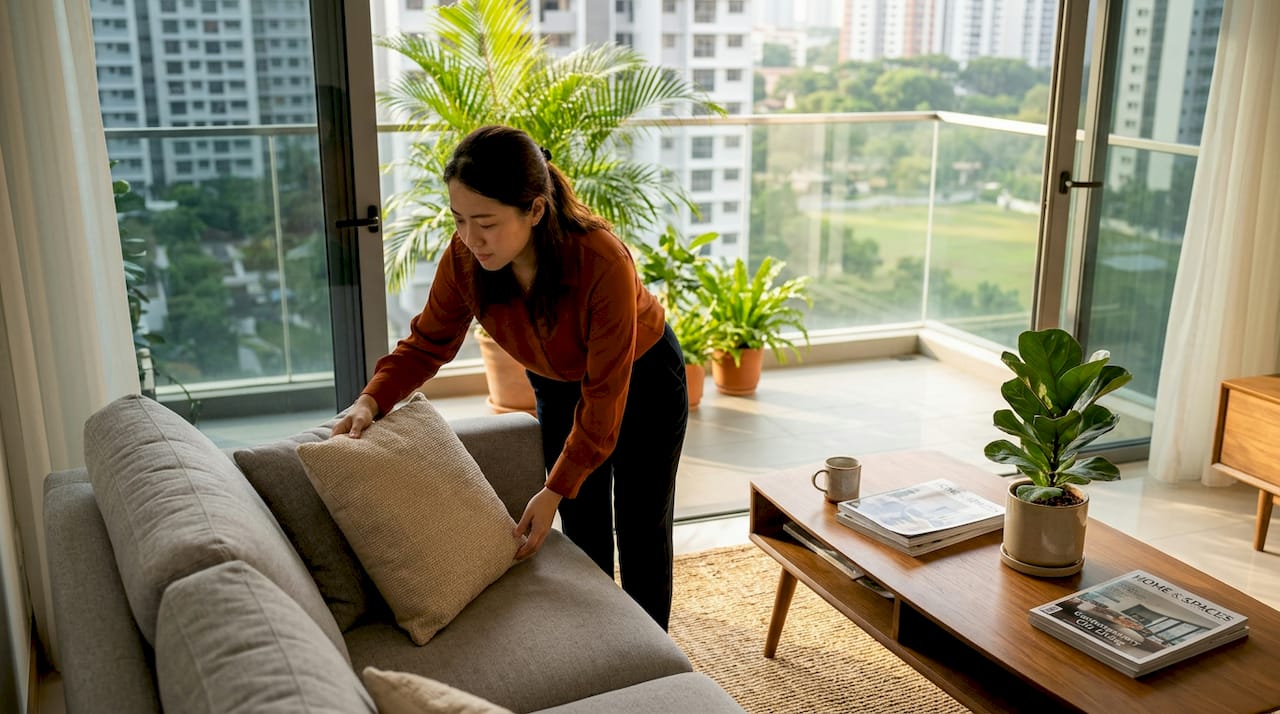
Most homeowners in Singapore assume that staging a property means spending tens of thousands on renovation or hiring an interior designer for months. That assumption costs them time and money. Home staging Singapore for property sale and rental is a far more practical discipline than most people realise. It is about presenting a space so that buyers or tenants can picture themselves living there, not about expressing your personal style or redesigning your home. Done well, it shortens your listing period, attracts stronger offers, and makes your property stand out in a market where most viewings happen within days of a listing going live.
Table of Contents
- Key takeaways
- What home staging means for your Singapore property
- Staging costs and logistics in Singapore
- Practical staging tips for Singapore homeowners and landlords
- Compliance and permissions for staging in Singapore
- How staging accelerates your sale or rental timeline
- My honest take on staging in Singapore
- Ready to stage your Singapore property?
- FAQ
Key takeaways
| Point | Details |
|---|---|
| Staging is not decorating | Staging removes personal style to help buyers and tenants picture themselves in the space. |
| Furniture rental suits Singapore’s pace | Rented furniture allows fast setup and removal, fitting Singapore’s short listing windows. |
| Cost is manageable | Staging costs range from S$800 for an HDB flat to over S$8,000 for landed homes, with clear returns. |
| Simple steps carry most of the weight | Decluttering, cleaning, lighting, and neutral colour choices produce significant visual results. |
| Compliance matters | HDB rules, MCST guidelines, and virtual staging disclosure requirements must all be observed. |
What home staging means for your Singapore property
Home staging, known in the industry as property presentation or real estate staging, is the process of preparing a property for sale or rent by making it visually appealing to the widest possible range of buyers or tenants. It is categorically different from interior decorating. Decorating reflects the owner’s taste. Staging reflects what the market wants to see, which is typically calm, uncluttered, well-lit spaces with scale-appropriate furniture and neutral tones.
The psychological principle behind staging is well established. 83% of buyer agents confirm that staging helps buyers visualise a property as their future home, which in turn increases the likelihood and strength of offers. In a Singapore context, this matters enormously. Buyers and tenants here move quickly, viewings are brief, and listing photos often determine whether a property gets shortlisted at all.
Staging takes several forms:
- Full physical staging: A professional team furnishes and decorates the entire property for the duration of the listing.
- Partial staging: Key rooms such as the living area, master bedroom, and kitchen are staged while other spaces are left neutral.
- Consultation-only staging: A staging consultant walks through the property and advises the owner on rearrangement, colour, and presentation without providing furniture.
- Virtual staging: Listing photos are digitally enhanced to show furniture and décor that does not physically exist in the property.
For Singapore’s housing types, each approach has its place. A vacant HDB flat benefits most from physical staging because empty rooms read as smaller than they are in photographs. A lived-in condo may only need a consultation and a targeted declutter. A landed home targeting the premium rental market almost always warrants full staging with curated furniture rental to convey the lifestyle expected at that price point. Learning how to stage a property from the ground up helps owners approach this process with confidence rather than guesswork.
Staging costs and logistics in Singapore
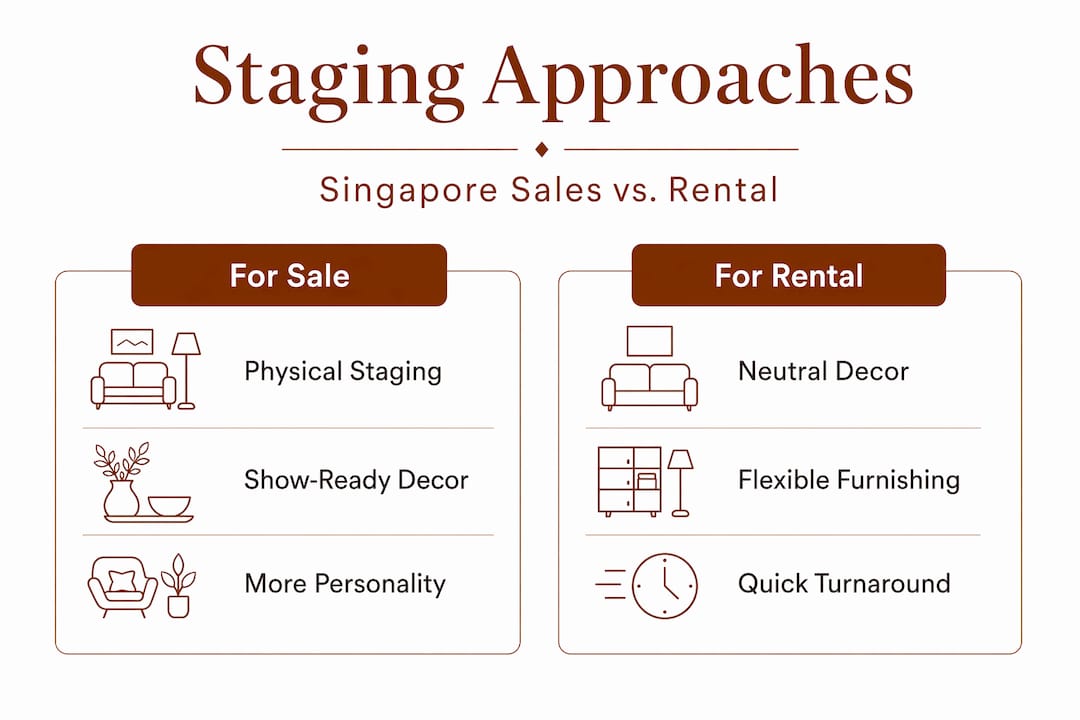
Understanding the budget before you begin prevents poor decisions mid-process. Staging costs in Singapore range from approximately S$800 to S$2,000 for a three-room HDB flat, S$2,500 to S$5,000 for a two-bedroom condo, and upward of S$8,000 for landed properties, all subject to 9% GST. These figures vary depending on whether you need full furniture provision, consultation only, or something in between.
As a general benchmark, spending 1% to 3% of the property’s sale price on staging is a reasonable guide. For a S$1.2 million condo, that means a staging budget of S$12,000 to S$36,000, though most effective staging in Singapore is achieved well below the upper end of that range with the right approach.
| Property type | Approximate staging cost | Typical service level |
|---|---|---|
| HDB 3-room flat | S$800 to S$2,000 | Consultation plus key items |
| HDB 4 or 5-room flat | S$1,500 to S$3,500 | Partial or full staging |
| Condo 1 to 2-bedroom | S$2,500 to S$5,000 | Full staging with furniture |
| Condo 3-bedroom | S$4,000 to S$7,000 | Full staging with furniture |
| Landed property | S$8,000 and above | Full premium staging |
Furniture rental solves one of the biggest logistical challenges in staging: the cost and complexity of sourcing, transporting, and removing physical furniture within a short window. Renting furniture for staging allows for quick delivery, a professionally staged appearance during the listing period, and swift removal once the property is sold or tenanted. There is no purchase cost, no storage required, and no disposal headache.
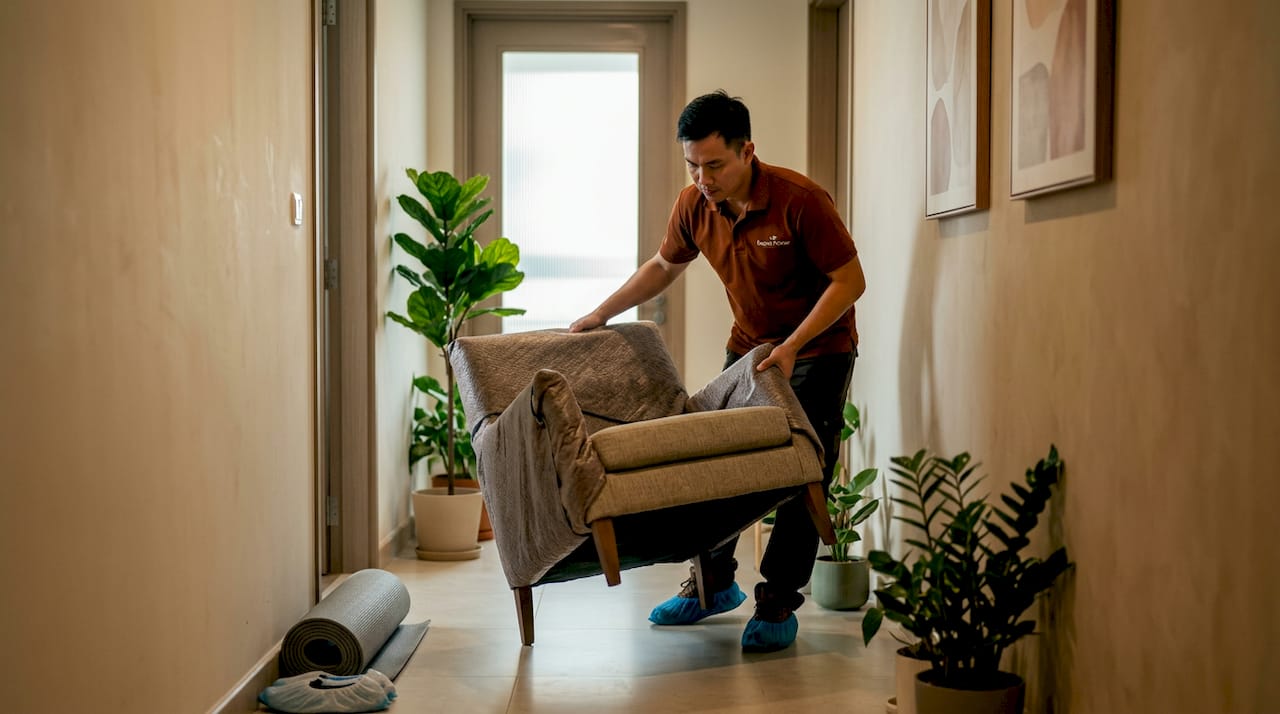
Pro Tip: Book your furniture rental and photography on the same day where possible. Singapore’s listing windows move fast, and having your staging and photos done in a single coordinated session reduces delays and costs.
Practical staging tips for Singapore homeowners and landlords
The most effective staging work is not about expensive additions. It is about subtraction and clarity. Here is a practical sequence that works across HDB flats, condos, and landed homes:
- Declutter thoroughly. Remove personal items, family photographs, excess furniture, and anything that makes the space read as “someone else’s home.” Buyers and tenants need mental space to imagine their own life there.
- Deep clean every surface. Singapore’s humidity means that mould, water stains, and odour build up faster than in temperate climates. Odour neutralisation and airflow are considered part of premium staging packages here for good reason. A space that smells fresh reads as well-maintained.
- Choose neutral colour schemes. Warm whites, soft greys, and light timber tones appeal broadly. Avoid painting feature walls in bold colours before a sale; it narrows your buyer pool. If the existing paint is dated, a fresh coat of white or off-white costs relatively little and makes a measurable difference.
- Place furniture to highlight flow. Scale is frequently mishandled in Singapore properties. Oversized sofas shrink a living room; undersized dining tables make a dining area look unused. Rental furniture allows you to select pieces that are proportionate to the room, which photographs far better than what most homeowners currently own.
- Use lighting strategically. Replace any dim or warm-yellow bulbs with neutral daylight bulbs for viewings and photography. Open blinds fully. In units with limited natural light, a well-placed floor lamp adds warmth without cost.
- Make it photo-ready before anything else. Singapore staging prioritises visual impact for listing photographs because most buyers shortlist online before ever setting foot in a property. If the photos do not perform, the viewings do not follow.
- Time your staging carefully. Avoid staging too far in advance of your listing date. Furniture rental is charged by the duration of use, and most Singapore listings move within a few weeks if priced and presented correctly.
Pro Tip: For rental properties, home decor for rentals should lean even more neutral than for sales. Tenants often bring their own artwork and soft furnishings, so a blank canvas with quality, well-positioned furniture is the most attractive starting point.
Compliance and permissions for staging in Singapore
Singapore’s property market is governed by rules that affect how you can present a home, and ignoring them creates risk. Key considerations include:
- HDB resale regulations. The Housing and Development Board imposes restrictions on modifications to HDB flats. Staging that involves structural changes, even temporary ones such as wall fixtures or built-in modifications, requires approval. Purely cosmetic staging, including furniture placement, soft furnishings, and lighting changes, is generally permissible without additional consent.
- MCST rules for condominiums. Management Corporation Strata Title bodies govern common areas and may have restrictions on delivery hours, lift access, and the use of common areas for staging materials or furniture. Always confirm logistics with building management before scheduling a delivery.
- Landed property permissions. For landed homes, particularly those in conservation areas or with specific land title conditions, any external staging or signage may require approval from the Urban Redevelopment Authority or the relevant authority.
- Virtual staging disclosure. Virtual staging must be labelled clearly in all listing materials. Presenting digitally altered photographs without disclosure is considered misrepresentation and may expose sellers and agents to legal risk. Virtual staging is a useful marketing supplement, not a replacement for physical preparation or honest representation.
- Avoiding misrepresentation. Staging should present the property accurately. Concealing structural issues, water damage, or defects behind furniture or décor constitutes misrepresentation and can void a sale transaction.
How staging accelerates your sale or rental timeline
The data on staging’s commercial impact is hard to dismiss. Staged homes in Singapore sell 30% to 50% faster than unstaged equivalents, with price uplifts of 5% to 15% reported in local transaction data. For a landlord, a property that rents two weeks faster than average represents a meaningful saving in holding costs.
| Metric | Unstaged property | Staged property |
|---|---|---|
| Average days on market | 45 to 70 days | 20 to 35 days |
| Offer strength | At or below asking price | 5% to 15% above asking |
| Viewing-to-offer conversion | Lower | Notably higher |
| Quality of enquiries | Mixed | More serious buyers and tenants |
Staged properties generate better-quality enquiries because staging makes spaces easier for buyers to visualise as their own home. Serious buyers make faster decisions when they can already picture their furniture in the room. This reduces the number of speculative viewings and concentrates interest from people genuinely motivated to proceed.
For properties with longer listing periods, staging can be refreshed. Swapping a few accent pieces, rearranging furniture, or updating photography every four to six weeks signals to the market that the property is active, not stale. The impact of staging on listing time is well-documented among Singapore agents, and refreshing presentation mid-listing is a practical tool that many landlords overlook.
My honest take on staging in Singapore
I’ve seen homeowners spend S$15,000 on staging and get modest results. I’ve also seen a S$1,500 furniture rental and a half-day of decluttering produce a listing that sold above valuation within a week. The difference was never the budget. It was the clarity of purpose.
What I’ve learned from working with landlords and homeowners across Singapore is that the best staging decisions are almost always subtractive. Remove the excess. Let the space breathe. Place one well-proportioned sofa rather than two cramped ones. The rooms that photograph best are the rooms that give the viewer room to imagine.
The logistics matter far more than most people expect. A beautiful staging plan that arrives two days after your photography slot, or a furniture delivery that the condo’s MCST delays, derails everything. Staging in Singapore is as much a logistics exercise as it is a design one.
My view on virtual staging is cautious. It is a useful tool for pre-marketing or for illustrating possibilities in a vacant unit, but it should never substitute physical preparation. Buyers who arrive at a viewing expecting what they saw in digitally enhanced photos and find something different leave disappointed, and disappointed buyers do not make offers.
Furniture rental, done well, is the most practical staging ally available in this market. It gives you the right pieces for the right duration without the overhead of purchasing, storing, or reselling. For landlords managing multiple properties, it is not just convenient. It is the sensible operating model.
— Expats Partner
Ready to stage your Singapore property?
If you are preparing a property for sale or rental and want a dependable, straightforward approach to furniture and staging, Expats Partner is built for exactly that.
Expats Partner provides property staging furniture and flexible rental packages for homeowners, landlords, and agents across Singapore. Whether you need a complete furnished setup for a condo listing or a targeted selection of pieces for an HDB flat, the process is designed to be clear, well-organised, and delivered on time. Transparent pricing, real inventory, and reliable logistics mean you are not left guessing. Explore short-term furniture rental options that are purpose-built for staging timelines and Singapore’s fast-moving property market.
FAQ
What does home staging cost in Singapore?
Staging costs range from approximately S$800 for a three-room HDB flat to over S$8,000 for a landed property, plus GST. The exact figure depends on property size, service level, and whether furniture rental is included.
Is furniture rental suitable for home staging in Singapore?
Yes. Furniture rental is widely used for property staging in Singapore because it allows fast delivery, a professionally presented appearance during the listing period, and clean removal once the property is sold or tenanted, with no long-term commitment required.
Does virtual staging need to be disclosed in Singapore listings?
Virtual staging must be clearly labelled in all listing photographs and marketing materials. Presenting digitally altered images without disclosure is considered misrepresentation and carries legal and ethical risk for both sellers and agents.
How much faster does a staged property sell in Singapore?
Staged homes in Singapore sell approximately 30% to 50% faster than unstaged equivalents, according to local transaction data, with offers typically ranging 5% to 15% above the asking price.
Can I stage an HDB flat without HDB approval?
Cosmetic staging, such as furniture placement, soft furnishings, and lighting adjustments, generally does not require HDB approval. Any structural or permanent modification, even if temporary, should be confirmed with HDB before proceeding.
Recommended
- From Vacant to Vibrant: How Home Staging Creates Liveable Spaces in Singapore – Expats Partner
- Singapore: Stage Your Home with Home Staging & Furniture Rental for Expats – Expats Partner
- How Home Staging Transforms Singapore Rentals Into Spaces Tenants Love – Expats Partner
- Why agents recommend professional staging in Singapore