
Renting wins on long term furniture cost for most stays under three years, while buying starts to pay off only beyond five years and only if you can sell or store the pieces afterwards. Budget several thousand Singapore dollars to furnish a one-bedroom flat outright, a higher amount for a two-bedroom home, and an even larger sum for a 4 room HDB, against rental packages from roughly S$178 to S$900 a month.
TL;DR:
- Renting furniture is generally more cost-effective for stays under three years, while buying only becomes advantageous after five years if you can resell or store the items.
- Furniture ownership costs include initial purchase, ongoing maintenance, frequent replacements of soft furnishings, and disposal fees, which often outweigh the purchase price alone.
- Rental prices vary with contract length, furniture quality, inclusions, and deposit terms, making careful comparison essential to avoid hidden costs like collection or exit fees.
- A quick payback calculation shows renting is cheaper for stays shorter than about 20 months for a two-bedroom setup, but buying may be better if staying longer and resale is feasible.
- Long-term rental packages offered by services like Expats Partner include delivery, setup, and collection, simplifying logistics and reducing future disposal or resale expenses.
Table of Contents
- What does long term furniture cost actually look like in Singapore?
- What is the full ownership cost breakdown for furniture?
- How does furniture rental pricing work in Singapore?
- How do you decide whether to rent or buy furniture?
- What hidden furniture costs catch people out in Singapore?
- How can you reduce long term furniture costs?
- How does a managed rental service change the cost equation?
- Get a furniture rental quote from Expats Partner
- Sources for local furniture budgeting
- FAQ
What does long term furniture cost actually look like in Singapore?
The honest answer depends on how you define “long term.” SingStat’s household expenditure notes treat furniture and housing upkeep as recurring costs, not one-off purchases, which is the right way to think about this. Furniture is never really a single transaction. It is a stream of costs that runs for as long as you occupy the space.
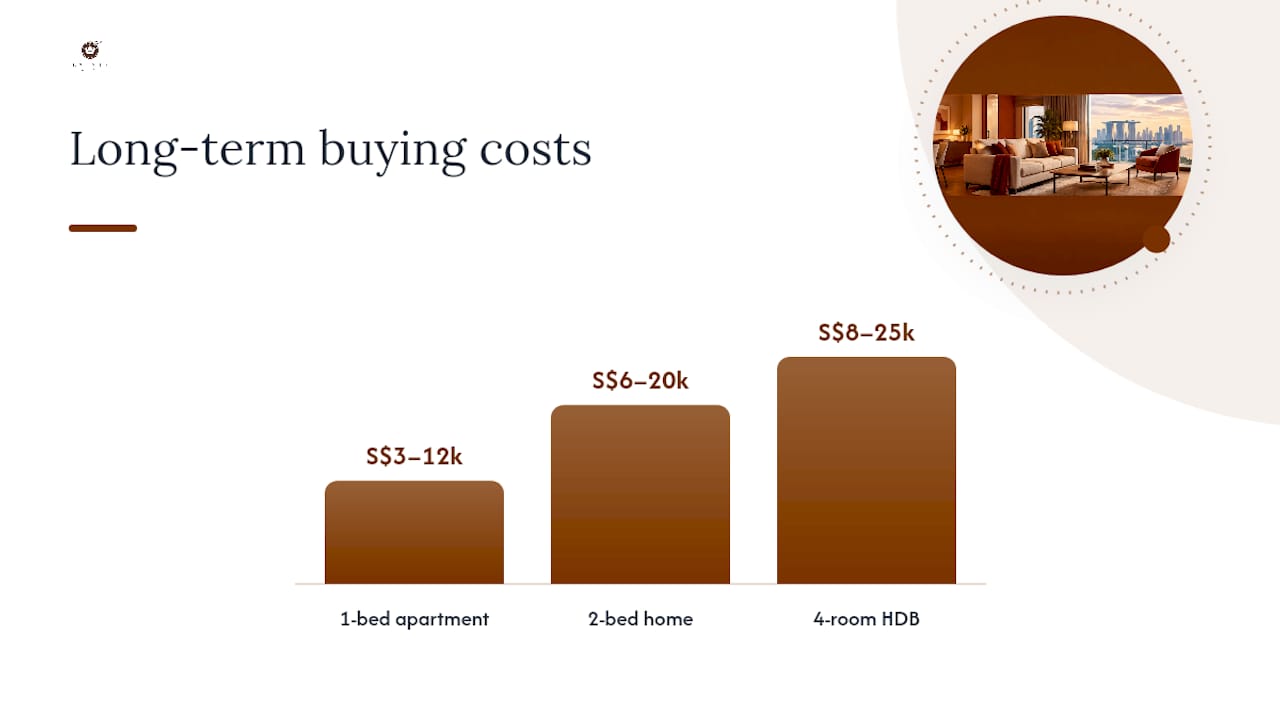
Buying outright for a one bedroom apartment in a budget-to-mid tier typically runs S$3,000 to S$12,000, depending on how much you spend on the sofa and bed frame, which are usually the two biggest line items. A two bedroom home with a proper dining set and extra storage sits between S$6,000 and S$20,000. A 4 room HDB, especially one being furnished for a family with a study or extra bedroom, often lands between S$8,000 and S$25,000 once curtains, lighting and appliances are added.
Rental tells a different story because the monthly figure often bundles in delivery, setup and, in many long-term packages, collection at the end.
- Single room or studio rental packages: rental fees can range widely depending on furniture condition and inclusions.
- Two bedroom packages: rental rates vary with package size and contents.
- Full-home packages: prices scale with size and finish level and vary accordingly.
Contract length changes the monthly figure more than most renters expect. Short-term leases usually carry a premium because the provider has to amortise delivery and collection costs over a shorter window.
What is the full ownership cost breakdown for furniture?
Sticker price is the smallest part of the ownership equation. The full picture has three phases, and skipping any one of them is how budgets blow out.
One-off costs hit before you even sit on the sofa: purchase price, delivery (often S$50 to S$150 per large item if not included), assembly, and sometimes wall-mounting or installation for units like TV consoles and wardrobes.
Recurring costs are the ones people forget to budget for. Fabric sofas typically need professional cleaning every 12 to 18 months. Reupholstery on a quality frame becomes worth considering around the 12 to 15 year mark. Mattresses, cushions and soft furnishings wear out faster than frames and need periodic replacement. SingStat’s cost-of-living notes group housing maintenance and repairs as an ongoing expenditure category, not a one-time event, and furniture upkeep behaves the same way.
End-of-life costs are the most underestimated. Getting rid of an old sofa or wardrobe is not free in most cases.
Disposal reality check: NEA guidance directs HDB residents to their Town Council and private estate residents to their estate’s Public Waste Collector for bulky-item removal, and fees vary depending on the item and the collection route.
Some large appliances qualify for free doorstep collection through schemes like ALBA’s, but sofas, mattresses and cabinets usually attract a separate charge, particularly if you need several items cleared at once.
How does furniture rental pricing work in Singapore?
Rental pricing is not a single number. It is a bundle of decisions, and understanding what sits inside each quote is what separates a fair deal from an expensive surprise.
- Duration sets the base rate. Short-term quotes (under six months) carry a premium because the provider needs to recover setup costs faster. Long-term commitments of a year or more usually unlock the lowest monthly rates, which is why budgeting between S$150 and S$2,000+ for furniture rental makes more sense as a range than a fixed figure.
- Furniture condition and style tier matter. A package built from newer, higher-grade pieces costs more per month than one using well-maintained but older stock.
- Delivery and collection inclusions change the real cost. Some quotes bundle these in; others charge separately at both ends of the lease, which can add hundreds of dollars if you are not comparing like for like.
- Deposits and damage waivers vary by provider. A refundable deposit is standard, but ask specifically whether normal wear is covered or whether every scuff gets deducted.
- Early termination fees can erode any savings. If there is a real chance you will need to end furniture lease early, ask for the penalty structure in writing before signing anything.
A quote that looks cheaper on paper but excludes collection or charges a steep exit fee is often the more expensive option once you run the full numbers. This is where reading contract terms carefully pays for itself many times over.
How do you decide whether to rent or buy furniture?
The simplest way to compare rent versus buy is a payback horizon calculation: work out how many months of rental it would take to equal the cost of buying outright, then compare that to how long you actually expect to stay.
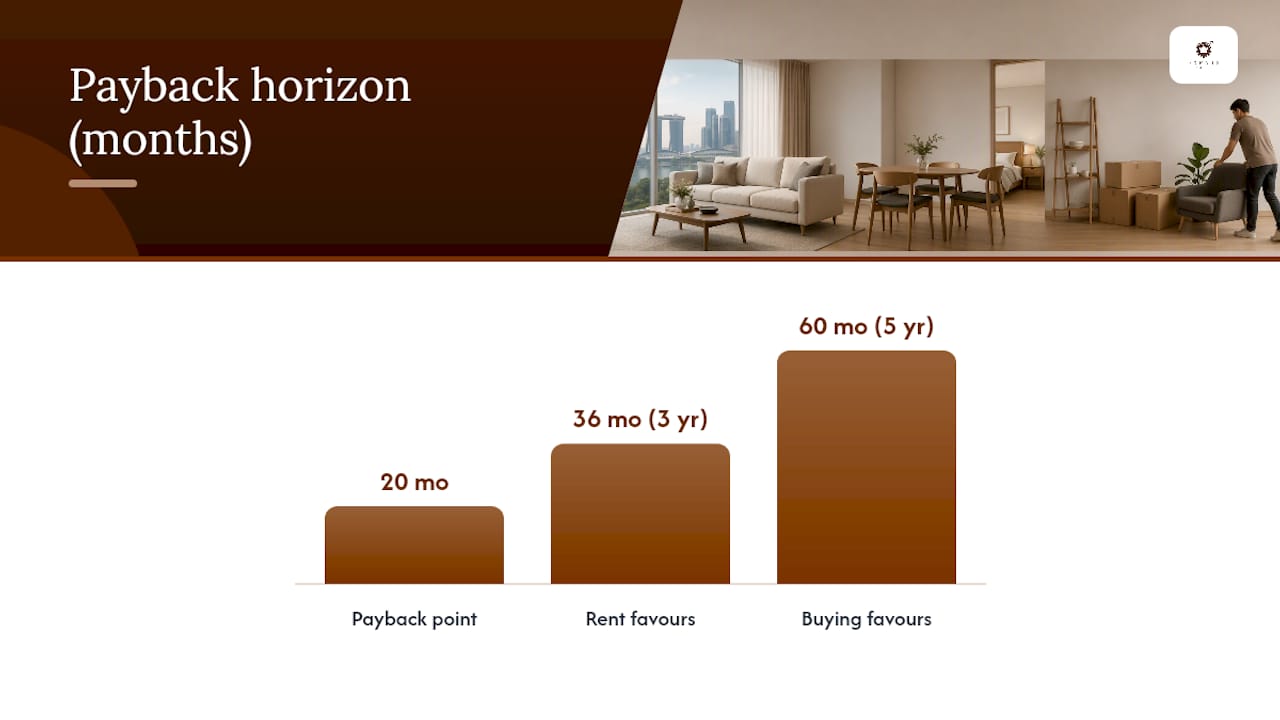
Worked example, two bedroom scenario: Buying costs roughly S$13,000 for a mid-tier two bedroom setup. A comparable rental package runs around S$650 a month. Divide S$13,000 by S$650 and you get twenty months. If you plan to stay in Singapore for less than 20 months, renting is the cheaper path even before you factor in disposal costs at the end of ownership. Stay longer than that, and buying starts to close the gap, assuming you can either keep the furniture for years or resell it well.
Before deciding, run through this relocation checklist and practical moving advice:
- How long is your realistic stay, including the chance your plans change?
- Can you resell the furniture, and do you have time to manage that process?
- Do you have a disposal route sorted if you cannot resell?
- Can your cashflow absorb a large one-off spend, or does a monthly cost suit your budget better?
- Are you willing to handle maintenance and repairs yourself?
Pro Tip: As a rough rule of thumb, renting tends to favour stays under about three years, while buying only pulls ahead beyond roughly five years, and only if resale or long-term storage is realistic. Between three and five years, the decision usually comes down to your appetite for hassle rather than pure cost.
What hidden furniture costs catch people out in Singapore?
The costs that blindside people are rarely the big-ticket items. They are the small, repeated ones that add up quietly over a lease or an ownership period.
- Bulky-item disposal fees through your Town Council (HDB) or Public Waste Collector (private estates) apply per item in many cases, and clearing a full flat’s worth of furniture at once can mean several separate charges.
- Resale reality rarely matches expectation. Selling used furniture in Singapore takes time, photography, listing effort and often several price drops before a buyer commits.
- Repeated delivery charges stack up if you replace items piecemeal rather than in one planned batch.
- Lost work hours spent coordinating collection, assembly or replacement rarely make it into anyone’s budget spreadsheet, but they are a real cost.
How can you reduce long term furniture costs?
Cutting long-term furniture expenses is less about spending less and more about spending in the right order.
- Apply a rough 2/3 rule to your budget. Put roughly two-thirds of your furniture spend into durable core pieces, such as the sofa, bed frame and dining table, and reserve the remaining third for lower-cost accents like lamps, art and cushions that are cheap to refresh later.
- Consider a hybrid approach. Rent the big, awkward-to-move core items and buy the smaller accent pieces you actually want to keep. This suits expats and frequent movers particularly well, since it avoids paying disposal or resale costs on furniture you will not want to ship home.
- Time your purchases around sales windows. Major retailers in Singapore run predictable seasonal discounts, and buying outside peak moving months (typically before the June and December relocation waves) often gets better pricing and faster delivery slots.
- Negotiate contract terms, not just the headline rate. Ask specifically about rate-locks on long-term rental packages, since a written rate-lock protects you if your lease extends or you swap items partway through.
Pro Tip: Durability data on furniture lifespans shows budget sofas typically last 3 to 8 years, mid-range pieces 7 to 12 years, and premium builds 15 years or more. A cheaper sofa replaced twice over a decade, with two rounds of delivery and disposal fees, frequently ends up costing more than one well-made piece bought once.
How does a managed rental service change the cost equation?
A managed furniture rental service removes several of the cost variables that make ownership unpredictable, which is exactly where Expats Partner positions its packages for renters and relocating households in Singapore.
Rental packages are often designed to fit typical household types to simplify selection.
Inventory is usually real and available, reducing wait times.
Flexible rental periods and coordinated delivery and collection help reduce logistics complexity.
Some providers offer written rate-lock on short-term quotes to protect against price increases if the stay extends, subject to written confirmation.
For relocation-heavy scenarios, corporate accommodation, or short-notice home staging, this structure typically removes far more cost and effort than it adds in monthly fees, particularly against the disposal and resale problems ownership creates later.
Get a furniture rental quote from Expats Partner
Expats Partner is the practical alternative to buying furniture outright for anyone unsure how long they will stay in Singapore. Instead of committing thousands of dollars upfront and then facing disposal fees or a slow resale process later, you get a monthly package that already includes delivery, setup and, on long-term plans, collection at the end.
Packages such as Vital+ – 1 Bedroom Apartment, Comfy – 1 Bedroom Apartment and Family – 2 Bedroom Apartment are built around real Singapore apartment layouts, not generic furniture lists, and pricing is transparent from the packages page. If your household needs a broader mix, from appliances to lighting, the full range of rental and relocation solutions covers everything from a single room to a complete home setup, including options to rent appliances with Electrolux as part of the same arrangement.
If you are still weighing up your options, the rent versus lease comparison walks through which structure suits your expected stay length. When you are ready to move forward, request a quote through the packages page and ask specifically about the written rate-lock so your monthly cost stays predictable even if your plans in Singapore change.
Sources for local furniture budgeting
Local disposal rules come from NEA’s bulky-item guidance, cost-of-living context from SingStat’s CPI notes, and furnishing benchmarks from PropertyGuru’s home budgeting guide.
FAQ
How much money should I budget for furniture?
Budget S$3,000 to S$12,000 to furnish a one bedroom home outright, or S$8,000 to S$25,000 for a 4 room HDB, depending on quality tier. If renting, expect S$150 to S$900 a month for most household sizes, detailed further in the furniture rental pricing guide.
Where is the best place to buy furniture in Singapore?
There is no single best source. It depends on whether you prioritise price, quality or speed, and many households mix budget retailers for accents with better-made pieces for core items like sofas and beds.
Can you rent furniture long term?
Yes. Long-term furniture rental in Singapore typically covers periods from several months to multiple years, with monthly rates dropping as the contract length increases. Providers like Expats Partner structure packages specifically around long-term rental terms, including delivery, setup and collection.
How much is the average cost of furniture?
There is no single average, since cost depends heavily on dwelling size and quality tier. A realistic range spans S$3,000 for a modest one bedroom setup to S$25,000 or more for a fully furnished 4 room HDB at a higher finish level.