

The fastest, lowest-risk route to a move-in ready home is a furnished relocation package with delivery and installation included. Relocation furniture refers to rental furniture, delivery, setup and later collection, arranged as a package rather than bought outright. For most relocating employees and families, ordering that package and timing it to the tenancy handover avoids weeks of empty rooms and mismatched purchases.
TL;DR:
- Short-term rental packages generally need 2 to 3 weeks to coordinate delivery and measurement checks, while full-home packages may require 4 to 6 weeks to schedule appliances and setup.
- Building access and lift bookings can cause delays, so confirming floorplan measurements and lift dimensions with suppliers beforehand prevents the most common issues.
- A diplomatic clause in leases allows early termination with proper notice, typically after 12 months on a 24-month lease, but must be negotiated before signing.
- Tax valuation for employer-provided furnished accommodation ranges from 40% to 50% of the unit’s annual value, depending on furniture thoroughness, affecting how benefits are reported.
- Verify that the supplier’s written inventory, installation procedures, and end-of-tenancy reinstatement policies are clear to avoid disputes during move-out.
Table of Contents
- What relocation furniture covers and which format fits your move
- How to time your furniture order around the move-in date
- Tenancy rules and tax points that affect furnished setups
- Choosing the right package: what to check before you sign
- Budgeting for furniture rental alongside tenancy costs
- How Expats Partner helps you get move-in ready
- Where to verify tenancy and tax rules
- Sources
- FAQ
What relocation furniture covers and which format fits your move
Relocation furniture rental comes in several formats, and choosing the right one depends on how long you are staying and how much control you want over individual pieces.
- Short-term rental suits assignments under twelve months and typically covers essentials with a lighter commitment.
- Long-term rental works for tenancies of a year or more and often carries better monthly rates for the same inventory.
- Full-home packages furnish every room in one order, useful for families or anyone who wants the flat ready in a single delivery.
- Room-only rentals let you furnish a bedroom or study without committing to a whole-home package.
- Corporate housing packages are pre-configured for company-mediated bookings, so HR teams can order consistent setups across multiple assignees.
A landlord-furnished unit differs from a vendor-supplied package: the landlord’s furniture stays fixed to the tenancy and is rarely negotiable, while a vendor package can be adjusted for duration, inventory and delivery timing. Families and long assignments generally do better with a full package, while a single assignee on a short posting can manage with room-only or essential items. Anyone working from home should check that desks, chairs and monitor stands are included, since these affect daily comfort more than most people expect.
How to time your furniture order around the move-in date
Coordinating furniture delivery with a tenancy handover takes more planning than people assume, mostly because building access and lift bookings rarely move quickly.
For a short-term package, allow a few weeks between confirming your order and delivery. Long-term or full-home packages typically need several weeks, particularly if the inventory includes appliances that must be sourced or tested. Building the timeline around these steps keeps the process predictable:
- Choose the package type and confirm the room-by-room inventory.
- Check measurements against the floorplan, including doorways, lift dimensions and staircases.
- Agree a delivery and installation window with the supplier and the property manager.
- Carry out an on-site check once furniture is placed, testing appliances and confirming placement.
- Sign a documented inventory handover so both parties have a record of condition.
- Schedule removal or reinstatement in line with the tenancy’s end date.
Before delivery day, prepare a short pack of details: the floorplan, lift access hours, parking arrangements, preferred delivery time and a named contact person on site. Property managers usually need advance notice to book lifts and protect common areas during a move, so confirm this with the agent well before the date.
Pro Tip: Send your floorplan and lift dimensions to the supplier before confirming the package, since a sofa that will not fit through the lift causes more delay than any other single issue.
For a fuller walk-through of this sequence, see our move-in timeline for renting furniture.
Tenancy rules and tax points that affect furnished setups
Furnishing decisions sit inside a tenancy contract, and a few regulatory points are worth checking before you commit to any package.
- Private residential leases must generally run for at least three consecutive months, per the Urban Redevelopment Authority’s rule to prevent shorter stays being treated as private tenancies.
- HDB flats carry their own approval steps and minimum occupancy periods, so check with the flat’s tenancy documentation before booking furniture around a shorter stay.
- A diplomatic clause, sometimes called a relocation clause, allows early termination with notice and needs to be negotiated into the lease before signing, not after.
- Furniture and fittings affect reinstatement obligations at the end of a tenancy, which is why a documented inventory at both delivery and collection matters.
A diplomatic clause is often included in 24-month leases and may allow termination after 12 months with two months’ notice, depending on the lease agreement before signing.
On the tax side, IRAS values furniture and fittings for employer-provided accommodation at a proportion of the annual value—around 40% for partially furnished units and 50% for fully furnished units—and this valuation is important for reporting accommodation benefits. HR and payroll teams should document clearly whether the company pays the rent, including furniture, or the employee pays and claims reimbursement, since the tax treatment differs.
Choosing the right package: what to check before you sign
A good furniture package is judged on fit, terms and transparency, not just on price. Work through these points before confirming any order:
- Space fit, confirming mattress sizes, sofa dimensions and table clearances against the actual room, not an assumed average size.
- Duration and terms, including the minimum rental period, extension fees and the early-return policy if your assignment changes.
- Inventory transparency, with a documented list and a clear damage policy that separates normal wear and tear from chargeable damage.
- Delivery and installation, confirming whether setup includes appliance testing, surge protection and cable routing, or whether that is left to you.
- Reinstatement and removal, covering who pays, how timing is scheduled, and how condition is recorded at handover.
- Work-ready furniture, checking for adjustable chairs and monitor stands if anyone in the household needs a proper home office setup.
Pro Tip: Ask for the inventory list in writing before delivery, not after, so any dispute at collection has a clear reference point.
Our guide on what is typically included in a furnished rental sets out standard inventory items worth checking against any quote.
Budgeting for furniture rental alongside tenancy costs
Furniture rental fees usually break into three parts: the monthly rental itself, a refundable deposit, and a one-off charge for delivery, setup and later collection. Rental cost depends on the inventory chosen and how long you keep it, so a room-only order costs less than a full-home package covering every space.
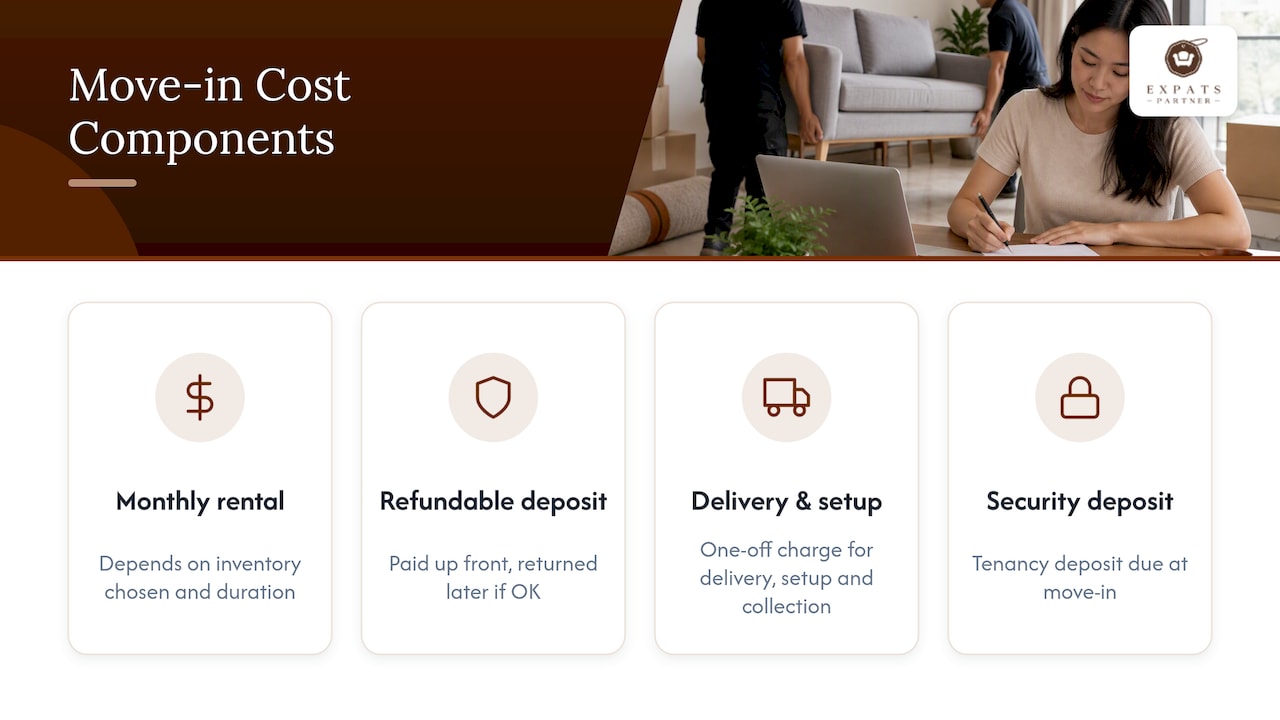
The bigger budgeting point is timing. Furniture costs land in the same window as the tenancy’s security deposit, first month’s rent and any agent fee, so the combined first-month cash requirement is higher than most people plan for. Building a small buffer into your relocation budget avoids a scramble in the final week before move-in.
For employer-provided furnished accommodation, IRAS values fittings at 40% of annual value for partially furnished units and 50% for fully furnished units, and this figure feeds directly into how the benefit is reported for tax purposes. Where cost is tight, staged delivery, a limited essentials package, or employer-mediated billing can spread the exposure without leaving the home unfurnished on move-in day.
How Expats Partner helps you get move-in ready
They supply short-term and long-term furniture rental, full-home and room packages, and corporate housing kits, with delivery, setup and later collection handled as part of the service. Rather than juggling separate suppliers for beds, sofas, dining tables and appliances, one package covers the room-by-room inventory and the installation date around your tenancy handover.
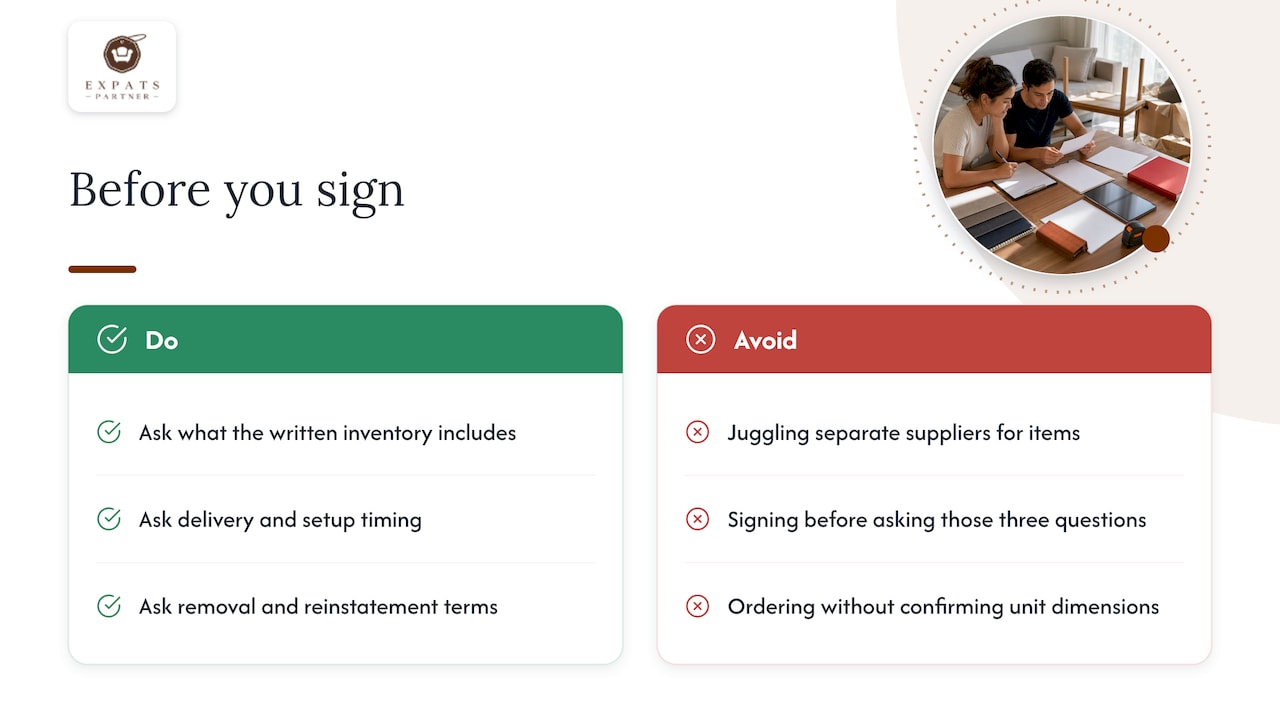
Before signing with any supplier, including us, ask three questions: what does the written inventory list include, what is the delivery and setup timing, and what are the removal and reinstatement terms at the end of the tenancy. These three answers tell you more about a supplier’s reliability than any brochure.
If you are weighing space fit before ordering, our partner’s showflat viewing checklist is a useful reference for confirming unit dimensions before furniture arrives.
To see current package options, visit our furniture package catalogue or check the relocation furniture packages page for a quote tailored to your move-in date.
Where to verify tenancy and tax rules
Check the Urban Redevelopment Authority’s guidance for the three-month minimum stay rule, HDB’s tenancy templates for flat-specific occupancy and deposit terms, IRAS for the 40%/50% furnished accommodation valuation, and the Council for Estate Agencies for tenancy negotiation checklists before signing.
FAQ
What does relocation furniture actually include?
Relocation furniture typically means rented furniture supplied as a package, with delivery, on-site setup and later collection built into the service. It can cover a single room or a full home, and often extends to appliances, lighting and decor depending on the package chosen.
How far in advance should I book furniture for a move-in?
Short-term packages generally need 2 to 3 weeks’ lead time, while long-term or full-home packages need 3 to 6 weeks to allow for measurement checks and delivery scheduling. Booking earlier gives more flexibility around lift access and building protection requirements.
Is a diplomatic clause the same as an early termination right?
A diplomatic clause is a negotiated tenancy term that allows early termination with notice, commonly after 12 months on a 24-month lease with two months’ notice given. It must be agreed and written into the lease before signing, since it cannot be added retroactively.
Does renting furniture affect my tax position if my employer pays?
Yes, where an employer provides furnished accommodation, IRAS values the furniture and fittings at 40% of annual value for partially furnished units and 50% for fully furnished units. Employers need to include this valuation when reporting the accommodation benefit, so HR and payroll should confirm how the rent and furniture costs are structured.
What should I ask a furniture rental supplier before signing?
Ask for a written inventory list, confirm whether delivery includes full installation and appliance testing, and clarify the removal and reinstatement terms at the end of the tenancy. These three points cover most of the disputes that arise with rented furniture.