
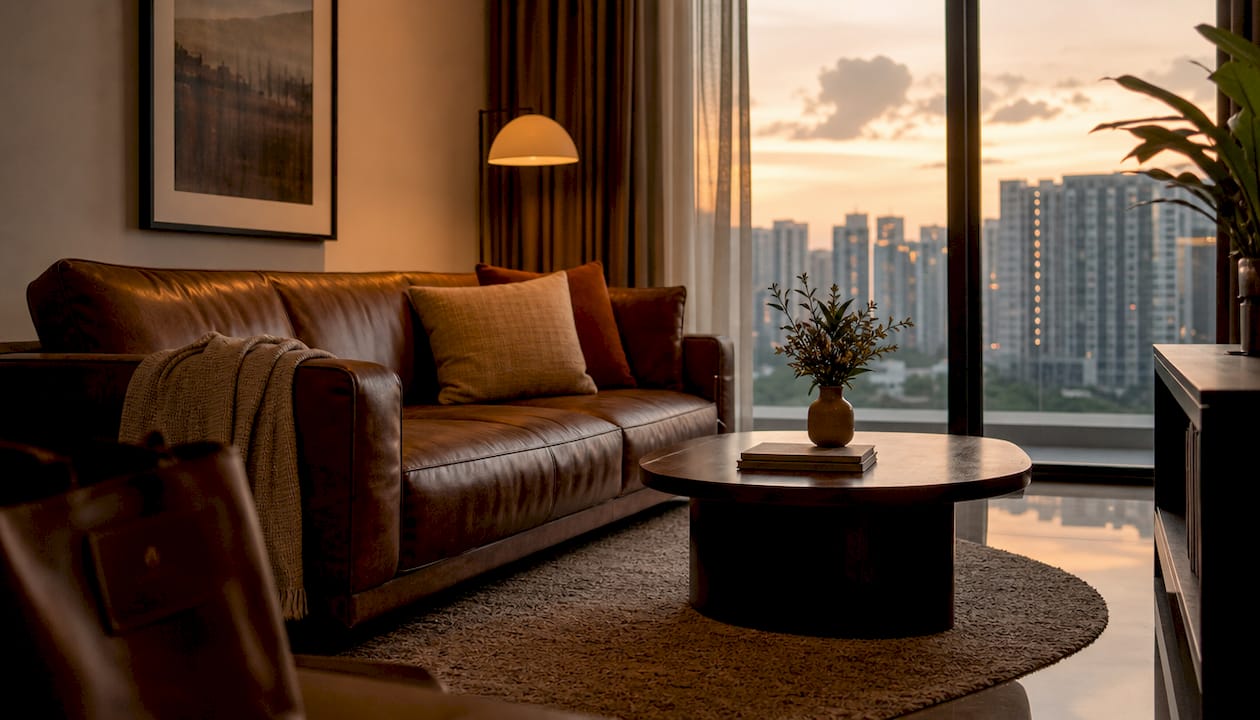
Designer furniture is defined as furniture produced by named designers or specialist studios, built to higher material and construction standards than mass-market alternatives, and selected for both function and lasting aesthetic value. For expats in Singapore, the role of designer furniture in expat lifestyle goes well beyond appearance. It addresses real daily needs: ergonomic comfort in a humid tropical climate, spatial efficiency in condominiums and apartments, and the psychological grounding that comes from living in a space that feels genuinely yours. Singapore’s expat population is substantial, and furniture choices for expatriates shape how well they settle, work, and rest during their posting.
How does posting duration affect furniture choices for expats?
Posting length is the single most important factor in any expat’s furniture strategy. Getting this wrong leads to either overspending on pieces you cannot move, or underspending and living uncomfortably for years.
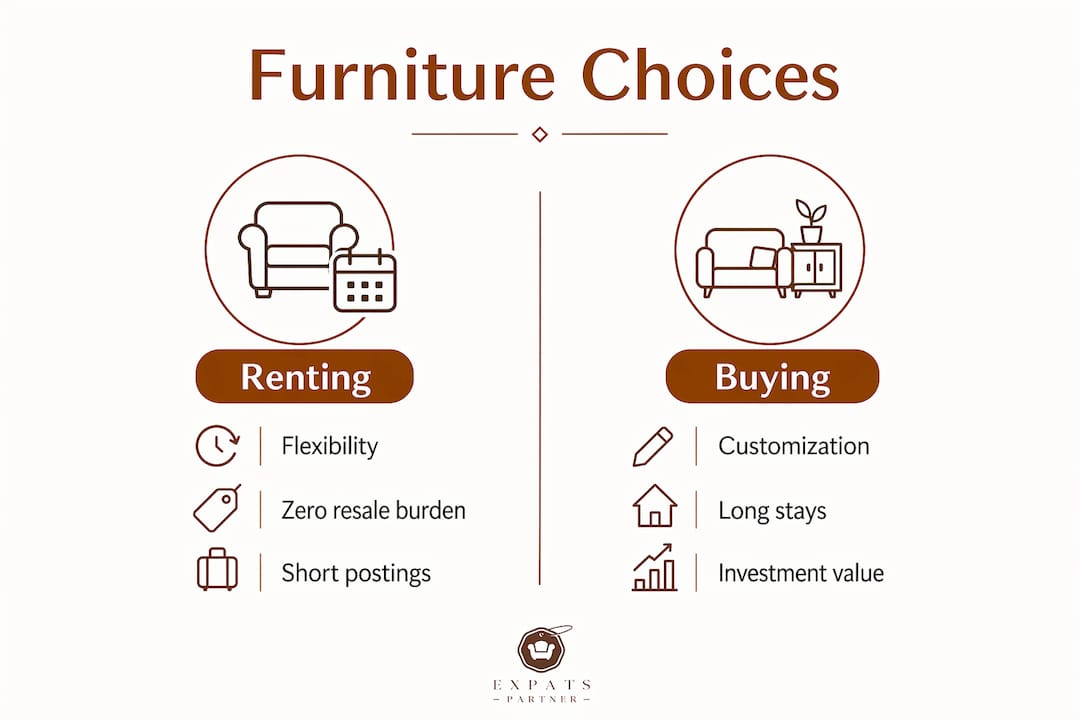
Industry guidance is clear: expats on 1–2 year postings benefit most from flexible, mobile-friendly rental furniture, while longer stays of three years or more justify investing in high-quality, durable pieces such as hardwood-frame sofas and solid dining tables. That distinction matters because the cost of dismantling, shipping, or reselling fixed furniture often exceeds its residual value.
For short postings, the priorities are:
- Flexibility: Pieces that can be returned, swapped, or left behind without financial loss.
- Neutral finishes: Colours and materials that suit any property and photograph well for resale.
- Rental packages: Full-home sets that arrive assembled and are collected at lease end.
For mid to long postings, the calculus shifts toward quality and personalisation. Custom-built fixed furniture is financially impractical for expats on postings shorter than three years due to relocation difficulties. However, freestanding designer pieces in walnut, oak, or performance-grade upholstery travel well and hold resale value.
| Posting length | Recommended approach | Key consideration |
|---|---|---|
| 1–2 years | Furniture rental package | Flexibility and zero resale burden |
| 2–3 years | Mix of rental and quality freestanding pieces | Balance cost with comfort |
| 3–5+ years | Invest in durable designer furniture | Lifecycle value and personalisation |
Pro Tip: If you are unsure of your posting length, start with a rental package for the first six months. You will learn the space, understand what you actually need, and avoid costly early mistakes.
What are the real benefits of designer furniture for expat homes?
The designer furniture benefits that matter most to expats are not purely visual. They are practical, ergonomic, and psychological.
Superior comfort and ergonomics
Designer furniture is built around human use. A well-constructed sofa with kiln-dried hardwood frames and high-density foam maintains its shape and support for years. Mass-market alternatives compress and sag within months. For expats working long hours or travelling frequently, coming home to a genuinely comfortable space is not a luxury. It is a daily necessity.
Climate-appropriate construction
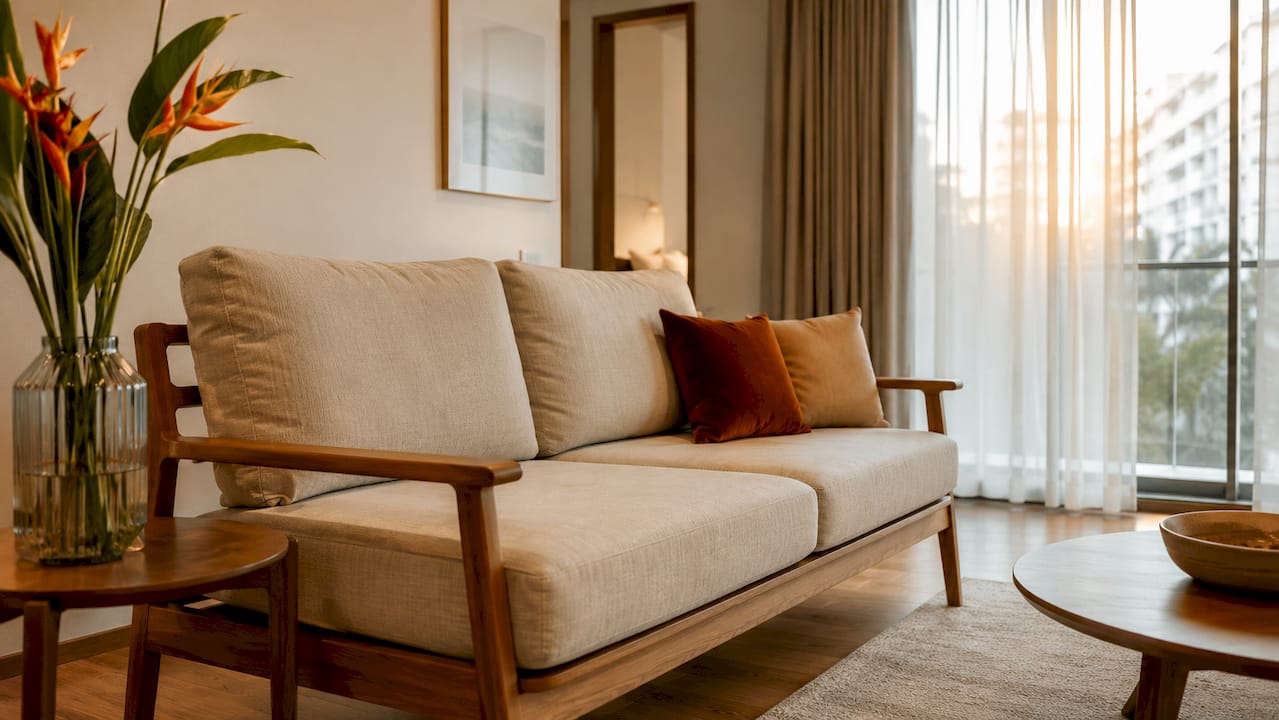
Singapore’s humidity sits consistently high throughout the year. Kiln-dried hardwood frames and quality upholstery fabrics are critical in this climate. Poorly constructed furniture warps, swells, or develops mould in humid conditions. Designer pieces built with treated timber, performance fabrics, and hand-polished finishes withstand Singapore’s climate far better than budget alternatives.
Cohesion and personal style
Expat home decor suffers most when furnished piecemeal. Mismatched rental items from different eras and styles create a space that feels temporary and impersonal. Designer furniture, selected as a considered set, produces visual cohesion. That cohesion signals care and intention, which affects how you feel in the space every day.
“Designer furniture acts as a psychological anchor in expat home environments. It creates a lasting sense of stability and belonging in temporary or unfamiliar living spaces, helping residents feel settled rather than transient.”
— KAQTU and Mirela B Interiors, interior design specialists
The psychological anchoring effect of quality pieces is well documented among expat interior specialists. A home that feels owned rather than borrowed supports better mental wellbeing, stronger daily routines, and a more positive experience of the posting overall.
Durability that reduces replacement costs
Designer furniture crafted with kiln-dried hardwood and hand-polished finishes withstands move-related stress better than mass-market pieces. That durability means fewer replacements, fewer disposal costs, and less time spent sourcing new items mid-posting.
Practical tips for styling expat living spaces in Singapore
Styling expat living spaces well requires attention to proportion, material, and logistics. Singapore condominiums and apartments vary widely in layout, but most share one characteristic: they reward restraint.
Sizing and proportion
HDB flats and condominium units in Singapore often have open-plan living and dining areas that feel generous but are actually compact. Oversized sofas or bulky dining tables quickly make a space feel crowded. Measure every room before purchasing or renting. Pay particular attention to doorway widths, which affect what can be delivered and assembled inside.
Anchoring a room with key pieces
Successful expat interiors use a few high-quality anchor pieces rather than filling every corner. Natural textures such as linen, wood, and stone provide sensory grounding and counteract the clinical feel of an unfurnished rental unit. Start with the sofa, the bed, and the dining table. Get those three right, and the rest of the space follows naturally.
Material and finish choices for Singapore’s climate
- Solid timber with sealed finishes: Resists humidity and ages well. Walnut and oak are particularly durable.
- Performance upholstery fabrics: Designed to repel moisture and resist fading in air-conditioned interiors.
- Powder-coated metal frames: Avoid bare steel, which can rust in humid conditions.
- Tempered glass surfaces: Easy to clean and unaffected by humidity, suitable for dining and coffee tables.
Managing furniture logistics between postings
Furniture logistics are one of the most underestimated challenges of expat life. Delivery and assembly in a new city can be complex and stressful. Sizing errors, shipment delays, and damage during transit are common. Neutral, high-quality, and versatile pieces with good resale value or ease of reconfiguration are the most practical choice, especially for postings shorter than three years.
| Furniture type | Relocation adaptability | Best for |
|---|---|---|
| Modular sofa | High: sections separate easily | All posting lengths |
| Solid timber dining table | Medium: heavy but durable | 2+ year postings |
| Bespoke built-in joinery | Low: fixed to property | Not recommended for expats |
| Rental package furniture | Very high: collected by provider | Short postings |
Pro Tip: Before your posting ends, photograph all furniture in good condition and list quality pieces on local resale platforms. Neutral finishes in walnut, white oak, or grey upholstery sell fastest in Singapore’s expat resale market.
Why do professional services help expats furnish homes more effectively?
Professional interior designers and turnkey rental services solve problems that expats rarely anticipate until they are already in them.
Ordering furniture through interior designers provides access to exclusive vendors and ensures pieces are both high quality and tailored to lifestyle needs. That access matters in Singapore, where lead times from international furniture brands can run to 12 weeks or longer.
The practical benefits of using a professional service include:
- Project management: A single point of contact handles ordering, tracking, and installation. You do not chase multiple suppliers across time zones.
- Local knowledge: Designers understand Singapore’s building regulations, lift dimensions, and condo management requirements that affect delivery.
- Relocation deadline alignment: Turnkey rental services deliver a fully livable space within agreed timelines, which is critical when you have a lease start date and a family arriving.
- Avoiding double payment: Poor early purchases that need replacing mid-posting are a common and avoidable cost. Professionals prevent this by specifying correctly from the outset.
- Ongoing support: Reputable services handle maintenance queries, swap requests, and end-of-lease collection without additional stress on the expat.
Professional interior designers uniquely navigate local complexities for expats, ensuring smooth delivery and installation through technical and administrative processes that are unfamiliar to new arrivals. For expats arriving in Singapore without local contacts, this guidance is genuinely valuable.
Key takeaways
Designer furniture serves expats best when it is chosen deliberately, sized correctly, and matched to the length of the posting.
| Point | Details |
|---|---|
| Match furniture to posting length | Short postings suit rental packages; longer stays justify quality freestanding pieces. |
| Prioritise climate-appropriate materials | Kiln-dried hardwood and performance fabrics resist Singapore’s humidity reliably. |
| Anchor rooms with fewer, better pieces | Three quality anchor pieces outperform a room full of mismatched budget furniture. |
| Use professional or rental services | They prevent sizing errors, delays, and costly early replacement purchases. |
| Neutral finishes retain resale value | Walnut, white oak, and grey upholstery sell well in Singapore’s expat resale market. |
What we have learned from furnishing expat homes in Singapore
Working with expats across Singapore has shown us one consistent pattern: the biggest furnishing mistakes happen in the first two weeks. Expats arrive, feel the urgency of an empty flat, and buy quickly from whatever is available. The result is a mix of pieces that do not work together, do not suit the space, and cannot be easily moved when the posting ends.
The expats who furnish well do the opposite. They spend the first week living in the space with minimal furniture. They notice where the light falls, how the air conditioning affects different rooms, and which areas they actually use. Then they make considered choices.
Quality does not always mean expensive. It means appropriate. A well-made sofa in a performance fabric at a mid-range price point will serve a two-year posting better than a designer showpiece that cannot survive Singapore’s humidity or fit through a standard condominium lift. The impact of furniture on expats is most positive when selection is intentional rather than reactive.
We also see expats underestimate the psychological value of getting the bedroom right. The living room is for guests. The bedroom is where you decompress after a long week. A quality bed frame, a good mattress, and considered bedside lighting cost less than most expats expect and return more than almost any other furnishing decision.
The most practical advice we can offer: resist the impulse to fill every room immediately. A calm, well-proportioned space with three excellent pieces feels more like home than a crowded flat furnished in a weekend.
— Expats Partner
Furnishing your Singapore home with Expats Partner
Expats Partner provides furniture rental packages designed specifically for expats in Singapore, with flexible durations that match your posting length.
Whether you need a fully furnished one-bedroom apartment ready within days or a curated two-bedroom package for a longer assignment, Expats Partner offers real inventory, transparent pricing, and reliable delivery and setup across Singapore. Every package is collected at lease end, so you never need to manage resale or disposal. Explore expat furniture rental options to find a package that suits your timeline and property type, or browse the full range of home furniture rental options available across Singapore.
FAQ
What is the role of designer furniture in an expat’s home?
Designer furniture provides ergonomic comfort, durable construction suited to Singapore’s climate, and visual cohesion that makes a temporary space feel genuinely lived-in. It also acts as a psychological anchor, supporting a sense of stability during an international posting.
Is it better to rent or buy furniture as an expat in Singapore?
Expats on postings of 1–2 years benefit most from rental packages, which offer flexibility and zero resale burden. Those staying three years or more can justify purchasing quality freestanding pieces with good resale value.
What furniture materials work best in Singapore’s humid climate?
Kiln-dried hardwood frames, performance upholstery fabrics, powder-coated metal, and tempered glass all perform well in Singapore’s humidity. Avoid untreated timber and bare steel, which are prone to warping and rust.
How quickly can a furnished expat home be set up in Singapore?
Turnkey rental services can deliver and install a fully livable home within agreed timelines aligned to your lease start date. Expats Partner offers delivery and setup across Singapore with packages available for both short-term and long-term postings.
Should expats avoid custom-built furniture in Singapore?
Custom-built fixed joinery is not recommended for expats on postings shorter than three years. It cannot be relocated and rarely recovers its cost at resale. Freestanding designer pieces in neutral finishes are a far more practical and financially sound choice.