
Expect to pay roughly $180 to $720 a month for short-term furniture, depending on flat size and package choice, with one to six month leases usually priced higher per month than a year-long term. Before signing anything, ask for a written package quote and explicit price protection so the figure you agree today is the figure you pay at delivery.
TL;DR:
- Short-term furniture rental prices in Singapore range from about $150 to $750 a month depending on flat size and lease duration, with longer commitments generally offering better rates.
- Bundled packages for entire flats often cost less and are more convenient than individually renting each piece, especially for one-bedroom and two-bedroom units.
- Additional fees such as delivery, collection, deposits, damage waivers, and potential price adjustments can significantly increase the total cost, so written price protection is essential.
- Using ex-rental or floor-stock furniture can reduce costs by 15 to 30 percent, and providers with ready inventory can deliver faster and more economically.
- Obtain a firm, written quote before signing to lock in rates and avoid mid-lease re-pricing, particularly for short-term rentals of one to six months.
Table of Contents
- What do short term furniture prices actually look like?
- How much does each piece of furniture cost to rent?
- Should you book a package or rent items individually?
- What fees get added on top of the monthly rate?
- How can you get a better rate on short-term furniture?
- How does Expats Partner price short-term furnishing?
- Get a firm quote before you commit to a lease
- Where these figures and pricing norms come from
- FAQ
What do short term furniture prices actually look like?
Most short-term furnishing quotes in Singapore fall into three broad bands, and the number you land on depends less on brand and more on flat size, item quality, and how many months you commit to.
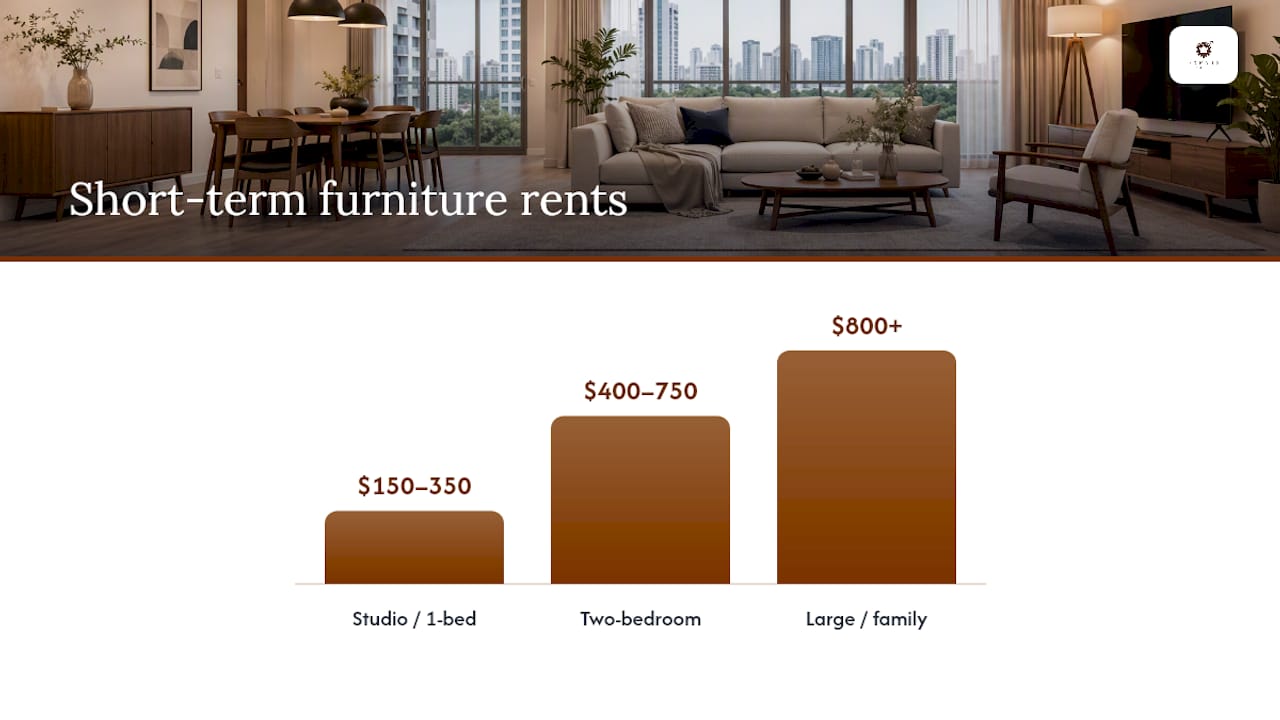
- Studio or one-bedroom flats: typically $150 to $350 a month for a core set (bed, sofa, dining table, basic storage).
- Two-bedroom flats: typically $400 to $750 a month, scaling with a second bedroom’s worth of beds, wardrobes, and living-area furniture.
- Larger family units or landed homes: frequently $800 and upwards a month once you add multiple bedrooms, dining capacity for guests, and outdoor or study furniture.
These figures usually cover the furniture itself, a mattress, and standard delivery to a ground-floor or lift-accessible unit. What they often exclude is just as important: large appliances (fridges, washing machines), premium fabric upgrades, and assembly beyond straightforward setup. Providers frequently price appliances separately, sometimes under an add-on rental line such as branded appliance packages.
Rental duration is the single biggest swing factor in your monthly rate. A provider carrying stock through a slow month would rather rent it to you at a slightly reduced short-term rate than leave it in a warehouse, but the reverse is also true: demand for one to six month leases is high among relocating expats and contractors, so many providers build in a premium for that flexibility. Guidance from furniture-rental specialists consistently shows that longer commitments (nine months plus) unlock materially better monthly rates than a three-month lease on the same items. If your stay is genuinely short, budget for that premium rather than being surprised by it.
How much does each piece of furniture cost to rent?
Building your own list, rather than taking a fixed package, only works if you know what individual pieces typically cost per month. Rates below reflect the kind of ranges seen across furniture-rental providers and consumer cost guides, and they move with fabric quality, ex-rental condition, and whether stock is ready to ship immediately.
- Two-seater sofa: roughly $25 to $60 a month.
- Three-seater sofa: roughly $40 to $90 a month.
- Bed frame with mattress: roughly $35 to $80 a month, varying by mattress firmness and frame material.
- Dining table with four chairs: roughly $30 to $70 a month.
- Coffee table: roughly $10 to $25 a month.
- TV console: roughly $15 to $35 a month.
Ex-rental stock, previously used but well maintained, tends to sit at the lower end of each range and is a legitimate way to cut cost without losing function. Newer or designer-grade pieces sit higher. A useful habit before committing to any single-item quote: confirm whether the quoted figure already includes delivery and basic assembly, or whether those get added afterwards. Providers rarely volunteer that distinction unless you ask directly, and it can shift your real monthly cost by 10 to 20 percent once delivery is factored in separately.
Should you book a package or rent items individually?
A bundled package almost always wins on convenience and, for a full flat, on total cost. Providers price packages as a set, which typically works out cheaper than assembling the same list item by item, and it removes the guesswork of matching styles across separate rentals.
- Choose a package when furnishing an entire flat. A one-bedroom package (commonly $150 to $350 a month range, depending on the tier) covers bed, sofa, dining set, and storage as one coordinated delivery.
- Go a la carte when you only need a handful of pieces. Someone moving into a partly furnished flat who just needs a bed and a sofa rarely benefits from a full package rate.
- Mix the two when your style needs differ by room. Some renters take a package for the living areas and add individual statement pieces, such as a specific dining table, separately.
For most short-term relocations into an empty flat, the package route saves both money and coordination effort. For partial furnishing, itemised rental keeps costs proportionate to actual need.
What fees get added on top of the monthly rate?
The headline monthly figure rarely tells the whole story. Ask about these before signing:
- Delivery and setup: often a one-off fee, sometimes waived for larger packages.
- Collection at the end of the lease: frequently charged separately from delivery.
- Security deposit: usually refundable, held against damage or missing items.
- Damage waiver: a recurring monthly charge that covers accidental damage.
- Repricing or surcharge clauses: some contracts allow the provider to adjust cost mid-term if input prices shift.
Furniture pricing has been genuinely volatile lately, and industry reporting on the 2026 market has flagged that quotes placed today can be repriced by the time of delivery due to tariff and lead-time pressures. That’s exactly why written price protection matters: get the provider to confirm, in writing at deposit stage, that your rate is locked for the lease term.
Pro Tip: If you already carry home contents insurance with accidental damage cover, ask the provider to accept proof of that policy instead of paying their separate damage-waiver fee. Many will agree once you show the certificate.
How can you get a better rate on short-term furniture?
A few habits consistently lower the final bill without compromising on what you actually get.
- Ask about ex-rental or floor-model stock. These pieces are typically 15 to 30 percent cheaper than new inventory and function identically for a short stay.
- Request delivery or collection fee waivers. Providers with quieter showroom periods are often willing to drop these charges to secure a booking.
- Bundle small items into one order. A single coordinated delivery of side tables, lamps, and a rug usually costs less than three separate small orders.
- Confirm rate stability for your full term. Ask directly whether the monthly price is fixed for the lease or subject to review.
Pro Tip: Ask specifically whether ready-to-ship inventory is available for your move-in date. Providers with stock already assembled and warehoused can often deliver faster and price more competitively than made-to-order options.
Retailers such as Ikea have recently cut prices across several furniture lines as part of a wider affordability push, a signal that the broader market is under pressure to keep costs down. That trend can work in a renter’s favour if you’re willing to ask providers whether their rates reflect it.
How does Expats Partner price short-term furnishing?
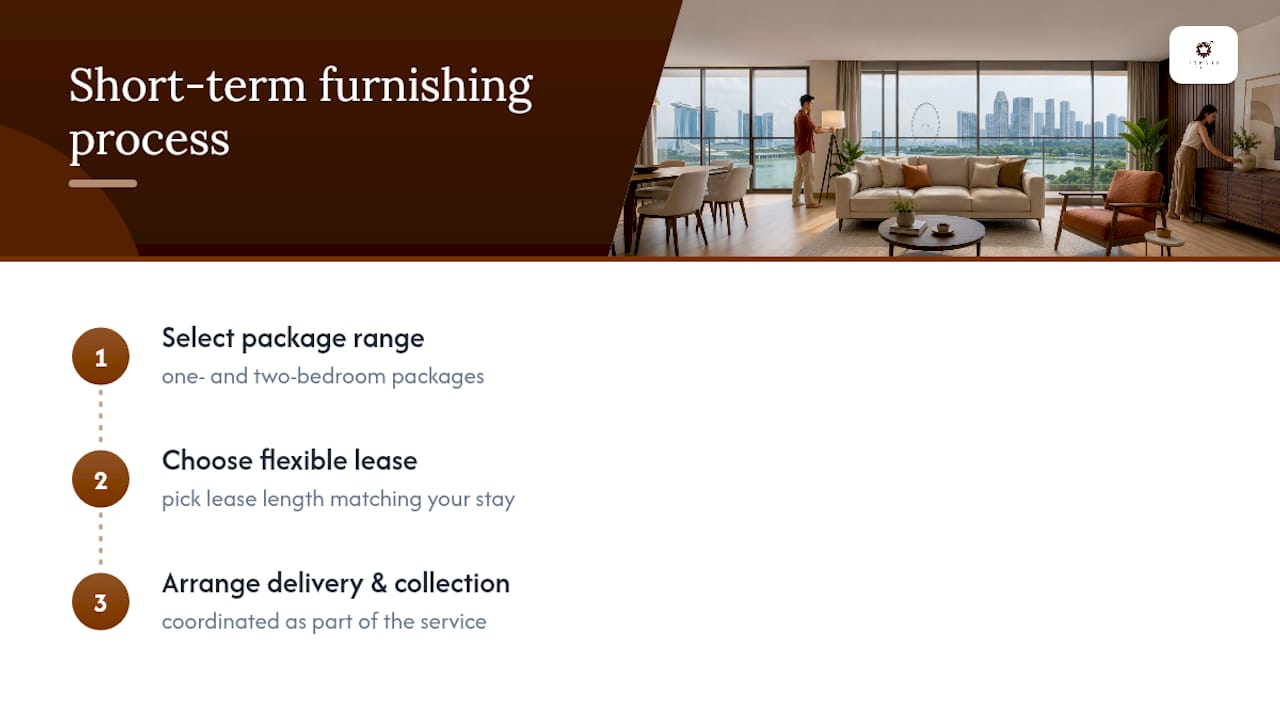
Expats Partner offers furniture rental packages designed for typical Singapore flat sizes, including options for one-bedroom and two-bedroom flats at different price points. Each draws on in-stock inventory rather than made-to-order pieces, which keeps delivery timelines realistic for someone relocating on short notice.
Flexible lease periods mean you’re not locked into a term that outlasts your actual stay, and delivery and collection are coordinated as part of the service rather than handled as a separate booking. If you’re weighing a short-term furniture rental against building a list piece by piece, reviewing the full package range is the fastest way to see what’s actually included at each price point.
Get a firm quote before you commit to a lease
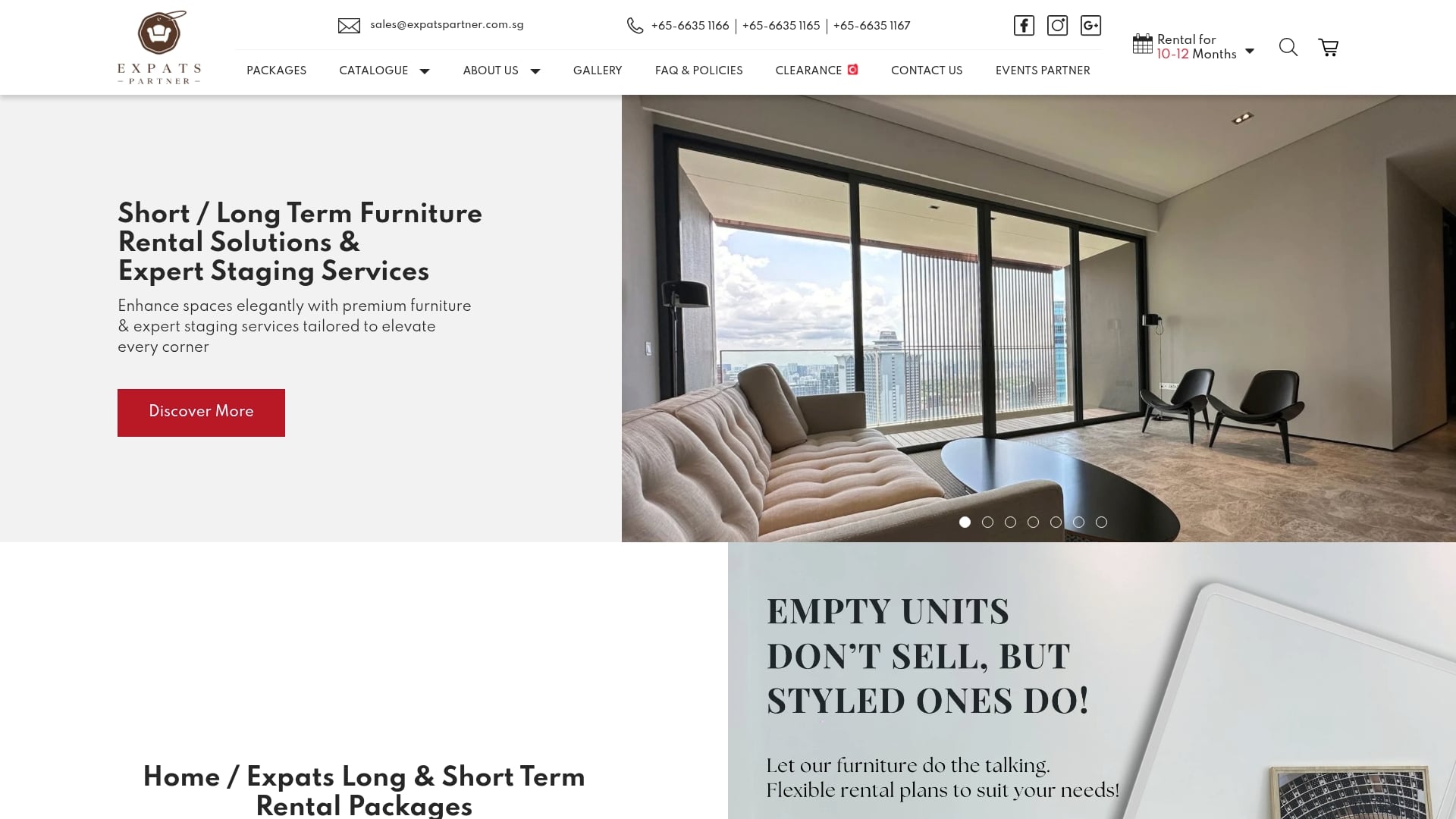
Comparing headline monthly numbers only gets you so far. What actually protects your budget is a provider who will put the price, the inclusions, and the term length in writing before you pay a deposit. Expats Partner’s package pages list ready stock across the Vital+, Comfy, and Family tiers, so you can see exact monthly figures rather than estimate against a range.
That matters most for renters on one to six month leases, where the market-wide premium for short terms is real and where a locked, written quote is the only real defence against mid-lease repricing. Beyond furniture itself, decorative touches such as those covered in this guide to organic office accents can affect a total furnishing budget if you’re layering in styling on top of the base package. For a straightforward move, browsing Singapore short-term furniture rental options for expats and requesting a customised quote is the practical next step. Ask Expats Partner directly for written confirmation of your rate and lease term before your move-in date.
Where these figures and pricing norms come from
The cost ranges and negotiation tactics in this guide draw on furniture-rental industry pricing guides that track typical monthly ranges by package and item, alongside 2026 reporting on tariff-driven price volatility in the wider furniture market. Retailer pricing moves, such as Ikea’s recent affordability-focused cuts, offer useful context on where the broader market is heading.
FAQ
How much does it cost to furnish a house in Singapore?
Furnishing a full house through rental typically runs from around $800 a month upwards for larger or landed properties, while a one-bedroom flat can be furnished from roughly $178 a month using a package such as Vital+.
What is the average cost of upholstery services in Singapore?
Upholstery pricing varies by fabric and piece size and isn’t standardised across providers; renting pre-upholstered furniture through a package avoids this cost entirely, since the item arrives ready to use.
How much is one month’s rent in Singapore, and does that affect furniture pricing?
Residential rent varies widely by property type and location and is separate from furniture rental costs, though tenants moving into unfurnished flats often budget for both together when planning a short-term stay.
What is the average rental price in Singapore for furniture?
Typical furniture rental runs from around $150 to $350 a month for a one-bedroom flat and $400 to $750 a month for a two-bedroom flat, with the exact figure shaped by lease length and item quality.
Does renting for a shorter period always cost more per month?
Usually, yes. Providers commonly price one to six month leases higher per month than terms of nine months or longer, so it’s worth asking directly whether a provider offers price stability regardless of term length.