
For most corporate staff accommodation projects, the best result comes from pairing a standardised furniture, fittings and equipment (FF&E) master list with flexible rental for roles where headcount shifts. This balances durability, delivery speed and total cost of ownership better than an outright purchase model. The principle behind pooled furnishing programmes, as reflected in 6 FAH-5 FAP guidance and 15 FAM procurement references, is straightforward: fixed specifications reduce mismatched replacements and give budgeting some predictability. Your immediate next step is simple. Draft a one-page specification sheet covering every room category, then request both a purchase quote and a rental quote from a partner such as Expats Partner to compare against it directly.
Key Takeaways
Standardising FF&E specifications while using rental for headcount flexibility gives procurement teams the strongest balance of durability, delivery speed and predictable total cost of ownership.
| Point | Details |
|---|---|
| Build one master spec sheet | Fix material, finish and lifespan standards for every room category before requesting quotes. |
| Match sourcing model to project length | Use purchase for fixed long-term needs and rental for volatile headcount or short contracts. |
| Standardise parts across units | Interchangeable hinges, castors and hardware cut repair time and mismatched replacements. |
| Document every handover | Photograph condition at delivery and return to avoid disputes over damage costs. |
| Weight supplier evaluations consistently | Score warranty, certification, delivery reliability and flexibility the same way across every bid. |
| Consider a bundled rental partner | Expats Partner combines delivery, installation, repair and collection under one SLA to reduce procurement workload. |
Quick resources and internal links to follow up
- Home furniture rental for full package options and terms
- Where to rent furniture for staff accommodation for provider comparisons
- Consult 6 FAH-5 FAP guidance and 15 FAM procurement rules for pooled inventory and certification standards
Table of Contents
- What furniture and minimum specs does staff accommodation need?
- Which materials and finishes cut lifecycle costs?
- Should you buy, rent, or lease your furniture?
- What should you ask suppliers before signing?
- How should you plan delivery, assembly and staging?
- How does a rental partner reduce procurement workload?
- What does budgeting for staff accommodation furniture actually involve?
- How Expats Partner supports staff accommodation projects
- FAQ
What furniture and minimum specs does staff accommodation need?
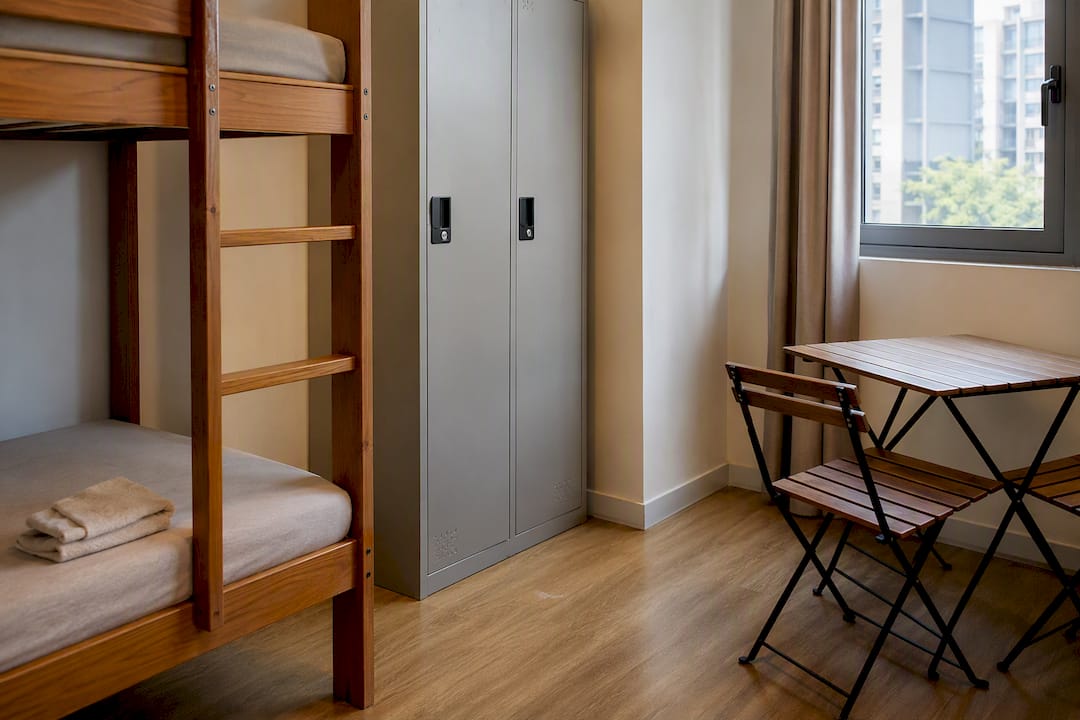
Start with the bedroom. Bunk beds or single frames in powder-coated steel resist knocks better than painted timber, and mattresses should specify density and a removable, washable cover rather than a vague “medium firm” description. A locker or wardrobe with a lock and proper ventilation belongs in every room brief, not just dormitory-style units. Ability Trading’s review of accommodation suppliers groups the essentials the same way: sleeping solutions, secure storage, and dining or work furniture suited to high-frequency use and easy cleaning.
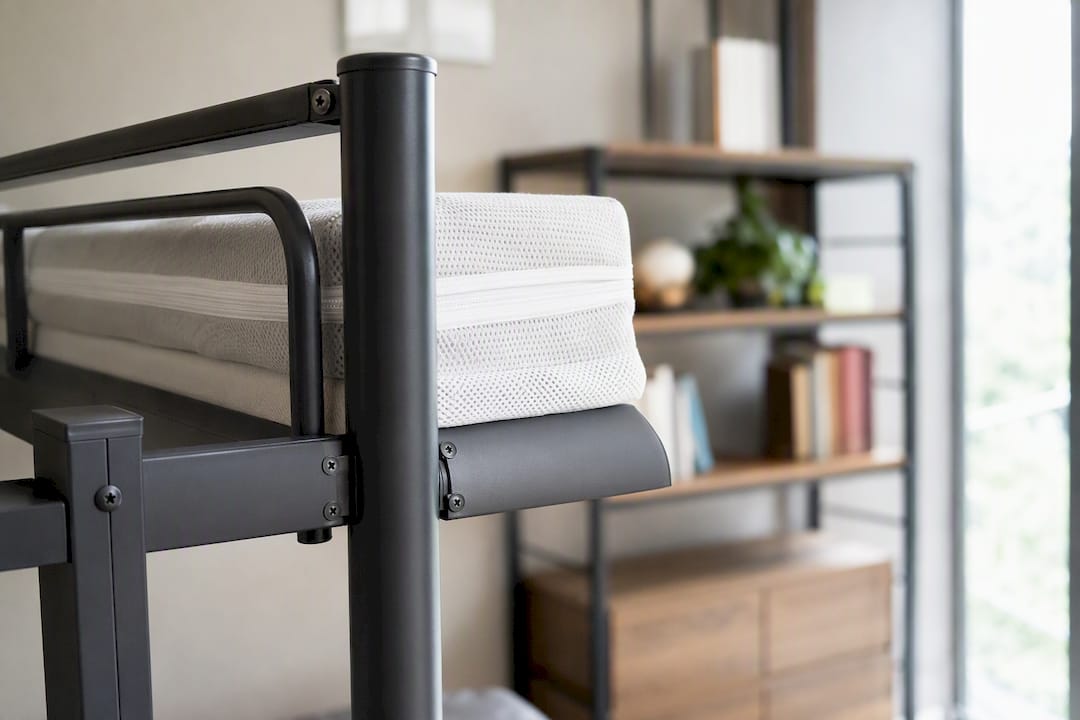
Work and dining areas need commercial-grade legs and surfaces, not domestic office furniture that loosens under daily wear. Common areas benefit from wipeable upholstery on lounge seating and stacking or cafe-style tables, which give you flexibility when room layouts change.
Minimum spec callouts to write into any brief:
- Bed frames: powder-coated steel or engineered timber, rated for a 7 to 10 year lifespan under daily use
- Mattresses: stated foam or coil density, zip-off washable cover, fire-retardant certification
- Storage: lockable doors, ventilation slats, corrosion-resistant hardware
- Desks and chairs: laminate or steel-frame construction able to withstand repeated wipe-downs
- Lounge and dining seating: vinyl or commercial fabric, stackable where floor space is tight
Al Basfoor’s work with labour accommodation projects confirms that heavy-duty metal bunks, metal single beds and lockers are commonly used where space and bulk pricing both matter, because they hold up to volume use better than lighter alternatives.
Which materials and finishes cut lifecycle costs?
Powder-coated steel outperforms painted metal on chip resistance and is the default for frames and lockers. Laminated MDF works for desks and casegoods provided edges are properly sealed against moisture. Solid timber veneers look better in serviced corporate housing but cost more to repair if damaged. For upholstery, commercial-grade fabrics or vinyl/leatherette resist staining and wipe clean far more easily than domestic-grade textiles.
Prefer finishes rated for anti-microbial resistance and frequent cleaning, particularly in shared bathrooms and communal lounges. A simple maintenance routine keeps replacement cycles honest:
- Daily: surface wipe-downs on high-touch items
- Weekly: check locks, hinges and castors for wear
- Quarterly: full inspection with photo logging of any damage
Pro Tip: Insist on standardised parts and tool-free assembly across every unit. When a locker hinge fails in block 3, you want the same spare part that fits block 12, not a special order.
Should you buy, rent, or lease your furniture?
Each model suits a different situation. Purchase gives you a fixed asset with no ongoing rental cost, but it locks up capital and leaves you responsible for storage, refurbishment and eventual disposal. Long-term lease spreads cost but often carries penalties for early termination. Short-term rental and bundled rental-with-install-and-return services suit projects where headcount or duration is uncertain, since the provider absorbs the logistics of delivery, assembly and eventual collection.
Watch for these decision triggers before committing to a model:
- How long is the accommodation contract, and is renewal likely?
- How volatile is expected headcount over the next 12 months?
- Do you have storage and disposal capacity for returned or decommissioned items?
- Is capital expenditure restricted this financial year?
When you build an RFP, compare providers on the same dimensions every time: best fit (durability versus comfort), cost model (capex versus opex), lead time, who holds maintenance responsibility, and how easily the arrangement scales up or down. Rental tends to win on rapid scale-up, trial furnishing of a new site, and any scenario where disposal or refurbishment costs would otherwise eat into the budget. A pooled programme referenced in 15 FAM 720 residential furnishings guidance makes the same case for defining replacement cycles at the outset rather than reacting to wear as it happens.
What should you ask suppliers before signing?
A short checklist keeps supplier calls focused and comparable across bids:
- Warranty length and what it actually covers (frame, upholstery, mechanical parts)
- Certification against recognised safety standards, since procurement rules under 15 FAM 760 require FF&E to meet standards such as UL or CE
- Whether stock is genuinely in-stock or made-to-order, and what that means for your delivery date
- Delivery and installation lead times, stated in working days
- Installation crew capacity for multi-unit or multi-floor projects
- Spare-part availability and typical turnaround for replacements
Questions worth copying directly into supplier emails:
- What is your SLA for replacing a damaged or faulty item?
- What recourse do we have if delivered stock does not match the agreed spec?
- Can you provide inventory visibility so we know what is genuinely available versus on order?
- Is insurance included, and who handles disposal or return at contract end?
Adjust the weighting if your project has an unusually tight deadline or a known headcount surge coming.
How should you plan delivery, assembly and staging?
A predictable timeline avoids last-minute scrambling. Typical stages run: order confirmation, a stated lead time (often one to three weeks for in-stock items), a scheduled delivery window, on-site assembly, then a handover inspection before occupants move in.
Before delivery day, confirm:
- Lift and loading dock access, especially for high-rise blocks
- Room labelling so crews place items correctly without supervision at every door
- Electrical points checked against appliance requirements
- A staging area for unpacking and assembly, away from finished units
Once furniture is in place, build in a routine: quarterly inspections, a small stock of spare parts kept on-site, and a documented plan for removal or return when a unit is decommissioned.
How does a rental partner reduce procurement workload?
The real friction in staff accommodation projects usually sits in logistics and asset management, not in choosing a sofa fabric. A service model built around a single contract for delivery, installation, repairs, replacement and collection removes most of that friction, because one vendor is accountable for the entire lifecycle rather than five separate suppliers.
A typical rental package for a staff unit includes:
- A bedroom set (frame, mattress, wardrobe)
- A lockable storage locker
- A work desk and chair
- A shared dining or communal furniture package
- Optional linen and mattress protector services
Inventory transparency matters here. Knowing what is genuinely in stock versus made-to-order lets you commit to a move-in date with confidence rather than hope. Staged delivery, where furniture arrives in phases as units are ready for occupancy, also helps when a project runs across several floors or buildings on a rolling schedule. The result for a facilities team is one SLA to manage, lower capital outlay upfront, and an operating cost that is easier to forecast than a purchase-and-maintain model. Expats Partner structures its home furniture rental packages around exactly this kind of single-vendor accountability.
What does budgeting for staff accommodation furniture actually involve?
Initial investment is only part of the picture. A purchase model requires capital outlay for every item plus delivery and assembly costs, and that figure is easy to calculate. What is harder to forecast is the ongoing cost: repairs, replacement of worn items, storage for spares, and eventual disposal fees when units are decommissioned or refurbished.
Total cost of ownership should account for four things: the purchase or rental price, maintenance and repair costs over the expected lifespan, storage or warehousing if you own the assets, and disposal or resale value at end of life. A steel bed frame that costs more upfront but lasts a decade will usually beat a cheaper frame needing replacement every three years, once you run the numbers across the full period.
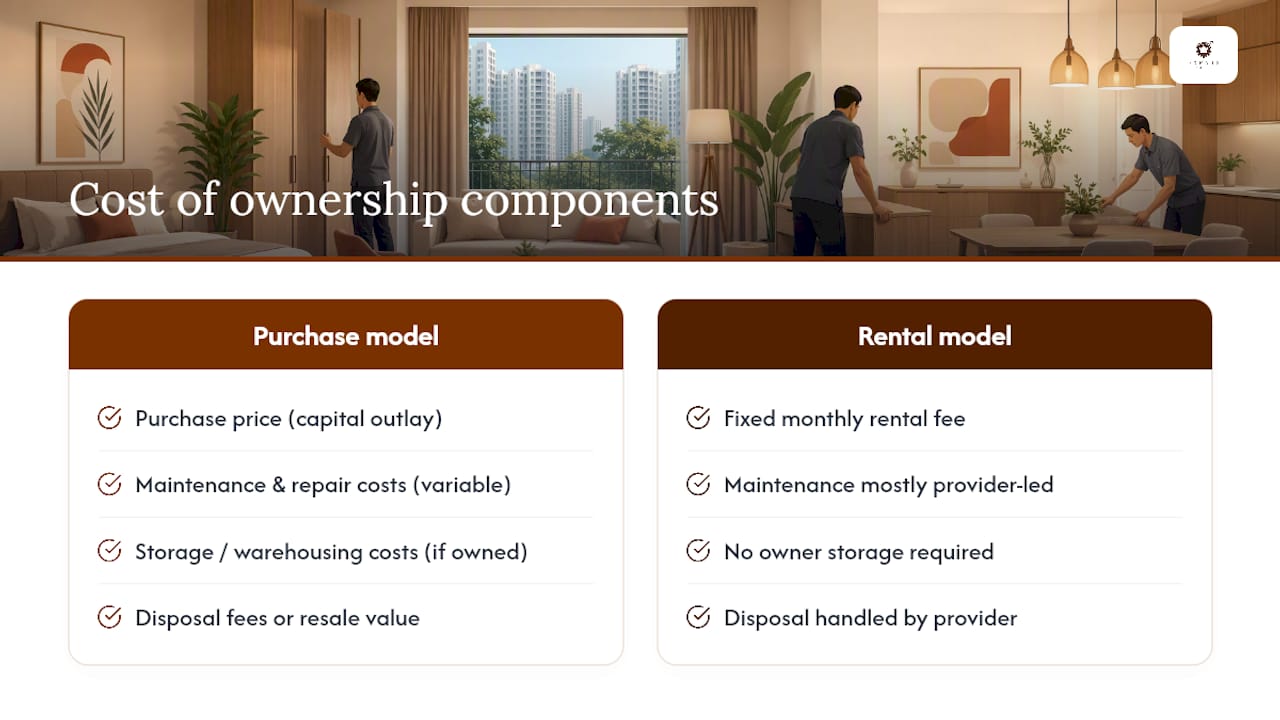
Rental changes this calculation by converting most of that uncertainty into a fixed, predictable monthly cost. You are not carrying the risk of a locker hinge failing in year four, and you are not holding capital in an asset that depreciates the moment it is unpacked. For projects with known headcount but an uncertain contract length, that predictability often outweighs the marginal cost difference between renting and owning outright. Budget holders should also factor in the administrative cost of managing purchase logistics (sourcing, storage, disposal) against the simpler line-item cost of a rental agreement, since staff time spent chasing suppliers rarely appears on a spreadsheet but is real all the same.
Authoritative note for procurement teams
We think procurement teams get the best results by prioritising standardisation and logistics over chasing the cheapest single item. Document handover condition with photos, and keep warranty terms on file from day one.
How Expats Partner supports staff accommodation projects
Furnishing multiple units on a deadline, with headcount that might grow or shrink next quarter, is exactly the scenario where flexible rental earns its keep. Expats Partner provides furniture rental packages across Singapore built for this kind of variability, with real inventory, clear pricing, and delivery, installation and collection handled under one agreement rather than five separate contracts.
If you are comparing purchase quotes against a rental option for a corporate housing project, our corporate housing furniture rental page sets out package options and typical timelines. For projects with a tighter runway or uncertain lease length, the Singapore short term furniture rental service is built for fast turnaround without locking you into a long contract. Reach out with your room count and target move-in date, and we will put together a quote you can weigh directly against a purchase brief.
FAQ
What furniture is essential for staff accommodation?
Bedroom sleeping solutions, secure lockable storage, and durable dining or work furniture that withstands frequent cleaning form the core categories every brief should cover.
Is it better to buy or rent furniture for staff housing?
Rental suits projects with uncertain headcount or contract length because it converts capital risk into a predictable operating cost; purchase suits long, stable occupancy with low turnover.
How long should staff accommodation furniture last?
Steel bed frames and lockers typically last 7 to 10 years under daily use when specified with powder-coated finishes and standardised hardware.
What should a furniture rental contract include?
Look for a single SLA covering delivery, installation, repair, replacement and collection, plus clear terms on inventory availability and damage recourse. Expats Partner structures its packages this way for corporate housing projects.
How do I compare furniture suppliers fairly?
Score each bid on the same dimensions: warranty length, safety certification, in-stock availability, delivery lead time, and scalability, using a fixed weighting so results are comparable across suppliers.