
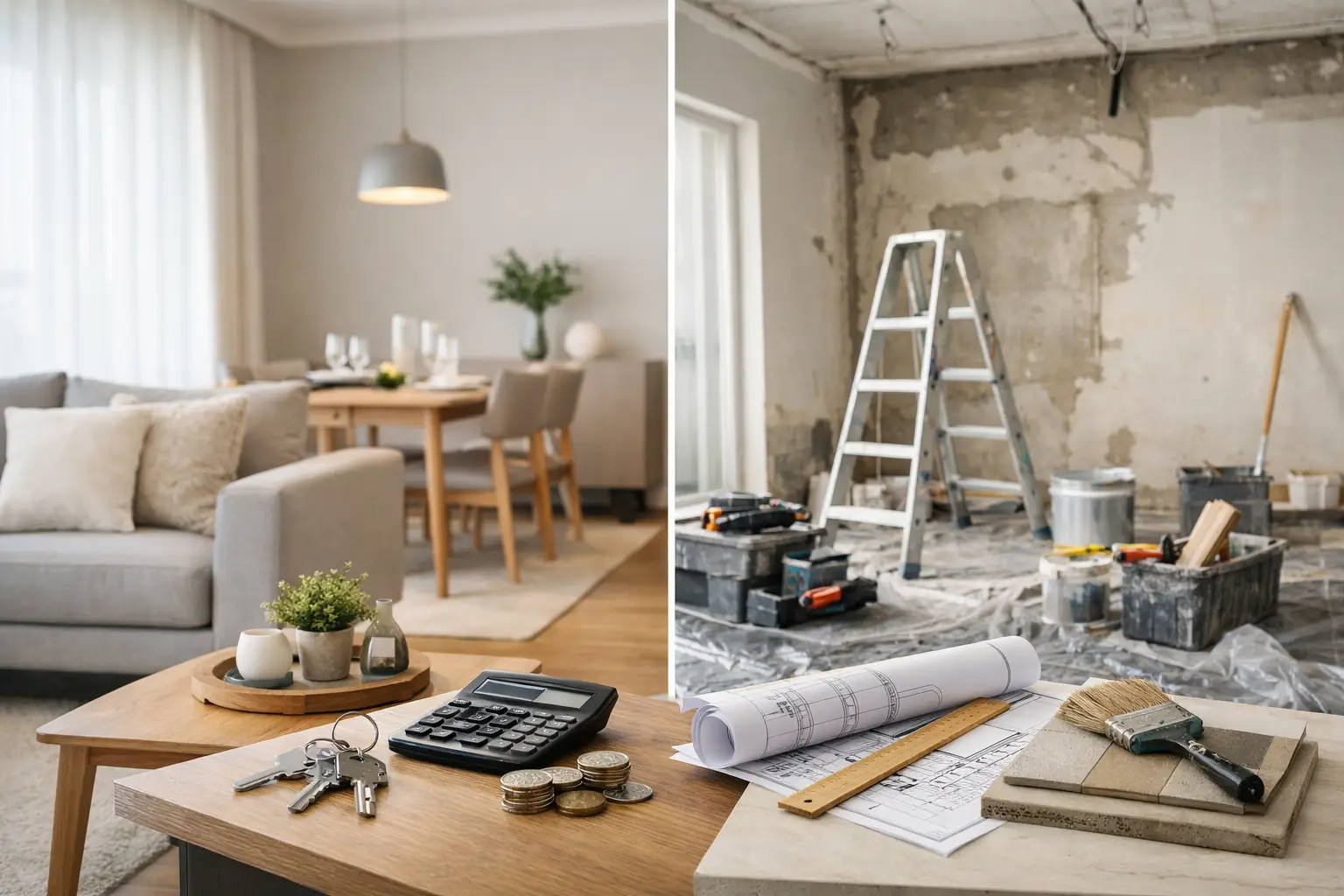
A seller spends $40,000 updating a kitchen, only to find buyers still calling the flat “hard to picture”. Another owner rents furniture, styles the same size property in a few days, and suddenly enquiries pick up. That is the real question behind staging vs renovation costs – not simply which costs less, but which improves perception fast enough to influence viewing interest and offers.
For agents, landlords and homeowners, the answer is rarely absolute. Some properties need genuine remedial work before they can be marketed well. Others are structurally sound but underperform because they feel empty, dated or unclear in photos. When presentation is the real problem, staging can often achieve more than renovation at a fraction of the outlay.
Understanding staging vs renovation costs
Staging and renovation serve different purposes, so their costs should never be judged as if they are interchangeable line items.
Home staging is about presentation. It uses furniture, layout, styling and visual cues to help buyers or tenants understand how a space lives. It addresses emotional response, scale, flow and first impressions. In practical terms, it helps a listing photograph better, view better and feel more move-in ready.
Renovation is about changing the property itself. That might mean replacing flooring, redoing bathrooms, hacking walls, upgrading carpentry or modernising finishes. Renovation can improve condition and function, but it usually comes with higher spend, more coordination and longer timelines.
So when people compare staging vs renovation costs, they are often really comparing two very different goals. One improves marketability. The other alters the asset. Sometimes you need both, but many sellers and landlords only need one to get a stronger result.
Where staging usually makes more financial sense
If a home is clean, well maintained and broadly neutral, staging tends to be the more efficient spend. Empty properties are the clearest example. A vacant unit may technically be ready, but online it often feels smaller, colder and harder to interpret. Buyers scroll quickly. If the photos do not help them understand the rooms, they move on.
Staging solves that problem without committing the owner to major works. A well-furnished living area shows proportion. A dining setup suggests lifestyle. A bedroom gives scale to a room that might otherwise look awkward. These details matter because most prospects decide whether to book a viewing before they ever step through the door.
For rental listings, staging can be especially effective when the target audience is expats, relocating professionals or corporate housing decision-makers. They are often assessing multiple options quickly and looking for homes that already feel practical and settled. A staged property reduces uncertainty.
This is also where furniture rental becomes commercially sensible. Instead of buying furnishings outright for a short marketing period, agents and owners can prepare the property quickly with less capital tied up. That keeps the focus on performance rather than ownership.
When renovation is worth the cost
There are cases where staging will not solve the underlying issue. If the flooring is badly damaged, the kitchen is visibly failing, walls are stained, lighting is poor or bathrooms feel neglected, buyers may see the property as a project rather than an opportunity. In those cases, renovation can protect value or widen the pool of interested parties.
Renovation is also worth considering when the condition of the home is so dated that it affects financing, compliance or buyer confidence. A fresh coat of paint and smart furniture cannot disguise major wear, outdated fixtures or practical defects for long. Viewers notice.
The trade-off is time and risk. Renovation budgets have a habit of expanding. Material choices, contractor delays and variation orders can shift the economics quickly. More importantly, not every renovation pound or dollar spent is recognised by the market. Owners often renovate to personal taste, but buyers assess through the lens of location, price and convenience.
That is why a selective approach usually works better than a full overhaul. Fix what genuinely weakens the property, then stage the rest so the improvements are seen in the best possible light.
The hidden costs people forget to include
The headline spend is only part of the equation. Renovation often carries indirect costs that affect the real return.
Vacancy is one of the biggest. If a property sits off market for several extra weeks while works are completed, there is a financial cost to that delay. For landlords, that may mean lost rent. For sellers, it may mean missing a favourable window of buyer demand.
There is also management time. Renovation involves decisions, site visits, contractor coordination, defect checks and handover issues. For owners based overseas or agents handling multiple listings, that operational load matters. Staging is typically far lighter. Once the scope is agreed, installation is faster and less disruptive.
Then there is the question of flexibility. Renovation is fixed. If the market shifts or your target audience changes, you cannot easily adjust a built-in solution. Staging is adaptable. The visual direction can be aligned to a buyer profile, rental tier or property type without permanently changing the home.
Staging vs renovation costs for different property scenarios
A near-new condo that feels bland and empty is a classic staging case. The surfaces are acceptable, the layout is fine, but the listing lacks warmth and scale. Spending heavily on renovation here is usually hard to justify. Styling the property well is often enough to lift perceived value.
An older landed home with tired bathrooms and visibly worn joinery is different. If buyers are likely to mentally deduct large repair costs, selective renovation may be necessary. Even then, it rarely makes sense to stop at the works. Once the home is improved, staging helps communicate the result clearly.
For developer units, show flats and sales galleries, staging often provides better control over the sales experience than renovation because the emphasis is on aspiration and usability. Buyers need help reading space. The furnishing plan does that quickly.
For short-term corporate housing or relocation setups, renovation is usually the wrong tool unless there is a serious issue with the property. Speed, flexibility and minimal coordination are usually the priorities. Furnishing and styling answer those needs more directly.
How to decide what your property actually needs
Start by asking a blunt question: is the property underperforming because of condition, or because of presentation?
If viewers comment on damage, age, smell, poor lighting or obvious defects, the answer is probably condition. If they say the rooms feel small, empty, awkward or hard to imagine living in, the answer is more likely presentation.
Next, consider your timeline. If the property needs to go live quickly, staging has a clear advantage. It can usually be arranged faster than construction work and with fewer moving parts. That speed is not just convenient. It can directly affect how long a listing sits without serious interest.
Then look at your target market. Higher-end buyers and tenants often expect both good condition and strong presentation. Mid-market listings may benefit more from smart styling than expensive upgrades, especially if neighbouring properties set the benchmark. The right decision depends on what your audience compares you against.
A sensible middle path is often best: complete essential repairs, refresh obvious visual issues such as paint or lighting, then stage the property to improve impact. That avoids overspending on renovation while still dealing with the details that undermine confidence.
Why presentation often changes the outcome faster
Property decisions are not made from spreadsheets alone. They are made from photos, first impressions and whether someone can imagine themselves living there. That is why presentation has outsized influence.
A staged home feels easier to understand. It photographs with purpose. It softens awkward corners, clarifies room use and helps buyers or tenants emotionally settle into the idea of the property. Renovation may improve the shell, but staging helps people connect with it.
For many listings, that connection is what turns passive browsing into an enquiry, and an enquiry into a serious viewing. From a commercial perspective, that is often the more useful return.
If you are weighing staging vs renovation costs, the smartest decision is usually not the biggest spend. It is the one that solves the actual barrier to interest.
For properties that are structurally sound but visually underperforming, staging is often the faster, lighter and more effective route. For homes with clear condition issues, renovation may be necessary – but usually in a focused way, not as an open-ended project. The strongest results often come from knowing where to stop building and start presenting.
At Expats Partner, that is where a practical staging plan can make all the difference.
Contact us now at: Kevin Chang – 80119753 sales@expatspartner.com Sales Specialist