
A proven strategy to sell your property faster combines competitive pricing, professional staging, and immediate, broad market exposure from the first day of listing. These three levers directly influence buyer behaviour, search visibility, and offer timelines. According to Opendoor, buyer interest peaks sharply in the first seven to ten days after a property goes live, then declines steadily. Miss that window and you are fighting an uphill battle. The National Association of Realtors (NAR) and Redfin both confirm that sellers who price realistically, present well, and market aggressively from the outset consistently outperform those who test the market or delay preparation.
![Hero image of a beautifully staged living room ready for property viewings]
How does pricing strategy affect how fast a property sells?
Pricing is the single most powerful lever in any fast property sale strategy. Set the price correctly and buyers come to you. Set it too high and your listing stagnates while comparable homes close around you.

The most effective tactic is to price 1 to 3% below recent comparable sales. Opendoor data links this approach directly to higher initial buyer traffic and multiple showings within the first seven to ten days. This matters because most buyers set automated price alerts on portals, and a slightly lower entry point places your listing in front of a broader pool of active searchers.
When multiple buyers compete early, negotiation dynamics shift in the seller’s favour. Competing offers frequently push the final sale price above comparable homes, meaning the initial discount is recovered and sometimes exceeded. This is the counterintuitive reality that experienced agents understand but many sellers resist.
Redfin reports the typical home in February 2026 took 66 days to go under contract, the slowest winter pace in a decade. That figure tells you the market is not forgiving of overpriced listings. Sellers who price realistically compress that timeline considerably.
Pro Tip: Avoid the “test the market” approach entirely. A listing that sits for three or more weeks accumulates a stigma that forces deeper price reductions later. Price it right from day one.
What presentation techniques help sell a home more quickly?
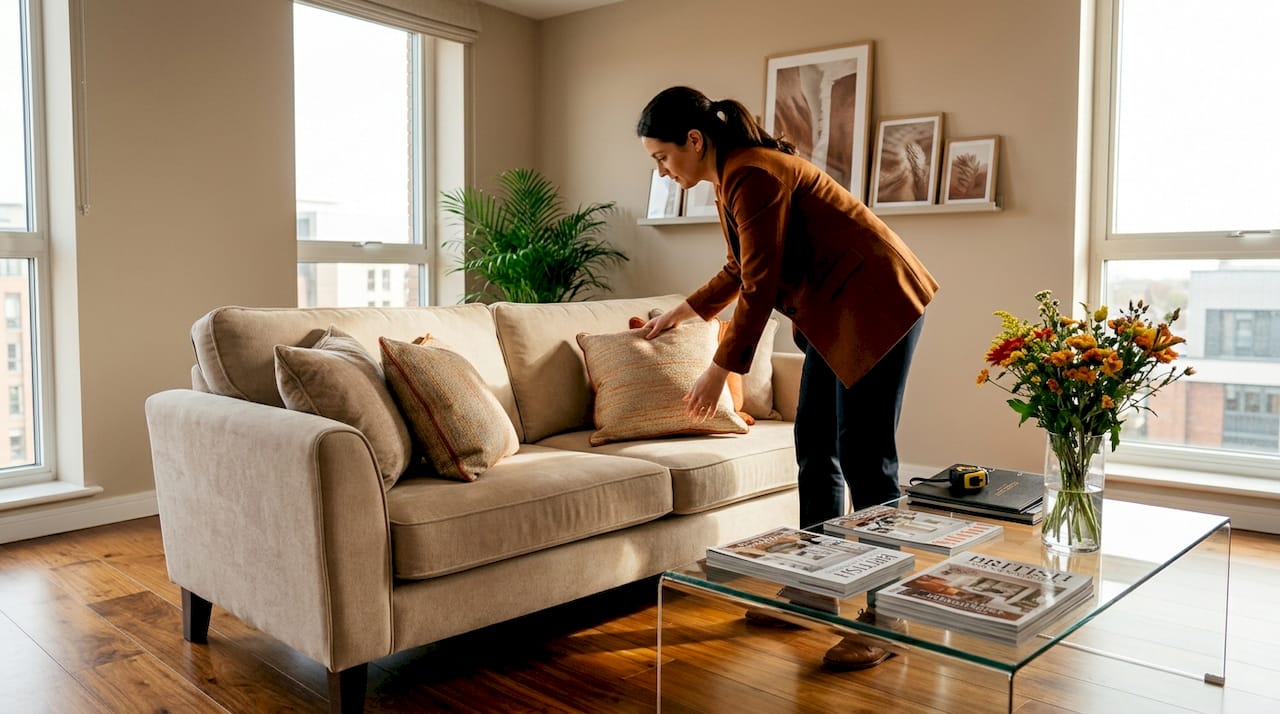
Home staging is defined as the professional practice of decluttering, depersonalising, and styling a property so that buyers can easily picture themselves living there. It is not about expensive renovation. It is about creating a calm, neutral backdrop that removes distraction and builds emotional connection.
The data on staging is clear. NAR’s 2025 Profile of Home Staging found that 83% of buyer agents say staging helps buyers visualise a property, with many reporting final offers 1 to 10% higher than comparable unstaged homes. That uplift on a mid-range property represents a meaningful return on a modest staging investment.
Photography compounds the effect of staging. Professional listing photos increase online views by 47% compared to smartphone images. More views translate directly to more showings, and more showings produce faster offers. Cutting corners on photography is one of the most common and costly mistakes sellers make.
For properties targeting remote or international buyers, digital presentation tools extend reach further still. Video walkthroughs generate over 400% more enquiries than static listings. 3D tours, drone photography, and short-form video for social media platforms each add a layer of accessibility that static photos cannot replicate.
Practical staging guidelines
- Remove personal photographs, excess furniture, and clutter from every room
- Use neutral colours on walls and soft furnishings to appeal to the widest range of buyers
- Arrange furniture to define each room’s purpose clearly and create a sense of space
- Address lighting: open curtains, replace dim bulbs, and add lamps where natural light is limited
- Pay close attention to kitchens and bathrooms, as these rooms carry disproportionate weight in buyer decisions
Pro Tip: Establish a pre-showing routine you can complete in under an hour: wipe surfaces, take out bins, open windows briefly, and set lighting. Consistency keeps the home viewing-ready without daily effort.
The relationship between staging and faster sales is well documented. If you want to understand why staged homes attract more offers, the evidence points consistently to buyer psychology and the ability to imagine occupying the space.
| Presentation element | Impact on sale speed |
|---|---|
| Professional staging | Buyers visualise faster; offers arrive sooner |
| Professional photography | 47% more online views; higher showing rates |
| Video walkthrough | Over 400% more enquiries from remote buyers |
| 3D tour or drone footage | Broader reach; attracts international and investor buyers |
How can you maximise market exposure to attract buyers quickly?
Broad, immediate market exposure is the third pillar of an effective fast-sale approach. A well-priced, beautifully staged home that nobody sees will not sell quickly. Distribution matters as much as the product itself.
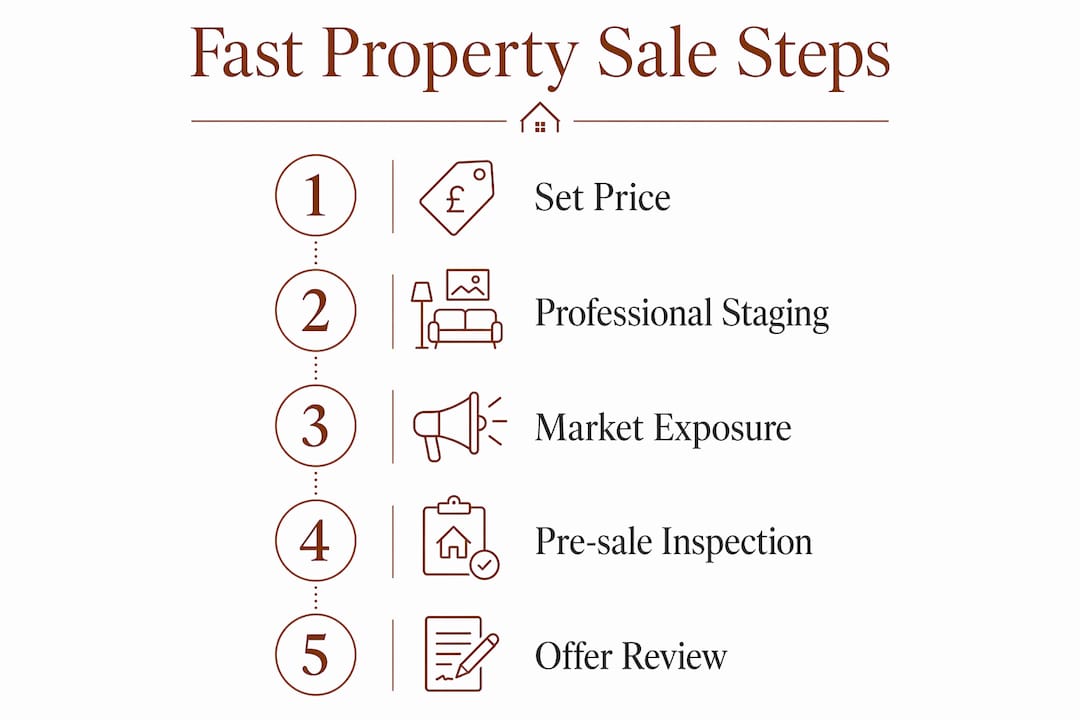
The most effective sequence is to launch with a “coming soon” pre-marketing phase of five to seven days before the official listing date. This builds anticipation among active buyers already watching the market. When the listing goes live, it enters with momentum rather than silence.
Once live, syndication across major property portals and social media channels is non-negotiable. Listing descriptions that lead with lifestyle and functional benefits rather than dry specifications generate significantly higher engagement. Buyers respond to how a home feels and functions, not just how many square metres it contains.
Showing flexibility is equally important. Here is a practical sequence to follow:
- Schedule an open house in the first weekend after listing to capture the peak interest window
- Enable a lockbox or digital access system so agents can show the property with minimal notice
- Accept weekday evening viewings to accommodate working buyers
- Prepare the home to show-ready standard before each viewing using a consistent checklist
- Follow up with agents within 24 hours of each showing to gather feedback and gauge interest
NAR’s pre-showing checklist covers 15 steps including cleanliness, lighting, odour neutralisation, and organisation, all achievable in under an hour for an occupied home. Sellers who follow this routine consistently report a better buyer experience and faster offer timelines.
Pro Tip: Rather than reducing your asking price to attract hesitant buyers, consider offering to cover a portion of closing costs. This preserves your headline price while giving buyers a tangible financial incentive to proceed.
Why do pre-sale inspections help you sell faster?
Pre-sale inspections are one of the most underused tools in a seller’s preparation plan, yet they directly reduce the risk of deal collapse and renegotiation. Experienced sellers treat them as risk management, not an optional extra.
NAR’s REALTOR® Confidence Index shows that deal fallout rates hover around 5%, with inspection surprises cited as a leading cause. A transaction that falls through after four to six weeks of negotiation costs the seller time, money, and market momentum. Restarting the sale process with a stigmatised listing is far more damaging than addressing issues upfront.
A pre-listing inspection identifies structural, electrical, plumbing, or cosmetic defects before buyers discover them. Sellers can then repair critical items, adjust pricing to reflect known issues transparently, or prepare clear disclosures that reduce buyer anxiety. This transparency signals confidence and reduces the likelihood of buyers using inspection findings as leverage to renegotiate aggressively.
- Repair high-priority defects such as roof condition, water ingress, and electrical safety before listing
- Obtain written quotes for any issues you choose not to repair, so buyers have accurate cost context
- Include the inspection report in your disclosure pack to demonstrate openness
- Address cosmetic issues such as cracked tiles, dripping taps, and peeling paint, as these create a disproportionately negative impression during viewings
“Preempting inspection or appraisal surprises by conducting a presale inspection can reduce fallout and speed closing.” — NAR Consumer Guide
Sellers who complete this process before listing report fewer renegotiations, cleaner contract periods, and faster completions. The upfront investment in time and modest repair costs is almost always recovered in a smoother, quicker transaction.
Cash offers, iBuyers, and investor sales: which is fastest?
For sellers who need to close quickly regardless of price, alternative fast-sale routes offer a different set of trade-offs. Understanding the differences helps you choose the right path for your situation.
Cash sales and iBuyer offers can close in as few as 14 days by removing mortgage approval and appraisal contingencies entirely. Opendoor, one of the most established iBuyer platforms, allows sellers to request an offer online, receive a cash price within days, and select a closing date that suits their timeline. Traditional investor purchases follow a similar process but typically involve direct negotiation rather than an algorithmic offer.
| Route | Typical timeline | Price outcome | Best suited for |
|---|---|---|---|
| Traditional listing | 30 to 90 days | Full market value | Sellers with time and a well-presented property |
| iBuyer (e.g. Opendoor) | 14 to 30 days | 5 to 15% below market | Sellers prioritising speed and certainty |
| Direct investor sale | 7 to 21 days | 10 to 20% below market | Properties needing significant work |
| Cash buyer via agent | 14 to 28 days | Near market value | Well-priced properties with strong demand |
The trade-off is price. iBuyer offers typically come in 5 to 15% below open market value, and when you factor in service fees and the absence of competing bids, the net proceeds are lower than a well-executed traditional sale. However, for sellers facing urgent timelines, property condition challenges, or a slow local market, the certainty of a cash close has genuine value.
Pro Tip: Always obtain at least two or three offers from different routes before committing. Calculate net proceeds after fees, commissions, and carrying costs for each option. The fastest route is not always the most financially sound one.
Key takeaways
Selling a property faster requires competitive pricing, professional presentation, and immediate broad market exposure working together from the first day of listing.
| Point | Details |
|---|---|
| Price competitively from day one | Pricing 1 to 3% below comparable sales generates early traffic and competing offers. |
| Stage and photograph professionally | NAR data shows staging lifts offers by 1 to 10% and professional photos increase views by 47%. |
| Launch with maximum exposure | Syndicate across portals, use video, and hold an open house in the first weekend. |
| Conduct a pre-sale inspection | Identifying defects upfront reduces the 5% deal fallout rate and speeds closing. |
| Evaluate fast-sale alternatives carefully | iBuyer and cash routes close in 14 days but typically yield 5 to 15% less than market value. |
What we have learned from working with sellers in Singapore
From our experience working alongside landlords, expats, and property agents in Singapore, the sellers who move fastest share one consistent habit: they prepare before they list, not after the first viewing disappoints.
The most common misconception we encounter is that a higher asking price leaves room to negotiate. In practice, overpriced listings attract fewer viewings, receive lower-quality offers, and ultimately sell for less than properties priced correctly from the start. The negotiation room sellers think they are creating is actually costing them time and money.
Presentation is where we see the sharpest difference between properties that sell in two weeks and those that linger for two months. An empty or poorly furnished property asks buyers to do imaginative work that most are unwilling to do. A well-staged home, with furniture scaled correctly to the space and neutral styling throughout, removes that friction entirely. Buyers make decisions faster when the home already feels liveable.
We also notice that sellers underestimate the value of responsiveness during the sale process. Agents who cannot get access to a property quickly, or who receive slow feedback responses, move their buyers on to the next listing. Flexibility and communication are free tools that many sellers leave unused.
The balance between speed and realistic market expectations matters too. In a market where homes are taking longer to sell, compressing your time-to-ready and reducing friction at every stage is the most reliable path to a faster outcome. Speed is not guaranteed by any single tactic. It is the result of several well-executed decisions working together.
— Expats Partner
How professional staging can support your sale
If you are preparing a property for sale and want to present it at its best without the cost and commitment of buying furniture, professional home staging and furniture rental offer a practical solution.
Expats Partner provides home staging and furniture rental services in Singapore tailored to landlords, expats, and property agents who need a property to look its best quickly. From short-term furniture rental packages to fully styled staging solutions, the service removes the logistical burden from sellers and delivers a viewing-ready home with real inventory, reliable delivery, and clear pricing. If you want to understand how staging shortens listing time in practice, Expats Partner’s team can walk you through the options suited to your property and timeline.
FAQ
What is the fastest way to sell a property?
The fastest route to a completed sale is a combination of competitive pricing, professional staging, and immediate market exposure on day one of listing. For sellers who need to close within two to four weeks, cash buyers or iBuyer platforms such as Opendoor can complete transactions in as few as 14 days.
How much does staging actually help sell a property?
NAR research shows that 83% of buyer agents say staging helps buyers visualise a property, with final offers frequently coming in 1 to 10% higher than unstaged comparable homes. Staged properties also tend to receive offers more quickly because buyers make decisions with greater confidence.
Should I reduce my price or offer buyer incentives?
Offering to cover a portion of closing costs is generally more effective than a headline price reduction, as it preserves your listed value while giving buyers a direct financial benefit. Price reductions, particularly after a listing has been live for several weeks, can signal desperation and attract lower offers.
What is a pre-sale inspection and why does it matter?
A pre-sale inspection is a professional assessment of a property’s condition conducted before listing, allowing sellers to identify and address defects upfront. NAR data shows deal fallout rates sit around 5%, with inspection surprises as a leading cause. Addressing issues before listing reduces renegotiation risk and speeds the closing process.
When does an iBuyer or cash sale make sense?
An iBuyer or direct cash sale makes sense when your timeline is urgent, your property requires significant repairs, or the local market is moving slowly. These routes typically yield 5 to 15% below open market value, so sellers should calculate net proceeds carefully before committing.
Recommended
- Why Smart Sellers Use Home Staging to Sell Faster, Add Value, and Stay Stress-Free – Expats Partner
- Short-Term vs. Long-Term Staging: What’s Best for Your Property Listing? – Expats Partner
- How staging shortens listing time in Singapore
- Sell Your Home Faster with Professional Staging: A Simple Way to Boost Value and Ease Stress – Expats Partner