
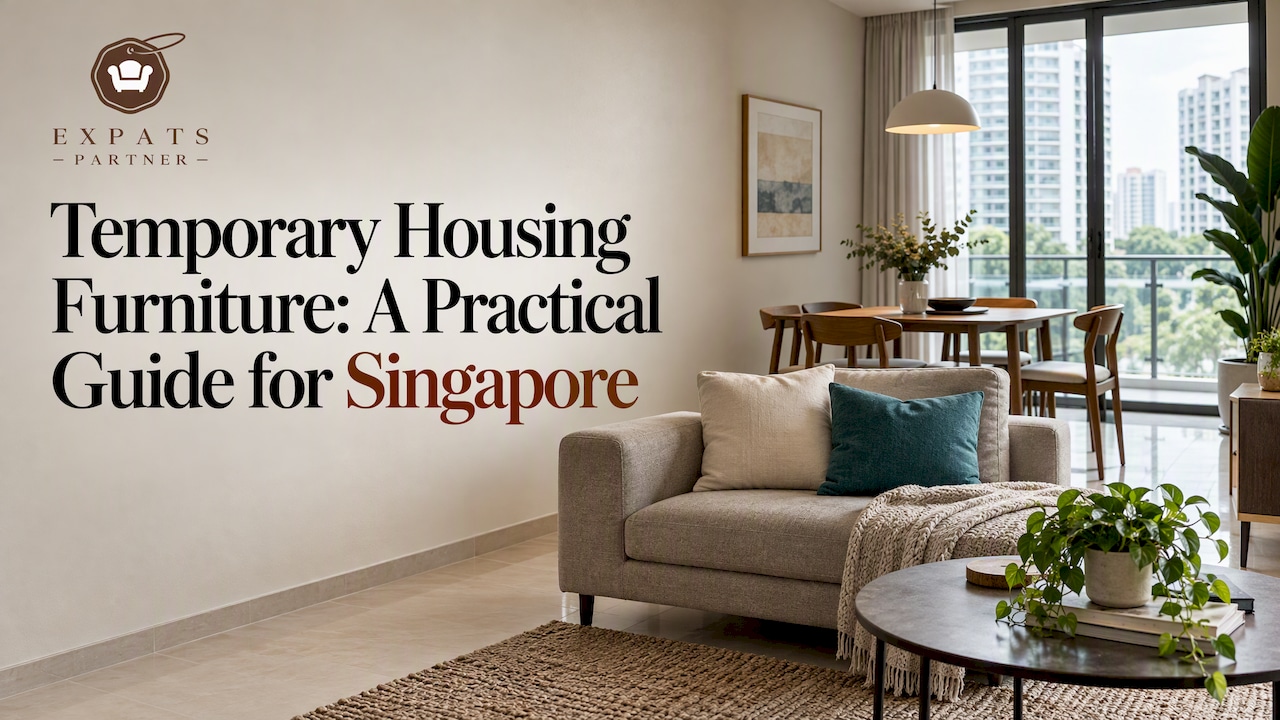
For temporary housing in Singapore, rent the furniture rather than buy it. Furnish only the rooms you will use from the first night, and book delivery to match your real move-in date. A short stay rarely justifies buying a sofa, bed and dining set that you will have to sell or dispose of in a few months. This guide covers the lease rules that decide how short “temporary” can be, what most rentals actually include, a room-by-room checklist, and how to line up delivery and collection so you are not sleeping on the floor.
TL;DR
- Private homes in Singapore cannot be let for less than three consecutive months, and HDB flats not for less than six months. Plan your furniture around that floor, not around a few weeks.
- Many rentals are only partly furnished, often with white goods but no beds or sofas. Confirm the inventory before you sign.
- Furnish in order of need: bed, work surface, seating, dining, then décor. Anything past that can wait for week two.
- Rent for the term you will stay, photograph everything at arrival, and agree the collection date in writing.
- Our packages start at S$178 per month for a one-bedroom apartment, so you can compare renting with buying on real numbers.
Table of Contents
- What “temporary” means under Singapore’s rental rules
- What temporary housing usually includes, and what it does not
- Rent, buy or borrow: how to decide
- The checklist: furnish in this order
- How much will it cost?
- Timing: delivery, storage and the gap between leases
- Protect your deposit: document the condition at move-in
- Choosing furniture that suits a Singapore home
- For landlords, agents and companies
- How we help
- Frequently asked questions
What “temporary” means under Singapore’s rental rules
Before choosing furniture, check how long you are allowed to stay. Singapore sets minimum stay periods to stop homes being used as de facto hotels. For private residential property such as condominiums and landed homes, the minimum is three consecutive months. For HDB flats, it is six months. Serviced apartments are the regulated exception, and they operate with a shorter minimum stay of seven days.
The practical consequence is that “temporary housing” in Singapore usually means one of four things:
- A private home on a three- to twelve-month lease, often unfurnished or partly furnished.
- An HDB flat on a minimum six-month term, which suits people who will be in Singapore at least half a year.
- A serviced apartment, which is furnished but priced for convenience rather than for a long stay.
- A co-living room, where the operator furnishes the unit and you rent a bedroom with bundled utilities.
If you are a landlord or agent, note that the minimum periods apply to the person occupying the unit, and the authorities do enforce them. Check the current wording on the URA and HDB websites before you advertise a short let. If you are a tenant, ask the landlord or agent to confirm in writing that the arrangement complies with the rules, because a tenancy that breaks them can leave you without a home at short notice.
A three-month minimum is also a useful planning number for furniture. It is long enough that living out of suitcases and borrowing a mattress becomes miserable, and short enough that buying a full set makes little financial sense.
What temporary housing usually includes, and what it does not
The word “furnished” covers a wide range in Singapore. Many whole-unit condominium rentals are described as partially furnished, which typically means the kitchen and utility appliances are there, such as a fridge, washing machine and air-conditioning, but the rooms themselves are bare or hold only a few pieces. New arrivals are then left to source beds, sofas and tables immediately.
Fully furnished units tend to come with a bed and wardrobe in each bedroom, a sofa, a dining set and basic appliances. The quality varies a lot, and landlords who furnish to a good standard often charge a premium on rent for it. Serviced apartments and co-living spaces go further and add linen, cookware and cleaning.
Rather than trusting the label, ask for an itemised inventory before you sign. Three questions settle most surprises:
- Which beds are included, and are mattresses part of the inventory or only frames?
- Is there any seating or table beyond the kitchen, and any desk?
- Are the air-conditioners and the washer working and serviced, and who pays if they fail?
The gaps you find are exactly what a rental package should fill.
Rent, buy or borrow: how to decide
The decision is mostly about how long you will stay and what happens to the furniture afterwards.
| Situation | Best route | Why |
|---|---|---|
| Staying 3 to 12 months | Rent a package | No resale effort, no disposal, one delivery and one collection |
| Staying 1 to 3 years, moving on afterwards | Rent, or buy only a few durable pieces | Rental avoids the cost of selling or shipping when you leave |
| Settling in Singapore long term | Buy what you love, rent the gap | You can rent for the first weeks while you shop properly |
| Waiting for a lease to start or end | Rent a small set | Covers the gap without committing to anything |
| Landlord preparing a unit | Rent or stage | Keeps capital free and the unit viewing-ready |
Buying cheap and reselling sounds sensible, but it costs time. You need to collect, assemble, advertise, meet buyers and often discount heavily. Disposal of large items is its own task in a high-rise block. Renting turns all of this into a monthly figure and a collection date.
Borrowing from colleagues or friends works for a week or two. Beyond that, comfort and reliability matter, particularly if you are working from home or have children.
The checklist: furnish in this order
If you try to furnish everything on day one, you will overspend on things you do not need. Work through the list in order of how soon you will miss each item.
Day one: the essentials
- A bed and mattress for every sleeper. Sleep after a long flight and a humid first day is the single most valuable purchase or rental.
- Wardrobe or clothing storage. If the unit has none, a rental wardrobe or open rack is easier than living from suitcases for months.
- Working air-conditioning and a fan. Confirm this at viewing rather than assuming. Most temporary homes in Singapore rely on it daily.
- Linen, towels and basic kitchenware. These are often outside furniture packages, so plan them separately.
Week one: work and daily living
- A desk and a proper chair. Many expatriates start work remotely while waiting for an office or a pass, so this is not optional.
- A sofa or two armchairs. Seating changes how a rented flat feels more than any other item.
- A dining table with chairs. Even a small table is useful when you are cooking at home for the first time.
- Lighting. Overhead light in some flats is basic, so a floor lamp or table lamps make rooms comfortable for the evening.
When you have settled: comfort and finish
- Bedside tables and a TV console.
- Barstools if the kitchen has a counter.
- Rugs, plants and décor. Florals and greenery make a rented room feel less temporary, and they are easy to return.
- Extra appliances that the unit lacks, such as a second fridge or a dryer for families.
For families
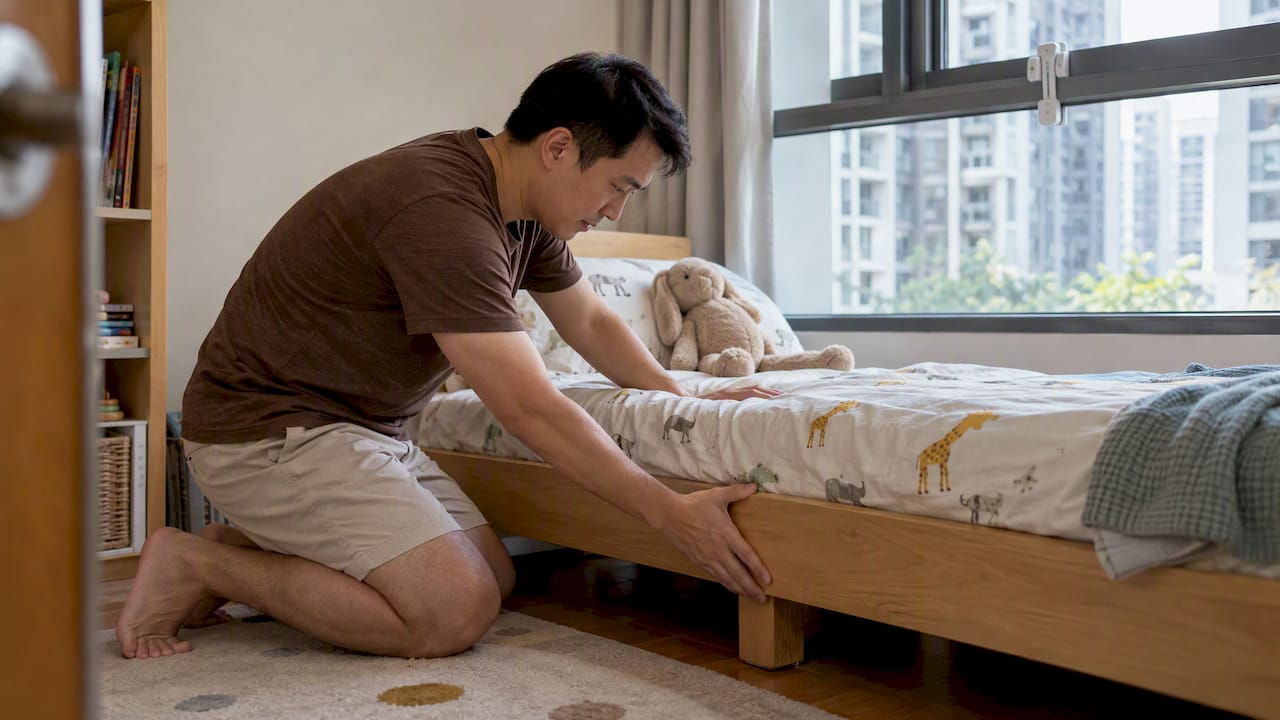
Children change the checklist. Check that bedroom furniture suits their age, that beds are stable, and that windows and balconies are safe in the home itself. If you are arriving in time for the school year, deliver before the family lands rather than after, so the first night is not spent assembling anything.
How much will it cost?
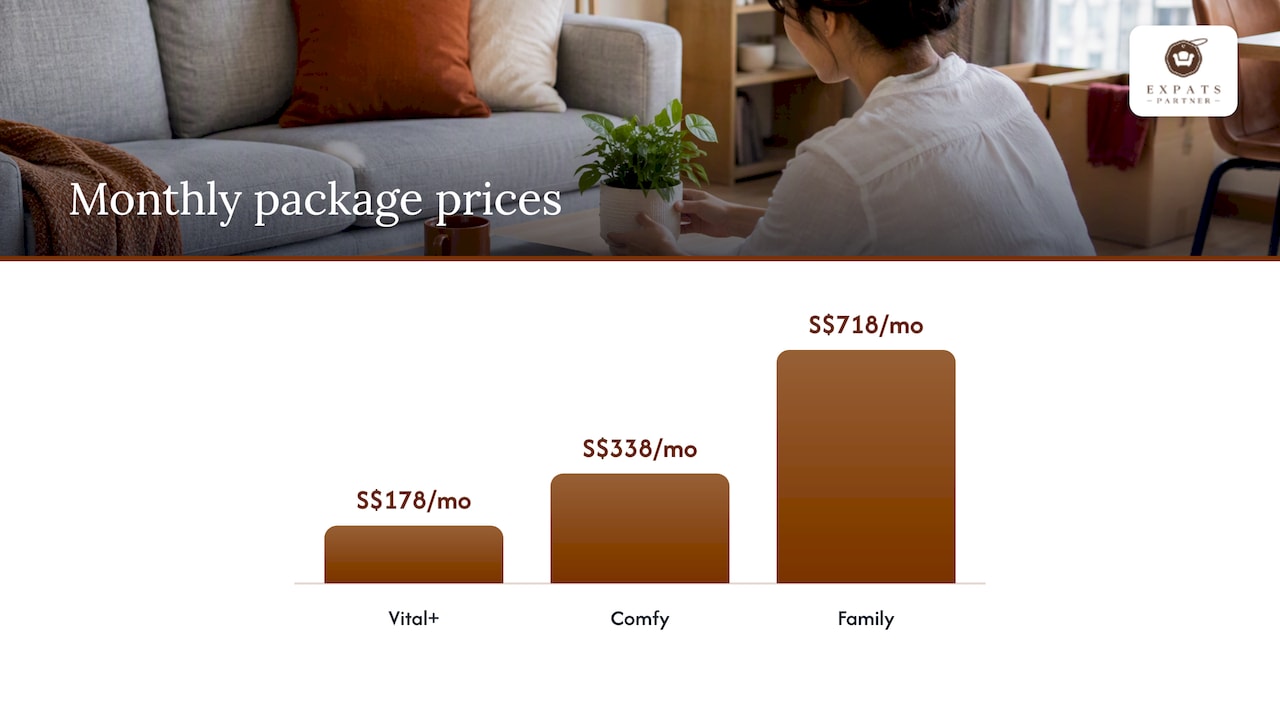
Costs depend on the size of the home and how long you rent. As published on our site, our full-home packages are priced per month:
| Package | Home size | Price |
|---|---|---|
| Vital+ | 1 bedroom apartment | S$178 per month |
| Comfy | 1 bedroom apartment | S$338 per month |
| Family | 2 bedroom apartment | S$718 per month |
The three packages are designed for different levels of furnishing, so look at what each contains on the packages page before you compare. Other items, such as individual beds, sofas, chairs, dining tables, lamps, plants and appliances, can be added on request, and pricing for them depends on the item and rental period.
Set this against the alternatives. Buying a full set for a short stay means paying the whole amount upfront, then recovering only a fraction by resale. A landlord furnishing a three-bedroom home for tenants may budget a five-figure sum and expect to recover it over several years, which only works when the unit stays let. As a tenant on a short assignment, you rarely have that horizon.
If your company is paying, it also helps to know that rental is a monthly operating cost rather than an asset to track and dispose of. Ask your HR or relocation team how the housing allowance treats furniture before you commit.
Timing: delivery, storage and the gap between leases
The most common problem in expatriate moves is a mismatch of dates. Your container arrives before the flat is ready, or your old lease ends before the new one starts. There are three practical ways to handle it.
- Rent a small set for the gap. A bed, a table and a few chairs cover a few weeks without disturbing anything else.
- Keep your shipment in storage until the permanent home is ready, and rent furniture in the meantime. This keeps your own belongings from sitting in a flat you are about to leave.
- Sequence delivery and collection. Ask for delivery the day before you arrive, and a collection date that follows your move-out inspection rather than precedes it.
When you book, confirm these points:
- Whether delivery includes carrying items to the unit and assembling them.
- The lift booking and any building rules for moves, since many condominiums limit move-in hours and require a lift reservation.
- The collection window, and what happens if your departure date moves.
- Whether you can extend the rental if your stay runs longer.
For more on how short rentals work in practice, our guide to short-term furniture rental in Singapore walks through the process in more detail, and the page on relocation furniture packages explains how packages are put together for moves.
Protect your deposit: document the condition at move-in
A security deposit in Singapore is commonly one to two months’ rent, and disputes over it often come down to what was in the unit and what condition it was in. Whether the furniture belongs to the landlord or a rental company, protect yourself the same way.
- Ask for an inventory and condition report. It should list every item and note existing marks. Both parties should sign it, and keep a copy each.
- Return your comments quickly. Do not leave it for later. Agree a time limit with the landlord in the tenancy agreement, and many tenants aim for the first few weeks.
- Take dated photos on arrival. Photograph each room, the inside of wardrobes, the mattress edges, the appliances and any marks on walls and floors.
- Keep rental furniture separate in the paperwork. If you are renting from a supplier, the rental agreement should list items and condition on delivery, and the landlord’s inventory should not count them.
- Report faults in writing, for example a broken air-conditioner, on the day you find them.
If a dispute cannot be settled between you, ask the relevant authority or a legal adviser about your options. For tenancy matters, claims that fit within the limits may be brought to the Small Claims Tribunal. Check the current limits and eligibility on the official site before you rely on it.
Choosing furniture that suits a Singapore home
Singapore homes are compact, humid and often reached by lifts with strict dimensions, which affects what works in a rental.
- Scale matters. A large sectional is rarely suitable for a one-bedroom condo or an HDB living room. A two-seater sofa and a small coffee table keep walkways clear.
- Pick materials for the climate. Solid surfaces that wipe clean and fabrics that dry quickly cope better with humidity than delicate finishes.
- Multi-function pieces earn their place. A dining table that doubles as a desk works well in a small flat.
- Keep it neutral. A calm palette makes it easier to add your own accessories, and it suits landlords who want the home to stay appealing at the end of the lease.
If you are also thinking about how to refresh an HDB flat more permanently, an interior design guide can help you plan the longer term, but for a stay of a year or less, the aim is comfort without alteration. Avoid anything that needs drilling, painting or other changes that you would need to reverse.
For landlords, agents and companies
The same logic applies to people providing temporary housing rather than living in it.
Landlords who let to expatriates on shorter terms often find that move-in-ready units get enquiries faster than bare ones. Furnishing through rental keeps the capital free, and lets you refresh the look between tenancies without storing old pieces. If you are preparing to sell or relist, our work on home staging follows the same principle, and our article on why HDB and private property staging differ explains how the approach changes by property type.
Agents can offer a furnished package as a way to close a deal with a tenant who arrives with nothing. It shortens the decision and removes a common objection.
Corporate relocation and HR teams place staff in temporary housing for assignments, and need consistency across several units. Our page on furniture rental for staff accommodation sets out what to look for when you furnish accommodation for more than one employee, and our expat furniture rental overview covers lease options.
How we help
We are a Singapore furniture rental and staging specialist. For temporary housing, we offer short- and long-term rental, full-home packages sized for one- and two-bedroom apartments, room-specific furniture, appliances and accessories, and coordinated delivery, setup and collection. Our stock is real inventory, so what you see on the site is what we deliver.
If you are planning a move, start with the packages and tell us your arrival date, home size and expected length of stay. If your needs are more specific, such as several units for a company or a property to stage, contact us through our main site and we will suggest a setup that suits the space.
Frequently asked questions
Can I rent a home in Singapore for just one month?
Generally not in a private home or an HDB flat. Private residential property has a three-month minimum stay, and HDB flats have a six-month minimum. Serviced apartments are the exception, with a seven-day minimum, so they suit very short stays but cost more per night than a standard lease.
What furniture do I need for a three-month stay?
Start with a bed and mattress for each person, a desk and chair if you work from home, a sofa and a small dining set. Add lamps and décor only if you feel the space needs it. Confirm which white goods the unit already has, because many rentals include the fridge, washer and air-conditioning but little else.
Is it cheaper to rent or buy furniture for temporary housing?
For stays of up to a year or two, renting is usually simpler and avoids the cost of reselling or disposal. Buying becomes more reasonable if you plan to stay for several years. Our packages start at S$178 per month for a one-bedroom apartment, which gives you a concrete figure to compare against your own shopping list.
How do I avoid deposit disputes over furniture?
Get a signed inventory and condition report, and take dated photos of every room when you arrive. Raise any faults in writing straight away. Keep rental furniture documented separately from the landlord’s own items.
Can I extend or end the furniture rental early?
It depends on the rental agreement, so agree the terms before you sign. Ask about extension options and notice periods at booking, especially if your assignment dates could change.