
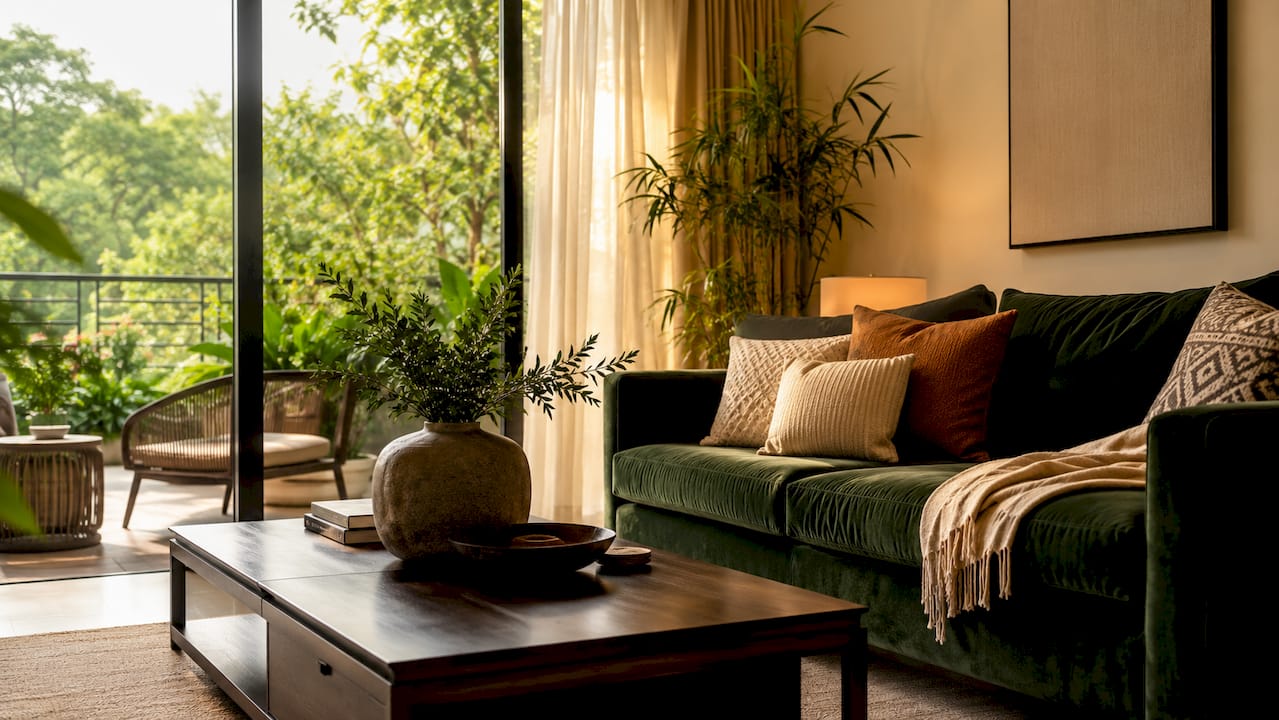
Professional staging is defined as the deliberate furnishing and presentation of a property to maximise its appeal to target buyers, and in the luxury segment, it is the single most effective tool for commanding a price premium and reducing time on market. The role of staging in luxury property sales goes well beyond decoration. It positions a home as a finished lifestyle product that meets the precise expectations of high-net-worth buyers. Staged luxury homes sell up to 73% faster and achieve 5–10% higher prices than unstaged equivalents. For agents and sellers in Singapore’s competitive condominium and landed property market, that difference is not marginal. It is the gap between a listing that lingers and one that closes.
How does staging influence buyer perception in luxury home sales?
Staging clarifies scale, layout, and lifestyle potential in ways that empty rooms simply cannot. Luxury buyers are highly visual and expectation-driven. They arrive at a viewing with a clear picture of how a premium home should feel, and an empty or poorly furnished space forces them to fill in the blanks themselves. Most will not bother.
A well-staged home removes that hesitation. It shows buyers exactly how a 4-metre living room accommodates a full sofa arrangement, how the primary bedroom reads as a calm retreat, and how the kitchen functions as a social centrepiece. These are the emotional zones that drive purchase decisions in the luxury tier. When staging gets them right, buyers move from interest to offer with far less friction.
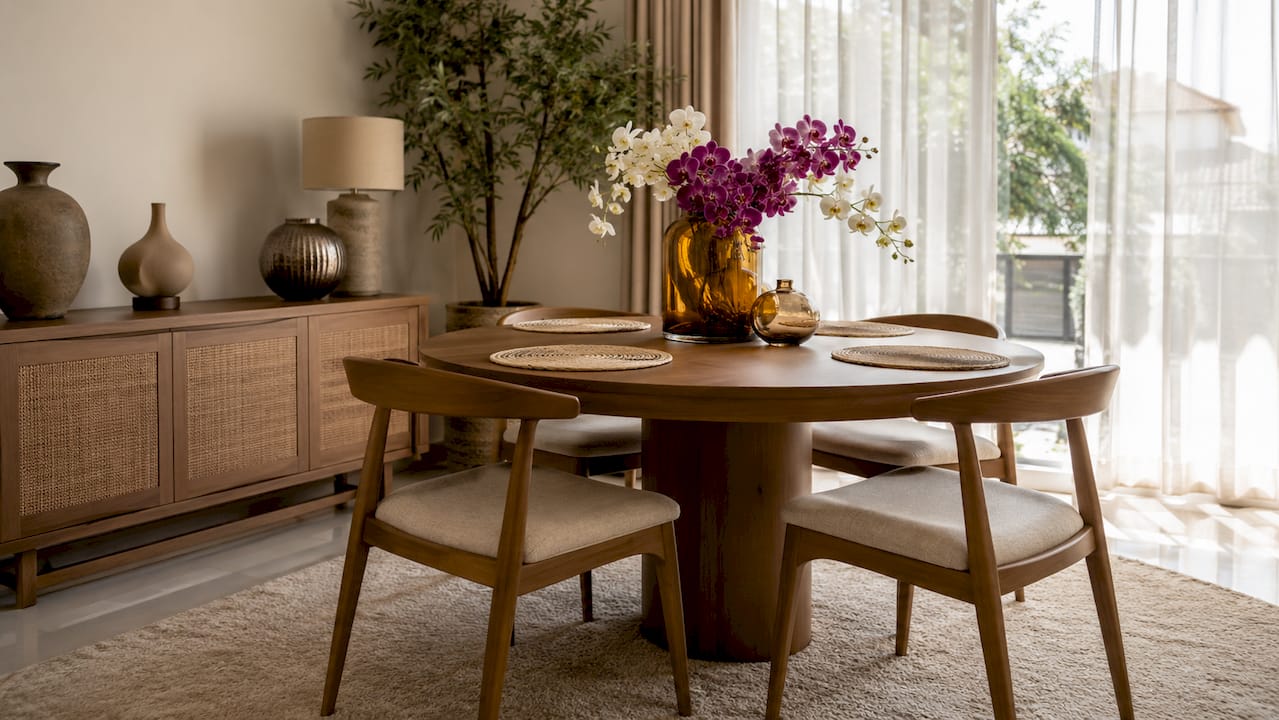
The risks of getting it wrong are equally significant. Underscaled or incomplete staging signals to affluent buyers that the seller has not invested in the property’s presentation. That signal quietly erodes trust and perceived value. A sparse arrangement of mismatched rental pieces in a $5 million condominium does more damage than a vacant unit, because it draws attention to the gap between expectation and reality.
Key areas where staging shapes buyer perception most directly:
- Primary bedroom: Buyers assess this space for calm, proportion, and quality. Oversized beds with premium linens set the tone immediately.
- Kitchen and dining zone: These spaces signal lifestyle. A styled dining table with considered lighting suggests the home is ready for entertaining.
- Living area: Scale matters here. Correctly proportioned sofas and coffee tables show the room’s true capacity without crowding it.
- Entrance and foyer: First impressions form within seconds. A clean, well-lit entrance with a considered console or artwork anchors the entire viewing.
Pro Tip: Focus staging investment on the kitchen, primary bedroom, and living area first. These three zones account for the majority of buyer emotional response in luxury viewings, and they photograph best when properly furnished.
What measurable impact does staging have on sale speed and price?
The financial case for staging luxury properties is well established. Professionally staged luxury homes sell 73% faster and achieve 5–10% higher sale prices. On a $2 million property, a 6% price premium represents $120,000 in additional proceeds against a staging cost that is a fraction of that figure. The return on investment at that scale can reach 14 times the staging outlay.
Speed matters as much as price. A property that sits on the market for three months accumulates carrying costs, attracts lower offers, and signals to buyers that something is wrong. Staging addresses this directly. 68% of staged properties receive offers within the first weekend, compared to 27% of unstaged listings. That gap reflects the difference in buyer confidence, not just aesthetics.
The indirect financial benefits compound the direct ones. Sellers who stage avoid the pressure of price reductions, which in the luxury segment can be substantial. Agents report that staged listings attract stronger initial offers and generate more competing bids. Both outcomes protect the seller’s negotiating position.
| Metric | Staged properties | Unstaged properties |
|---|---|---|
| Offers within first weekend | 68% | 27% |
| Typical price premium | 5–10% | Baseline |
| Sale speed | Up to 73% faster | Baseline |
| Risk of price reduction | Significantly lower | Higher |
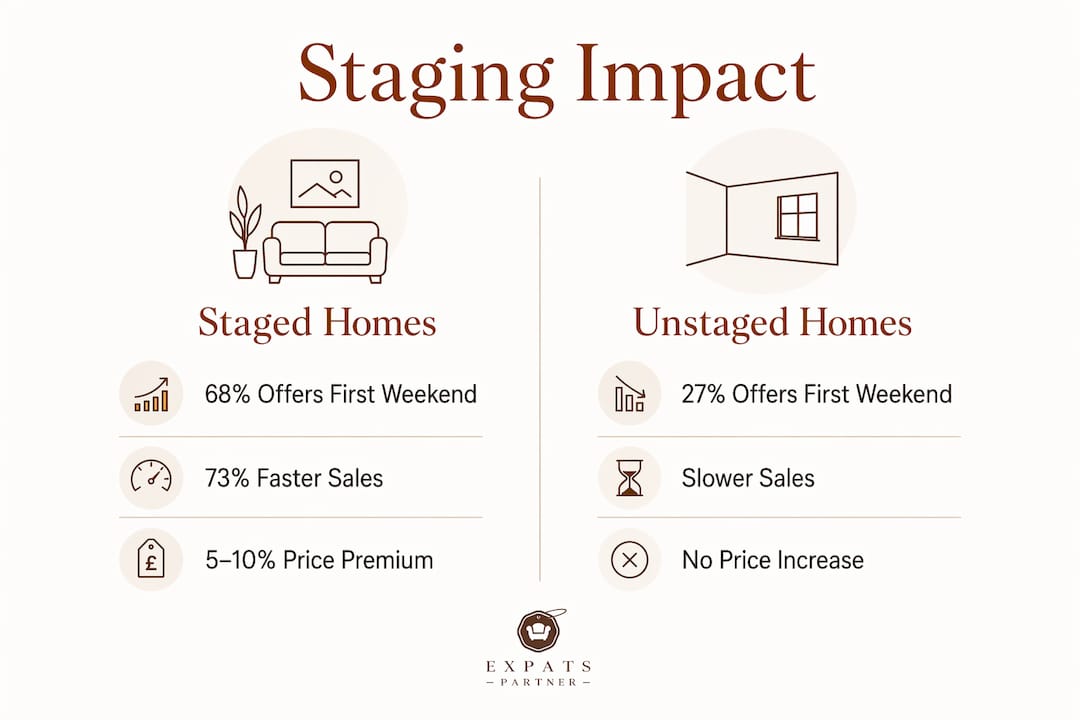
The data points to one conclusion: staging is not a cost. It is a pre-listing investment with a measurable and reliable return. For Singapore’s luxury condominium and landed property market, where buyer expectations are high and competition is consistent, that return is particularly dependable.
How does staging enhance open house success for luxury properties?
Open house performance depends almost entirely on the environment buyers walk into. Staging helps 81% of buyers visualise living in a home, which is the precise psychological shift that moves a visitor from curious to committed. A well-staged open house gives buyers permission to imagine their own life in the space, and that imagination is what drives offers.
Luxury open houses attract a different kind of visitor. Buyers attending a $3 million condominium viewing are not browsing. They have done their research, they have a shortlist, and they are assessing whether this property justifies its price. Staging answers that question before they ask it. Buyers in well-staged luxury listings spend 10–20 minutes on site, engaging with the space rather than moving through it quickly.
To maximise open house outcomes, apply staging with these priorities in mind:
- Prepare the entrance first. The foyer sets the tone. A clean, well-lit entry with a single piece of considered furniture or art signals quality before buyers reach the main living areas.
- Stage the kitchen to function. Style the counter with a few considered objects. Avoid clutter. Buyers should see a kitchen that is ready to use, not one that is merely decorated.
- Set the dining table. A fully set dining table communicates scale and lifestyle. It also photographs well for listing materials used to drive open house attendance.
- Keep bedrooms calm and neutral. Luxury buyers respond to restraint. Crisp linens, minimal accessories, and good lighting read as premium without effort.
- Remove personal items entirely. Buyers need to see themselves in the space. Personal photographs, collections, and idiosyncratic décor interrupt that process.
Pro Tip: Use your open house staging checklist to confirm every room is viewing-ready at least 48 hours before the event. Last-minute staging rarely achieves the same result as a considered, planned setup.
What staging strategies apply to off-plan and new luxury developments?
Off-plan sales present a distinct challenge. Buyers are committing to a property they cannot yet walk through, which means staging must work harder and earlier in the sales process. Digital twins and virtual staging are most effective when integrated at the start of a development’s marketing programme, not added as a late-stage visual layer. Early integration allows staging to shape the buyer journey from the first touchpoint.
Physical show units remain the gold standard for luxury off-plan developments. A fully staged show flat gives buyers a tangible reference point for quality, scale, and finish. It also generates proof-of-demand data that supports financial arrangements with lenders and validates pricing for developers. Staged properties in new developments sell up to three times faster than unstaged equivalents. That acceleration is particularly valuable for developers managing cash flow across multiple units.
Effective off-plan staging strategies include:
- Commit to physical staging for at least one show unit per floor plan type. Buyers need to experience the actual dimensions and finish quality, not just renders.
- Integrate virtual staging into digital marketing from launch. Consistent visual language across renders, virtual tours, and physical staging builds buyer confidence in the product.
- Use staging to support unit comparison. When buyers are choosing between two similar floor plans, a staged unit makes the decision easier and faster.
- Avoid treating staging as a finishing touch. Late-stage visual add-ons consistently underperform because they are disconnected from the buyer journey already in progress.
For Singapore developers managing condominium launches, the staging decision belongs in the pre-launch planning phase, not the final weeks before the showroom opens.
Key takeaways
Professional staging is the most reliable pre-listing investment available to luxury property sellers, consistently delivering faster sales, stronger offers, and measurable price premiums.
| Point | Details |
|---|---|
| Staging accelerates sales | Staged luxury homes sell up to 73% faster than unstaged equivalents. |
| Price premiums are real | Staging delivers 5–10% higher sale prices, representing significant proceeds on luxury listings. |
| Open house conversion improves | 81% of buyers can visualise living in a staged home, directly increasing offer rates. |
| Off-plan staging must start early | Digital and physical staging integrated at launch outperforms late-stage visual additions. |
| Poor staging causes harm | Underscaled or incomplete staging signals low seller investment and erodes buyer confidence. |
Staging as brand positioning, not decoration
From where we stand at Expats Partner, the most common mistake we see in luxury property staging is treating it as an afterthought. Sellers approve a budget, agents arrange a quick furniture drop, and the result is a home that looks furnished but does not feel finished. That distinction matters enormously to affluent buyers.
Luxury staging is brand positioning. It requires the same level of deliberate decision-making that goes into any premium product launch. The furniture must be proportioned to the architecture. The colour palette must complement the finishes. The accessories must feel considered, not assembled. When all of those elements align, the home communicates quality before a single word is spoken.
We have also seen the value of making staging non-negotiable above certain price points. Top listing agents treat staging as a condition of taking on a luxury listing, not an optional extra. Some go further by negotiating the sale of staged furniture alongside the property itself, allowing sellers to recoup part of their staging investment while offering buyers a turnkey purchase. That approach protects the seller’s price point and simplifies the buyer’s decision.
The practical lesson is straightforward. Staging is a risk-mitigation strategy as much as a marketing one. A well-staged luxury property defends its asking price. A poorly staged or unstaged one invites negotiation downward. In Singapore’s high-end residential market, where a single percentage point represents tens of thousands of dollars, that defence is worth every dollar invested in getting the presentation right.
— Expats Partner
Staging support for your luxury listing in Singapore
Expats Partner provides home staging services in Singapore tailored for the high-end residential market, including condominiums, landed homes, and new development show units. Our approach covers full-room furniture selection, delivery, setup, and collection, giving agents and sellers a viewing-ready property without the logistics burden.
For sellers who prefer flexibility, our furniture rental for staging options allow you to present a fully furnished luxury home without purchasing or storing furniture long-term. We work with property agents, developers, and individual sellers across Singapore to match furnishings to the property’s architecture, price point, and target buyer profile. Speak with our team to discuss your listing’s requirements and timeline.
FAQ
What is the role of staging in luxury property sales?
Staging positions a luxury property as a finished lifestyle product that meets affluent buyer expectations, resulting in faster sales and higher offers. It is a strategic investment, not a cosmetic exercise.
How much faster do staged luxury homes sell?
Staged luxury homes sell up to 73% faster than unstaged equivalents, with 68% of staged properties receiving offers within the first weekend of listing.
Does staging increase the sale price of a luxury home?
Staging consistently delivers a 5–10% price premium on luxury properties. On a $2 million home, that premium can represent $120,000 in additional proceeds against a comparatively modest staging cost.
How does staging support open house success?
Staging helps 81% of buyers visualise living in a home, which directly increases the likelihood of an offer following an open house viewing. Well-staged properties attract more qualified visitors and generate faster decisions.
When should off-plan developments begin staging?
Staging for off-plan developments should begin at the pre-launch planning phase. Early integration of physical and virtual staging generates buyer interest, supports lender arrangements, and consistently outperforms staging added late in the sales process.