
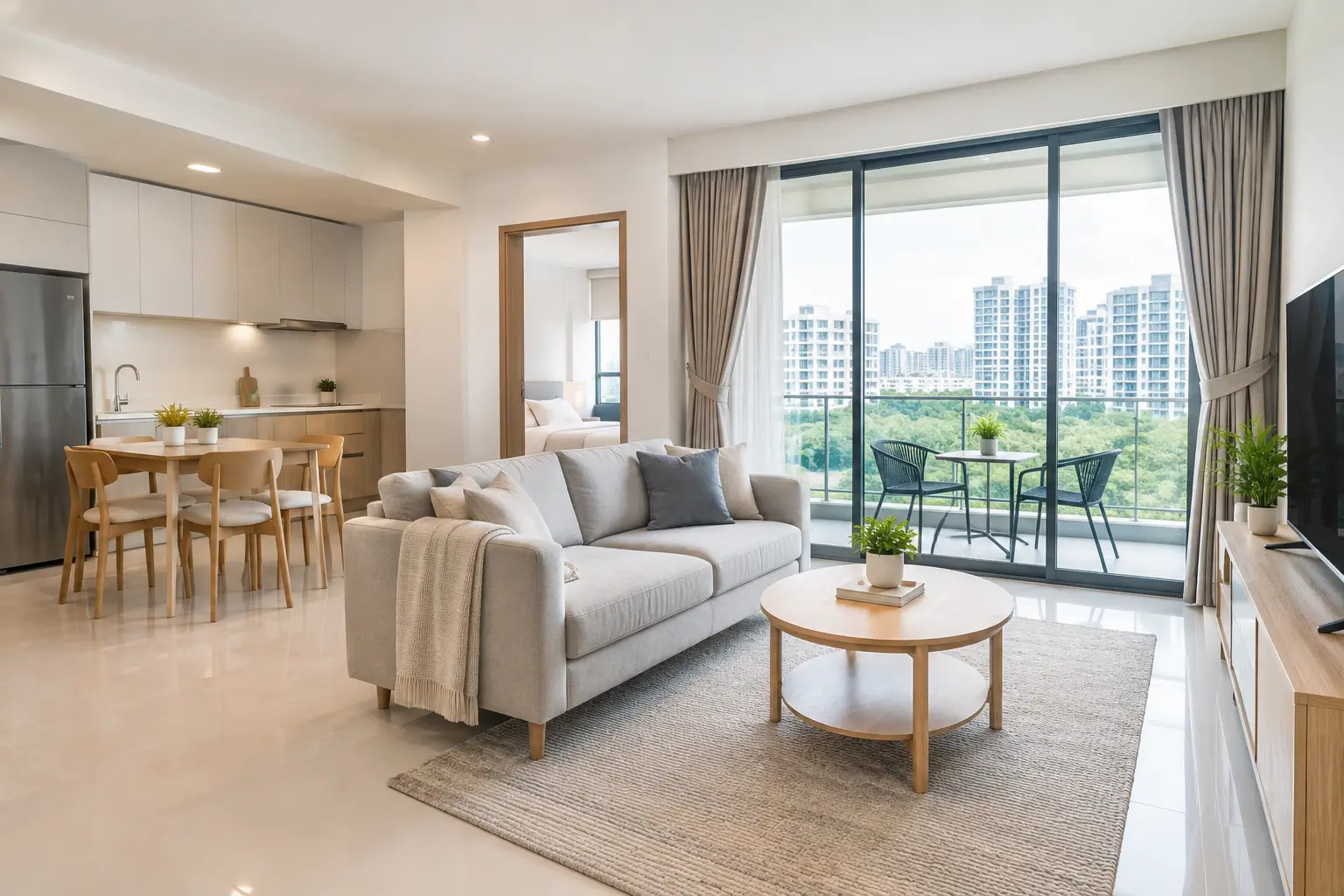
A vacant flat can look larger in photographs, but it rarely helps a prospective tenant understand how life will work there. Knowing how to create tenant-ready homes means preparing for that practical decision: where they will eat, work, rest, store their belongings and welcome guests. The aim is not to fill every corner. It is to present a clean, comfortable home that feels ready from the first viewing.
For landlords and property agents in Singapore, this preparation can also reduce the time spent answering basic questions during viewings. A well-furnished home gives each room a clear purpose, supports stronger listing photos and helps suitable tenants picture themselves moving in with minimal disruption.
Start with the tenant and the lease
A tenant-ready setup should begin with the likely occupant, not a fixed furniture package. A one-bedroom condominium near the CBD may appeal to a single professional or couple who values a proper work area and a dining table that can also host friends. A family-sized landed home needs practical seating, bedroom storage and a layout that allows people to move around comfortably.
Lease length matters too. For a short-term corporate tenancy, a complete and durable setup often makes the property easier to market. For a longer lease, some landlords may prefer to provide the essentials and leave room for tenants to add personal pieces. There is no single right level of furnishing, but the offering should be clear in the listing and consistent at the viewing.
Before ordering furniture, confirm the property’s size, existing fixtures, condition, building access rules and target rental range. These details affect everything from sofa dimensions to delivery timing. They also prevent a common and costly problem: choosing attractive pieces that are too large for the lift, doorway or living area.
How to create tenant-ready homes room by room
The most effective approach is to make every main space immediately understandable. Tenants should not have to guess whether an alcove is meant for dining, working or storage.
Give the living room a useful centre
The living room should feel comfortable without becoming crowded. A proportionate sofa, coffee table, television console and rug are often enough to define the space. In larger homes, an occasional chair or side table can make the seating arrangement feel more complete.
Avoid oversized sectionals and excessive decorative accessories. They may look impressive in isolation, but can make a typical Singapore living room appear smaller in photos and restrict circulation during viewings. Neutral furniture with a little texture, paired with cushions or artwork in restrained colours, creates a welcoming impression while allowing tenants to imagine their own belongings in the home.
Make dining and work arrangements visible
A dining table should suit the home, rather than occupy as many seats as possible. A compact four-seater may be more convincing than a crowded six-seater in a smaller unit. Ensure chairs can be pulled out easily and do not block balcony doors or walkways.
A defined work area has become a practical consideration for many tenants. This does not require turning a bedroom into an office. A simple desk, supportive chair and suitable lamp in a quiet corner can show that the home accommodates hybrid working. Where space is limited, a small desk with clean cable management is usually more useful than a large statement piece.
Prioritise rest, storage and practicality in bedrooms
Bedrooms need to feel calm and functional. Provide an appropriately sized bed, bedside tables where the room allows, and adequate wardrobe space. Good mattresses and bed bases matter more than elaborate styling because they affect the tenant’s day-to-day experience.
Use bedding to make the room photograph well, but keep it simple. Light, fresh colours tend to make compact rooms feel brighter. If the property has built-in wardrobes, check that doors, drawers and rails work properly before the first viewing. A beautiful room can quickly lose appeal if storage is difficult to use.
Do not overlook the kitchen, bathrooms and balcony
Tenant readiness is often won or lost in the practical areas. Kitchens should be clean, free of unnecessary items and fitted with working appliances where these are included. Check cupboard hinges, cooker hoods, taps and drainage. If basic kitchenware is part of the rental offering, provide a sensible, complete set rather than a mixture of leftover items.
Bathrooms require particular attention to mould, silicone, water pressure and ventilation. Fresh towels and a tidy vanity can improve presentation for photographs, but maintenance is the priority. On balconies, keep furniture modest and weather-suitable. A small table and chairs can suggest an enjoyable outdoor space, while too much furniture can make it look unusable.
Choose furniture for use, not just for photographs
Presentation has a direct role in attracting enquiries, but a furnished rental must also withstand daily use. Select pieces that are comfortable, stable and easy to clean. Washable fabrics, durable dining chairs and well-made bed frames are sensible choices, especially where tenant turnover is expected.
There is a trade-off between investing in new furniture and using quality pre-owned pieces. New items may be appropriate for a premium property, a specific design brief or an owner who wants a particular finish. Well-maintained pre-owned furniture can be more cost-conscious and sustainable, provided it is clean, in good condition and suitable for the home. What tenants notice most is whether the space feels cared for and cohesive.
Furniture rental can be especially useful when timing is tight, the tenancy period is uncertain or a landlord does not want to manage storage and resale later. It also allows the furnishing plan to match the expected tenant profile without committing to a permanent purchase.
Prepare the property before delivery day
Furniture should be the finishing layer, not a way to disguise unresolved issues. Attend to repairs, repaint tired walls where needed and arrange a thorough clean first. Replace failed light bulbs and test air-conditioning, appliances, locks and window fittings. These are small details, but they shape a tenant’s confidence in how the property will be managed after move-in.
Measure rooms, lifts and access routes carefully. Confirm loading-bay booking requirements with the management office, along with permitted delivery hours and protection requirements for common areas. A planned delivery avoids delays and reduces stress for agents, owners and building staff.
When the furniture is installed, check sightlines. The route from the entrance to the living room should be clear, and windows should not be unnecessarily blocked. Take listing photographs only after cables, packaging, cleaning supplies and personal items have been removed.
Create a handover standard, not just a styled home
A tenant-ready home should be as easy to take over as it is to view. Prepare an inventory that records furniture, appliances, keys, remotes and the condition of each item. Include clear photographs at handover. This protects both landlord and tenant and makes the end-of-lease process more straightforward.
It is also worth providing simple operating information for appliances, air-conditioning controls, refuse disposal and building facilities. For overseas tenants or relocating professionals, this practical guidance can make the first few days far less stressful.
Before the first tenant arrives, carry out one final walk-through from their perspective. Open the wardrobe, sit at the desk, test the shower, switch on the lights and check that the Wi-Fi arrangement is understood. If something feels inconvenient during that walk-through, it will likely be noticed on move-in day.
When professional furnishing support makes sense
Some landlords have the time and local knowledge to coordinate purchasing, delivery, assembly and collection themselves. Others are preparing a property between tenancies, managing several units or working to an agent’s listing deadline. In those cases, a furnishing partner can manage the practical work while keeping the design focused on the rental market.
Expats Partner can supply, deliver, install and later collect furniture for furnished rental setups, helping owners and agents prepare homes without the burden of buying and storing every item. The right approach remains tailored: a compact city flat, a family home and a corporate rental should not all be furnished in the same way.
A tenant-ready home does not need to look like a showroom. It needs to feel clean, considered and straightforward to live in, so the right tenant can walk through the door and see a home that already makes sense.