
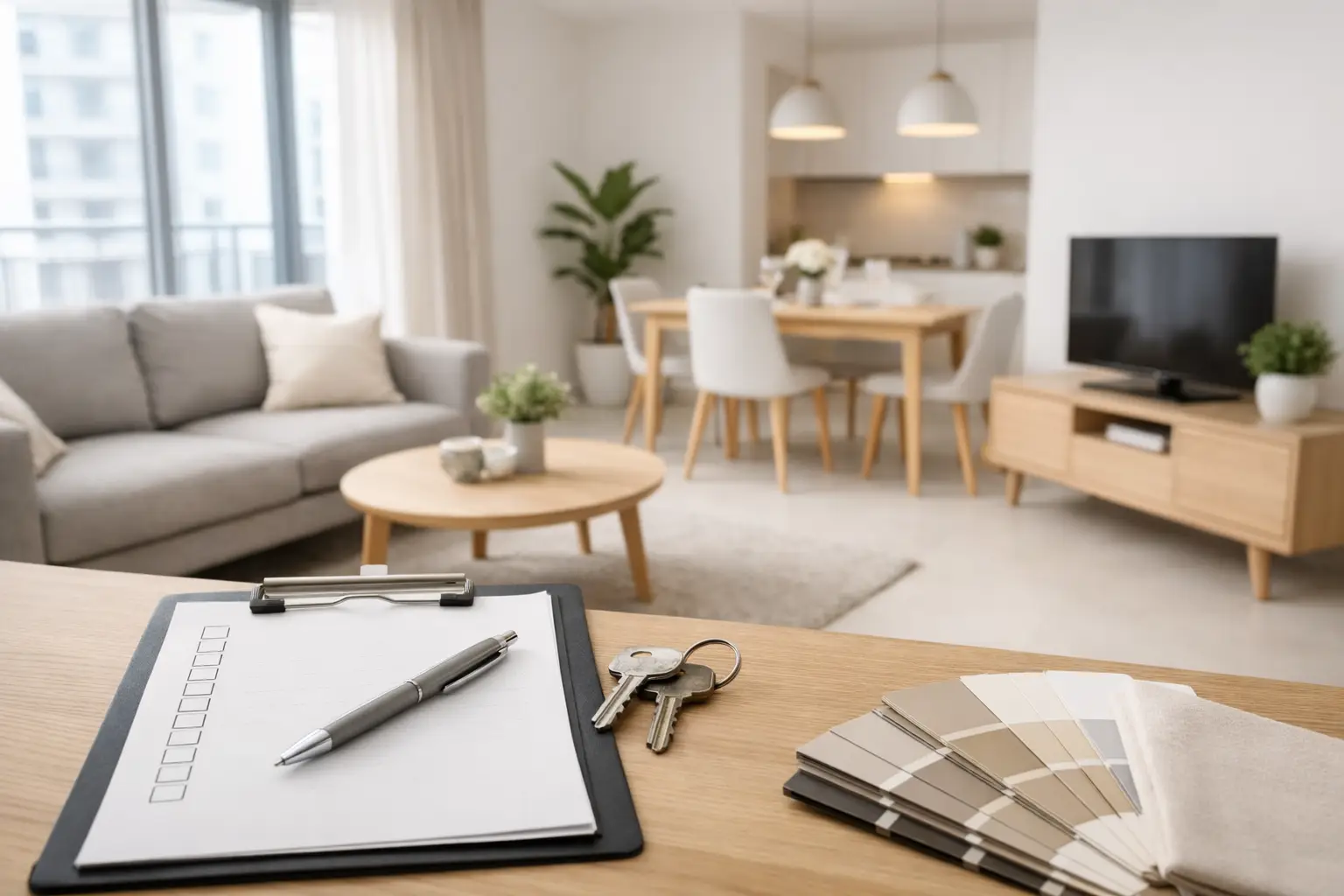
A vacant flat can look smaller than it is, colder than it feels, and harder to picture as a home. That is why a solid vacant flat staging checklist matters. For agents, landlords and sellers, the goal is not to decorate for decoration’s sake. It is to shape how the space reads in photos, how it flows during viewings, and how quickly a prospect can imagine living there.
Empty rooms tend to expose every awkward corner. A slightly narrow living area feels tighter. A long wall looks unfinished. Even a good layout can seem uncertain without furniture to explain how the room works. Staging fixes that by giving each zone a purpose and making the property feel ready rather than waiting.
Why a vacant flat staging checklist changes results
Most decisions start online. If your listing photos feel sparse or flat, buyers and tenants may scroll past before they ever book a viewing. When the flat is staged well, rooms appear more balanced, proportions become easier to understand, and the overall impression feels more complete.
That does not mean every vacant property needs a full designer fit-out. It depends on the unit, the target market and the expected price point. A compact investment flat may only need the main living areas staged. A higher-value home, a premium rental, or a unit with an unusual layout often benefits from a fuller setup. The point is to stage with purpose, not to overfill.
The practical vacant flat staging checklist
Before any furniture arrives, start with condition. The property should be cleaned thoroughly, including skirting, windows, switches and flooring. Empty flats collect dust quickly, and dust shows up in both photos and viewings. Minor repairs should also be completed first. Loose handles, chipped paint, blown bulbs and stained grout may seem small, but in a vacant space they become more visible.
Next, assess the lighting. Replace mismatched or dim bulbs and keep the colour temperature consistent throughout the flat. Natural daylight helps, but many viewings happen at times when daylight is less flattering. Good internal lighting softens the space and makes it feel better maintained.
Then look at the walls and finishes. Neutral tones usually work best because they widen appeal and help the room feel brighter. If repainting is needed, choose clean, calm colours rather than anything too warm or trendy. In vacant staging, the backdrop matters as much as the furniture because there is less else to distract the eye.
Define each room clearly
One of the biggest mistakes in vacant properties is leaving room use open to interpretation. A buyer should not have to guess whether an alcove fits a dining table or whether a bedroom can take a proper bed. Staging should answer those questions quietly.
The living room should show a logical seating layout, even if it is compact. A sofa, coffee table, rug and a simple side chair often do enough to establish scale. If the room allows, add a console or media unit to anchor the wall. The aim is to show comfort and circulation, not to pack in pieces.
For the dining area, use a table size that fits the room honestly. Oversized furniture makes the flat feel cramped. Furniture that is too small makes the room feel underused. Good staging sits in the middle – proportionate, practical and believable.
In bedrooms, place beds that reflect the intended market. A principal bedroom should look like a principal bedroom, not a guest room. Bedside tables and lamps help frame the space and make it feel complete. Secondary bedrooms can be staged more lightly, but they still need a clear purpose.
Focus on the key rooms first
If budget or timing is tight, stage the rooms that carry the listing. Usually that means the living area, dining area and principal bedroom. These are the spaces that most influence photography and first impressions.
There are cases where additional rooms matter more. If the property targets families, the second bedroom may need more attention. If the unit includes a study nook or flexible room, it helps to stage it as a work-from-home space because buyers now pay closer attention to usable function. It depends on who you want to attract.
Furniture selection: less styling, more clarity
The best vacant flat staging checklist is not built around decorative volume. It is built around proportion, layout and relevance. Choose furniture that feels current, neutral and easy to live with. Think clean lines, soft textiles and restrained colour.
Heavy, dark furniture can make smaller flats feel dated or compressed. Extremely minimal furniture can make the unit feel temporary or incomplete. A balanced approach works better. You want the flat to feel polished, but still realistic.
Soft furnishings do a lot of work here. Rugs define seating zones. Cushions add warmth. Bedding gives the bedroom visual weight. Curtains, if appropriate, can soften hard lines and improve the way light reads in photographs. Accessories should be kept measured. A few pieces of artwork, simple table styling and light greenery are usually enough.
Prepare for photography, not just viewings
A staged flat needs to perform twice – first in the listing, then in person. These are not always the same thing. Some layouts look fine on site but appear awkward in wide-angle photography. That is why furniture placement should be tested with camera angles in mind.
Leave enough visual breathing room between pieces. Avoid blocking windows or key sight lines. Keep surfaces tidy and consistent. In photos, clutter multiplies. So does emptiness. The right setup gives the eye a place to land without making the room feel busy.
This is also where styling restraint matters. Too many accessories can date a listing or distract from the property itself. Too few and the room feels cold. A practical middle ground usually performs best, especially in markets where buyers and tenants want a home that feels move-in ready but not over-designed.
The staging details that people notice subconsciously
A useful vacant flat staging checklist includes details that rarely get mentioned but often affect perception. Flooring should be spotless and, where possible, visually uninterrupted. Cables and extension leads should be hidden. Curtains or blinds must hang neatly. Mirrors should be clean and positioned intentionally, not randomly.
Scent matters too, but lightly. A vacant flat should smell fresh and neutral, never perfumed. Air-conditioning vents, bathrooms and closed wardrobes should all be checked before viewings begin.
Temperature also changes how a property is received. In Singapore, a warm, stuffy unit feels neglected within minutes. If the property has working air-conditioning, use it before viewings. Comfort shapes judgement faster than many owners realise.
Timing and logistics make a difference
Good staging is partly visual and partly operational. If photography is booked before the staging is fully settled, results suffer. If installation happens too early, the flat may sit too long and lose freshness. If furniture removal is poorly timed, handover gets messy.
That is why many agents and owners prefer rental-based staging. It keeps the setup flexible, reduces upfront spend, and avoids the problem of buying furniture for a short sales or leasing cycle. For vacant units, that speed and practicality often matter as much as design.
Expats Partner approaches staging in that practical way – using furniture and styling to support listing performance, viewing quality and faster decision-making without adding unnecessary complexity.
Common staging mistakes to avoid
The first mistake is treating every flat the same. A compact city unit, a family condo and an investment property do not need identical styling. The right checklist always reflects the likely audience.
The second is over-staging. If every surface is covered and every corner is styled, the property can feel artificial. Buyers and tenants still want to see the flat itself. Staging should guide the eye, not compete for attention.
The third is under-staging the awkward spaces. Narrow entries, bay windows, odd recesses and long corridors are where vacant properties often lose momentum. These areas do not always need major furniture, but they do need a visual answer. A bench, slim console or reading chair can be enough to make the layout feel intentional.
A final check before the listing goes live
Walk through the property as if you are seeing it for the first time. Stand at the entrance and note the first impression. Check every room from the doorway. Turn on all lights. Open and close curtains. Look for anything that feels unfinished, too large, too small or slightly off-centre.
Then review the flat through a commercial lens. Does the staging support the likely asking price? Does it suit the target tenant or buyer? Does it make the viewing experience easier and the photos stronger? If the answer is yes, the property is in a better position to attract serious interest rather than casual browsing.
A well-staged vacant flat does not need to feel lavish. It needs to feel clear, liveable and ready. That is often what moves someone from looking to enquiring.
Contact us now at: Kevin Chang – 80119753 sales@expatspartner.com.sg Sales Specialist