
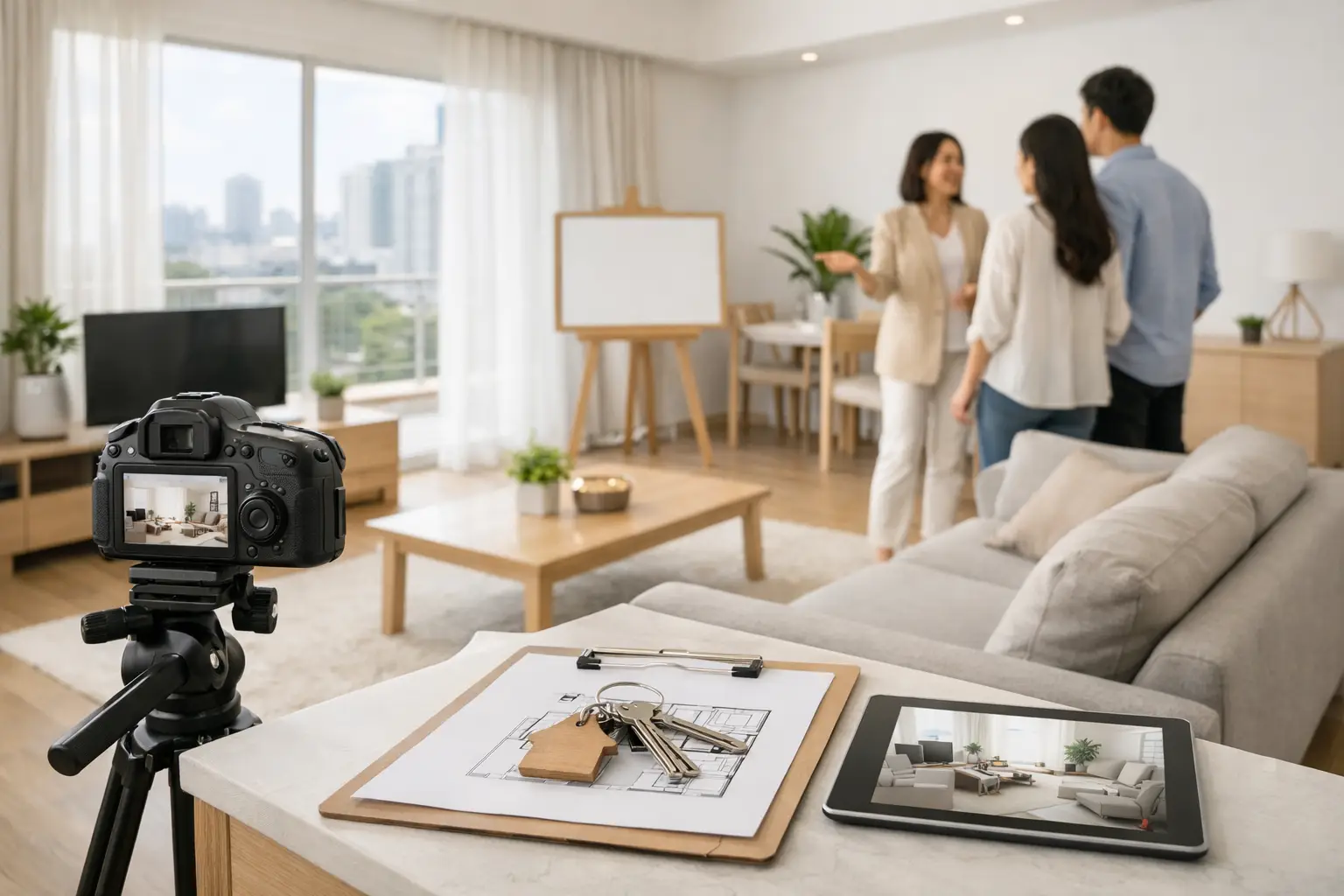
An empty property can look bigger on paper and smaller in a buyer’s mind. That is the challenge behind most vacant home marketing ideas – the space may be clean and available, but without context it can feel cold, flat in photos, and harder to picture as a home.
For agents, landlords, and owners, that gap matters. A vacant unit often gets fewer emotional reactions during online browsing, and weaker reactions usually mean fewer quality enquiries. The good news is that marketing an empty home is not about adding noise. It is about adding enough clarity, warmth, and structure for buyers or tenants to understand how the property lives.
Why vacant homes are harder to market
A vacant property removes distractions, but it also removes cues. Buyers cannot easily judge room scale, furniture placement, traffic flow, or how a space might support everyday life. In photographs, blank rooms can blend into one another. During viewings, they may feel echoey, stark, or smaller than expected.
This is where presentation becomes commercial, not decorative. The aim is not to make a home look extravagant. It is to make it easier to read. When a listing feels legible online and coherent in person, people stay with it longer, enquire faster, and arrive at the viewing with fewer doubts.
Vacant home marketing ideas that improve response
1. Stage the rooms that carry the decision
Not every room needs a full setup. In many cases, the living area, dining space, and main bedroom do most of the persuasive work. These are the spaces that help viewers understand proportion and imagine routine.
A practical staging plan focuses on decision-making zones rather than filling every corner. For a compact flat, that may mean defining one strong living area and one restful bedroom. For a larger home, it may also include a study nook or dining setup that reflects how people actually use the property. The point is clarity. If buyers can immediately see what a room is for, the property starts working harder.
2. Use photography that gives scale, not just coverage
Vacant listings often suffer from wide shots that technically show the whole room but say very little about how it feels. Good property photography for empty homes needs more than brightness. It needs visual anchors.
Furniture, rugs, lighting, and styling pieces help create those anchors. They show how far a sofa sits from the television wall, whether a bed fits comfortably, and how circulation works around key areas. This can be the difference between a listing that gets glanced at and one that gets saved.
If the property will remain vacant during marketing, invest in photography after staging rather than before. Doing it the other way round usually creates two problems – a weak first impression online, followed by a better in-person experience that fewer people ever reach.
3. Build the listing around lifestyle, not emptiness
Many vacant listings rely too heavily on factual descriptions. Floor area, tenure, facing, and nearby amenities matter, but they are rarely enough on their own. When the home is empty, the written listing has to do more interpretive work.
That means describing how the space functions. Instead of simply stating that a unit has an open-plan living area, explain what that creates – easier entertaining, a brighter daily environment, or a more flexible layout for couples, families, or landlords targeting tenants. The wording should stay grounded, but it should help the reader picture use, not just data.
This is especially relevant in Singapore, where buyers and tenants often compare several similar units in the same development. If one listing feels clearer and more liveable, it tends to hold attention longer.
4. Improve the first ten seconds of the viewing
A vacant home has no second chance at atmosphere. The moment the door opens, viewers are deciding whether the property feels welcoming or lifeless. That reaction is fast and often emotional.
Simple details can change the tone immediately. Curtains adjusted properly, lights switched on, air-conditioning running where appropriate, and a clean scent-free environment all help. If the unit is staged, the entrance sightline matters as well. What the viewer sees first should make the home feel organised and intentional.
This is one of the most overlooked vacant home marketing ideas because it sounds basic. Yet many empty units are shown with harsh lighting, closed blinds, and no focal point. Those details shape perception before the agent has said a word.
Where furniture rental fits into vacant home marketing ideas
For many owners and agents, the issue is not whether staging helps. It is how to do it quickly without buying furniture, arranging delivery from multiple vendors, or committing to long-term use.
That is where furniture rental becomes practical rather than optional. It allows vacant homes to be presented with the right amount of structure and comfort for the marketing period. This is particularly useful for sale listings, rental units between tenancies, developer stock, and relocation housing that needs to feel ready without becoming a permanent fit-out.
A flexible setup also lets you respond to the property itself. A compact city flat may need clean, space-conscious pieces. A larger family home may benefit from a warmer, more settled arrangement. The best approach depends on target audience, price point, and how quickly the property needs to be market-ready.
5. Match the presentation to the likely buyer or tenant
A common mistake is styling every vacant home in the same generic way. Neutral presentation is usually the right starting point, but neutral does not mean identical.
A one-bedroom flat aimed at young professionals should not be dressed like a suburban family home. Likewise, an investment unit intended for rental viewings may need a more efficient visual story than a high-value resale property where buyers expect a stronger lifestyle impression. Good marketing starts with the likely audience and works backwards.
This is where experienced staging helps. The goal is not to impose a style. It is to remove friction from the decision process. When viewers feel that a property suits their life or their target tenant, hesitation drops.
6. Give awkward spaces a job
Vacant homes often expose layout questions that furnished homes can soften. A narrow corner, a long wall, or a space between living and dining zones may read as wasted area when left empty.
Thoughtful staging turns those uncertainties into answers. A console, dining set, reading chair, or compact desk can define purpose without cluttering the room. This matters because uncertainty in a viewing often becomes objection later. If a prospect has to work too hard to solve the layout in their head, they may move on to an easier option.
7. Keep the styling clean enough for broad appeal
There is a balance to strike. An empty home needs warmth, but over-styling can make it feel forced or too taste-specific. For most listings, especially where broad market appeal matters, clean and neutral wins.
That means furniture scaled correctly to the room, a restrained palette, and accessories used to soften rather than dominate. The overall effect should be calm and liveable. Buyers should notice the home first, not the styling choices.
8. Create consistency between online interest and in-person experience
One reason staged vacant homes perform better is that they reduce disconnect. If the online listing shows a complete, coherent home and the in-person viewing delivers the same impression, trust builds. If the online presentation is sparse and the viewing is also sparse, prospects may assume there is less value in the property than there really is.
Consistency matters commercially. It shapes how seriously people take the listing and how ready they are to make an offer or submit an application. Marketing works best when every step supports the same message – this home is ready, clear, and worth considering.
9. Move quickly when the property becomes vacant
A vacant property should not sit in a marketing grey area for weeks while decisions are being made about furnishing or presentation. The first burst of listing activity is often the strongest. If the property goes live before it is properly prepared, you may lose momentum that is difficult to recover.
A faster staging and furniture rental process helps protect that early window. It allows agents and owners to launch with stronger visuals and a better viewing setup from the start. For many properties, that is more effective than trying to upgrade the presentation after interest has already cooled.
What to prioritise when budget is limited
Not every vacant home needs a full transformation. If budget is tight, prioritise the spaces that shape online clicks and viewing confidence. In most cases, that means the main living area, main bedroom, and photography.
If there is room to do more, improve the dining area or any awkward transition space that may otherwise create doubt. Even a modest setup can materially change perception when it is planned well. The measure is not how much furniture is added, but whether the property becomes easier to understand.
For agents and owners who need a practical partner, Expats Partner supports this process with home staging and flexible furniture rental designed to help vacant properties feel ready, liveable, and marketable without unnecessary delay.
A vacant home does not need more decoration. It needs a clearer story – one that helps buyers or tenants see value quickly, both on screen and at the front door.
Contact us now at: Kevin Chang – 80119753 sales@expatspartner.com.sg Sales Specialist