
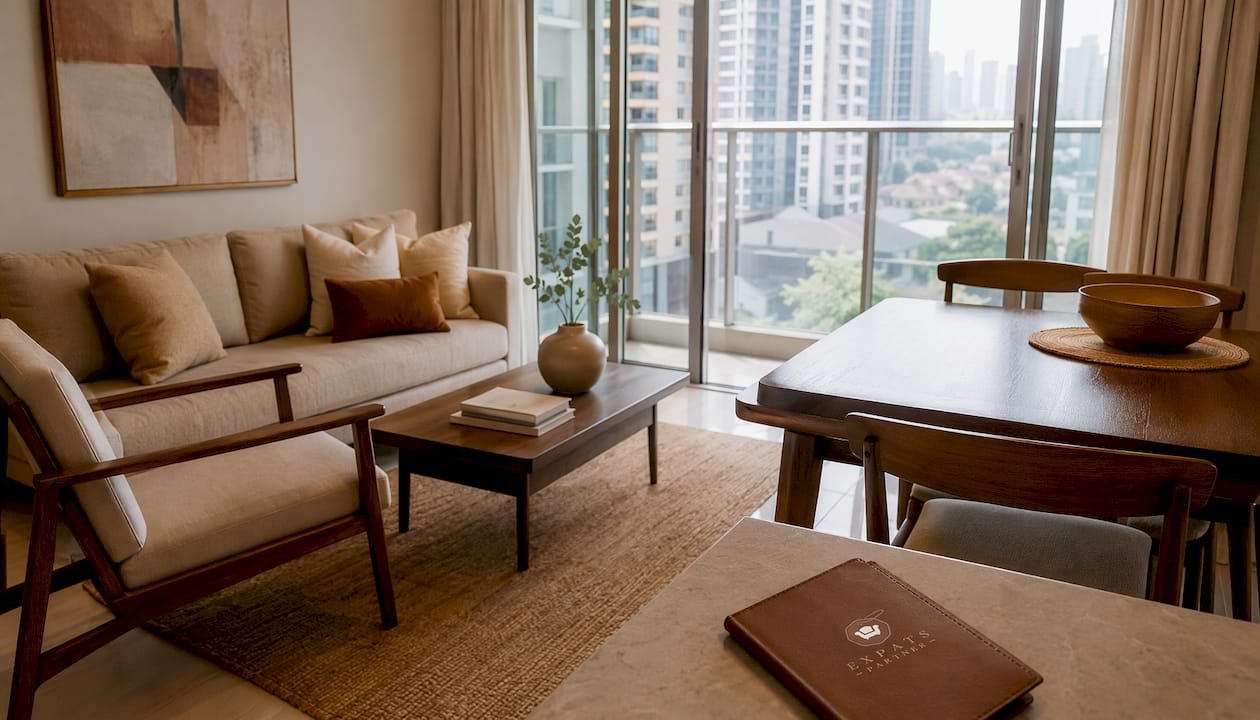
What does a furnished apartment include?
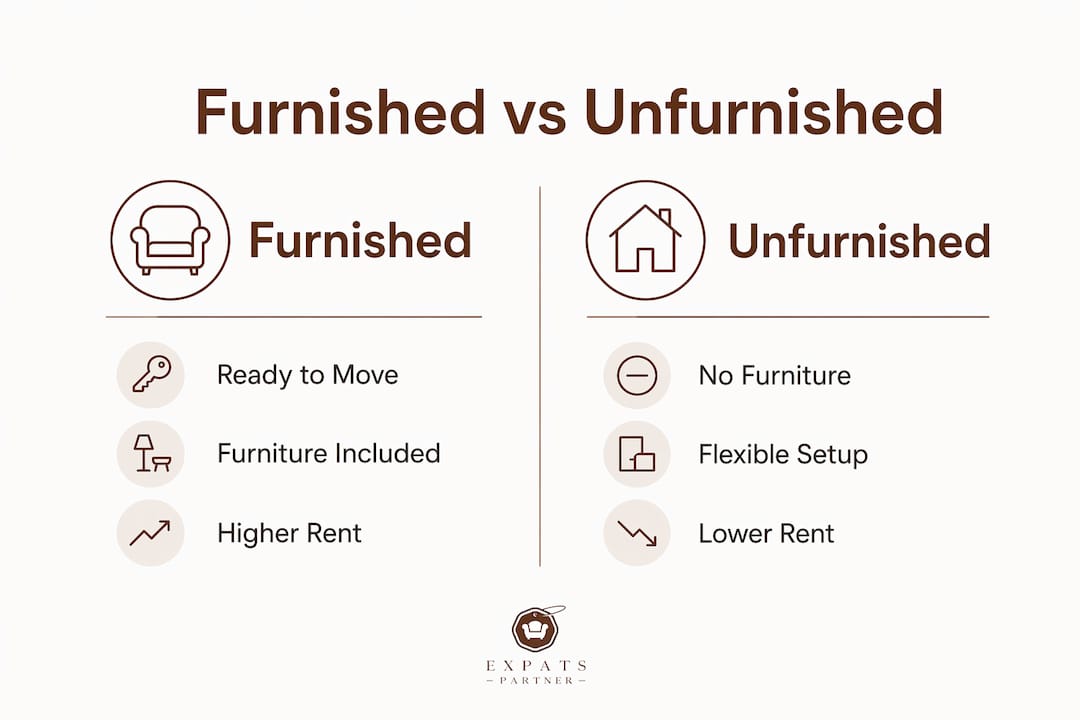
A furnished apartment is a residential rental unit that comes equipped with the essential furniture and household items needed for comfortable, immediate occupancy. You move in without needing to source a bed, sofa, or dining table yourself. The unit is ready from day one.
No universal checklist governs what qualifies as “furnished,” but the industry consistently recognises a core set of inclusions:
- Bedroom: bed frame, mattress, wardrobe, and bedside tables
- Living area: sofa, coffee table, and sometimes a television console
- Dining area: dining table and chairs
- Kitchen: refrigerator, washing machine, and basic cooking appliances
- Fully furnished extras: cookware, linens, lamps, curtains, and decorative items
The distinction between furnished and fully furnished matters practically. A furnished unit covers the structural pieces. A fully furnished unit goes further, adding kitchenware, bed linen, towels, and décor, so a tenant can arrive with just a suitcase. Expats on short assignments and corporate travellers are the primary audience for fully furnished units, precisely because the move-in experience requires almost no preparation.
What are the main types of furnished apartments?
Furnished apartments fall into three broad categories, each suited to a different tenant profile and budget.
- Semi-furnished: walls, flooring, and fixed fittings only, plus perhaps an air-conditioning unit or built-in wardrobe. The tenant supplies most furniture.
- Furnished: core furniture pieces provided, typically beds, sofas, a dining set, and white goods such as a refrigerator and washing machine.
- Fully furnished: everything above, plus soft furnishings, kitchenware, lamps, and décor. Move-in ready with no additional purchases needed.
| Category | Typical inclusions | Best suited for |
|---|---|---|
| Semi-furnished | Fixed fittings, air-con, built-in storage | Long-stay tenants with own furniture |
| Furnished | Beds, sofas, dining set, white goods | Expats, mid-term tenants |
| Fully furnished | All furniture plus linens, cookware, décor | Short-term tenants, corporate travellers |
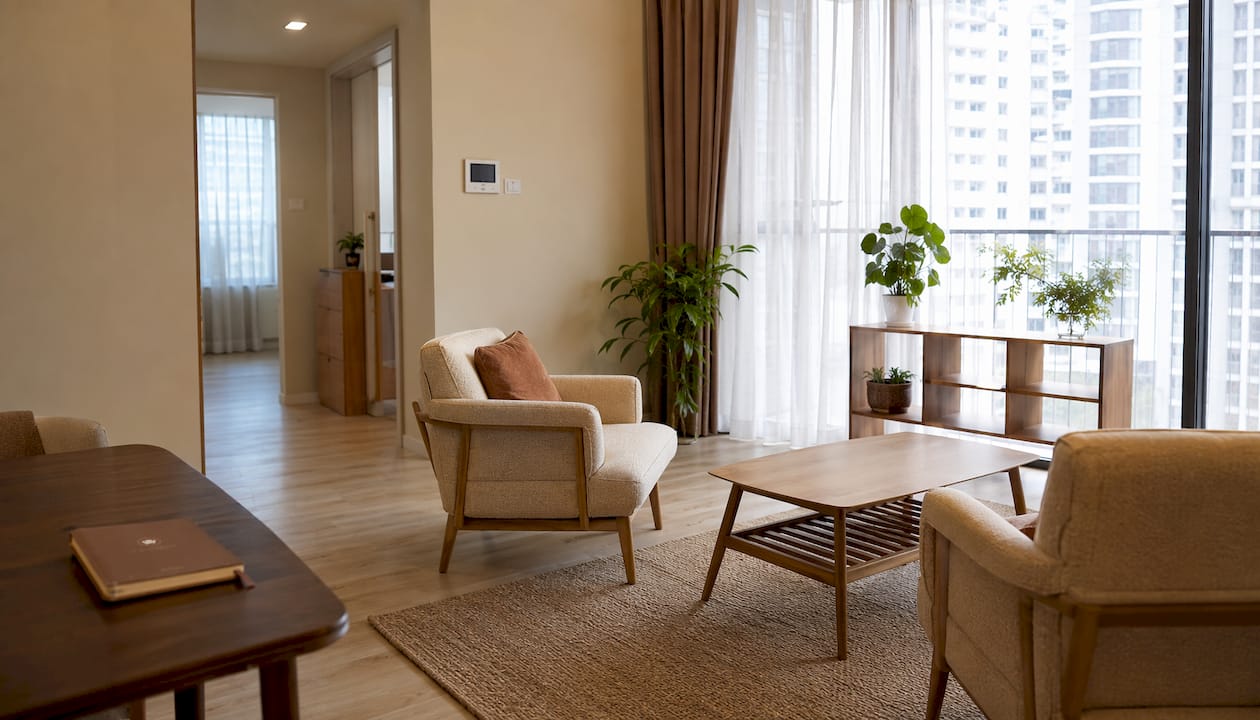
Quality and design coherence vary considerably across these categories. A well-curated fully furnished unit uses coordinated pieces that work together spatially, making the home feel considered rather than assembled from mismatched stock. That design element directly influences tenant satisfaction and the rent a landlord can command.
Why furnished apartments benefit both tenants and landlords
For tenants, the primary benefit is the removal of moving stress. Sourcing, purchasing, transporting, and assembling furniture for a temporary home takes time, money, and considerable effort. A furnished unit eliminates all of that, which is why expats on fixed-term assignments and foreign professionals relocating to Singapore consistently prefer them. The convenience is immediate and tangible.
Furnished apartments also cater well to short-term leases, giving tenants the flexibility to relocate again without the burden of reselling or disposing of furniture.
For landlords, furnishing is a calculated business decision rather than a gesture of goodwill:
- Higher rental income: furnished units command a market premium, reflecting the furniture and styling investment
- Access to premium tenants: expats, corporate housing teams, and relocation packages typically seek furnished properties
- Faster occupancy: a move-in-ready unit reduces void periods between tenancies
- Stronger perceived value: a well-styled interior photographs better and attracts more enquiries
The trade-off is real. Furnishing requires upfront capital and ongoing maintenance. Furniture wears, breaks, and needs replacing. Landlords who treat furnishing as a long-term asset investment, rather than a one-time cost, tend to manage this more effectively. For landlords weighing the numbers, rental furniture for landlords is worth reading before committing to a furnishing approach.
Practical considerations when furnishing an apartment in Singapore
Quality and style selection are not cosmetic decisions. Furniture that is poorly proportioned for a Singapore condo layout, or that clashes visually, reduces the perceived value of the unit and can actively deter tenants. Coordinated interiors that make practical use of limited floor space consistently outperform mismatched arrangements in tenant appeal.
Beyond aesthetics, there are several practical points every landlord and tenant should address:
- Inventory documentation: request a written inventory list before signing any tenancy agreement. No universal standard exists for what a furnished unit must include, so the only reliable protection is a documented list agreed by both parties.
- Condition checks: photograph every item at move-in. Furnished rentals typically carry higher security deposits because of the risk of furniture damage. Detailed photographic records protect tenants from unfair deductions at the end of a tenancy.
- Lease terms: the tenancy agreement should specify which items are included, their condition, and the tenant’s responsibility for maintenance and minor repairs.
- Insurance: tenants should consider contents insurance covering accidental damage to the landlord’s furniture. Landlords should hold building and contents cover that extends to furnished items.
- Maintenance responsibilities: agree in writing who handles replacement of worn or broken items, particularly for longer tenancies where furniture depreciation is a realistic concern.
Pro Tip: Always request the inventory list before you sign, not after. Walk through the unit with the list in hand, note any discrepancies, and photograph every item. This single step prevents the majority of deposit disputes at the end of a tenancy.
Are furnished apartments more expensive to rent?
Furnished apartments are generally priced higher than comparable unfurnished units, with the premium influenced by furniture quality, the level of styling, and lease duration. A short-term lease on a fully furnished condo in Singapore will sit at the higher end of that range. A longer tenancy on a modestly furnished unit may attract a smaller premium.
Factors that shape the price gap:
- Furniture quality: premium pieces and coordinated interiors justify a higher rent than flat-pack basics
- Lease length: short-term tenancies carry a higher monthly rate to offset the landlord’s setup costs over fewer months
- Location and property type: a furnished unit in a prime district commands more than the same specification in a suburban estate
- Inclusions: a fully furnished unit with linens, cookware, and utilities included will price higher than a furnished unit covering furniture only
For tenants, the calculation is straightforward. The rental premium is often offset by the cost of buying, storing, and eventually reselling furniture, particularly for assignments of one to two years. For a short-term furniture rental arrangement, the flexibility alone frequently justifies the additional monthly cost.
How furnished status shapes lease agreements
Furnished apartments tend to attract shorter minimum lease terms. Landlords offering fully furnished units in Singapore commonly accept six-month tenancies, whereas unfurnished landlords typically require twelve months or more. This reflects the tenant profile: expats and corporate travellers need flexibility, and landlords furnishing specifically for that market price and structure leases accordingly.
The tenancy agreement for a furnished unit carries additional clauses that an unfurnished agreement does not. Expect provisions covering the inventory list, the condition of furniture at handover, responsibility for accidental damage, and the process for replacing worn items. Some agreements specify that the tenant must maintain the furniture in its original condition, fair wear and tear excepted. Understanding these clauses before signing protects both parties and prevents disputes that are otherwise difficult to resolve.
Lease duration also affects the economics of furnishing. A landlord renting furnished on a rolling six-month basis will replace furniture more frequently than one with stable two-year tenants. That replacement cycle feeds directly into pricing decisions and the quality of furniture a landlord is willing to invest in initially.
How do furnished apartments compare with serviced apartments?
Furnished apartments and serviced apartments are often confused, but they serve different needs. A furnished apartment is a standard residential tenancy where the unit comes with furniture. The tenant manages their own utilities, cleaning, and daily living independently.
A serviced apartment operates more like a hotel. It includes housekeeping, reception services, and utilities bundled into the monthly fee. The furniture and fittings are typically of a higher specification, and the management is handled by an operator rather than a private landlord.
Short-term rentals, such as those listed on holiday platforms, occupy a different position again. They are designed for stays of days or weeks, priced per night, and regulated differently from standard residential tenancies in Singapore.
The practical distinction for most expats and corporate tenants comes down to duration and independence. A furnished apartment suits someone staying three months to two years who wants a home environment and the freedom to live on their own terms. A serviced apartment suits someone who wants hotel-level support without the formality of a hotel. Short-term rentals work for brief visits but rarely make financial sense beyond a few weeks.
Key takeaways
A furnished apartment is a residential rental unit equipped with essential furniture and household items, ready for immediate occupancy, and generally priced above comparable unfurnished units.
| Point | Details |
|---|---|
| Core definition | A furnished apartment includes beds, sofas, a dining set, and white goods as standard. |
| Three categories | Semi-furnished, furnished, and fully furnished differ by the depth of inclusions provided. |
| Rental premium | Furnished units are generally priced higher than unfurnished equivalents. |
| Inventory documentation | Always obtain a written inventory list and photograph all items before signing a tenancy. |
| Lease flexibility | Furnished units commonly support shorter minimum lease terms, suiting expats and corporate tenants. |
FAQ
What is the difference between furnished and fully furnished?
A furnished apartment provides core furniture such as beds, sofas, and white goods. A fully furnished apartment adds soft furnishings, kitchenware, linens, and décor, making it move-in ready with no additional purchases needed.
Are furnished apartments more expensive to rent?
Furnished apartments are generally priced higher than unfurnished units, with the premium varying by furniture quality, lease length, and location.
What should you check before signing a furnished tenancy?
Request a written inventory list, walk through the unit to verify every item, and photograph the condition of all furniture before signing. This protects your deposit at the end of the tenancy.
Who typically rents furnished apartments in Singapore?
Expats on fixed-term assignments, foreign professionals on corporate relocation, and short-term tenants are the primary renters of furnished apartments in Singapore.
How does a furnished apartment differ from a serviced apartment?
A furnished apartment is a standard residential tenancy with furniture included; the tenant manages utilities and cleaning independently. A serviced apartment bundles housekeeping, utilities, and management services into the monthly fee, operating closer to a hotel model.