

Furnished rentals are defined as residential properties let with furniture, appliances, and household essentials included, and they consistently command higher rent than bare, unfurnished units. The rent premium for furnished properties ranges from 15% to 50% over comparable unfurnished lets, depending on location, property type, and tenant demand. That gap exists because tenants pay for convenience, not just space. Beyond the headline rent, furnished letting also unlocks tax deductions and depreciation benefits that unfurnished landlords cannot access. Understanding why furnished rentals earn more requires looking at tenant behaviour, operating costs, and tax strategy together, not in isolation.
Why furnished rentals earn more than unfurnished properties
The financial advantage of furnished letting starts with tenant demand. Certain tenant groups will pay a measurable premium to move into a home that is ready from day one. Corporate professionals, expatriates, postgraduate students, and short-term contract workers all share one priority: they want to settle in quickly without buying, transporting, or eventually disposing of furniture.
This demand is concentrated in specific locations. Urban areas near central business districts and universities command the largest premiums, with monthly rent differences of £145–£165 on a single one-bedroom apartment in comparable UK urban markets. That figure compounds over a 12-month tenancy into a meaningful income gap.

Furnished units attract mobile tenants such as professionals and expats who prioritise flexibility over long-term commitment. In Singapore, this pattern is especially pronounced. Expats on two or three-year employment passes rarely ship furniture internationally. They actively seek move-in ready condos and apartments, and they budget for the convenience premium as part of their relocation package.
The benefits of furnished rentals also extend to listing appeal. A well-furnished unit photographs better, shows better, and lets faster. Faster letting means fewer void days, which directly protects annual income. Staging a rental listing with quality furniture is not just aesthetic. It is a financial decision.
- Corporate tenants and expats pay a premium for immediate occupancy without furniture investment.
- Short-term contract workers need flexibility and will not commit to buying furniture for a six-month stay.
- Postgraduate students in urban centres often arrive without household goods and prefer furnished options.
- Relocation packages from employers frequently cover furnished accommodation costs, removing price sensitivity.
Pro Tip: Target your furnished rental at tenants whose employers cover accommodation costs. Corporate relocation packages often have fixed budgets that absorb the furnished premium without negotiation.
What are the real costs of running a furnished rental?
The furnished premium is profitable, but it is not free. Landlords who enter furnished letting without accounting for operating costs often find their net returns disappointing. The upfront furniture investment alone can range from S$10,000 to well above S$50,000 depending on unit size and quality standard. That cost must be recovered through the rent premium before any net gain is realised.
Payback periods for furniture investment typically range from 4 to 36 months, depending on the market, the premium achieved, and occupancy rates. A landlord achieving a S$400 monthly premium on a well-furnished two-bedroom condo in Singapore recoups a S$12,000 furniture investment in 30 months. That calculation changes significantly if the unit sits vacant for two months between tenancies.
Tenant turnover is 2–4 times higher in furnished properties than in unfurnished ones. Mobile tenants, by definition, move more often. Each turnover triggers cleaning, inventory checks, minor repairs, and re-letting costs. These are real expenses that reduce net income.
Comparing furnished and unfurnished operating costs
| Cost category | Furnished rental | Unfurnished rental |
|---|---|---|
| Upfront investment | High (furniture, appliances) | Low (fixtures only) |
| Tenant turnover frequency | Higher (mobile tenants) | Lower (settled families) |
| Cleaning and maintenance | More frequent per year | Less frequent per year |
| Security deposit | Higher (covers furniture damage) | Standard |
| Landlord insurance | Specialist policy required | Standard residential policy |
| Void period risk | Moderate to high | Lower in stable markets |
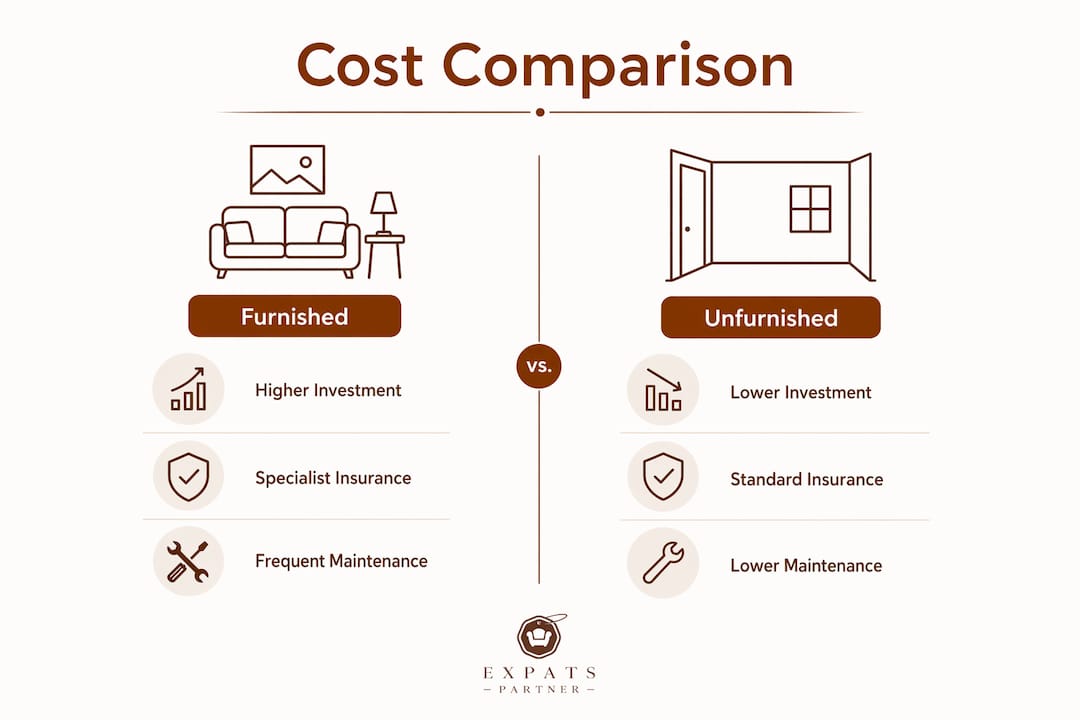
Specialist landlord insurance is non-negotiable for furnished lets. Standard residential policies do not cover furniture damage, and the cost of replacing a sofa, dining set, or bed frame after a difficult tenancy can erase months of premium income.
Commercial-grade furniture is the practical answer to frequent replacement costs. It carries a higher purchase price but withstands tenant turnover far better than domestic-grade pieces. Landlords who furnish with quality from the outset spend less on replacements over a five-year period.
Pro Tip: Opt for furniture rental rather than outright purchase if you are new to furnished letting. It reduces upfront capital risk, keeps your inventory current, and removes the disposal problem when tenants change.
How do tax advantages improve furnished rental income?
Tax treatment is where furnished letting genuinely separates itself from unfurnished letting. The difference is not marginal. Tax optimisation often contributes more to furnished rental earnings than the rent premium alone, potentially doubling net cash flow through classification and deductions.
The mechanism varies by jurisdiction, but the principle is consistent. Furnishing a property changes how rental income is classified, and that classification unlocks deductions that bare property letting does not allow.
Key tax advantages available to furnished landlords include:
- Furniture replacement deductions. Landlords can deduct the cost of replacing furniture, appliances, and household items against rental income. Unfurnished landlords cannot claim these deductions.
- UK Rent-a-Room scheme. This scheme offers tax-free income up to £7,500 annually for furnished rooms let within an owner-occupied property. This is a significant benefit for homeowners letting a spare room.
- French LMNP régime réel. France’s Loueur Meublé Non Professionnel framework classifies furnished rental income as commercial profit. Under the régime réel, landlords can offset depreciation on both furniture and the property structure against rental profits.
- Depreciation benefits. Under the LMNP régime réel, taxable income can be reduced close to zero for 8–15 years through depreciation calculations. The 2025 reform requires reintegration of depreciation into capital gains at sale, but annual income tax benefits remain substantial.
Proper tax planning enhances furnished rental profitability more significantly than the simple rent differential in many cases. Landlords who treat tax strategy as an afterthought leave material income on the table. The classification of rental income as commercial activity, as seen under France’s BIC regime, requires local registration and different tax filings, but the annual benefit justifies the procedural complexity for most investors.
The Singapore context differs from the UK and French frameworks, but the principle of deducting furnishing and maintenance costs against rental income applies. Landlords in Singapore should work with a tax adviser to confirm which expenses qualify as deductible against their rental income declarations.
How does location shape your furnished rental strategy?
Location determines whether the furnished premium is worth pursuing. The same furnished unit in two different locations can produce very different financial outcomes. Understanding this shapes a sound investment strategy.
| Location type | Tenant profile | Premium potential | Void risk | Recommended strategy |
|---|---|---|---|---|
| Central urban, near CBD | Professionals, expats | High (up to 50%) | Moderate | Fully furnished, short or medium term |
| University district | Students, researchers | Moderate to high | Seasonal | Furnished, flexible lease terms |
| Suburban residential | Families, long-term tenants | Low to moderate | Low | Unfurnished or lightly furnished |
| Tourist or short-stay area | Visitors, contractors | Very high (gross) | High | Short-term furnished, licence required |
Central urban areas produce the strongest case for furnished letting. Tenants in these locations are transient by nature, and they value convenience over cost savings. The furnished premium is profitable when landlords target high-demand areas where tenants prioritise hassle-free, fully-equipped homes.
Suburban family-oriented locations tell a different story. Settled families prefer unfurnished properties because they already own furniture and want to personalise their home. Offering a furnished unit in a suburban area often narrows your tenant pool without delivering a meaningful premium.
Short-term furnished lets can generate the highest gross revenue of any letting strategy, but they require licensing compliance, higher furnishing standards, and significantly more operational effort. They are viable primarily for landlords with strong local management in place or those who manage properties hands-on.
A mixed portfolio approach works well for investors with multiple units. Furnished units in central locations capture the premium income. Unfurnished units in stable residential areas provide consistent, lower-maintenance cashflow. The two strategies balance each other across the portfolio.
Key takeaways
Furnished rentals earn more because they combine a meaningful rent premium with tax advantages and strong tenant demand, but only when managed with discipline and placed in the right locations.
| Point | Details |
|---|---|
| Rent premium is real | Furnished properties command 15%–50% more rent than unfurnished equivalents in urban markets. |
| Tenant profile drives the premium | Expats, professionals, and short-term tenants pay more for move-in ready homes without negotiation. |
| Operating costs must be managed | Higher turnover, maintenance, and insurance costs reduce net income if not planned for from the outset. |
| Tax strategy multiplies returns | Deductions on furniture replacement and depreciation can contribute more to net income than the rent premium alone. |
| Location determines viability | Central urban areas near business districts and universities produce the strongest furnished rental returns. |
Our view on furnished letting as a long-term income strategy
The furnished premium is real. We have seen it play out consistently in Singapore’s expat rental market, where demand for move-in ready condos and apartments remains strong across the CBD fringe, Orchard, and East Coast corridors. But the premium does not manage itself.
The landlords who do well with furnished letting share a few consistent habits. They choose locations where tenant demand for furnished homes is structural, not seasonal. They invest in quality furniture from the outset rather than cutting costs with pieces that need replacing every two years. And they treat tax planning as part of the investment decision, not an annual filing exercise.
The mistake we see most often is landlords who furnish a property in the wrong location. A beautifully furnished unit in a suburban area with no expat or corporate tenant demand will sit vacant longer and earn less than a plainly furnished unit in the right postcode. Location selection is the single most important decision in furnished letting strategy.
Operational readiness matters just as much. Furnished units require faster turnaround between tenancies, more frequent inspections, and reliable maintenance contacts. Landlords without a trusted local agent or management arrangement find that the operational burden erodes the financial advantage. The solution is not to avoid furnished letting. It is to build the right support structure before the first tenant moves in.
For landlords in Singapore, furniture rental rather than outright purchase is often the more practical starting point. It reduces capital tied up in depreciating assets, keeps the unit looking current, and removes the logistical challenge of disposal when tenants change or the property is sold. The financial case for landlords who rent furniture rather than buy it is stronger than most assume.
— Expats Partner
Furnished rental solutions for Singapore landlords
Landlords in Singapore who want to capture the furnished rental premium need quality furniture that holds up across multiple tenancies, and a reliable partner who understands the expat rental market.
Expats Partner provides furniture rental for landlords and investors across Singapore, with flexible lease terms, durable furniture packages, and reliable delivery and setup. Whether you are furnishing a one-bedroom condo for a corporate tenant or a three-bedroom apartment for a relocating family, Expats Partner has packages designed to get your unit viewing-ready quickly. Our furniture rental packages cover full-home furnishing with clear pricing and no hidden costs, so you can calculate your returns with confidence before committing. Speak to the team to find the right package for your property and tenant profile.
FAQ
How much more rent does a furnished property earn?
Furnished properties earn 15%–50% more than comparable unfurnished units, with the largest premiums in urban areas near business districts and universities.
Is furnished letting worth it for Singapore landlords?
Furnished letting is worth it in Singapore when the property is in a location with strong expat or corporate tenant demand, such as the CBD fringe, Orchard, or East Coast areas. The premium is most reliable when paired with quality furnishing and a clear tenant profile.
What are the main costs of a furnished rental?
The main costs include upfront furniture investment, higher cleaning and maintenance frequency, specialist landlord insurance, and re-letting costs from higher tenant turnover. Planning for these from the outset protects net returns.
Can I deduct furniture costs from my rental income tax?
In many jurisdictions, landlords can deduct furniture replacement costs against rental income. In the UK, the Rent-a-Room scheme offers tax-free income up to £7,500 annually. Singapore landlords should confirm deductible expenses with a local tax adviser.
Is furniture rental better than buying furniture for a rental property?
Furniture rental reduces upfront capital outlay, keeps inventory current, and removes disposal costs when tenants change. For landlords new to furnished letting or managing multiple units, renting furniture is often more cost-effective than purchasing outright.