
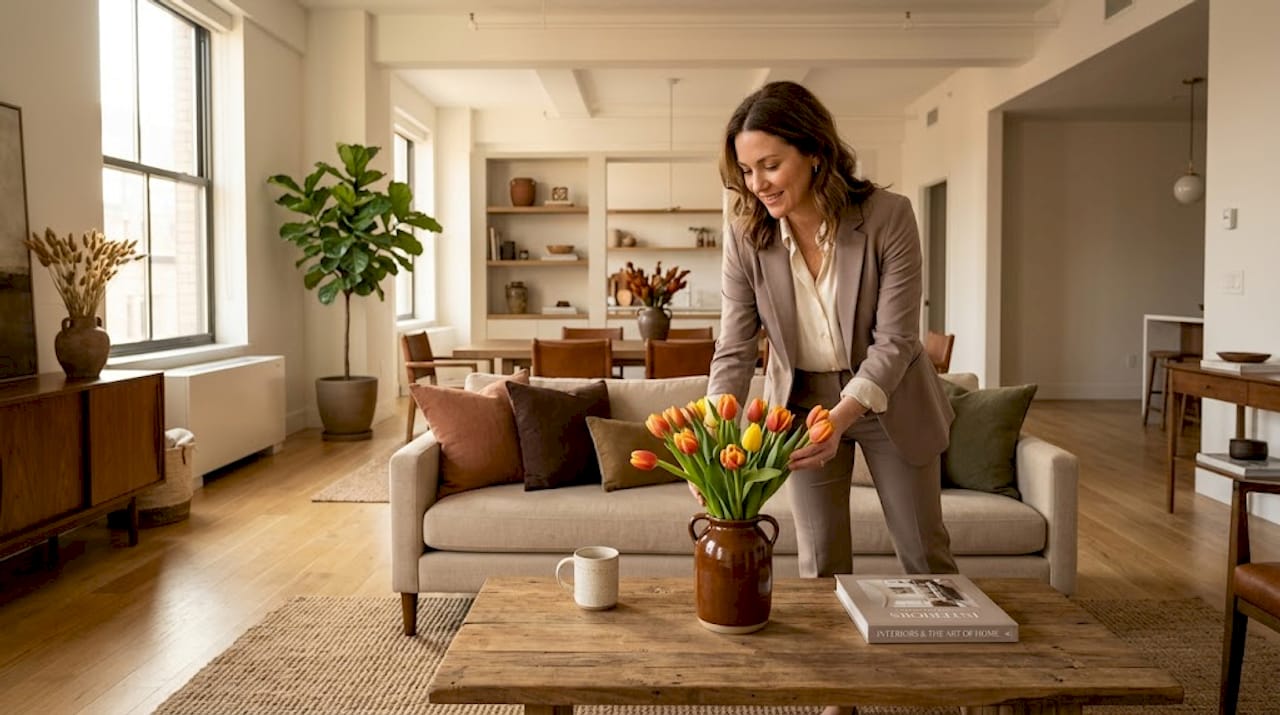
Many sellers assume staging is decorating. It is not. Understanding why staged homes attract more offers requires looking at the psychology behind how buyers make decisions and the numbers that follow. Staged homes sell 73% faster than unstaged properties, and offers routinely come in higher. That gap does not appear by chance. It is the direct result of staging working on buyer perception, emotional response, and competitive urgency at the same time. This article breaks down exactly how that happens, and what it means for your next sale.
Table of Contents
- Key takeaways
- Why staged homes attract more offers
- The financial case for staging
- Physical vs virtual staging: choosing wisely
- Practical staging strategies that generate offers
- Staged vs unstaged: the comparison that matters
- My perspective on staging and offers
- Ready to attract stronger offers?
- FAQ
Key takeaways
| Point | Details |
|---|---|
| Staging drives emotional connection | Buyers who feel an emotional pull towards a property are far more likely to make an offer above asking price. |
| Measurable financial return | Mid-level staging can deliver a 350% return on investment, adding significantly more value than it costs. |
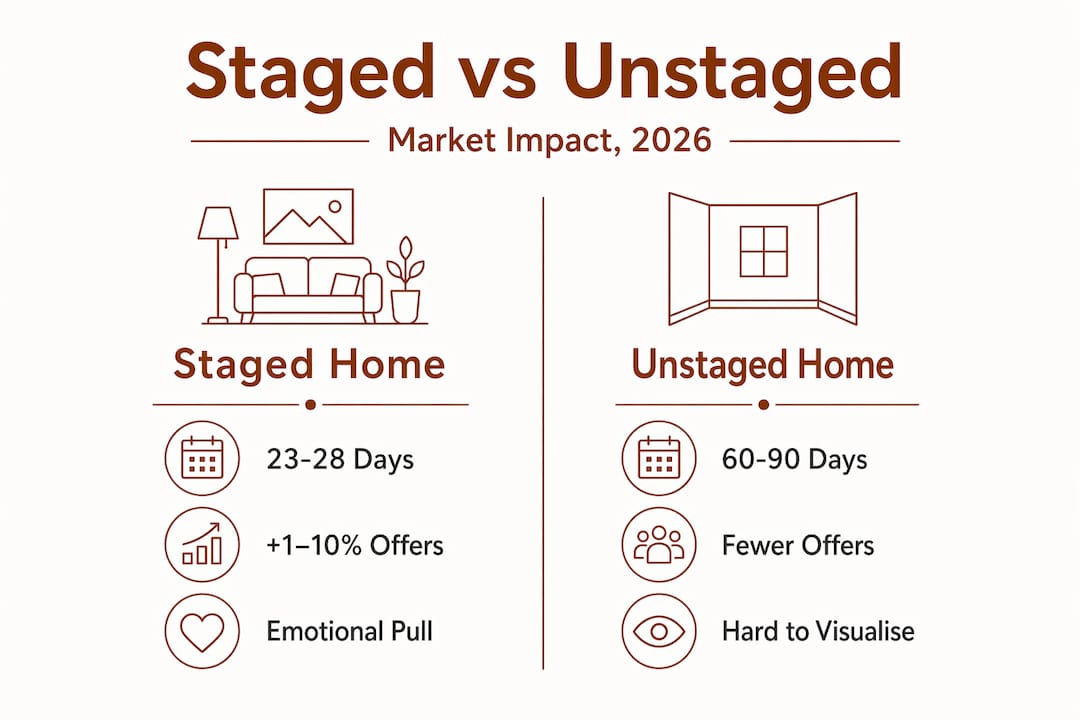
| Speed matters as much as price | Staged homes close in 23 to 28 days on average, compared to 60 to 90 days for unstaged properties. |
| Staging type affects buyer trust | Virtual staging is cost-effective but must be disclosed honestly to avoid damaging buyer confidence. |
| Neutral presentation wins broadly | Neutral, uncluttered styling appeals to the widest pool of buyers and reduces hesitation at viewings. |
Why staged homes attract more offers
The core reason staging works is not visual. It is psychological. When a buyer walks into a well-staged property, they stop evaluating a house and start imagining a life. That shift matters enormously because most purchase decisions, including high-value ones, are driven by emotion first and logic second.
“Staging helps buyers imagine lifestyle and flow instantly, driving emotional buying and higher offers.” — Michael Fowler Creative, 2026
83% of buyers’ agents agree that staging helps buyers visualise the property as their future home. That figure is not a small margin. It means the vast majority of people walking through a staged home are experiencing it as a potential future rather than a present listing.
This matters for multiple offers in a specific way. When buyers can picture themselves living somewhere, they become emotionally invested. Emotionally invested buyers do not walk away easily. They compete. They submit offers above asking price to avoid losing the property to someone else. That competitive dynamic is precisely what generates the bidding situations sellers want.
Consider the difference between viewing an empty room and one that has been furnished with a comfortable sofa, soft lighting, and a well-placed rug. The empty room forces the buyer to use their imagination without any guidance. The staged room tells them the story without saying a word. Buyers who need to fill in the blanks themselves often fill them with doubt rather than desire.
- Staging removes buyer uncertainty about scale, function, and liveability.
- Furnished rooms look larger and more purposeful in listing photographs.
- Buyers spend more time in staged homes during viewings, increasing emotional attachment.
- A staged home photographs better, driving higher online click-through rates before viewings even begin.
The financial case for staging
The numbers behind home staging effectiveness are clearer in 2026 than they have ever been. Sellers who stage strategically are not spending money on decoration. They are making a calculated investment with a documented return.
Staged homes close in 23 to 28 days, compared to 60 to 90 days for vacant or unstaged properties. That is a reduction of more than 60% in time on market. For a seller carrying mortgage payments, maintenance costs, or opportunity costs on a property, that time difference alone can justify the staging spend.
On price, offers on staged homes run 1% to 10% higher than on comparable unstaged listings. On a $1.5 million property in Singapore, a 5% premium means an additional $75,000 at closing. That figure reframes how sellers should think about staging budgets entirely.
The return on investment data is even more striking. Mid-level professional staging can deliver up to 350% ROI, turning a $4,000 staging investment into approximately $18,000 of added sell value. That is not a marginal improvement. That is a structural advantage.
| Metric | Staged home | Unstaged home |
|---|---|---|
| Average time on market | 23 to 28 days | 60 to 90 days |
| Offer price relative to listing | 1% to 10% above | At or below listing |
| Estimated staging ROI | Up to 350% | Not applicable |
| Buyer visualisation ease | 83% positive | Significantly lower |
One important clarification: staging increases perceived value but does not directly affect a home’s appraised value. What it does affect is buyer competition. And buyer competition is what pushes offers above the appraised baseline. That distinction helps investors in particular understand where staging’s financial power actually sits.
Pro Tip: If you are deciding between staging the entire property or focusing on key rooms, prioritise the living room, master bedroom, and kitchen. These three spaces drive the most emotional response during viewings and dominate listing photography.
Physical vs virtual staging: choosing wisely
Not all staging is created equal, and the type you choose has real consequences for buyer trust and final offers.
Physical staging involves bringing in actual furniture, artwork, and accessories to dress the property for viewings. It produces a genuine in-person experience and is particularly effective for high-value properties where buyers are making careful decisions based on how a space feels, not just how it looks in photographs.
Virtual staging uses digital tools to add furniture and styling to photographs of empty rooms. The cost is substantially lower and the turnaround is fast. For listings where the primary goal is generating online enquiries and driving viewings, virtual staging can perform well. However, the risk is clear: if buyers arrive at a viewing expecting the furnished space they saw online and instead find an empty property, trust breaks down immediately.
- Physical staging: Creates genuine emotional connection during viewings; higher upfront cost; best for premium and mid-range properties.
- Virtual staging: Lower cost and faster to produce; works well for online listings; must be clearly disclosed to buyers.
- Hybrid approach: Virtual staging for online marketing combined with selective physical staging of the most important rooms.
Transparency is not optional when using virtual or AI-generated staging imagery. Authenticity regarding virtual staging is considered non-negotiable for maintaining buyer trust. Disclosing that images are digitally staged and providing accurate photos of the actual space alongside them is both ethical and strategically sensible.
Knowing which approach suits your property is part of a broader decision about staging strategy. Exploring the latest staging trends in Singapore can help you make that choice with confidence, particularly in a market where buyer expectations are shifting alongside technology.
Pro Tip: When using virtual staging images in a listing, label them clearly as “virtually staged” in the image caption or listing description. This preserves trust and avoids the risk of buyers feeling misled when they attend the viewing.
Practical staging strategies that generate offers
Understanding why buyers prefer staged homes is one thing. Applying that understanding strategically is another. These are the staging choices that consistently produce competitive offers.
-
Stage the entrance first. The moment a buyer crosses the threshold, their emotional response begins forming. A clean, welcoming entryway with good lighting and a simple decorative element sets a positive first impression that colours everything they see next.
-
Use neutral tones throughout. Neutral, buyer-ready styling appeals to the broadest pool of buyers. Bold colours or highly personal décor narrows appeal. Soft whites, warm greys, and natural materials allow buyers to project their own vision onto the space.
-
Define each room’s purpose. An open space with no furniture reads as wasted square footage. A room with a desk, a chair, and a well-placed lamp reads as a productive home office. Giving every room a clear identity helps buyers see the full value of the floor plan.
-
Prioritise listing photography. Staging is not just for in-person viewings. Most buyers see a property online before they ever visit. Furniture placement, lighting, and accessory choices that photograph well will increase click-through rates and drive more viewings, which means more competing buyers in the room.
-
Choose furniture that enhances scale. Oversized furniture makes rooms feel smaller. Appropriately scaled pieces open up space and make rooms feel larger than they are. This applies to both physical and virtual staging choices.
-
Remove personal items and clutter. Family photographs, personal collections, and excess furniture are some of the most common costly staging mistakes. They anchor the space to someone else’s life rather than the buyer’s potential future.
Staged vs unstaged: the comparison that matters
To understand does home staging increase offers, it helps to look directly at the contrast between staged and unstaged properties across the metrics that sellers and investors care about most.
| Factor | Staged home | Unstaged or empty home |
|---|---|---|
| Time on market | 23 to 28 days | 60 to 90 days |
| Number of offers received | Multiple, often competitive | Fewer, often single offers |
| Offer price relative to asking | 1% to 10% above | At or below asking |
| Buyer engagement during viewing | High; buyers linger and explore | Lower; buyers move through quickly |
| Online listing performance | Strong click-through rates | Below average click-through rates |
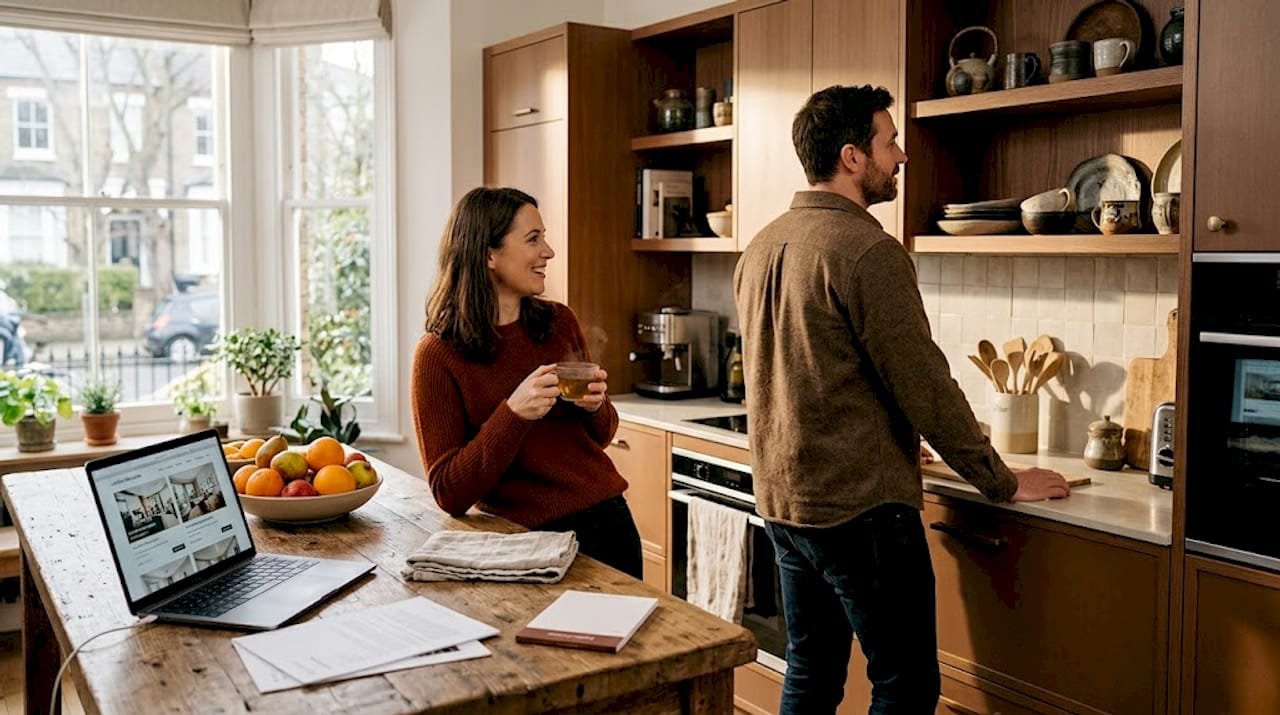
Buyer behaviour inside the property tells its own story. In a staged home, buyers slow down. They sit on sofas, open kitchen cupboards, and stand at windows. That physical engagement is a reliable signal of emotional investment. In an empty or cluttered property, buyers tend to walk through faster, cataloguing concerns rather than imagining possibilities.
The contrast in online performance is equally significant. Staged homes generate stronger listing photographs, which directly affects how many buyers request a viewing. Fewer viewings mean fewer offers. More viewings, with emotionally engaged buyers, create exactly the competitive conditions that produce multiple offers and price escalations.
My perspective on staging and offers
I have seen sellers approach staging as a last resort, something they add when a property has been sitting on the market for weeks without movement. That sequence is backwards.
In my experience, the sellers who achieve multiple competitive offers almost always stage before the property lists, not after. The difference is not just cosmetic. A property that launches with strong photography, a clear spatial narrative, and well-chosen furnishings enters the market in its best possible position. Buyers who view it early, when energy is high and competition is forming, make emotional decisions quickly.
What I have also noticed is that staging influences the negotiation phase as much as the offer phase. When a buyer has experienced a beautifully presented home and formed an emotional attachment, they are far less likely to negotiate aggressively on price. The psychological investment they have made in the property becomes a form of leverage for the seller.
The one mistake I would encourage sellers and investors to avoid is confusing staging with over-staging. The goal is not to impress buyers with a showroom. It is to create a calm, liveable space they can see themselves in. Restraint, particularly with accessories and colour, almost always outperforms maximalism.
Invest in staging before you list. Choose neutral, quality pieces. Be honest about virtual staging if you use it. The financial results follow from those decisions consistently.
— EP
Ready to attract stronger offers?
If this article has clarified the real value behind staging, the next step is putting that understanding to work on your property. Com works with property owners, expatriates, and real estate professionals across Singapore to create viewing-ready homes that attract high-value buyers.
Whether you are preparing a condominium for sale or managing an investment property portfolio, our team combines designer furniture, expert styling, and deep market knowledge to give your listing the competitive edge it needs. From practical guidance on effective staging methods to curated furniture selection and full styling services, we handle the details so you can focus on the outcome. Explore our practical staging advice to see exactly how we approach each property and what it means for your sale.
FAQ
Why do staged homes sell faster than unstaged ones?
Staged homes help buyers visualise the space as their future home, which increases emotional engagement and speeds up decision-making. Properties close in 23 to 28 days on average when staged, compared to 60 to 90 days for unstaged listings.
Does home staging increase offers above asking price?
Yes. Offers on staged properties are typically 1% to 10% higher than on comparable unstaged homes, driven by emotional buyer competition rather than changes to appraised value.
Is virtual staging as effective as physical staging?
Virtual staging performs well for online listings and costs significantly less, but it must be clearly disclosed to buyers. Physical staging creates a stronger emotional connection during in-person viewings and is generally recommended for premium properties.
What rooms should be staged first?
Prioritise the living room, master bedroom, and kitchen. These three spaces carry the most emotional weight for buyers and dominate listing photography, making them the highest-impact areas for staging investment.
Can staging hurt a sale?
Over-staging or using bold, personal décor can narrow buyer appeal. Neutral styling that appeals broadly, with clear spatial definition and no clutter, consistently outperforms heavily decorated or personalised presentations.