

Temporary housing shortens the disruption of moving, protects your family’s wellbeing, and buys you time to choose the right permanent home instead of settling for the first lease you find. Mobility research consistently links well-chosen short-term accommodation to faster settling and stronger work performance during relocation, while poorly chosen temporary stays create the kind of stress that follows a household for months.
Here’s what good temporary housing does for you during a move:
- Stability for routines — children keep school schedules, adults keep work hours, and daily life doesn’t collapse into chaos
- Time to search properly — you view homes without the panic of an expiring hotel booking
- Better financial outcomes — avoiding a rushed lease signed under pressure, which often costs more over time
- Reduced stress for the whole household — partners and children adjust more calmly with a stable base
- Continuity for employers — staff who settle faster return to full productivity sooner
Mobility experts increasingly treat temporary housing as a risk-mitigation strategy rather than a logistics afterthought, and the data backs that framing: high-quality temporary housing measurably reduces assignment failure and speeds up the return to full productivity.
Key Takeaways
Temporary housing works because it protects routines, productivity, and family wellbeing while buying time to make a considered permanent housing decision instead of a rushed one.
| Point | Details |
|---|---|
| Match housing type to stay length | Choose extended-stay hotels or coliving under a month; apartment-style options for six weeks or more. |
| Book early to secure quality | Early planning and preferred-supplier arrangements consistently produce better rates and consistent quality. |
| Budget beyond the nightly rate | Factor in deposits, utilities, cleaning fees, and move-in essentials before comparing prices. |
| Settle routines before boxes | Re-establishing bedtime, meals, and workspace matters more for wellbeing than full unpacking. |
| Furnish without buying | Expats Partner’s short-term furniture rental and move-in-ready packages furnish a temporary home quickly with transparent pricing and delivery included. |
Sources and further reading
Guidance drawn from HDB’s Home Improvement Programme framework on temporary housing during renovation works, URA’s planning classification for serviced apartments, and the Corporate Housing Providers Association’s definition of corporate housing. Mobility-industry commentary from HRM Asia, GMS Mobility, and NuCompass Mobility informed the productivity and cost analysis throughout.
Table of Contents
- What counts as temporary housing during a move?
- Why temporary housing matters during relocation
- How to choose temporary housing for your household
- Planning the timeline, booking window, and costs
- Settling into temporary housing quickly
- What we see most often at Expats Partner
- How Expats Partner makes your temporary home work from day one
- FAQ
What counts as temporary housing during a move?
Temporary housing sits between a hotel room and a signed tenancy. It’s furnished, flexible in length, and designed for stays that run from a few weeks to several months, without the nightly cost of a hotel or the twelve-month commitment of a standard lease.
The category covers several distinct options, and the differences matter more than most people expect when they start searching.
Serviced apartments are a regulated category with their own planning classification, distinct from ordinary residential leases or hotels. They typically come with housekeeping, front-desk support, and full kitchens, which makes them a strong fit for families who need to cook properly and want a hotel-level safety net. The trade-off is cost: serviced apartments usually sit at the premium end of the temporary housing spectrum.
Corporate housing is purpose-built furnished accommodation designed specifically for employee relocations and extended work assignments. It’s often apartment-style rather than hotel-style, with more space and a more residential feel, and it’s the default choice for many HR and mobility teams managing staff moves.
Furnished short-term rentals are private homes or condo units let out fully furnished for weeks or months at a time. They offer the most variety in size, layout, and neighbourhood, which suits families who want a specific school catchment or a particular commute. Quality varies more here than in the other categories, so vetting the provider matters.
Coliving spaces bundle a private bedroom with shared communal areas: kitchens, lounges, sometimes coworking space. They work well for single professionals relocating alone but rarely suit families, given the shared-space model.
Extended-stay hotels sit closest to traditional hotel service, usually including utilities and housekeeping as standard. Space and kitchen facilities vary a lot between properties, and that variance directly affects how suitable one is for a family that needs to cook, do laundry, and spread out rather than live out of suitcases.
A few patterns hold across household types:
- Singles and couples on shorter assignments tend to do well in coliving or extended-stay hotels
- Families need the extra space and kitchen access that serviced apartments or furnished rentals provide
- Stays under a month favour hotel-style options; stays over six weeks usually favour apartment-style options with full kitchens and separate living areas
The right choice depends less on which category sounds best and more on how long you’ll actually be there and who’s living with you.
Why temporary housing matters during relocation
The practical case for temporary housing is straightforward: it removes the two worst decisions people make under pressure, which are signing a long lease sight unseen and skipping proper due diligence on a rushed short-term booking. But the case runs deeper than logistics. Mobility research treats a good temporary stay as an investment in what’s sometimes called “human sustainability” — protecting the people and routines that make a relocation actually work, not just the paperwork that gets someone from one country to another.
Start with productivity. Companies that get temporary housing right see staff return to full output faster, because the disruption to daily life is contained rather than compounding. A relocating employee who spends the first six weeks fighting over what apartment to sign, arguing with a landlord about a deposit, or living out of a suitcase in a cramped hotel room is not doing their best work. That cost is real, even though it rarely shows up on a spreadsheet.
The hidden cost of rushing it: Poor temporary-housing choices, unvetted short-term rentals, and accommodation with inadequate amenities create genuine security, support, and continuity risks for people who’ve just relocated. One widely cited figure in the relocation industry pegs the cost of a single failed relocation, driven by exactly this kind of poor housing decision, at well over a million dollars in lost productivity, replacement hiring, and disruption. Whether or not that number applies to your specific move, the underlying pattern holds: cutting corners on temporary housing rarely saves money once you account for the fallout.
The financial argument against rushing is worth sitting with. A slightly more expensive but genuinely well-suited temporary stay often shortens the overall length of the temporary period, because you’re not scrambling to escape a bad situation after two weeks. That’s the total-cost view mobility teams have learned to apply: the cheapest nightly rate isn’t the cheapest outcome if it forces an early, costly move to something better.
There’s also a policy lesson buried in how the best-run relocation programmes operate. Rather than applying a rigid, one-size-fits-all housing budget to every relocating employee, the most effective mobility policies set a defined budget alongside local discretion, letting the specifics of family size, city, and season adjust the plan. Individuals and families relocating independently can apply the same logic: set a ceiling, then let your actual circumstances, not a generic average, decide where within that ceiling you land.
Then there’s the part that doesn’t show up in any HR report: how a family actually feels during those first weeks.
- Routines survive — a stable kitchen table means dinner still happens at a normal time, and children keep a bedtime that resembles the one they had before the move
- Space for family life — a serviced apartment or furnished rental with a proper living room means the household isn’t confined to a single hotel room
- Privacy for hard decisions — choosing a permanent home is stressful; doing it while also negotiating shared hotel space with three children adds a layer of friction nobody needs
- Mental bandwidth — every decision made calmly in temporary housing is one less decision made in a panic
That mental bandwidth point matters more than it sounds. Relocation asks a lot of a household in a short window: school enrolment, new banking, new commutes, new social circles. A temporary home that functions properly, where you can cook a normal meal and sleep in a proper bed, frees up the emotional capacity to handle those other tasks without everything feeling like a crisis at once. A move-in ready furniture rental for a temporary stay does exactly this kind of quiet, practical work: it removes one entire category of decision from a period already full of them.
How to choose temporary housing for your household
Choosing well starts with an honest inventory of what your household actually needs, not what looks appealing in a listing photo. Work through these criteria in order, because each one narrows the field before the next becomes relevant.
- Confirm your realistic stay length first. Under four weeks points you towards extended-stay hotels or coliving; six weeks or more makes an apartment-style option, serviced or furnished rental, worth the extra setup effort.
- Set a budget ceiling that includes everything, not just nightly rate. Utilities, parking, and service fees can add a meaningful percentage on top of the headline price, particularly with serviced apartments.
- Map household composition against layout. A couple with a baby needs a separate bedroom far more urgently than storage space; two teenagers need a second bathroom more than a scenic view.
- Check the workspace situation before you book. If anyone in the household needs to work from the temporary home, confirm there’s a proper desk and reliable internet, not just a coffee table and hope.
- Look at school commute realistically, not optimistically. A property that looks fine on a map can mean an hour each way at peak traffic; check actual travel times at the times you’ll actually be travelling.
- Ask about pet policies explicitly and in writing. Many furnished rentals and serviced apartments restrict pets or charge additional deposits, and this is not always obvious from the listing.
- Assess the neighbourhood for daily life, not just safety. Proximity to a supermarket, a pharmacy, and public transport matters more day to day than most people expect when they’re focused on the property itself.
- Verify internet and utilities are genuinely included and functional. Ask specifically about internet speed if remote work is part of the picture, since “included” doesn’t always mean “adequate.”
When trade-offs are unavoidable, and they usually are, prioritise in this order: safety and location first, then space and layout, then furnishings and finish, then price. A cheaper property in the wrong location costs more in commute time and stress than the money it saves.
Before booking, ask any provider or host these questions directly:
- What exactly is included in the quoted price, and what costs extra?
- What’s the minimum stay, and what happens if I need to extend?
- Is the internet connection tested and confirmed working, not just advertised?
- What’s the cancellation or change policy if my relocation timeline shifts?
Pro Tip: Ask for photos taken within the last month, not stock images from when the property was first listed. Furnished rentals change tenants often, and “furnished” can mean anything from a fully equipped kitchen to a sofa and not much else.
Planning the timeline, booking window, and costs
Stays under a month typically price per night and cost more per day than longer bookings; most providers apply meaningfully lower daily rates once a stay crosses the 30-day mark, which is why matching your realistic length to the right pricing tier matters from the outset. Booking a month-long rate and leaving after two weeks wastes money; booking a short-stay rate and needing to extend repeatedly usually costs more than committing to the longer term upfront.

Lead time matters more than most people assume. Mobility teams and experienced relocation planners recommend booking as early as possible and, where practical, arranging preferred-supplier relationships in advance, because early planning consistently secures better rates and more consistent quality than last-minute booking. During peak relocation seasons, typically aligned with the start of school terms and the middle of the year when many corporate transfers happen, good properties get booked out weeks ahead. Waiting until you land is the single most common mistake in this entire process.
Extensions and holds work differently depending on provider type. Serviced apartments and corporate housing providers usually allow extensions if requested with reasonable notice, often a week or two, though rates can shift if you extend into a different pricing tier. Furnished short-term rentals booked through individual hosts are less predictable; always confirm extension terms in writing before you sign anything, not after you need one.
Budget for these items beyond the headline rental figure:
- Security deposit — often equivalent to several weeks’ rent, refundable but tied up for the duration
- Utilities — sometimes included, sometimes billed separately; confirm which before booking
- Cleaning fees — a common add-on for shorter stays, occasionally waived for longer bookings
- Move-in essentials — bedding, basic kitchenware, and toiletries if the property doesn’t supply them fully
Getting these numbers clear before you commit avoids the most common source of relocation-budget shock: discovering the “all-inclusive” price wasn’t quite that.
Settling into temporary housing quickly
A temporary home starts to feel like home the moment it stops looking like a hotel room, and that shift usually takes less effort than people expect.
Small personal touches do most of the work. Bringing family photos, even printed ones stuck to a fridge with a magnet, changes a space more than any amount of matching decor. Soft textiles, a throw blanket, proper pillows, a rug underfoot, soften the generic feel that most furnished properties start with. Lighting matters too: swapping harsh overhead lighting for a warm lamp in the evening makes a rented living room feel considerably less clinical within a single evening.

For children, re-establishing a routine fast matters more than the decor does. The same bedtime, the same breakfast routine, the same evening wind-down, signals to a child that life is stable even though the address has changed. A workspace matters just as much for adults: even a small desk with a proper chair, set up on day one rather than “eventually,” makes remote work sustainable rather than something done hunched over a laptop on a bed.
The essentials checklist for a move-in ready temporary home is shorter than most people think:
- A proper bed, not an inflatable mattress that ruins sleep quality within a week
- A dining table, even a small one, so meals happen at a table rather than on a lap
- A functional workspace with a desk and chair
- Basic kitchenware: pots, plates, cutlery, enough to cook a real meal
Furniture rental is a practical way to cover this list without buying items you’ll discard within months. Renting the essentials for the length of a temporary stay avoids both the cost of furnishing from scratch and the hassle of disposing of it all when the lease ends, which matters most when the stay itself has a defined end date.
Pro Tip: Unpack the kitchen and bedroom first, even if boxes stack up everywhere else. Being able to cook a proper meal and sleep in a made bed on night one does more for how settled a family feels than having every box unpacked by day three.
What we see most often at Expats Partner
Working with relocating households and companies day to day, a few patterns repeat constantly. The most common one is timing: people book their flights, sort their visas, and leave furnishing the temporary home until the final week, then scramble. That scramble almost always costs more, in money and in stress, than planning even two weeks earlier would have.
The second pattern is underestimating family-specific needs. A single professional can improvise with a hotel room for a fortnight; a family with two children and a dog cannot, and the gap between “technically has a bed” and “actually workable for this household” is where most complaints originate.
Early coordination solves both problems. When furnishing and housing decisions get made alongside the moving timeline, rather than after it, households avoid the emergency costs and mismatched properties that define a bad relocation story. The households who plan furniture and layout before the move date, not after arrival, consistently report a calmer first month.
How Expats Partner makes your temporary home work from day one
Expats Partner is the practical shortcut for anyone relocating who needs a temporary home furnished properly without buying furniture you’ll only use for a few months. Rather than sourcing a bed here, a dining table there, and hoping delivery windows line up before your flight lands, you get a full-home furniture package assembled, delivered, and set up before you arrive, or within days of moving in.
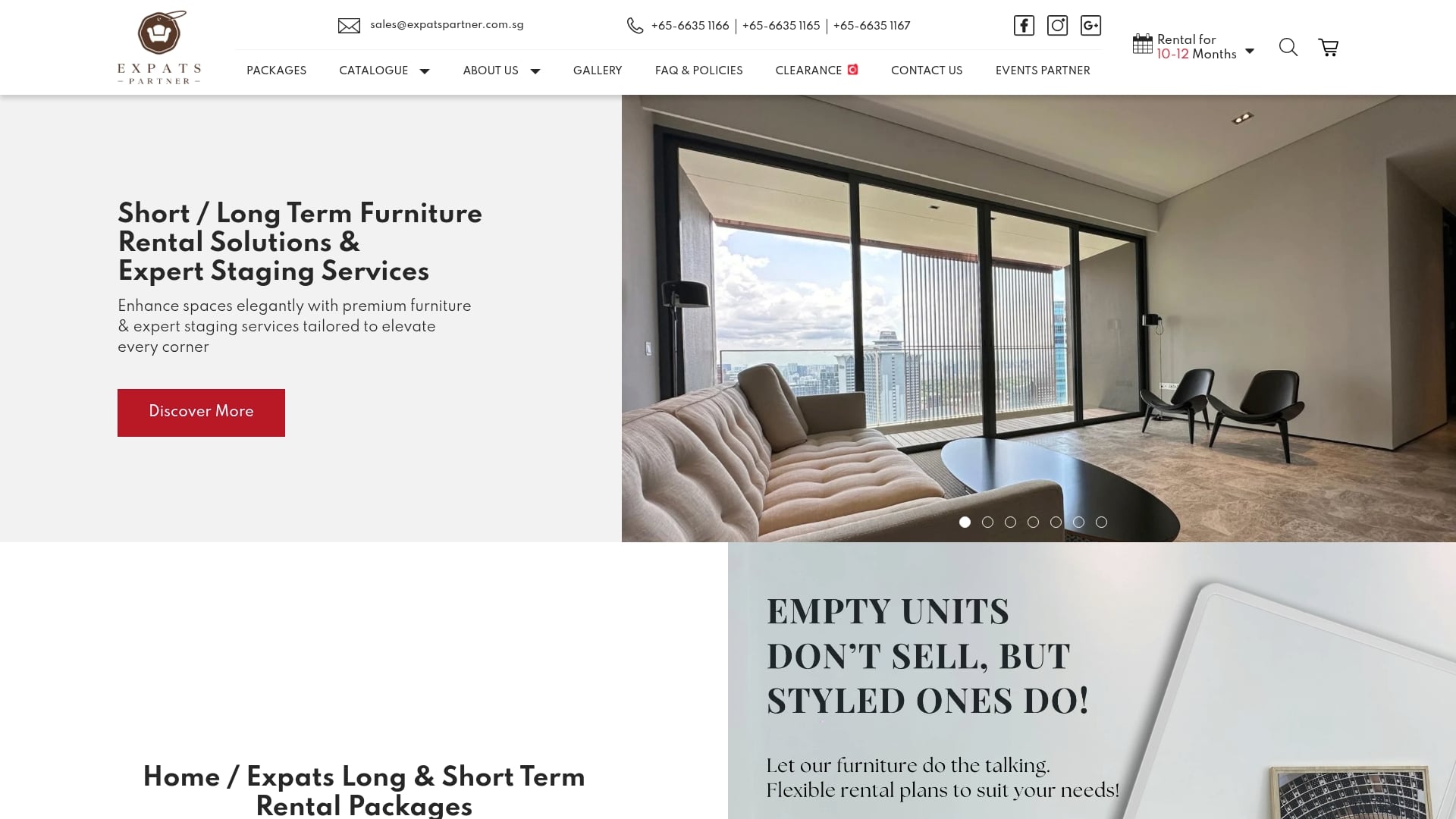
That speed matters against everything covered above: the households who settle fastest are the ones who spend their first weekend at a functioning dining table rather than hunting for a mattress supplier. Expats Partner’s short-term furniture rental packages are built specifically for temporary stays, serviced apartments, corporate housing, and furnished rentals alike, with transparent pricing and real inventory you can see before you commit, not a stock photo that bears no resemblance to what turns up. Delivery, setup, and eventual collection are handled as part of the service, which removes the logistics burden precisely when you have the least capacity to manage it. If your relocation timeline is already set, get a quote for a move-in ready furniture package and have your temporary home functioning before your first week is over.
FAQ
What is temporary housing during relocation?
Temporary housing is furnished, flexible accommodation used for weeks or months between leaving one home and settling into a permanent one, sitting between a nightly hotel and a signed lease.
How long should temporary housing last during a move?
Most relocations use temporary housing for four to twelve weeks, though this depends on how quickly you find and can move into permanent accommodation.
Is corporate housing different from a serviced apartment?
Yes. Corporate housing is purpose-built for employee relocations and extended assignments, while serviced apartments sit in a distinct, separately regulated planning category with their own housekeeping and amenity standards.
Can furniture rental help with temporary housing?
Yes. Renting furniture for a temporary stay avoids the cost and hassle of buying and disposing of items you’ll only need briefly. Expats Partner’s furniture rental packages are designed specifically for this kind of short-term, move-in-ready need.
When should I book temporary housing before relocating?
As early as your relocation date is confirmed. Booking early, ideally several weeks ahead, secures better rates and avoids the scramble that happens when good properties are booked out during peak relocation seasons.