
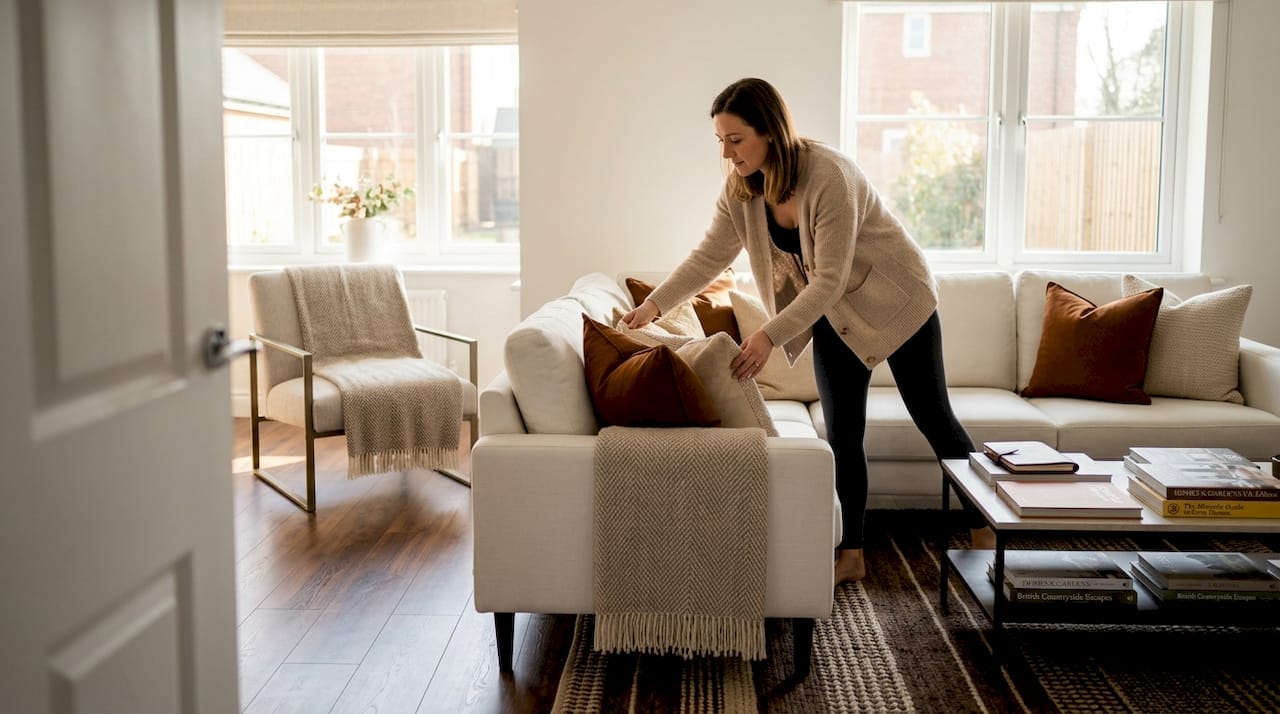
Selling a property is one of the most significant financial decisions you will make, and yet many sellers overlook one of the most practical tools available to them. Home staging is not about decorating to your own taste. It is a deliberate, evidence-backed sales strategy designed to help buyers picture themselves living in your property. Done well, it shortens the time your home sits on the market, strengthens your negotiating position, and can meaningfully increase your final sale price. This guide covers everything from the cost of home staging and DIY approaches to a room-by-room checklist and the growing role of virtual staging.
Table of Contents
- Key takeaways
- What home staging really is
- Understanding the cost of home staging
- Your room-by-room home staging checklist
- Physical staging versus virtual staging
- Timing and market strategy for staging
- Our perspective on what staging actually requires
- Stage smarter with Expats Partner
- FAQ
Key takeaways
| Point | Details |
|---|---|
| Staging aids buyer visualisation | 83% of buyers’ agents confirm staging helps buyers picture the property as their future home. |
| Staged homes can sell for more | Thoughtfully staged properties can achieve 10% more than unstaged equivalents in the same market. |
| DIY staging is a genuine option | Decluttering, neutralising décor, and rearranging furniture costs little but delivers measurable results. |
| Budget for contract extensions | Staging contracts typically carry monthly extension fees; plan your timeline carefully to avoid unexpected costs. |
| Prioritise high-impact rooms | Focus staging effort on the living room, kitchen, and master bedroom for the strongest return on investment. |
What home staging really is
Home staging is best understood as a sales tool, not decoration. Its purpose is to present your property in a way that highlights its strengths, minimises its weaknesses, and makes it easy for the widest possible range of buyers to imagine themselves living there. That distinction matters. Interior decorating reflects personal taste. Staging is about removing personal taste from the equation entirely.
The psychological effect on buyers is well documented. Neutral, clean spaces allow more buyers to mentally place their own belongings into a room, which builds emotional connection and accelerates decision-making. When a buyer walks into a cluttered, overly personalised space, their brain works harder to filter out what does not belong. That mental effort creates distance rather than connection.
The measurable benefits are equally compelling:
- Faster sales: Staged homes sell up to 11 times faster than non-staged ones, though results vary by market and property type.
- Better online performance: Professionally staged rooms photograph well, which drives more clicks and enquiries before a single viewing takes place.
- Stronger offers: Buyers who feel emotionally connected to a property are less likely to negotiate aggressively on price.
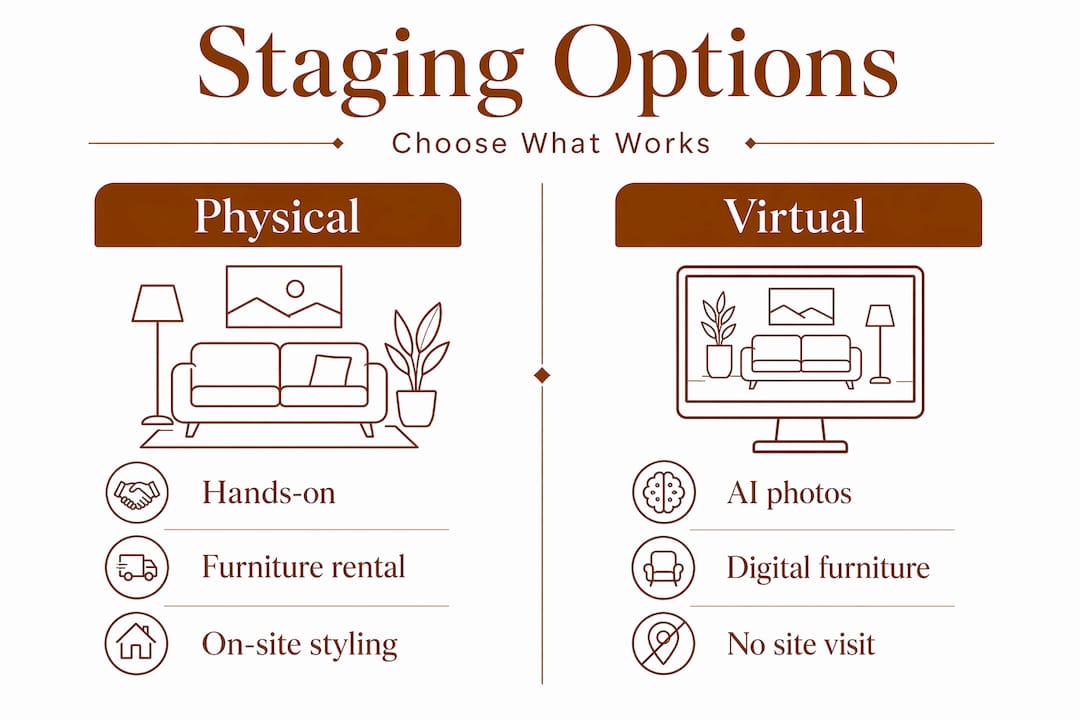
Staging comes in several forms. A consultation involves a professional advising you on changes to make yourself. Partial staging focuses on key rooms only. Full staging furnishes and dresses an entire property, often using rented furniture. Virtual staging applies digital editing to photographs of empty rooms. Each approach suits different budgets and property types, and we will cover all of them in detail below.
Understanding the cost of home staging
One of the most common reasons sellers hesitate to stage is cost. The reality is that the cost of home staging varies considerably depending on the level of service you choose.
| Service level | Typical cost range | Best suited for |
|---|---|---|
| Consultation only | $150 to $600 | Sellers with time and confidence to DIY |
| Partial staging | $1,800 to $3,500 | Properties needing help in key rooms only |
| Full professional staging | $3,000 to $12,000+ | Vacant properties or premium listings |
| Virtual staging (per room) | $50 to $200 | Online listings for vacant homes |
The return on that investment is worth examining carefully. Staged homes can sell for at least 10% more than unstaged equivalents. On a $600,000 property, that is $60,000 in additional value. Even a full professional staging at $10,000 starts to look like a sensible business decision at that scale.
DIY home staging is a genuine and effective alternative for sellers with limited budgets. It involves decluttering thoroughly, repainting walls in neutral tones, rearranging existing furniture to improve flow, and adding simple accessories like fresh flowers or clean white towels. The financial outlay can be minimal. The effort, however, is real. You need to be honest with yourself about how much time and energy you can commit before listing.
One hidden cost that catches many sellers off guard is staging contract duration. Most contracts carry a 30-day initial term, with monthly extension fees of $500 to $1,500 afterwards. If your property takes longer to sell than expected, those fees accumulate quickly.
Pro Tip: If your budget is tight, prioritise staging the living room, master bedroom, and kitchen. These are the rooms buyers weight most heavily in their decision-making, and they are also the spaces that photograph best for online listings.
Your room-by-room home staging checklist
A solid home staging checklist keeps the process manageable and ensures nothing important is overlooked. Work through these stages methodically, and you will cover the most impactful areas without feeling overwhelmed.
1. Declutter and deep clean every room
This is the single most impactful step in any staging process, and it costs almost nothing.
- Remove at least half the contents of every cupboard and wardrobe. Half-full closets create the perception of generous storage, which is consistently one of the top buyer priorities.
- Clear kitchen benchtops entirely, leaving only one or two decorative items.
- Remove all personal photographs, children’s artwork, and highly specific décor.
- Deep clean every surface, including skirting boards, light switches, and window tracks.
2. Neutralise walls and soft furnishings
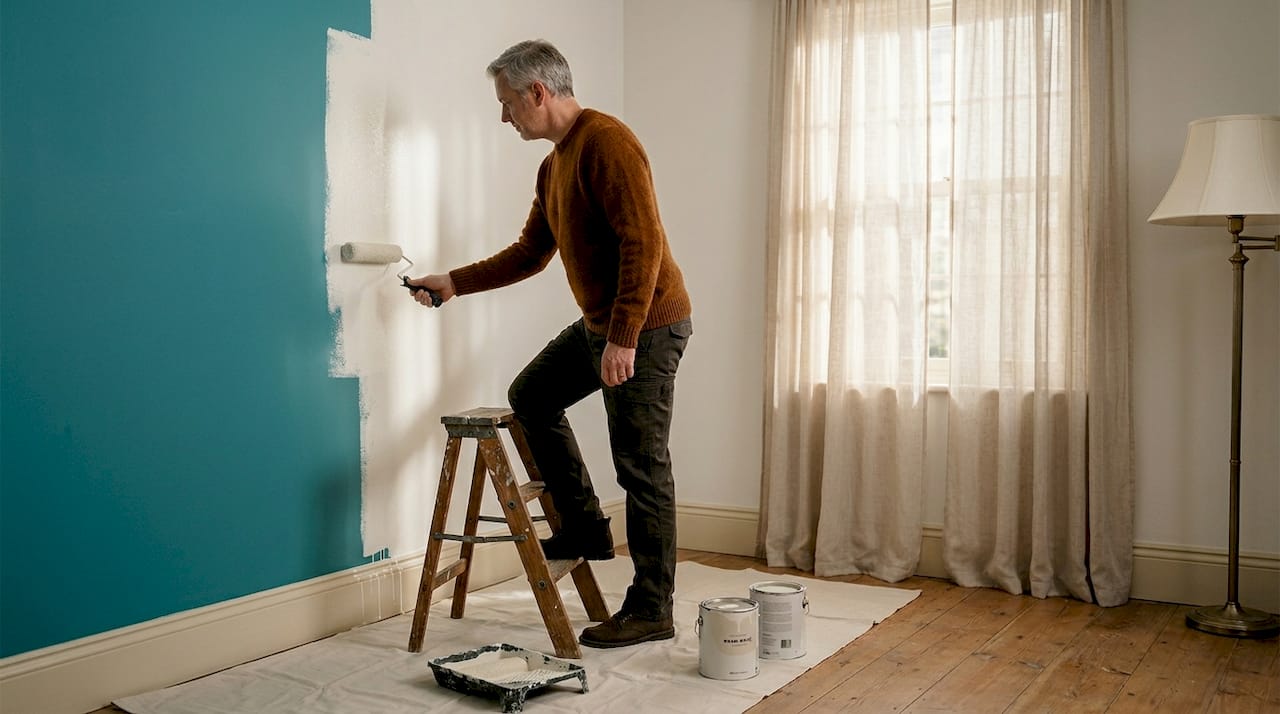
Bold or unusual colour choices appeal to some buyers and alienate others. Repainting in warm whites, soft greys, or pale greiges is one of the most cost-effective staging investments you can make. Replace heavily patterned cushions, throws, and rugs with neutral alternatives. The goal is a calm, welcoming backdrop that feels easy to imagine living in.
3. Arrange furniture for scale and flow
Furniture placement directly affects how large or small a room feels. Pull sofas and chairs slightly away from walls rather than pushing everything to the perimeter. Create clear pathways through each room. Remove any pieces that make the space feel crowded. In dining areas, make sure the table is appropriately sized for the room. Oversized furniture is one of the most common staging mistakes, and it is easy to fix.
4. Address kitchens and bathrooms on a budget
These two rooms carry disproportionate weight in buyer decisions, and you do not need to renovate to make them shine.
- Replace dated cabinet handles with simple brushed brass or matte black alternatives.
- Add a small potted herb or a single stem in a clean vase on the kitchen counter.
- In bathrooms, replace worn towels with fresh white ones, add a small plant, and remove all personal toiletries from view.
- A fresh coat of paint on bathroom walls and a new toilet seat can make a significant visual difference at minimal cost.
5. Improve kerb appeal
Many buyers form their impression before they step through the front door. Mow the lawn, trim hedges, and sweep pathways. Repaint or clean the front door. Add a simple potted plant on either side of the entrance. These small steps signal that the property has been well maintained, which sets a positive tone for the entire viewing.
Pro Tip: Schedule a professional clean of the exterior windows before listing photographs are taken. Clean windows make rooms feel brighter and larger in photographs, and buyers notice the difference during viewings.
Physical staging versus virtual staging
Virtual staging has grown considerably as a tool for property marketing, and it is worth understanding what it actually offers before deciding whether it suits your situation.
| Factor | Physical staging | Virtual staging |
|---|---|---|
| Cost | Higher upfront investment | Significantly lower per room |
| In-person impact | Strong and immediate | None. Rooms appear empty at viewings |
| Online appeal | Excellent | Excellent for vacant properties |
| Buyer trust | High | Requires transparent disclosure |
| Best use case | Occupied or vacant properties for sale | Vacant properties, online-only marketing |
| Turnaround time | Days to weeks | 24 to 48 hours |
Virtual staging uses AI-driven software to digitally furnish empty rooms in photographs. The results can be impressive online. The problem arises when buyers arrive at a viewing to find a bare, empty space that looks nothing like the listing images. AI-driven virtual staging modifies photos structurally and must be transparently disclosed to avoid misleading buyers. Failing to disclose this creates distrust and can derail negotiations.
Physical staging remains more effective for in-person showings, despite virtual staging’s cost advantages. For most sellers, the best approach is a combination: use physical staging for the property itself and supplement with professionally edited photographs to maximise online appeal. For vacant investment properties where budget is the primary concern, virtual staging for online listings paired with a simple physical clean and preparation for viewings is a practical middle ground.
Timing and market strategy for staging
Staging is most effective when it is coordinated with your listing timeline, not added as an afterthought. The principle is straightforward: the property should be viewing-ready before the listing goes live, not after the first enquiries arrive.
In competitive markets where buyers have plenty of choice, staged homes consistently attract more online clicks, more viewing requests, and more offers. Consider these practical points when planning your approach:
- Stage before photography. Listing photographs are your first impression for the majority of buyers. A staged property photographs dramatically better than an empty or cluttered one.
- Align staging with your pricing. Staging cannot compensate for a property that is priced above market value. The two must work together. A well-staged home at the right price sells quickly. An overpriced staged home simply attracts more disappointed viewers.
- Consider the duration. If you expect a quick sale in a hot market, a short-term staging arrangement may be sufficient. If your property is in a slower segment, plan for a longer staging period and factor in extension costs from the outset.
- Prioritise rooms that appear in listing photographs. Not every room needs equal attention. Focus your energy and budget on the spaces that will feature most prominently online.
Understanding how staging shortens listing time is particularly relevant in markets where inventory is high and buyers are selective. A property that looks viewing-ready from day one generates momentum. One that sits on the market for weeks and then gets staged sends the wrong signal to buyers who have been watching.
Our perspective on what staging actually requires
I have worked with enough properties and sellers to say this clearly: the biggest mistake people make with staging is treating it as a cosmetic exercise rather than a strategic one. You are not decorating. You are removing obstacles between a buyer and their decision.
What I have seen consistently is that sellers who over-stage, filling rooms with too many accessories or choosing furniture that is too aspirational for the neighbourhood, create a disconnect. Buyers sense when a space feels performative rather than liveable. Neutral minimalism has broader appeal than maximalist styling for most markets, though luxury properties in certain segments can support a richer aesthetic.
The other lesson I have learned is that staging and pricing must be planned together. I have watched beautifully staged properties sit on the market because the price was not aligned with comparable sales. Staging creates the best possible conditions for a sale. It does not manufacture demand that is not there.
My honest advice on DIY versus professional staging: do the decluttering and neutralising yourself, because no one else will do it as thoroughly as you will when it is your own home. But bring in professional help for furniture selection and room arrangement if you are staging a vacant property. Empty rooms are genuinely difficult to stage well without experience, and the cost of rented furniture for a short period is almost always recovered in the sale price. For more on effective staging approaches that balance effort and return, the principles are consistent regardless of market.
— Expats Partner
Stage smarter with Expats Partner
If you are preparing a property for sale in Singapore and need furniture to stage it effectively, Expats Partner offers flexible furniture rental solutions designed specifically for this purpose. Whether you need a fully furnished living space for a short-term listing or a curated selection of pieces for key rooms, the process is straightforward: choose your furniture, agree on a rental period, and have everything delivered, set up, and collected when the sale is complete.
This approach removes the need to purchase, store, or dispose of staging furniture, which is particularly practical for landlords, property agents, and expats managing a sale from abroad. Expats Partner works with real inventory, provides transparent pricing, and handles logistics reliably so that your property is viewing-ready without unnecessary complexity.
Explore furniture rental for staging or browse short-term rental options to find the right solution for your property and timeline. Your Partner for Every Home.
FAQ
What does home staging actually involve?
Home staging involves preparing a property for sale by decluttering, neutralising décor, arranging furniture strategically, and presenting each room to appeal to the broadest range of buyers. It is a sales strategy, not an interior decorating exercise.
How much does professional home staging cost?
Professional staging ranges from around $150 for a consultation to $12,000 or more for a full staging service on a larger or premium property. Partial staging of key rooms typically falls between $1,800 and $3,500.
Is DIY home staging effective?
Yes. DIY home staging focused on decluttering, repainting in neutral tones, and rearranging furniture can deliver meaningful results at low cost. The most impactful DIY steps are also the simplest: remove personal items, clear surfaces, and deep clean thoroughly.
Should I disclose virtual staging in my listing?
Yes. AI-driven virtual staging alters property photographs and must be transparently disclosed to buyers. Failing to do so creates distrust when buyers attend viewings and find the property looks different from the images.
Which rooms should I prioritise when staging on a budget?
Focus on the living room, master bedroom, and kitchen. These rooms carry the most weight in buyer decisions and are the spaces most likely to appear in listing photographs. Getting these three right delivers the strongest return on your staging investment.