
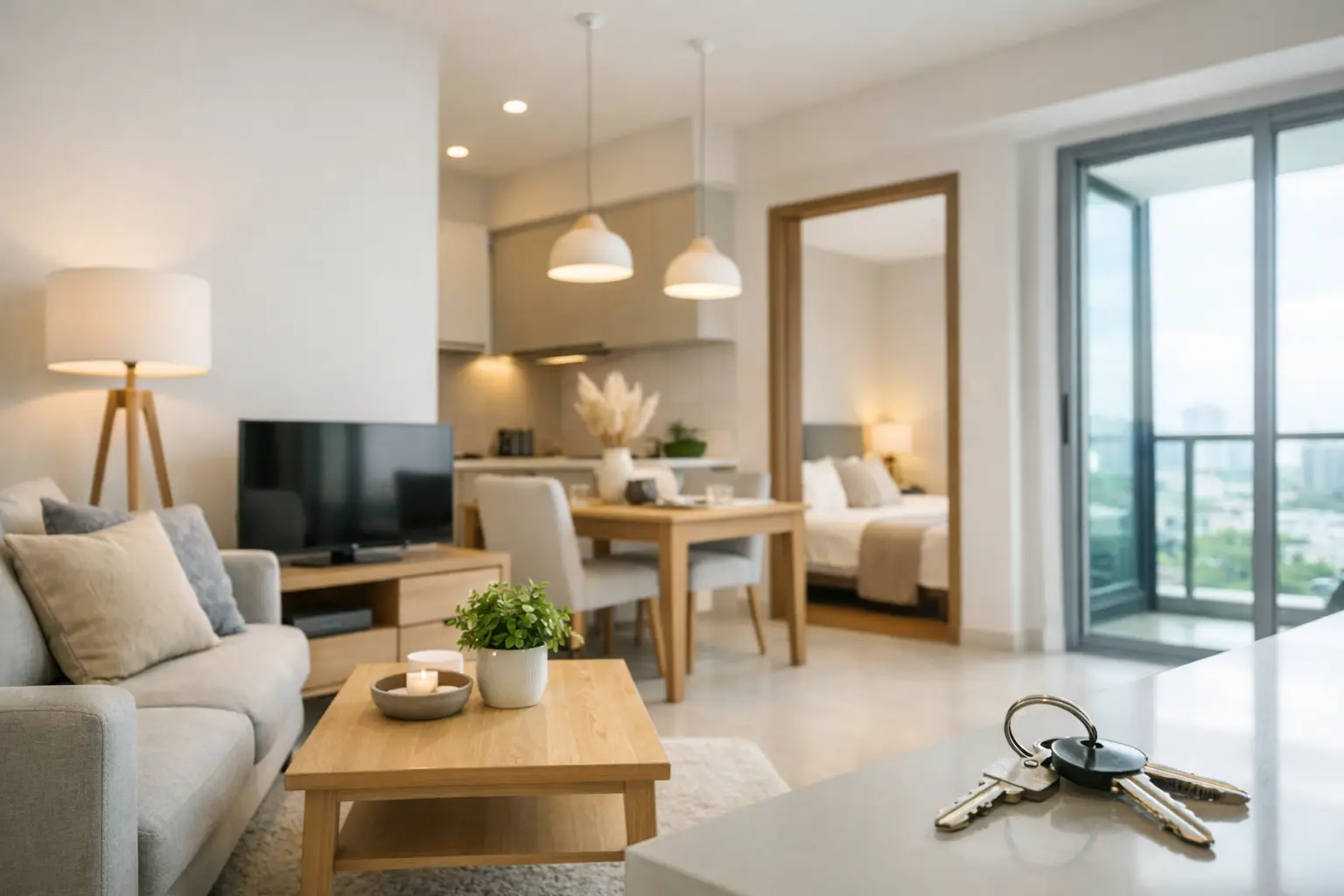
A vacant Singapore flat can look larger in person than it does online, yet still leave prospective tenants unsure where a dining table, work desk or sofa would fit. A considered furnished rental setup removes that uncertainty. It gives a listing warmth, scale and purpose, while helping landlords prepare a unit for the market without committing to every furniture purchase upfront.
For landlords and property agents, the objective is not to fill every corner. It is to create a home that photographs clearly, feels comfortable during a viewing and suits the type of tenant the property is intended to attract. That takes practical planning as much as good taste.
What a furnished rental setup should achieve
A furnished rental should make everyday living easy from the first day of tenancy. In Singapore, this often matters to expatriates, relocating professionals and tenants on fixed-term assignments who may not want to buy, move or later dispose of bulky furniture. They are usually looking for a home that feels ready, not a collection of items they must immediately supplement.
For a landlord, however, furnishing must also make commercial sense. The right setup can support stronger listing photographs, wider tenant appeal and a smoother move-in process. It should be durable enough for rental use, appropriate for the property’s rental level and flexible if the next tenant has different needs.
A good plan therefore balances three questions: Who is most likely to rent this home? How long is the expected tenancy? What level of furnishing is expected in this location and price range? A compact one-bedroom near an MRT station may need a practical work area and efficient storage. A family-sized condominium may need a proper dining setting, comfortable seating and bedrooms that demonstrate how the space can be used.
Start with the tenant, not the furniture
It is tempting to begin by choosing a sofa or bed frame. Start instead with the likely resident. A unit aimed at a single professional needs different priorities from one intended for a family arriving with children. Furnishing for the broadest possible audience can lead to a generic or overfilled result.
For corporate tenants and incoming expatriates, the basics need to be dependable: a comfortable bed, dining arrangement, sensible living-room seating, storage and a workable desk where space allows. Many will value a clean, neutral interior over highly personal styling. The home should feel settled, but still leave room for them to make it their own.
For family homes, it is useful to show clear zones. Buyers and tenants should immediately understand which area is for meals, where children could study and how the living room functions when several people are at home. This is particularly valuable in larger or unusually shaped units, where an empty room can be difficult to read.
Property agents can use the same thinking when advising owners. Rather than saying a property simply needs furniture, explain what the setup will help viewers see: the size of the dining area, the purpose of a spare room or the potential for a comfortable home office.
Build the furnished rental setup room by room
The living room usually carries the greatest visual weight in a listing. It should establish a calm first impression and help viewers judge the room’s proportions. A sofa, coffee table, rug and appropriately sized television console can be enough in a smaller flat. Adding too many occasional chairs or oversized pieces can make a usable room appear constrained.
In the dining area, match the table size to the available clearance rather than forcing in the maximum number of seats. A four-seat table often presents better than a crowded six-seat table in a compact unit. The route between the kitchen, dining table and living room should remain clear, especially during viewings.
Bedrooms need to look restful and functional. A bed, bedside tables, lamps and simple soft furnishings create a more inviting image than a bare mattress frame. Where there is room, a small desk or armchair can add a useful secondary function. Avoid treating every spare bedroom as a storeroom. If it is marketed as a bedroom, furnish it so viewers can believe it.
The most useful additions are often modest ones: curtains or blinds where needed, mirrors that improve light, lamps that soften evening viewings and a few restrained accessories. These details should support the room, not distract from it. Neutral colours, natural textures and tidy surfaces tend to photograph well and appeal to a wider group of tenants.
Rent, buy or combine both?
Buying furniture may suit landlords who expect to hold a fully furnished property over several long tenancies and have the time to manage replacements, repairs and storage. It gives complete ownership, but it also means dealing with delivery schedules, assembly, wear and eventual disposal.
Furniture rental is often more practical when timing is tight, the property is being tested as a furnished letting, or the owner wants to avoid a large initial outlay. It can also be helpful for landlords preparing a unit between tenants, when an unfurnished home needs to be market-ready quickly. Delivery, installation and collection can be coordinated as one service rather than several separate tasks.
There is no single right choice. Some landlords rent the main furniture package and buy a few specific pieces that suit the property long term. Others use a rental arrangement for a fixed tenancy period, particularly when the tenant profile or future use of the unit is uncertain. The key is to avoid buying inexpensive furniture simply to fill a room. Pieces that look poor in photographs or fail quickly can cost more in lost time and replacement effort.
Plan for operations as well as appearance
A successful furnished rental setup needs a clear handover process. Before delivery, confirm lift booking rules, loading access, management-office requirements and any restrictions on lorry timing. In condominiums, these details can affect whether installation is straightforward or delayed.
It is also sensible to document the condition of furnishings at the start of the tenancy. An inventory with photographs provides a shared record for the landlord and tenant, and makes end-of-lease discussions more straightforward. Include appliances, keys, remotes and any smaller accessories provided with the home.
Think about maintenance before selecting items. Upholstered furniture should be suitable for regular use, dining chairs should be easy to clean, and storage should be sturdy enough for everyday belongings. Very delicate finishes may look appealing in a showroom but can be less suitable in a rental property. Durable does not need to mean dull. It means choosing pieces that continue to look presentable after normal use.
Presentation matters before the first viewing
Once the furniture is in place, prepare the property as carefully for photographs as for a physical viewing. Open curtains, switch on lamps where they improve the room, remove packaging and ensure cables are neatly managed. The kitchen and bathrooms should be clean and clear of personal or maintenance items.
A well-presented home allows prospective tenants to focus on the property rather than the effort required to live there. It can also give agents clearer marketing material and reduce the need to explain basic room functions repeatedly during viewings.
For vacant, tenanted or time-sensitive properties, Expats Partner can coordinate furniture, styling, delivery and collection around the practical demands of the listing or lease. That support is particularly useful when owners and agents need a presentable result without managing multiple suppliers.
The most effective rental homes do not try to impress through excess. They feel organised, comfortable and believable. When each room has a clear purpose and the furnishings suit the expected tenant, a property becomes easier to market and easier for someone to imagine calling home.